
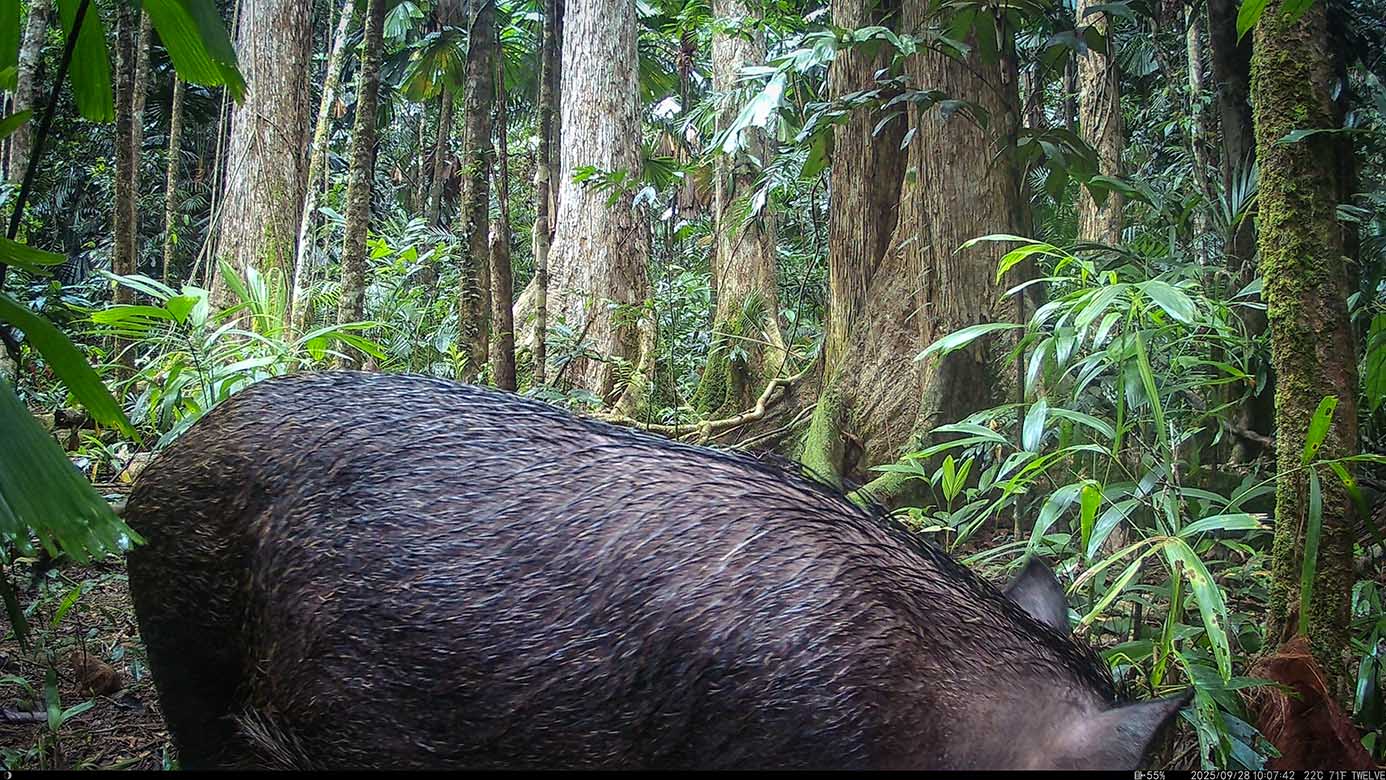
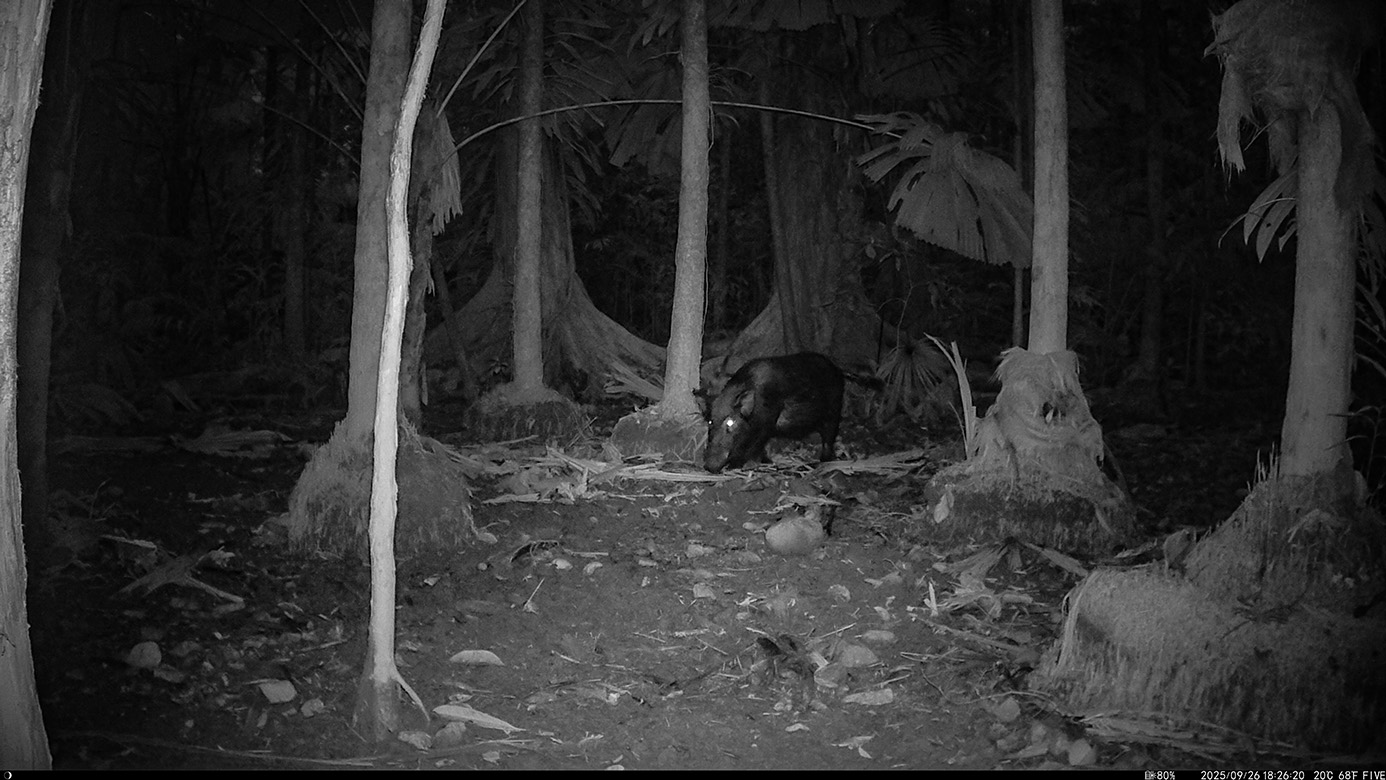
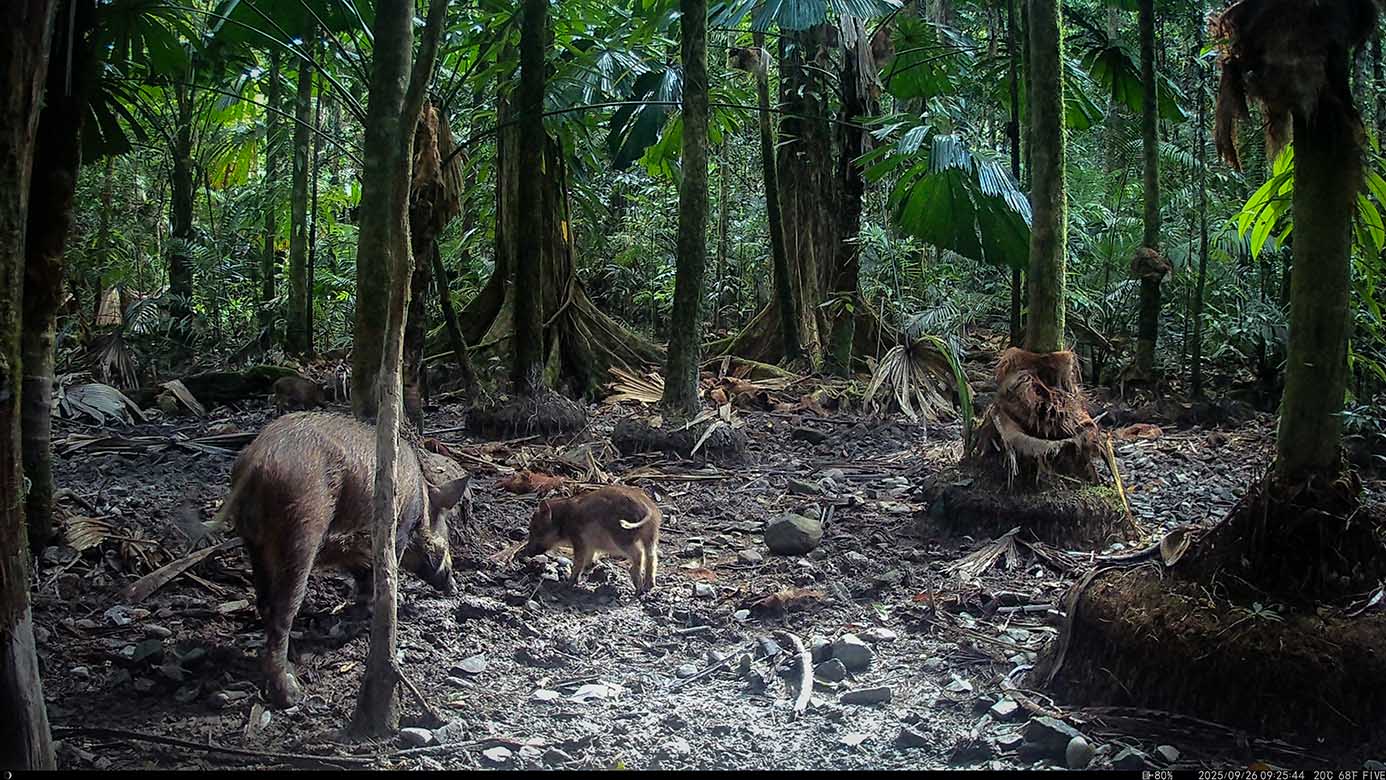
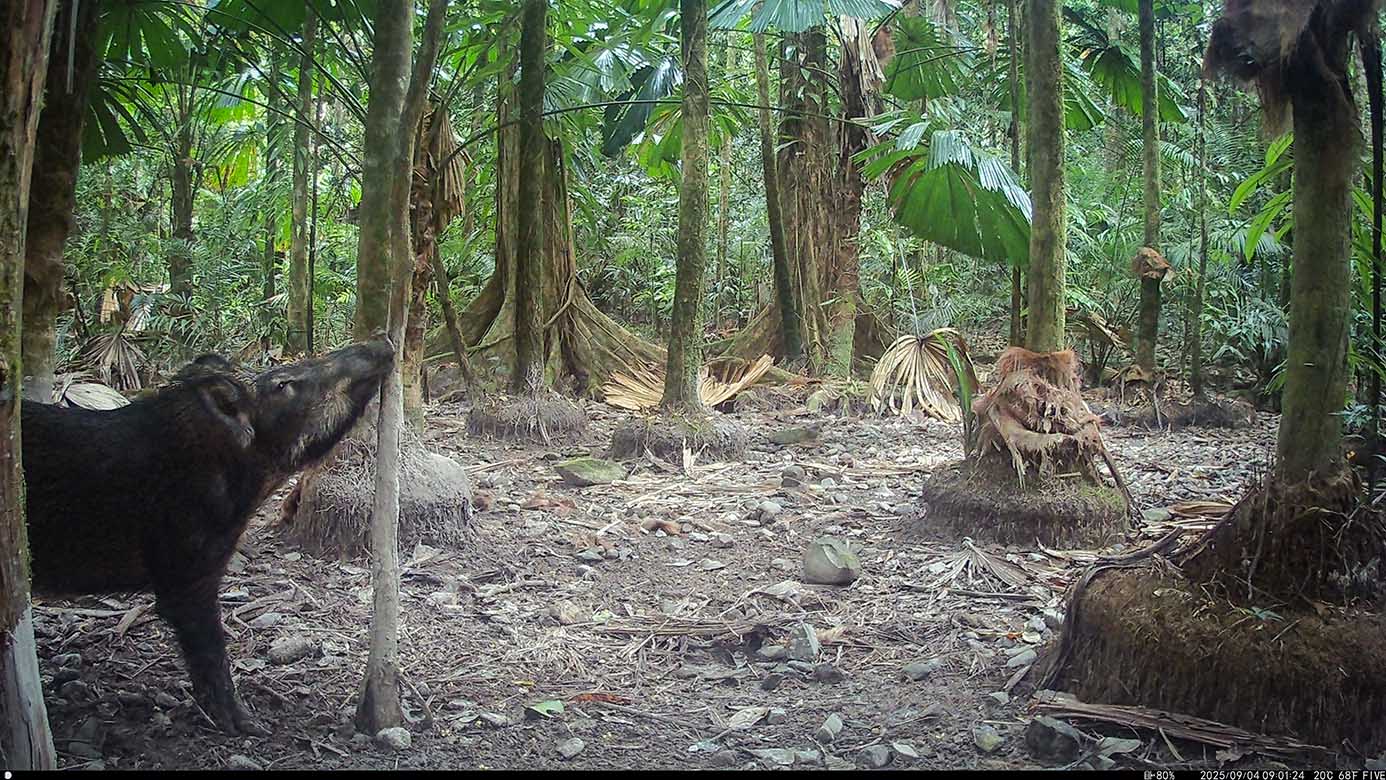
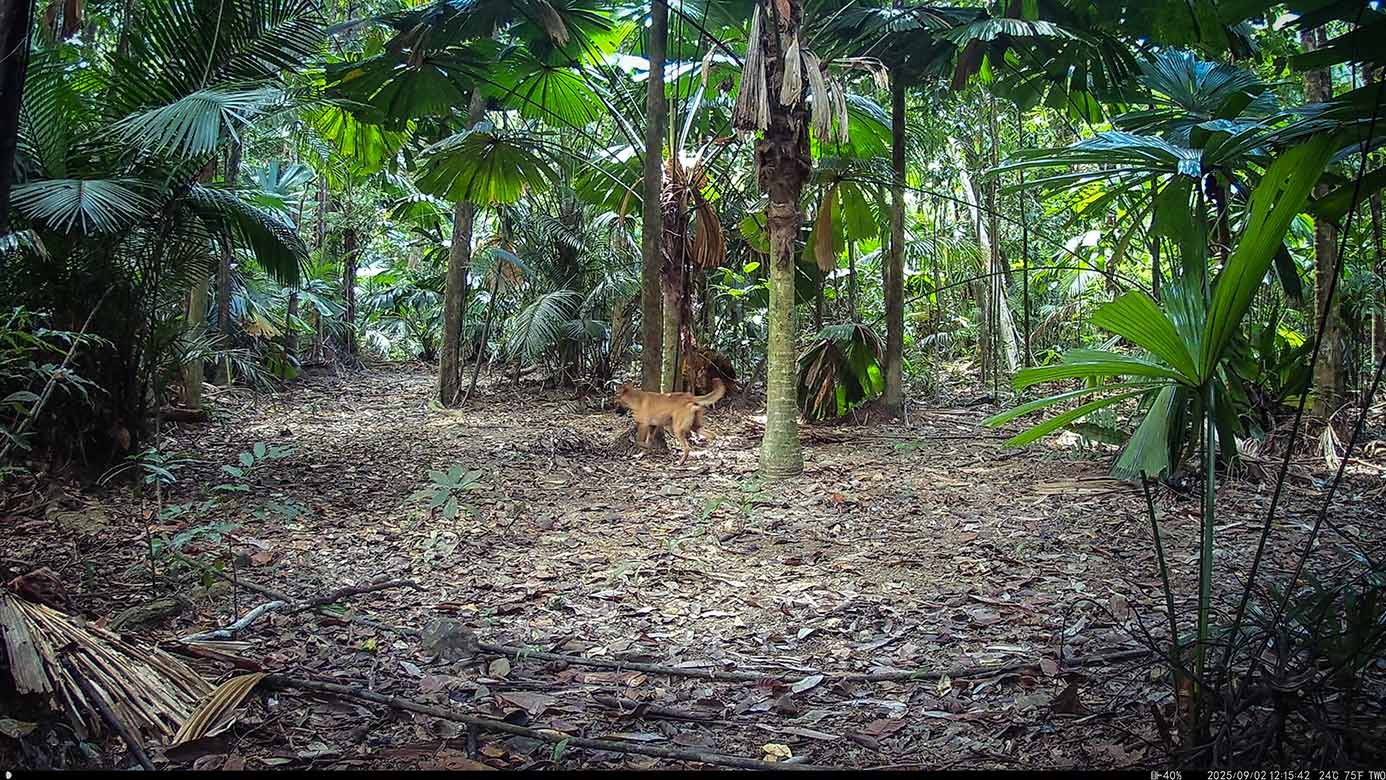
Camera Traps – September 2025 accrued 30-cassowaries, 157-dingoes and 78-feral pigs. Against the cumulative monthly average, cassowary numbers fell by 72%, dingoes exploded by 372% and feral-pig numbers dropped by 60%. Against September 2024, cassowary sightings rose by 30%, dingo numbers skyrocketed by 683% and feral-pigs fell by 65%.
Image highlights from Camera Traps – September 2025
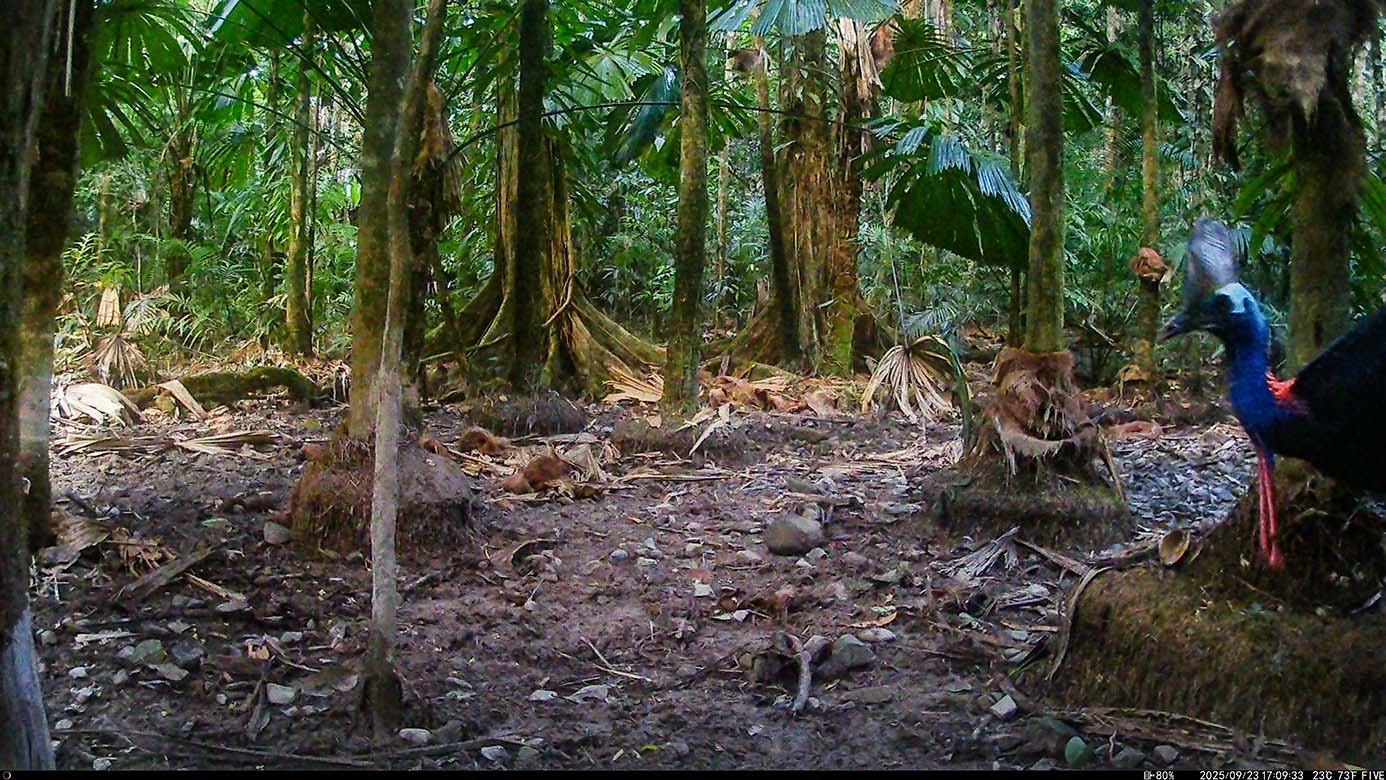
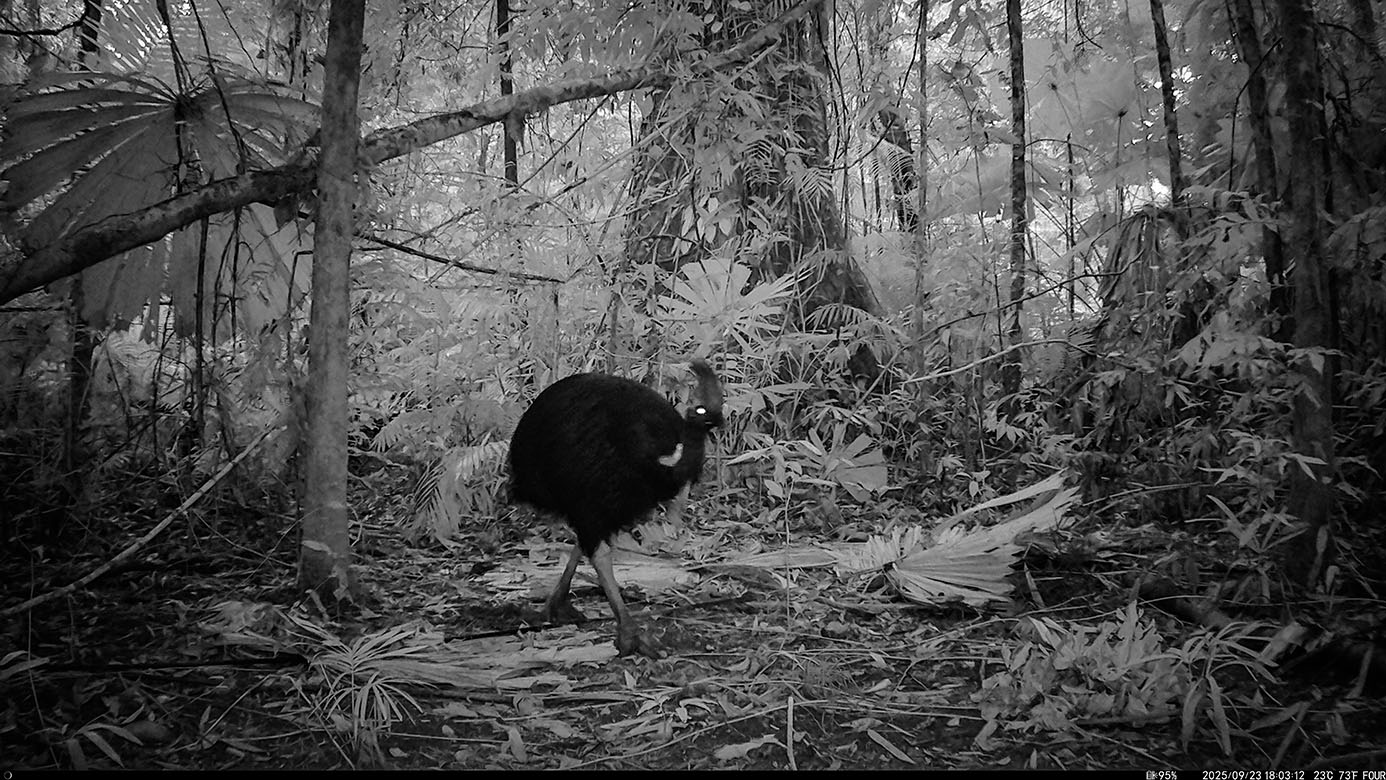
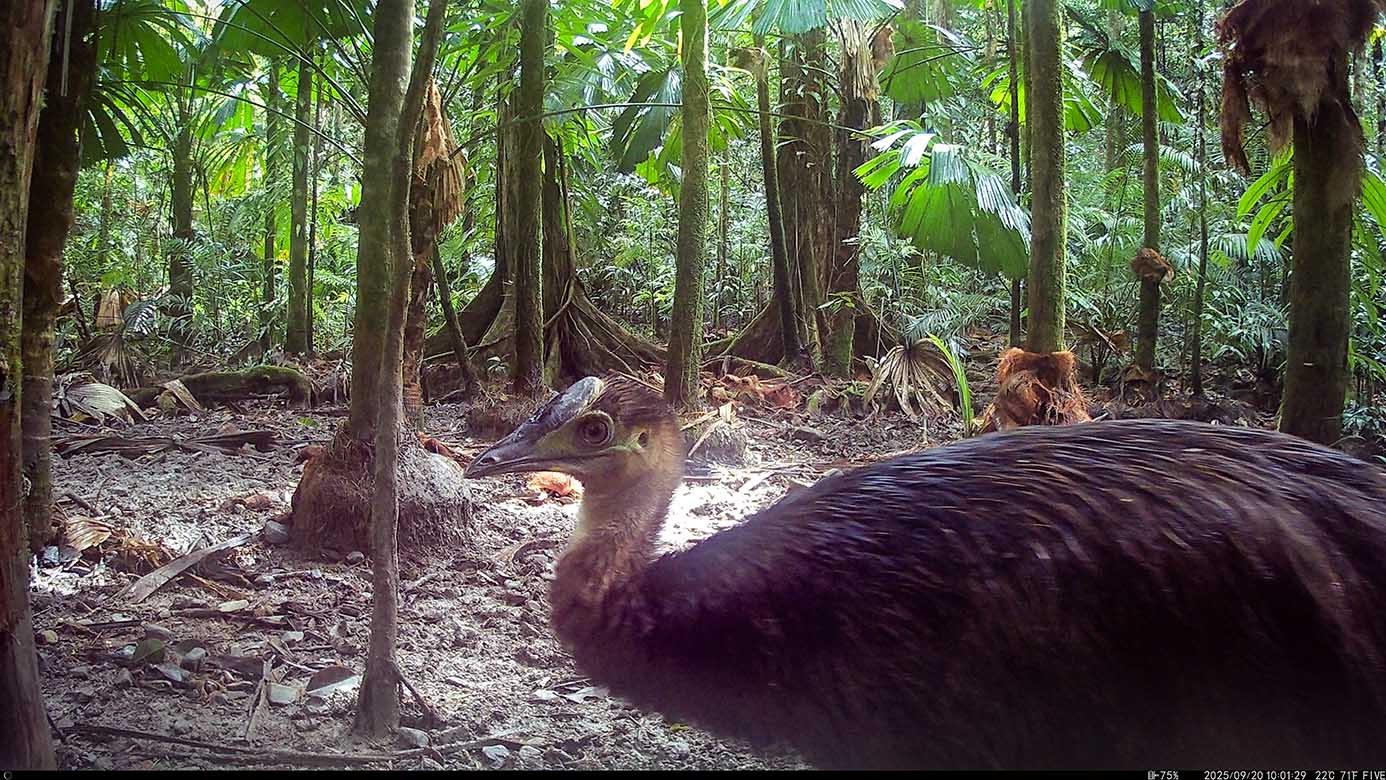
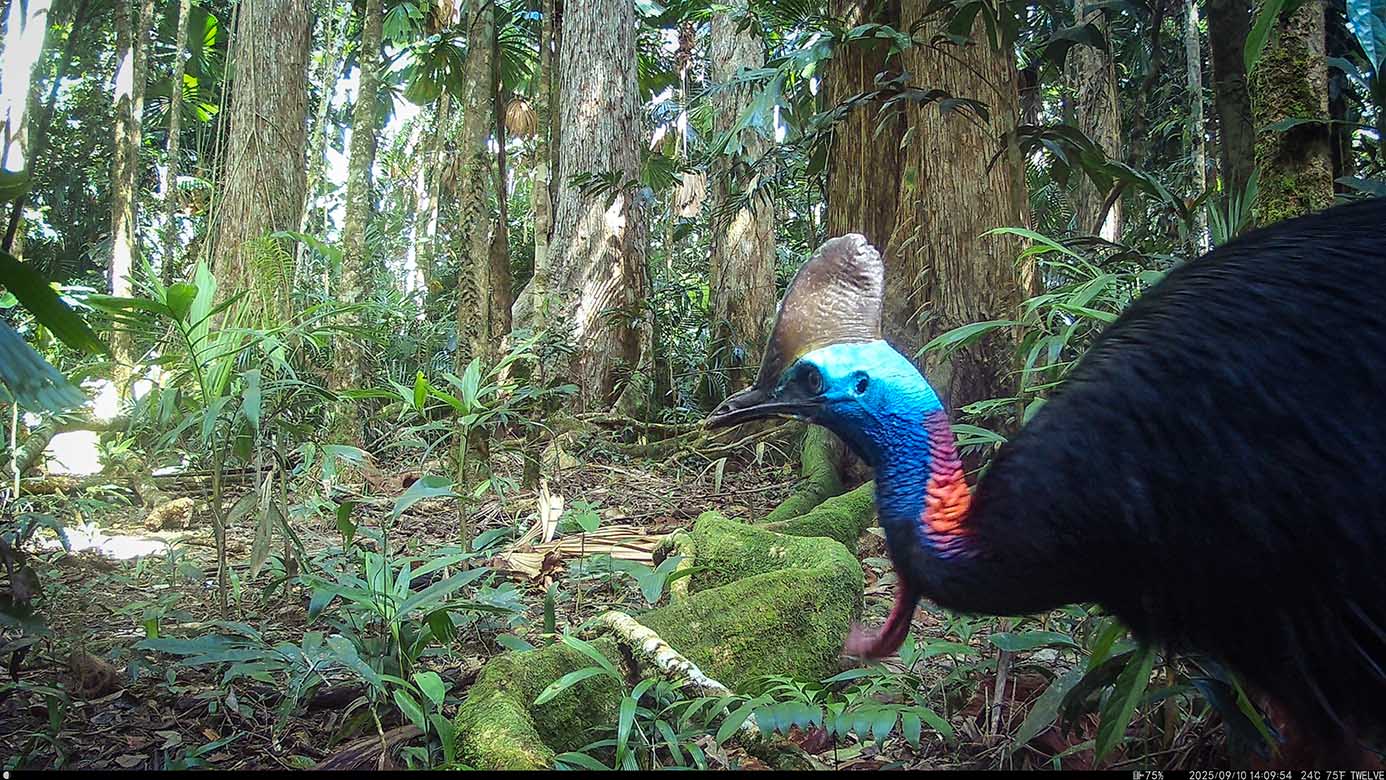
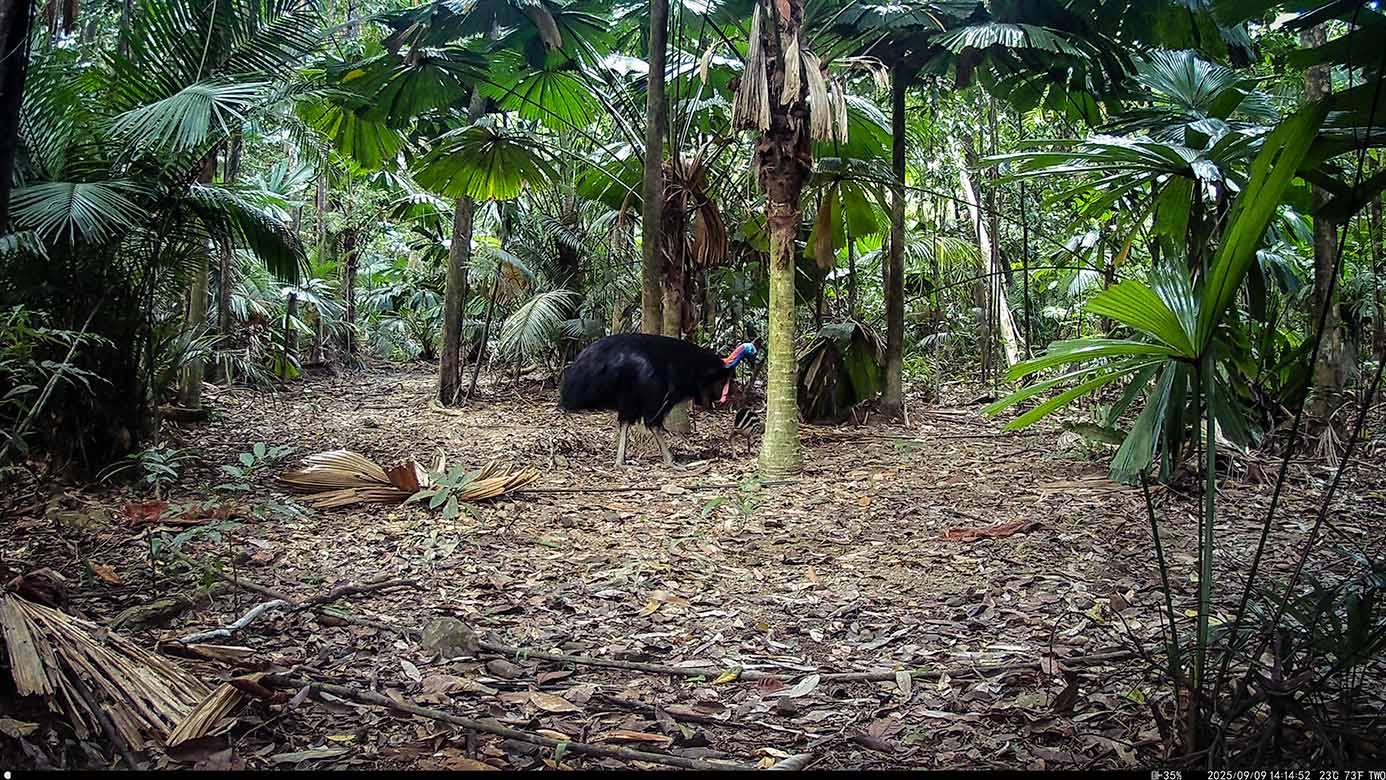
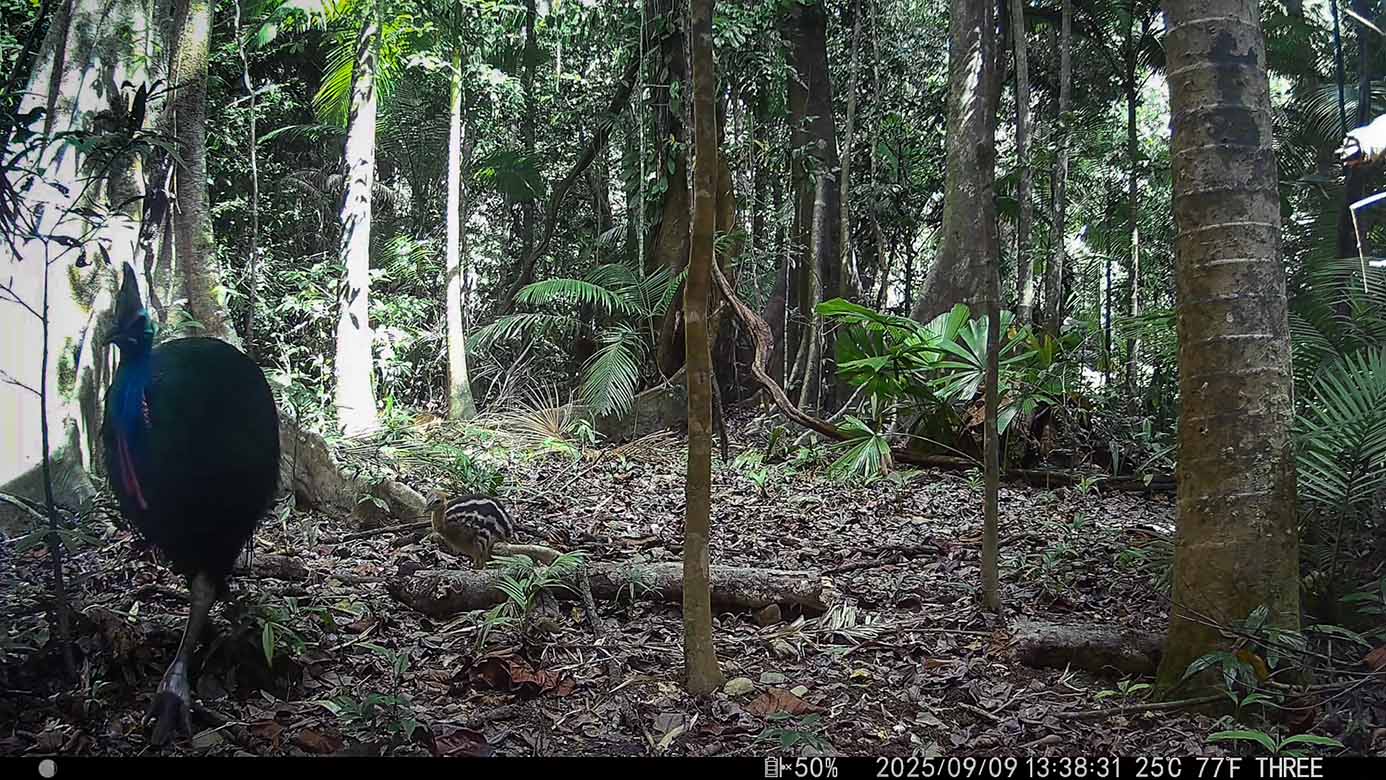
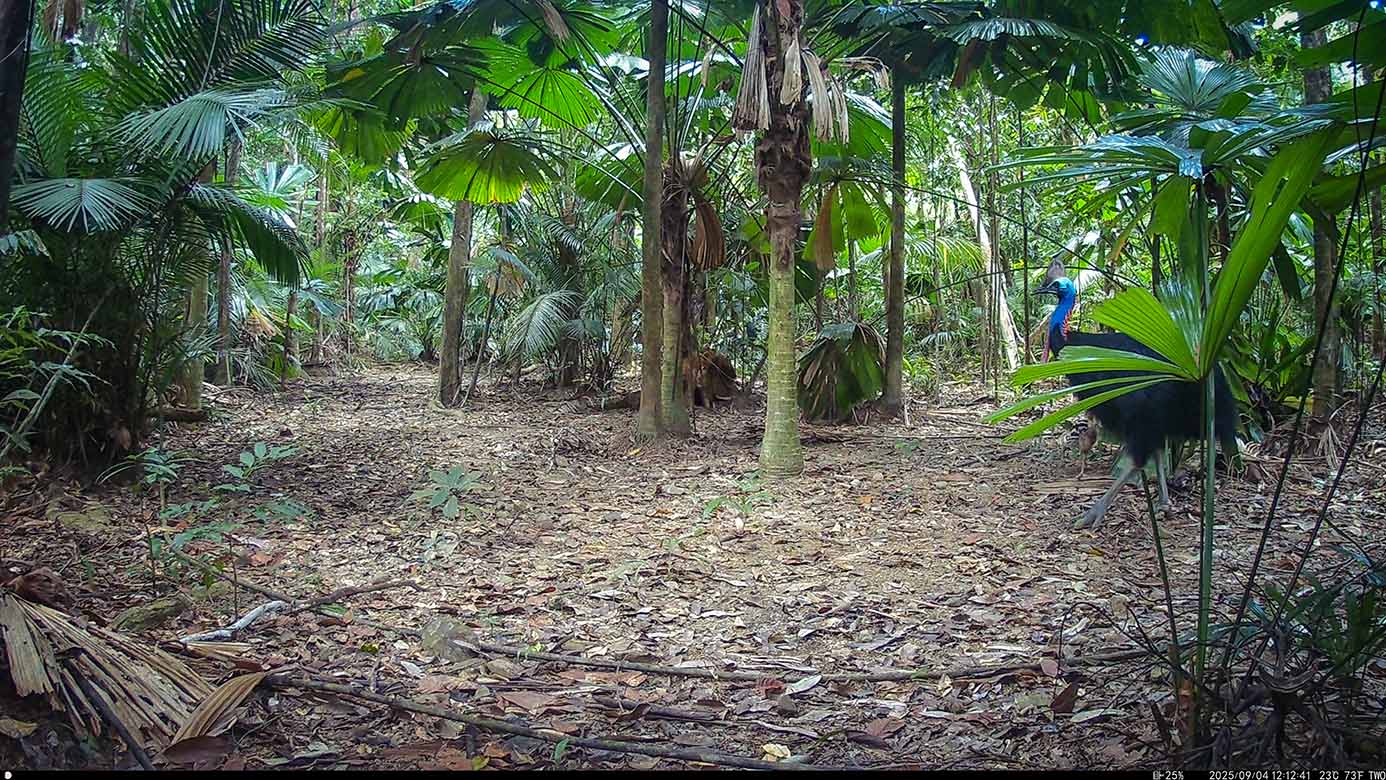
Keeping up with the cassowaries …
Crinkle-cut & Wobbly
Tex!
Cheryl!
Manu & Baloo demolishing a Spectacled Monarch’s nest
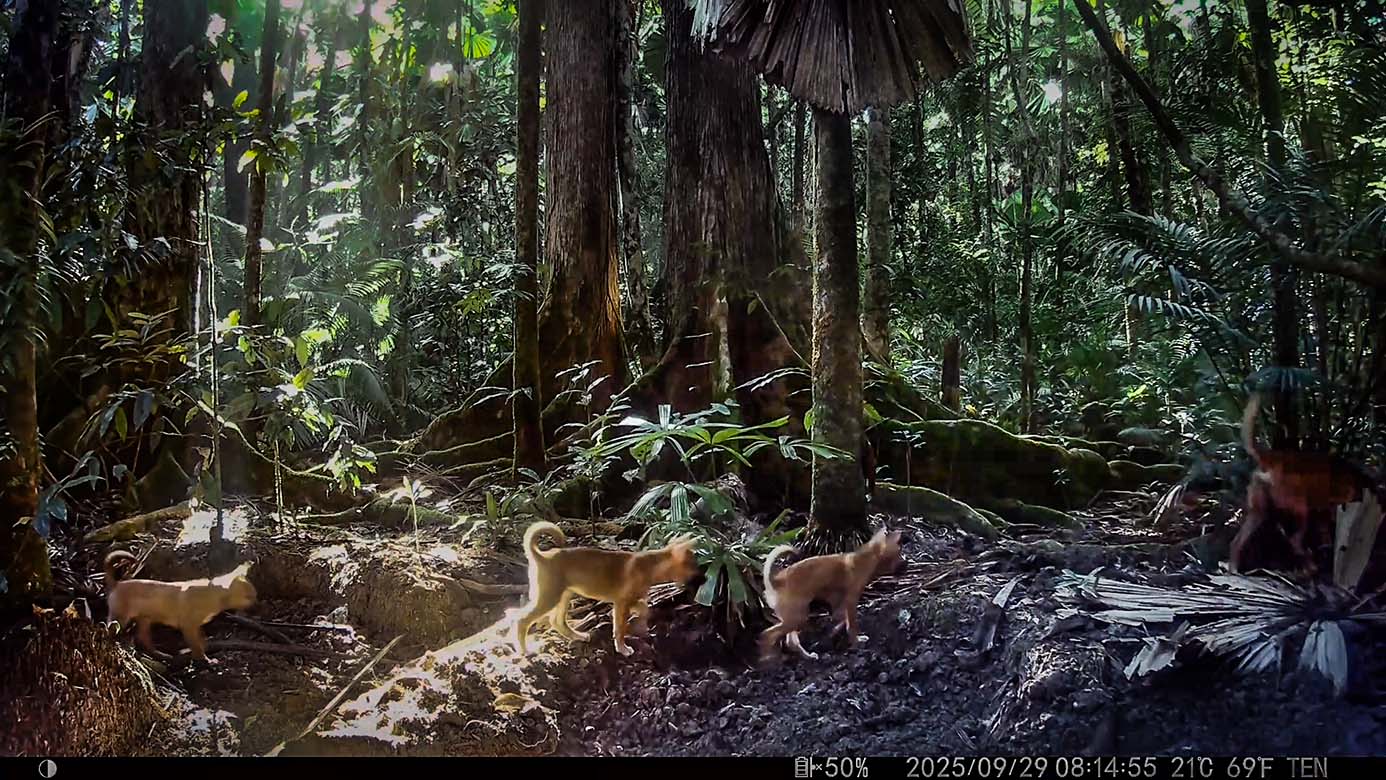
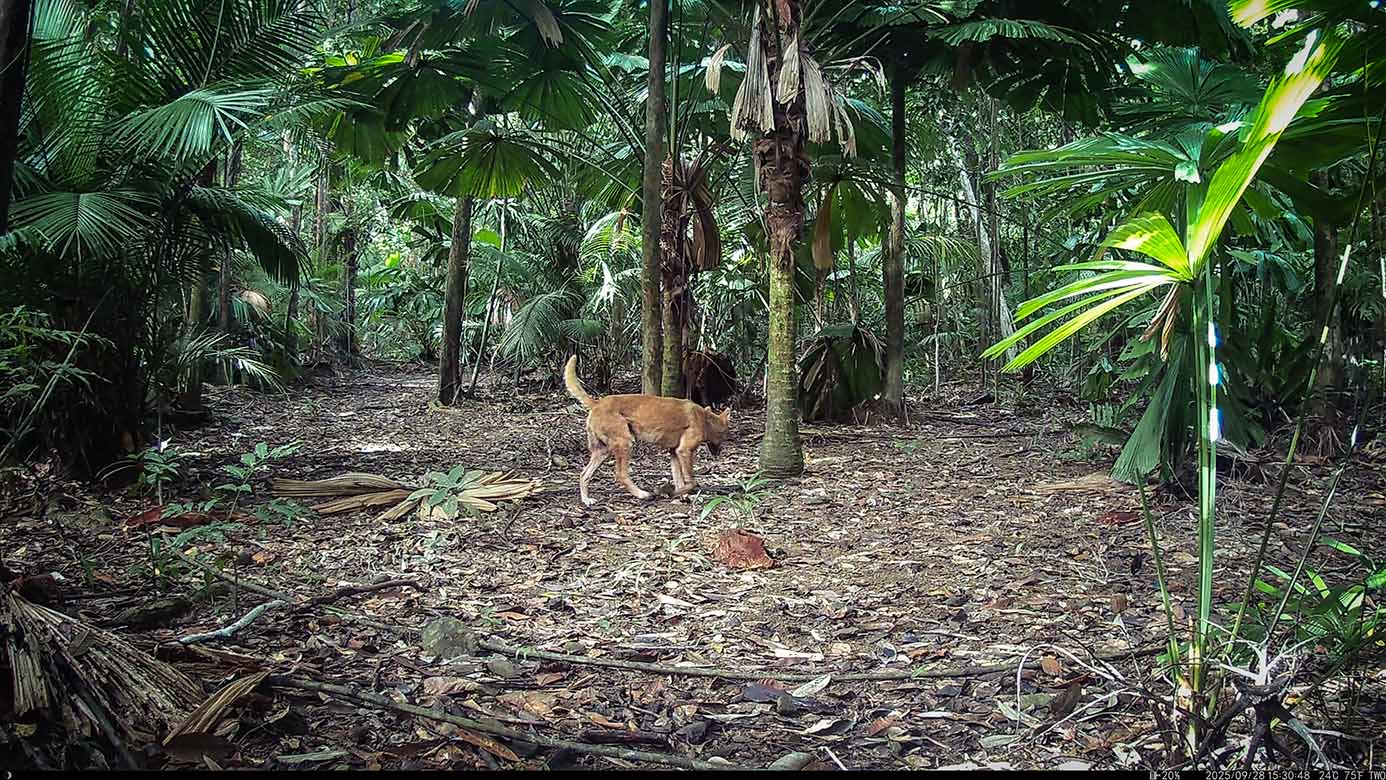
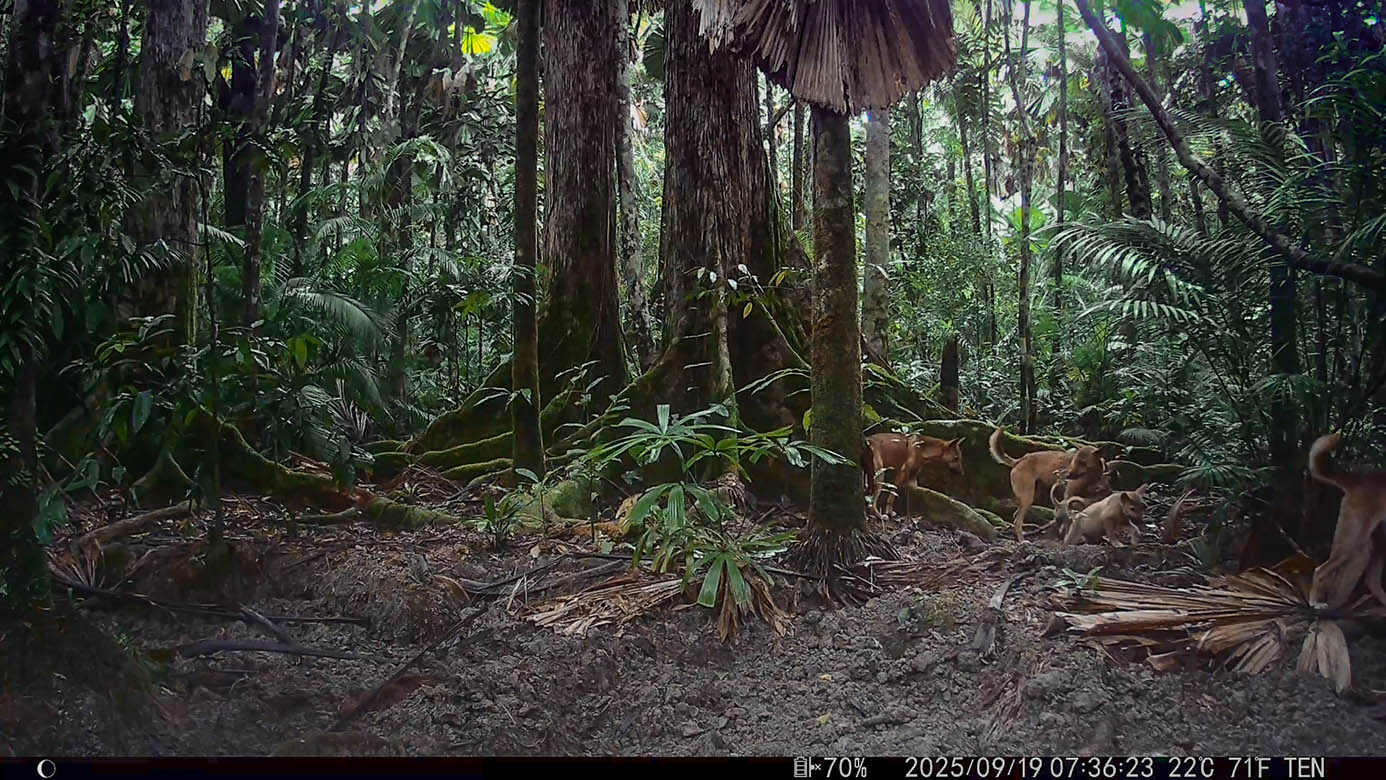
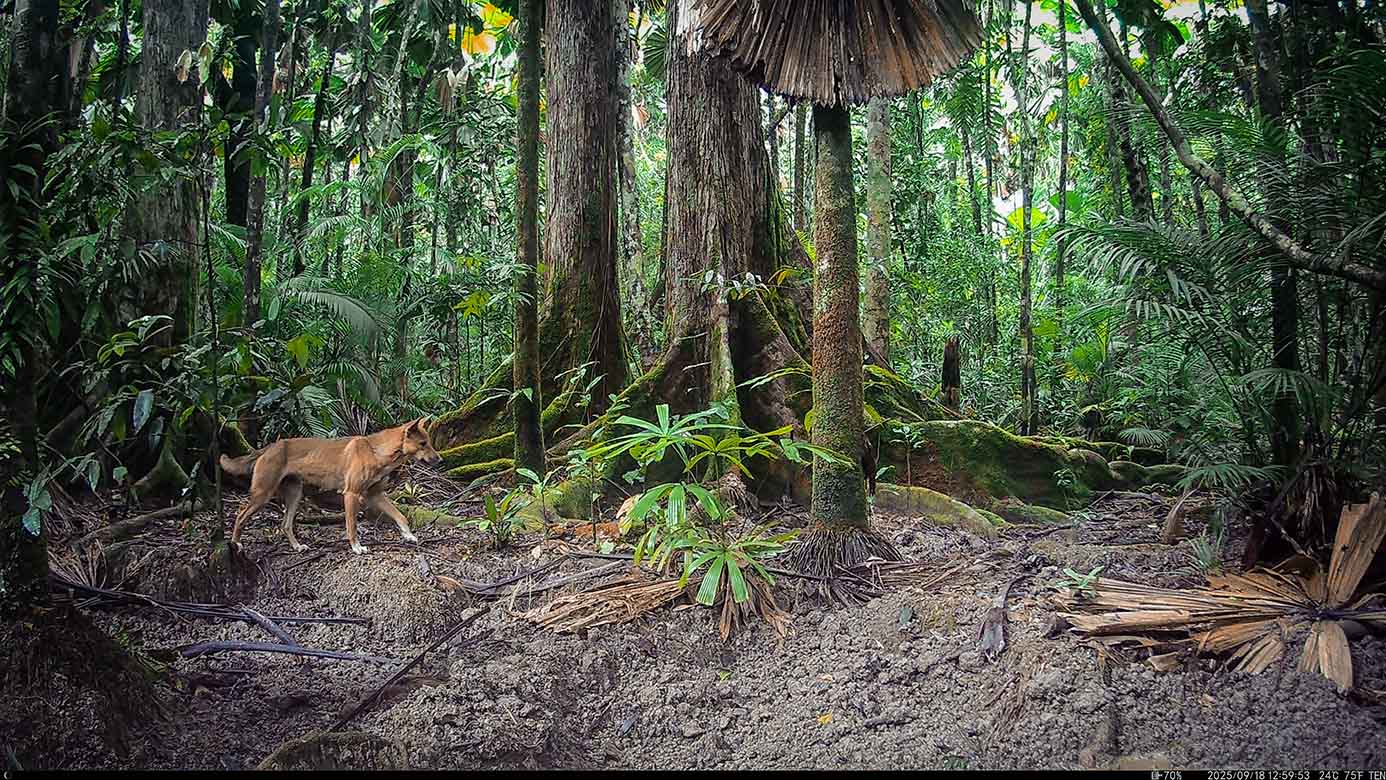
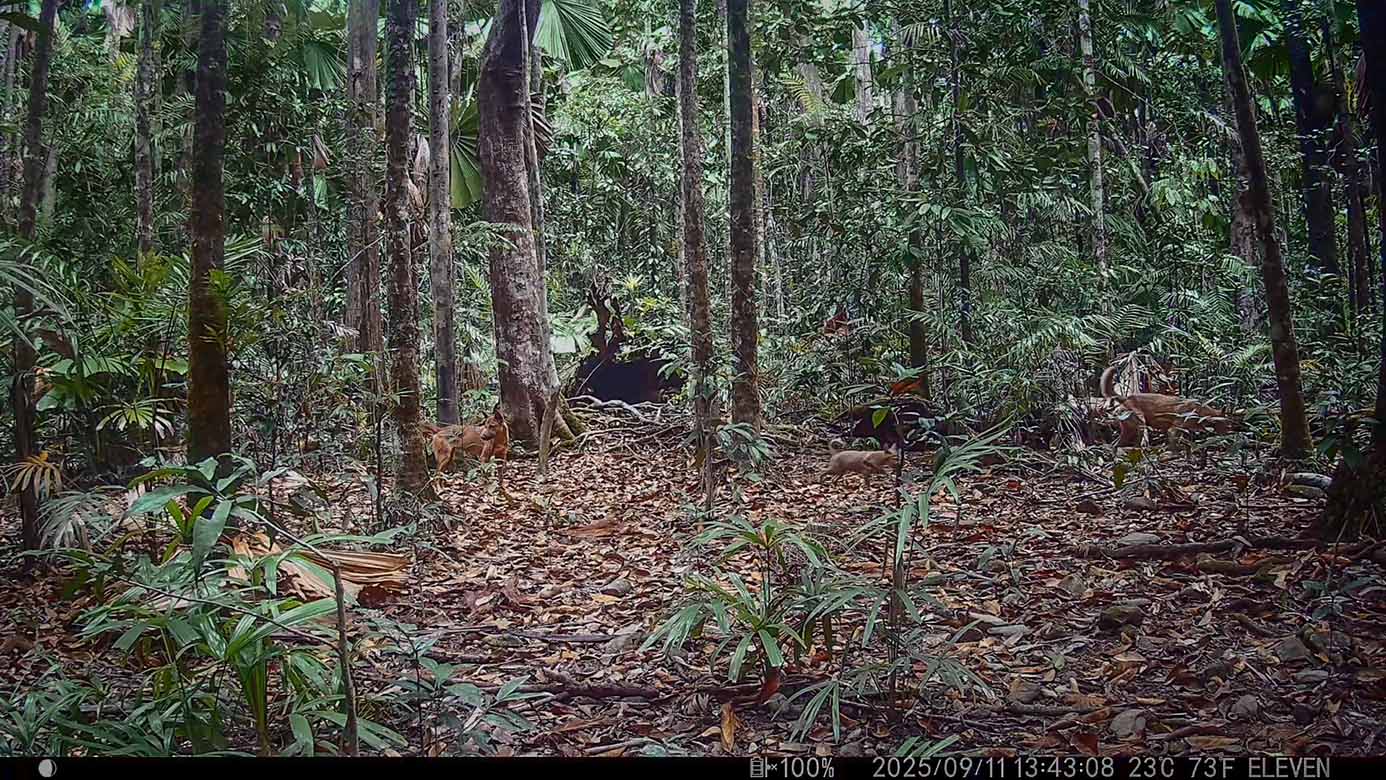
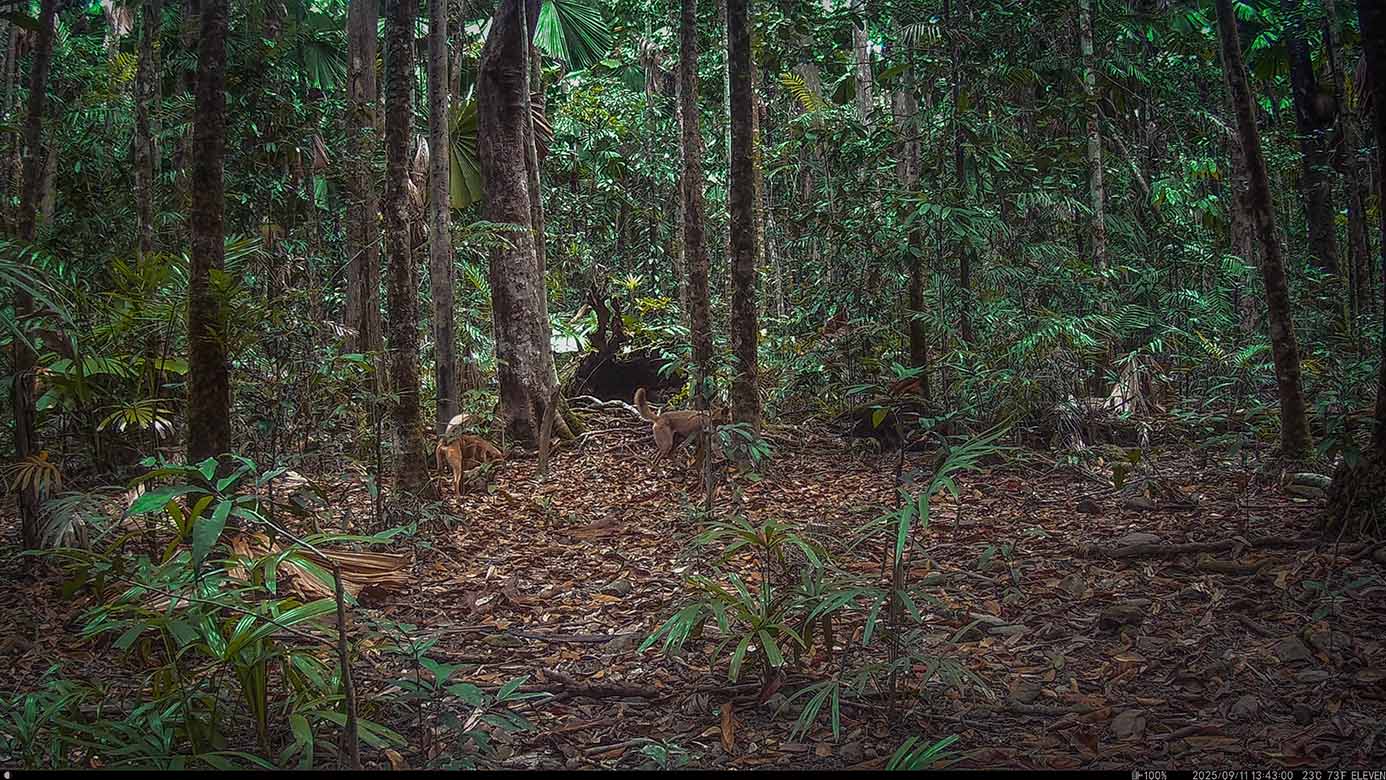
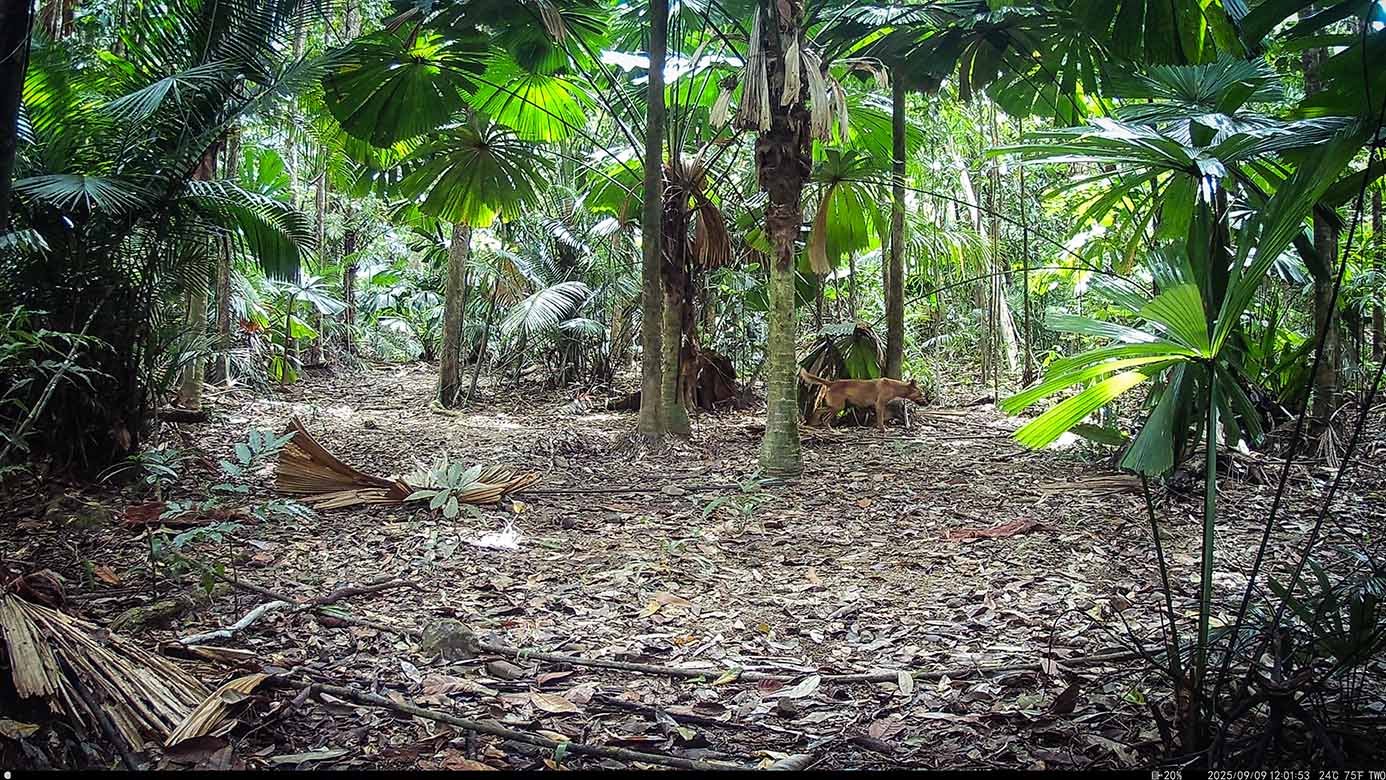
Daintree Dingoes …
A young dingo pup under tuition of dad & uncle on an early foray into the broader expanse of its World Heritage rainforest habitat
Delightfully relocating their den in front of camera-trap # 10, a new dingo trilogy of terror for the feral-pigs in the Daintree Rainforest
Dingo exuberance at sunrise in the Daintree Rainforest
Evasive maneouvres in the Daintree Rainforest
Uncharitable behaviour in the Daintree Rainforest can provide valuable lessons: A hostile Brush Turkey charging threateningly upon another, forcing it to flee headlong towards an Orange-footed Scrub-fowl, triggers an evasive fly-over against the oncoming assault.
But, what if the attacker is invasive and the victim is not a scrub-fowl and also lacks the faculty of flight? Uncharitable aggression towards flightless human inhabitants is an intensifying menace within the Daintree Rainforest. When outside interlopers flood social media with images of trees that have been legally cleared for house construction, slating landholders seemingly for their very existence, to campaign for millions to ‘Save the Daintree Rainforest’, public reactions are predictably hostile, often attacking landholders for threatening cassowaries and destroying the environment.
What right does a lawfully established Australian community, within an immutable conservation management regime, have to defend itself from sustained attack and when does campaigning transgress from charitable to uncharitable?
Regrettably, my days of jumping over belligerent turkeys has come to an end, but I will always stand stridently against enviro-charlatanry on the grounds of righteousness and defend my community of dedicated custodians as the highest order of environmental charity.
If the average purchase-price of freehold land within the area is conservatively estimated at $50,000-per-property, landownership within the area would have cost $56.8-million. No other investor or government funding program or even the full-collection of ‘Daintree-Rainforest-saving-charities’ has come close to the economic contribution of the Cape Tribulation and Daintree Coast community. If the average landholder’s rates-payment is $5,000-per-property, the custodial community contributes $5.68-million-per-year to local governance. The Cape Tribulation and Daintree Coast community collectively carries the entire burden of cost for property ownership, management and protection, as well as maintaining annual land-tax payments for governance and regulation. The eyes, ears and voices of community vigilance tend to the area’s passionate stewardship, twenty-four-hours-a-day, seven-days-per-week, month after month, year after year and without cost to the taxpayer. The freehold-title right to exclude trespass provides the custodial community with contiguous tenure advantage and a permanent protective presence regulates the unfamiliar enthusiasms of the half-million-or-so Daintree River ferry-crossing visitors per-year to engage with the world-renowned Daintree Rainforest. There is no more strident, nor cost-effective expression of environmental charity than that which is discharged by the custodial community throughout this enclave.
If the objective of any external organisation is to displace people and communities from coveted property, then it will only ever be uncharitable, as it degrades the quality and contiguousness of Cape Tribulation and Daintree Coast environmental capital, compromises community stewardship and undermines the higher order of environmental charity and ecotourism cost-recovery-potential.
Daintree Rainforest Foundation Ltd has been registered by the Australian Charities and Not-for-profits Commission and successfully entered onto the Register of Environmental Organisations. Donations made to the Daintree Rainforest Fund support the Daintree Rainforest community custodianship and are eligible for a tax deduction under the Income Tax Assessment Act 1997.