
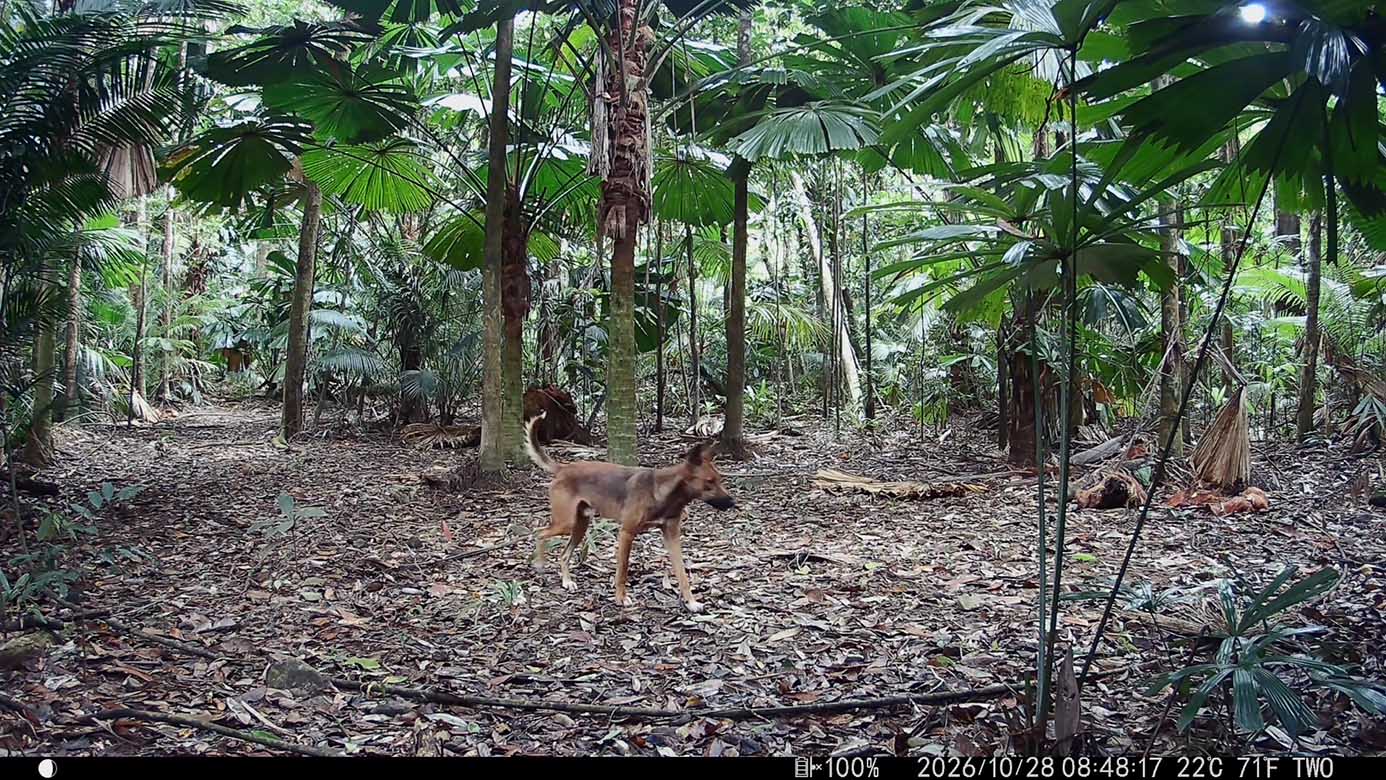
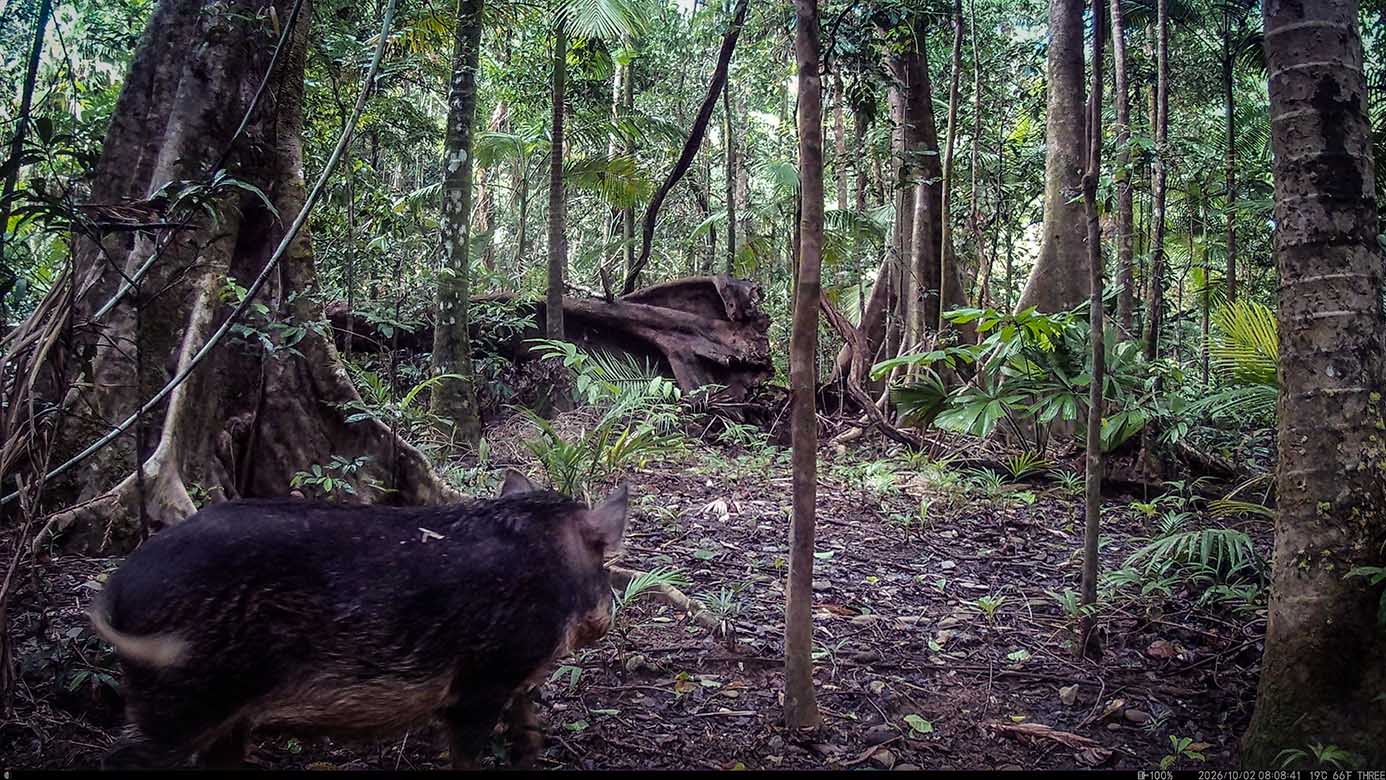
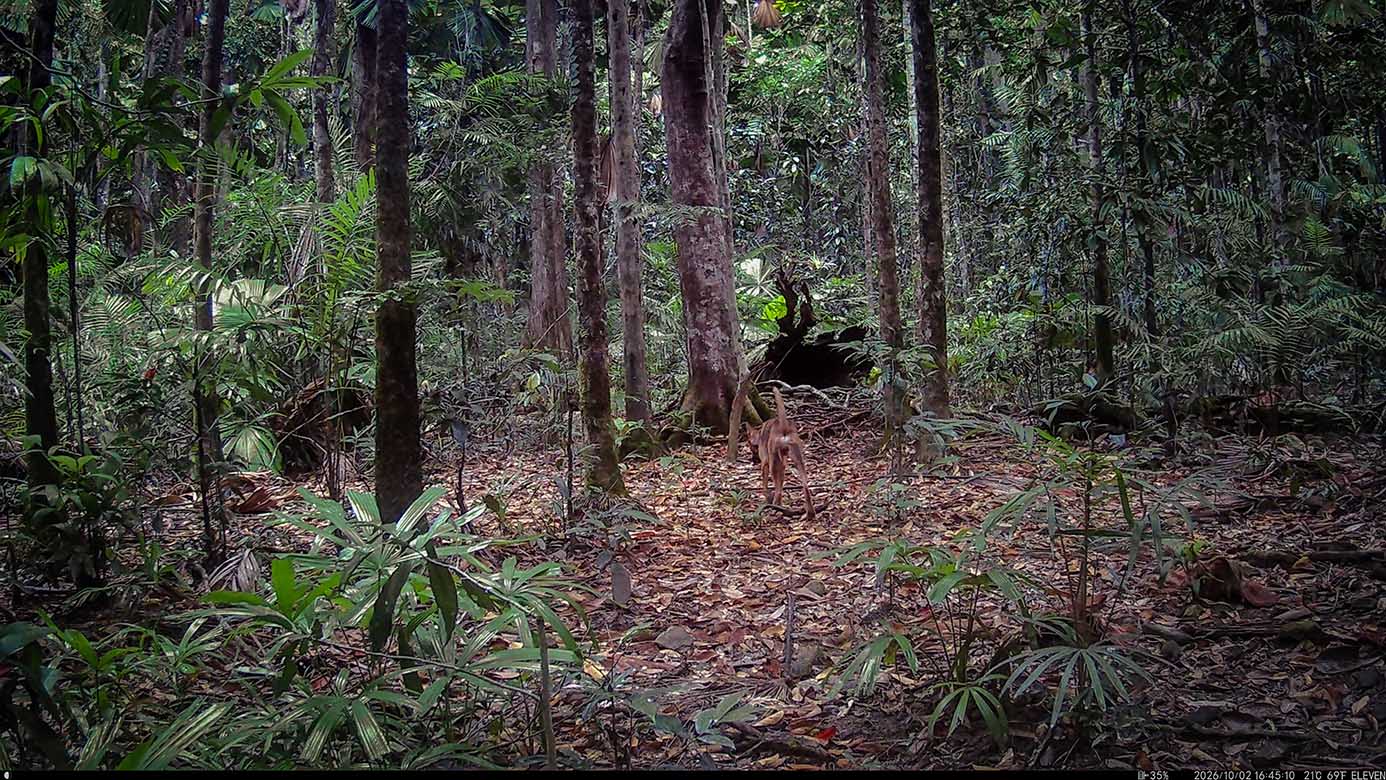
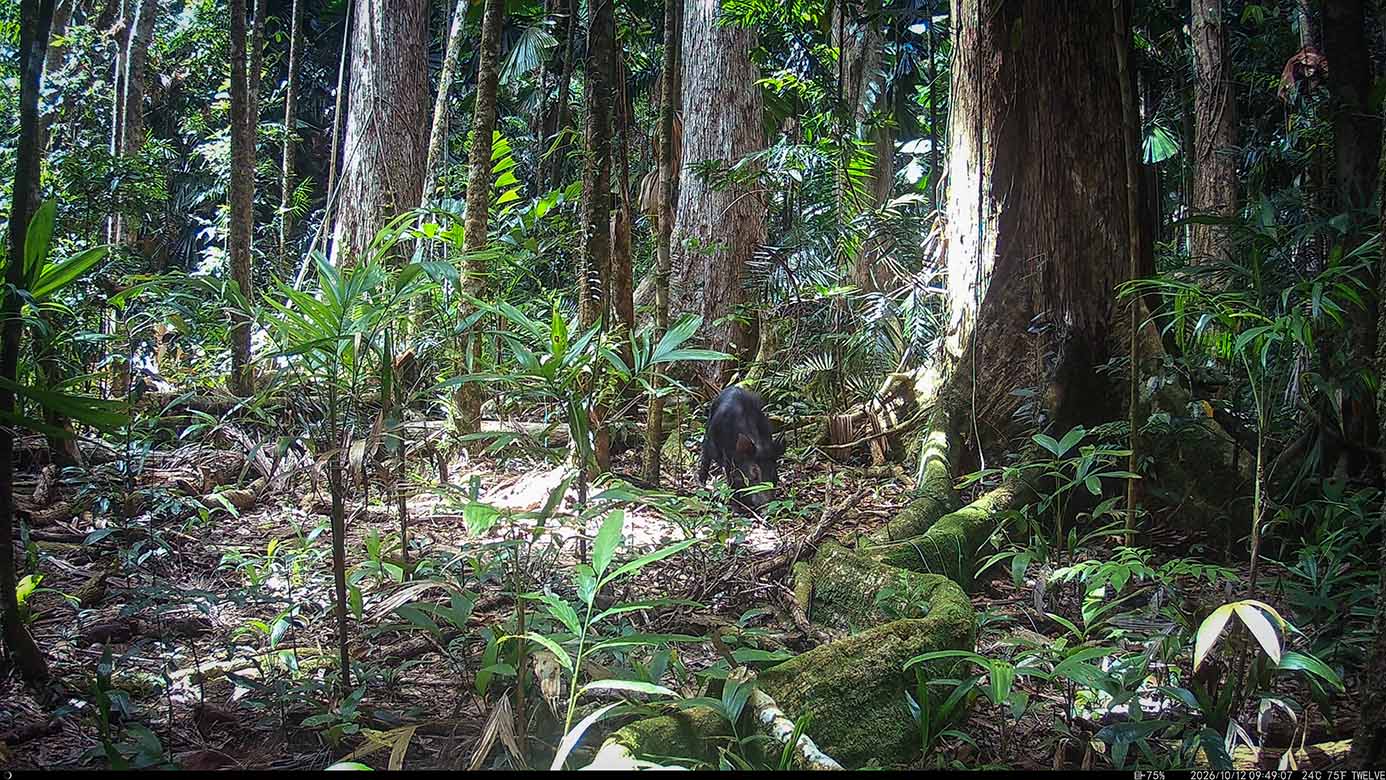
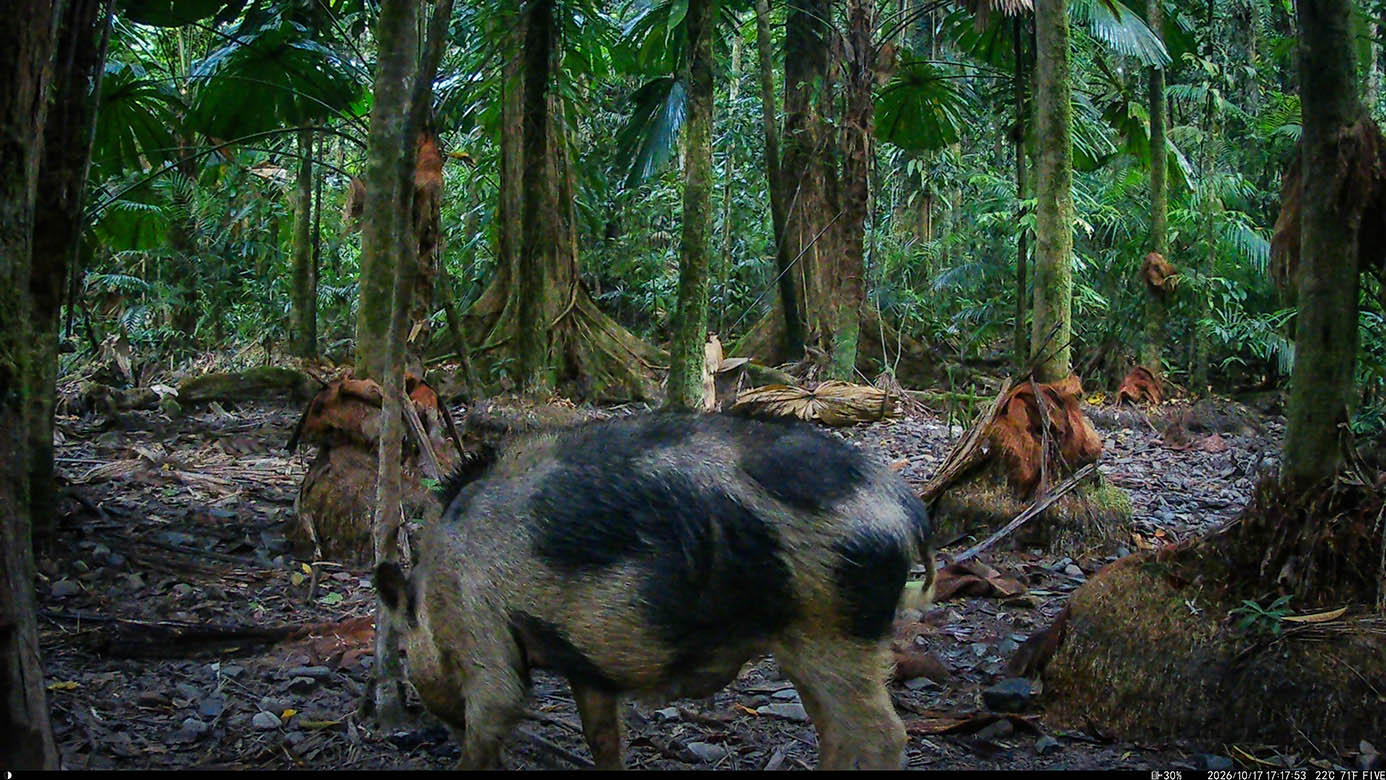
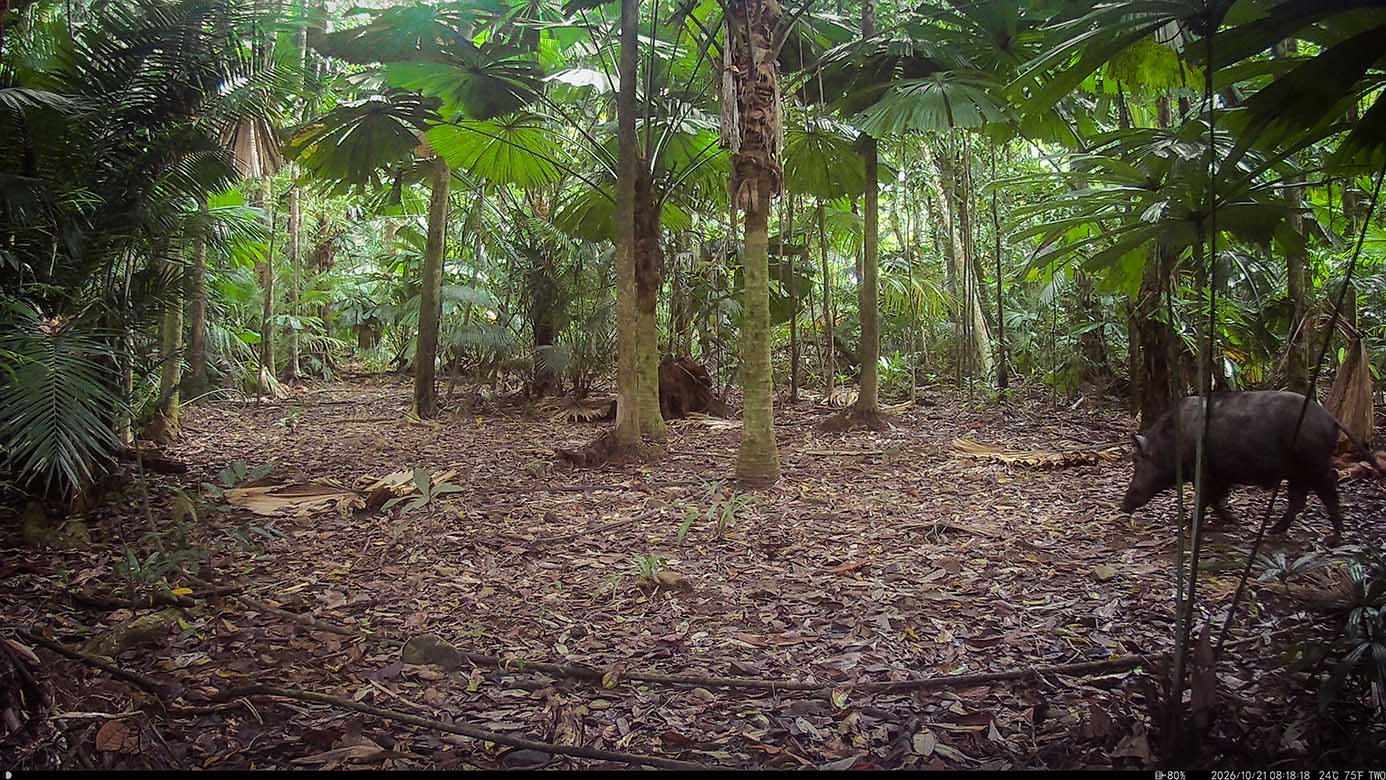
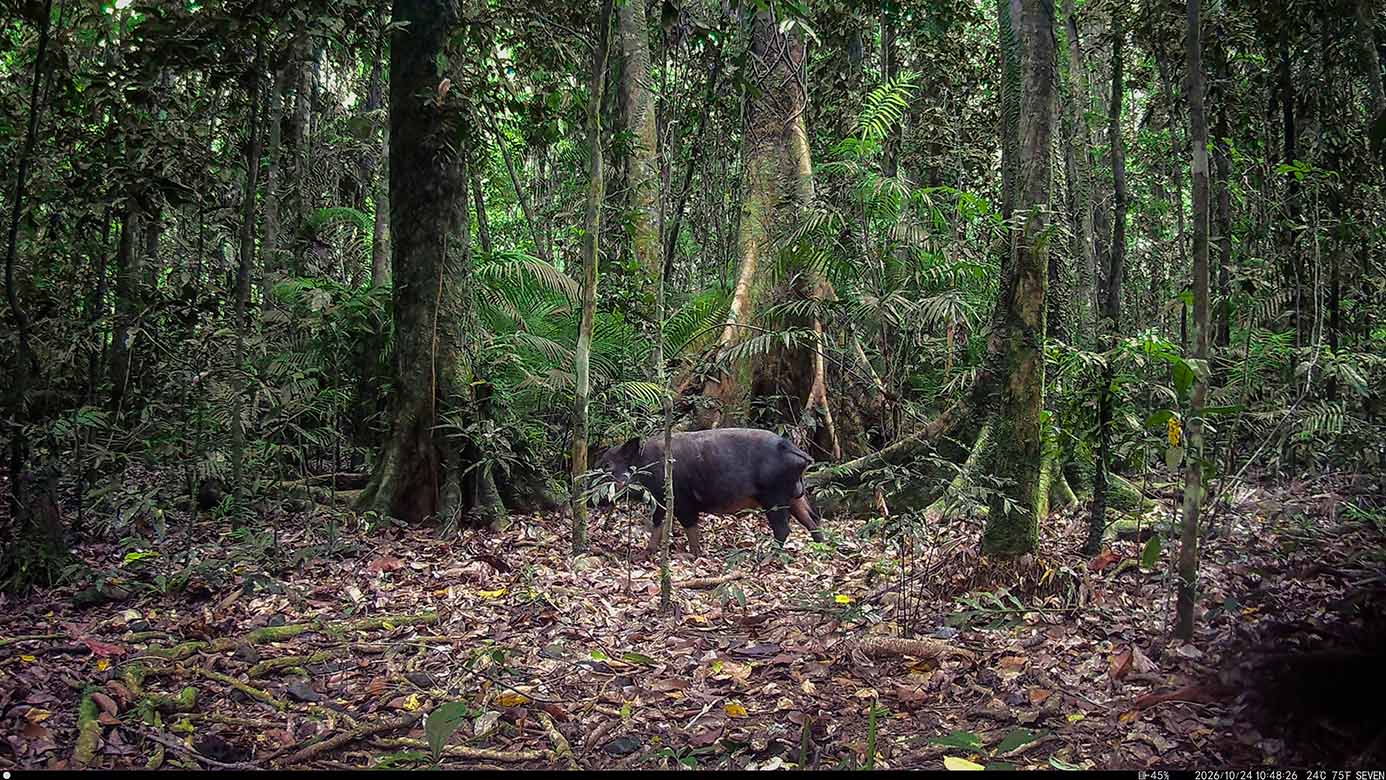
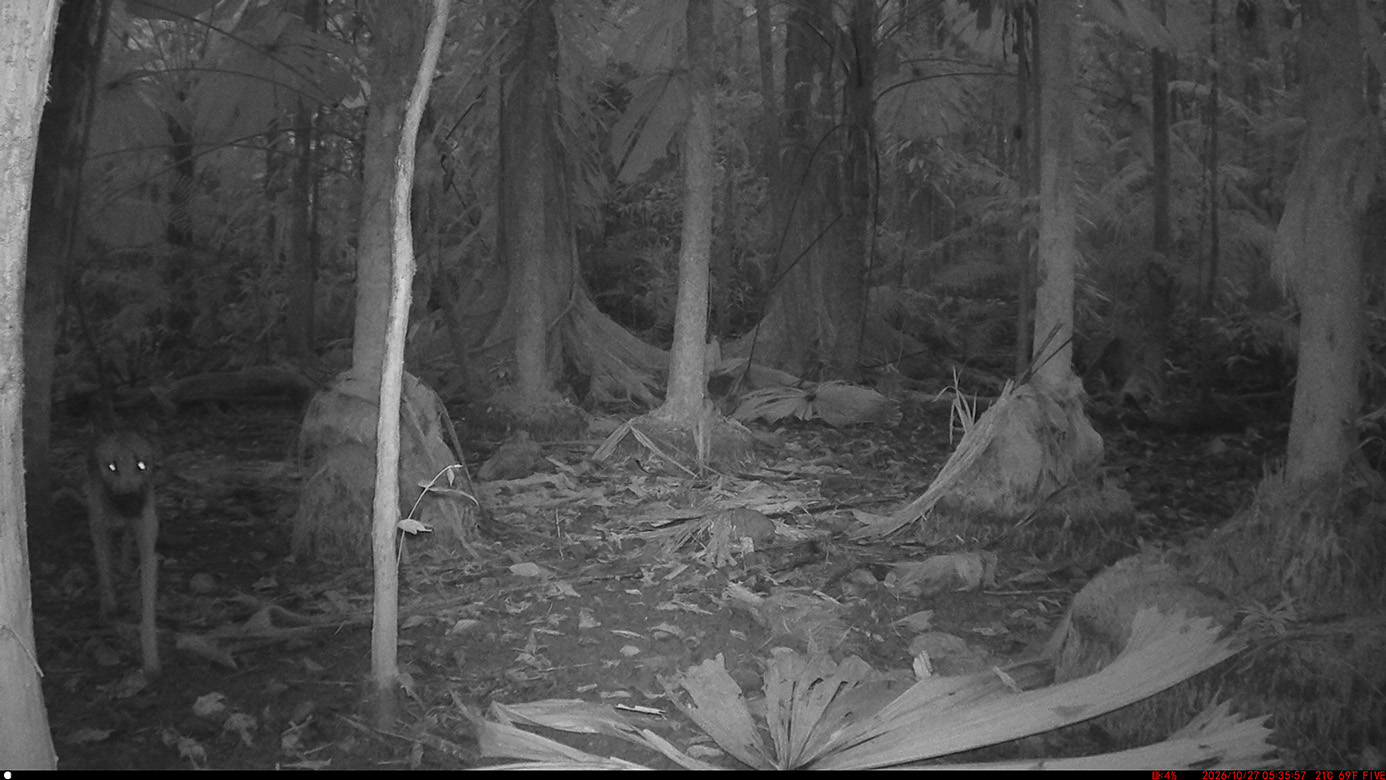
Camera Traps – October 2026 accrued 109-cassowaries, 24-dingoes and 67-feral pigs. Against the cumulative monthly average, cassowary numbers rose by 7%, dingo numbers decreased by 46% and feral-pig numbers also fell by 67%. Against October 2025, cassowary sightings increased by 98%, dingo numbers dropped by 44% and feral-pig sightings rose by 16%.
Image highlights from Camera Traps – October 2026
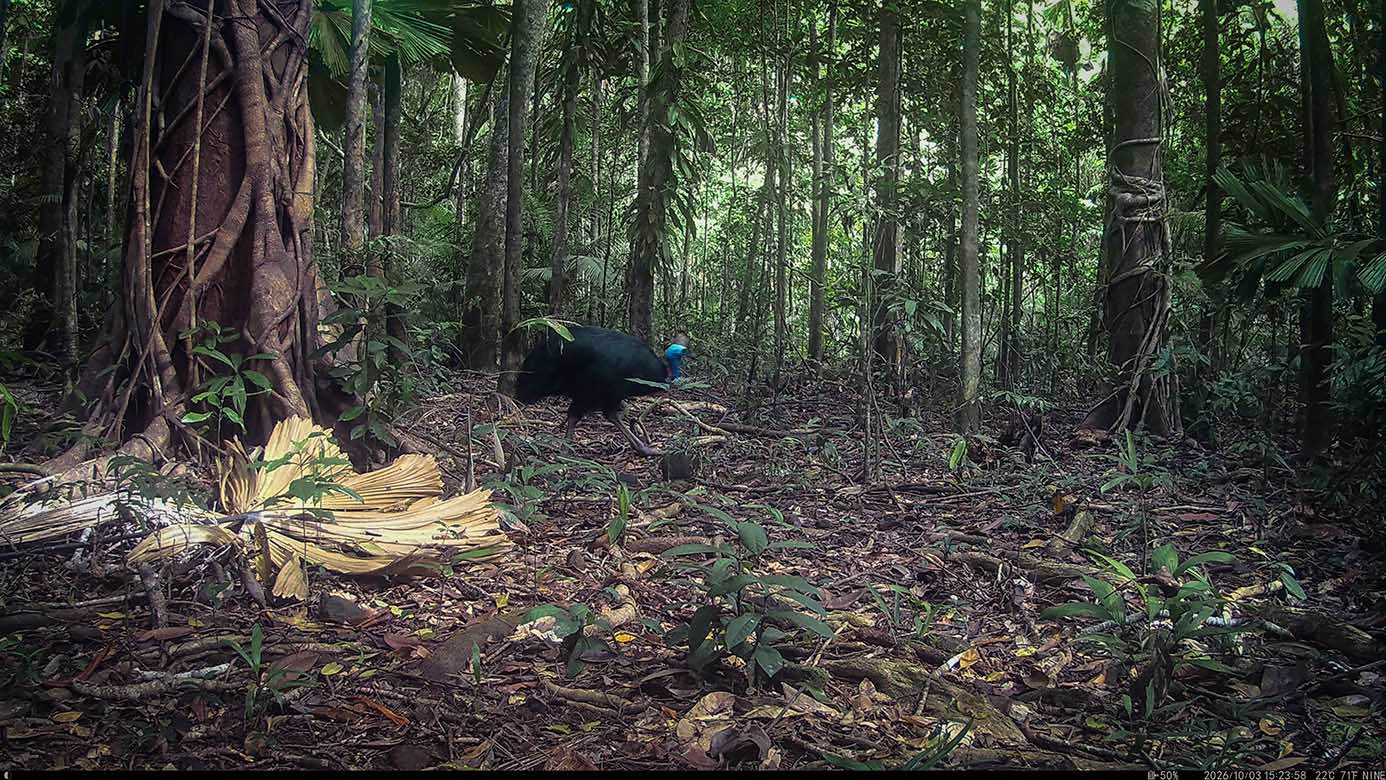
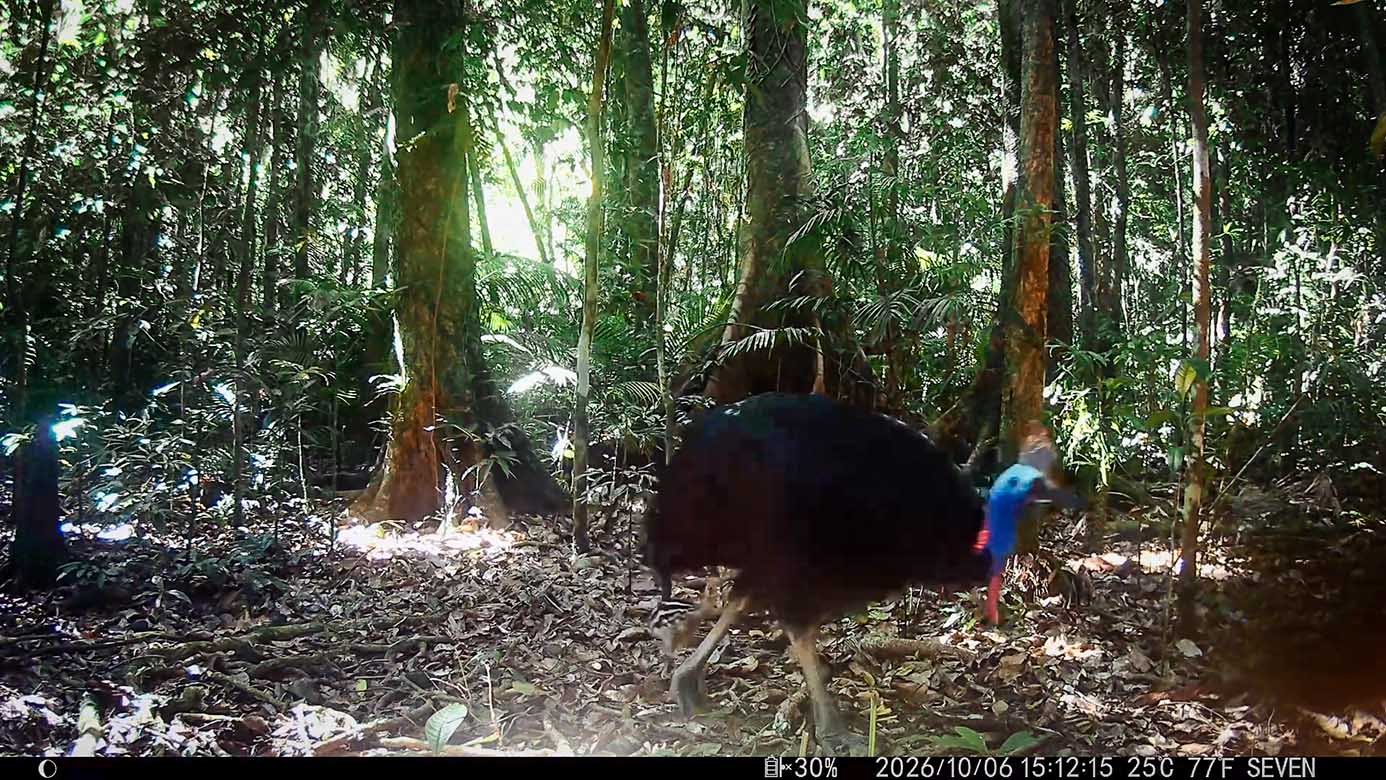
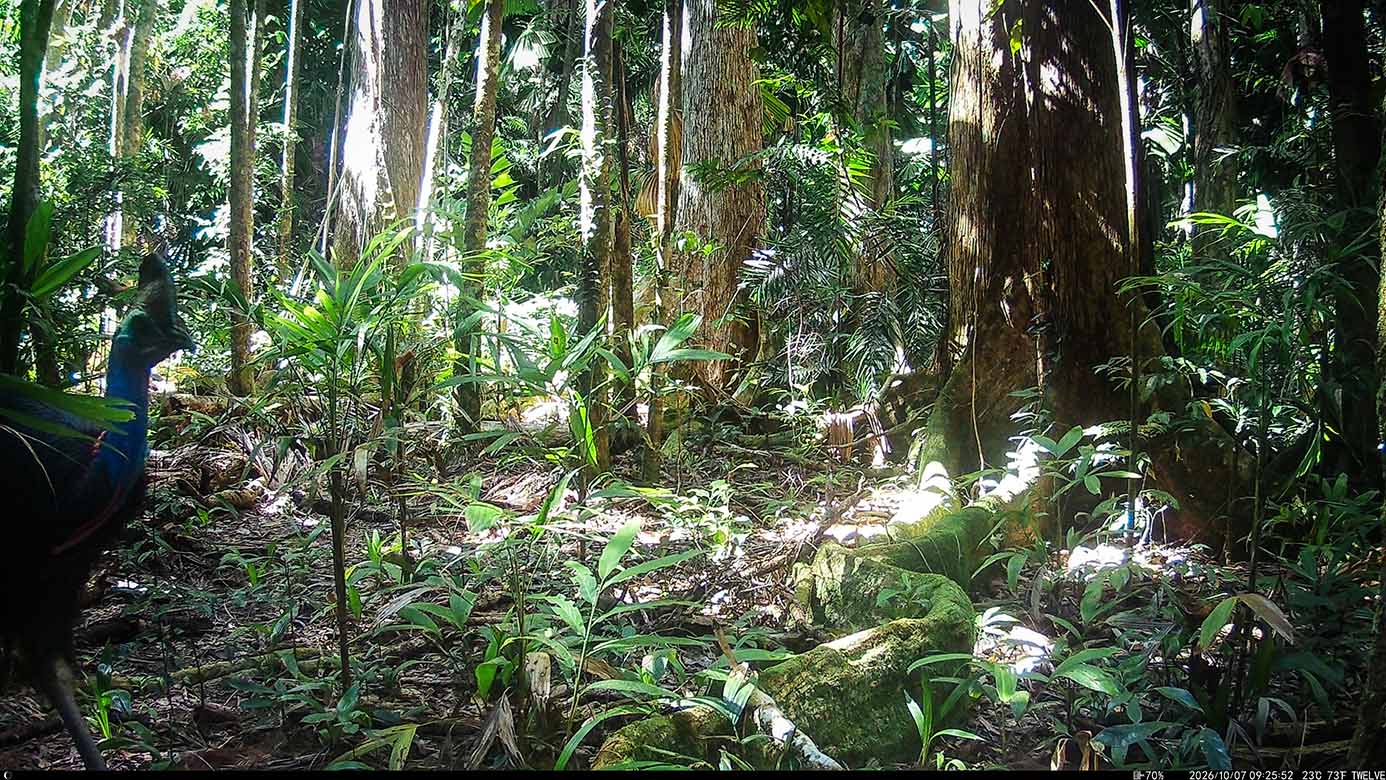
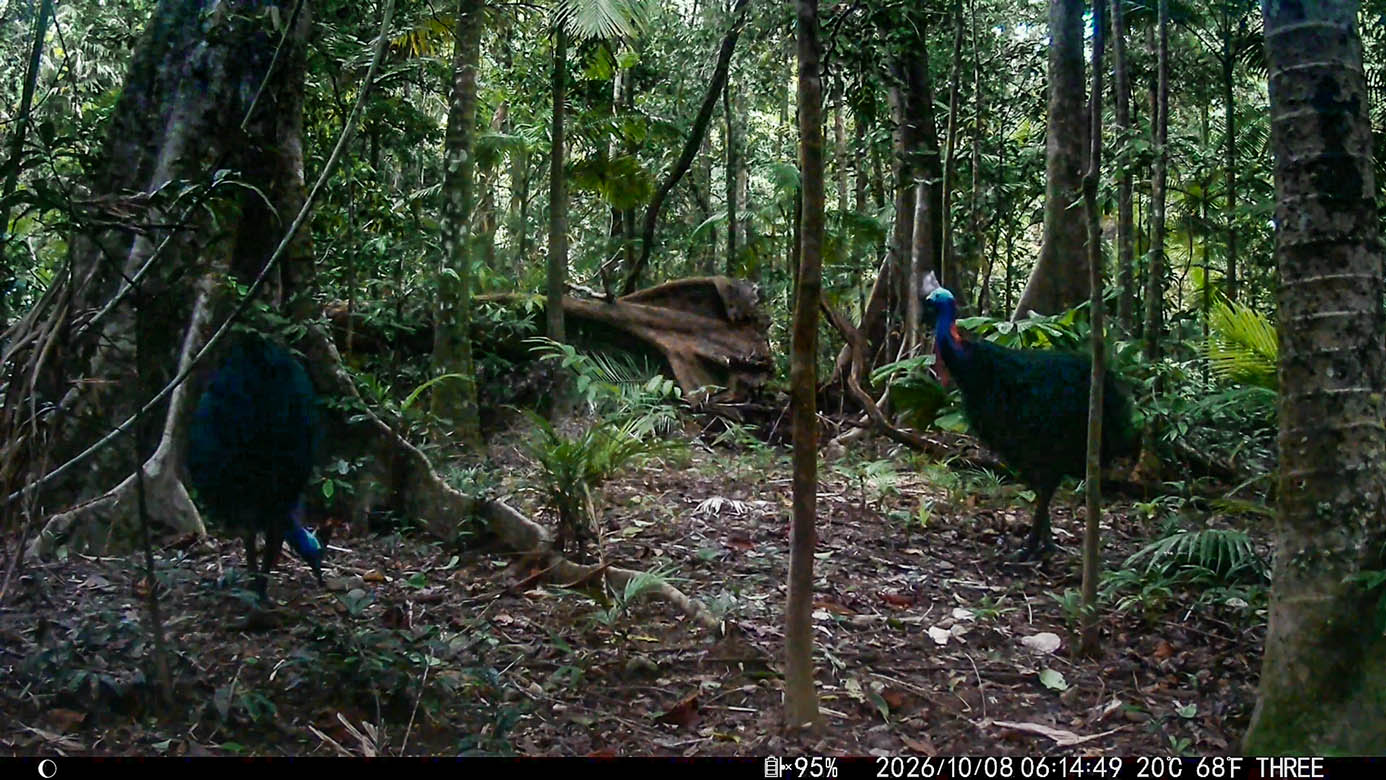
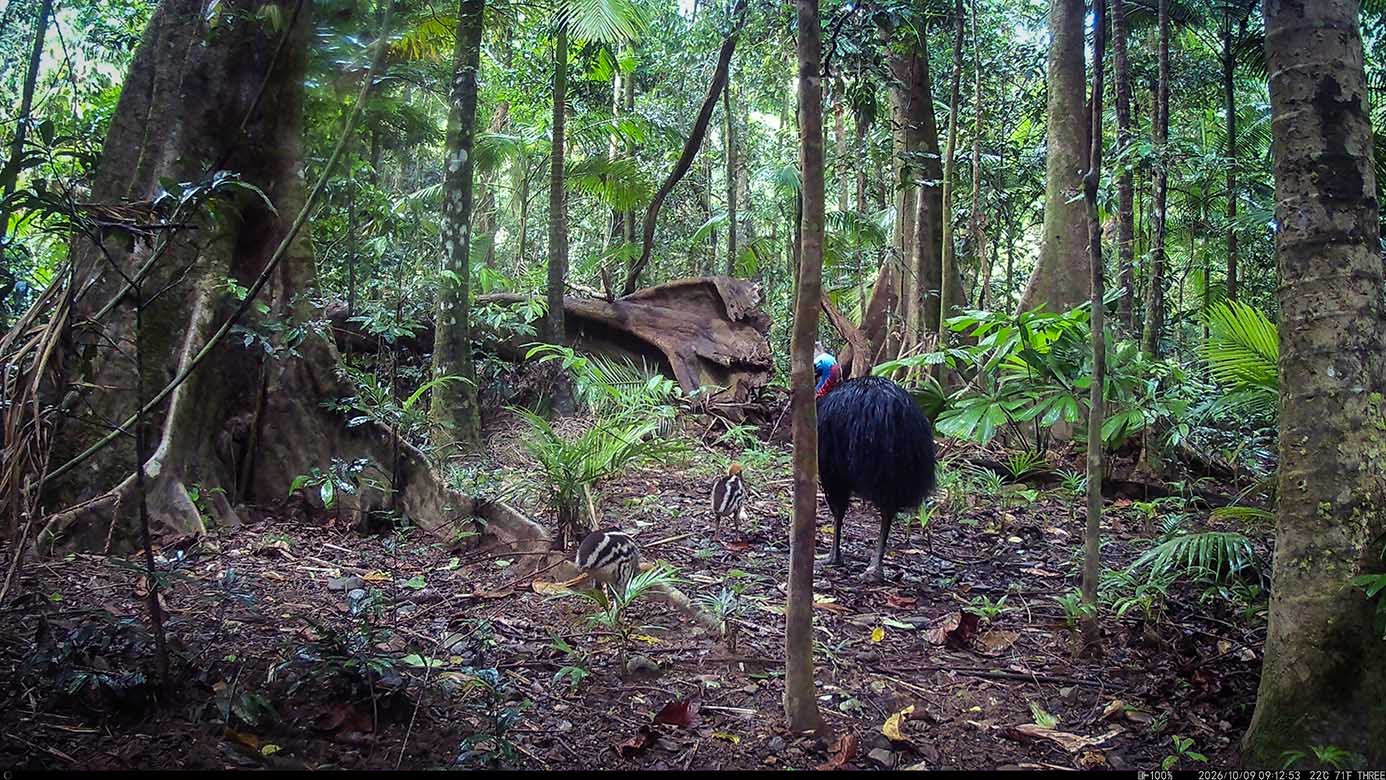
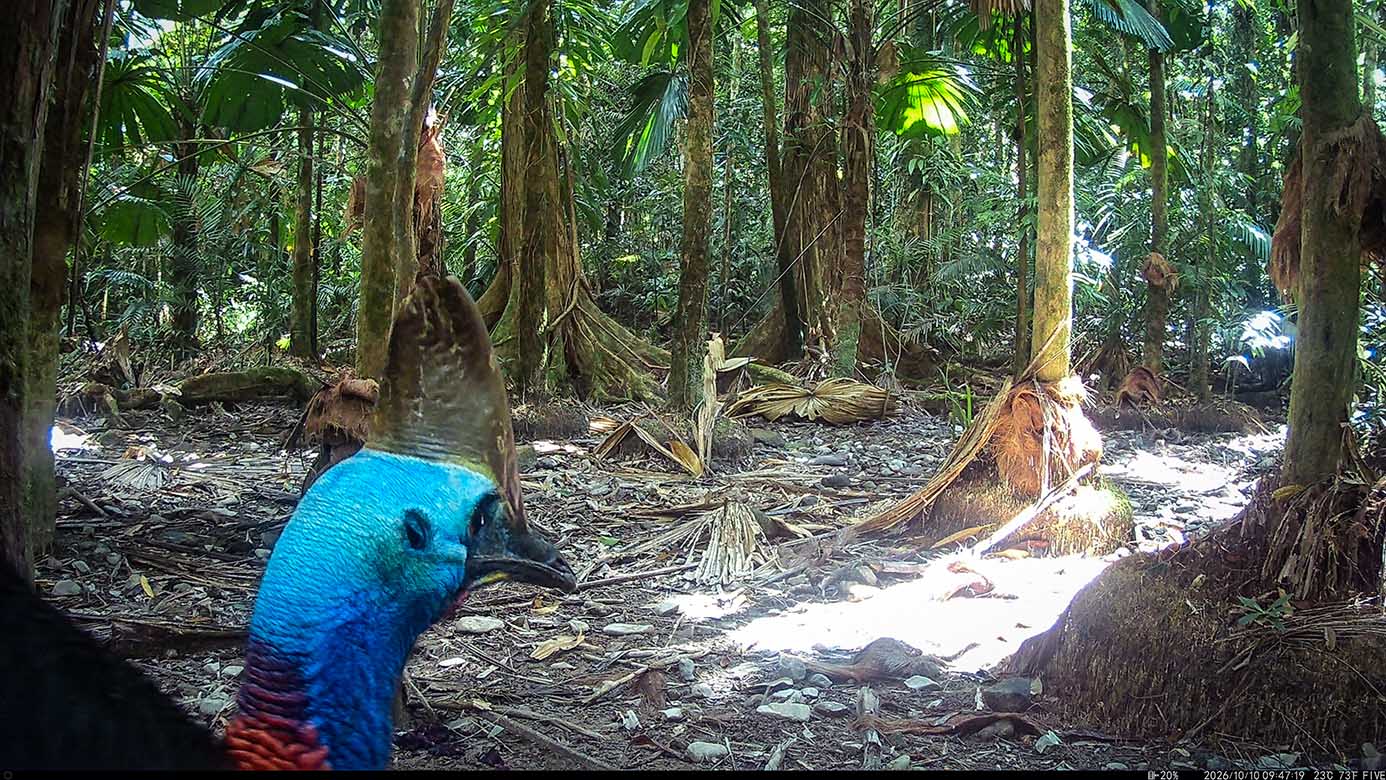
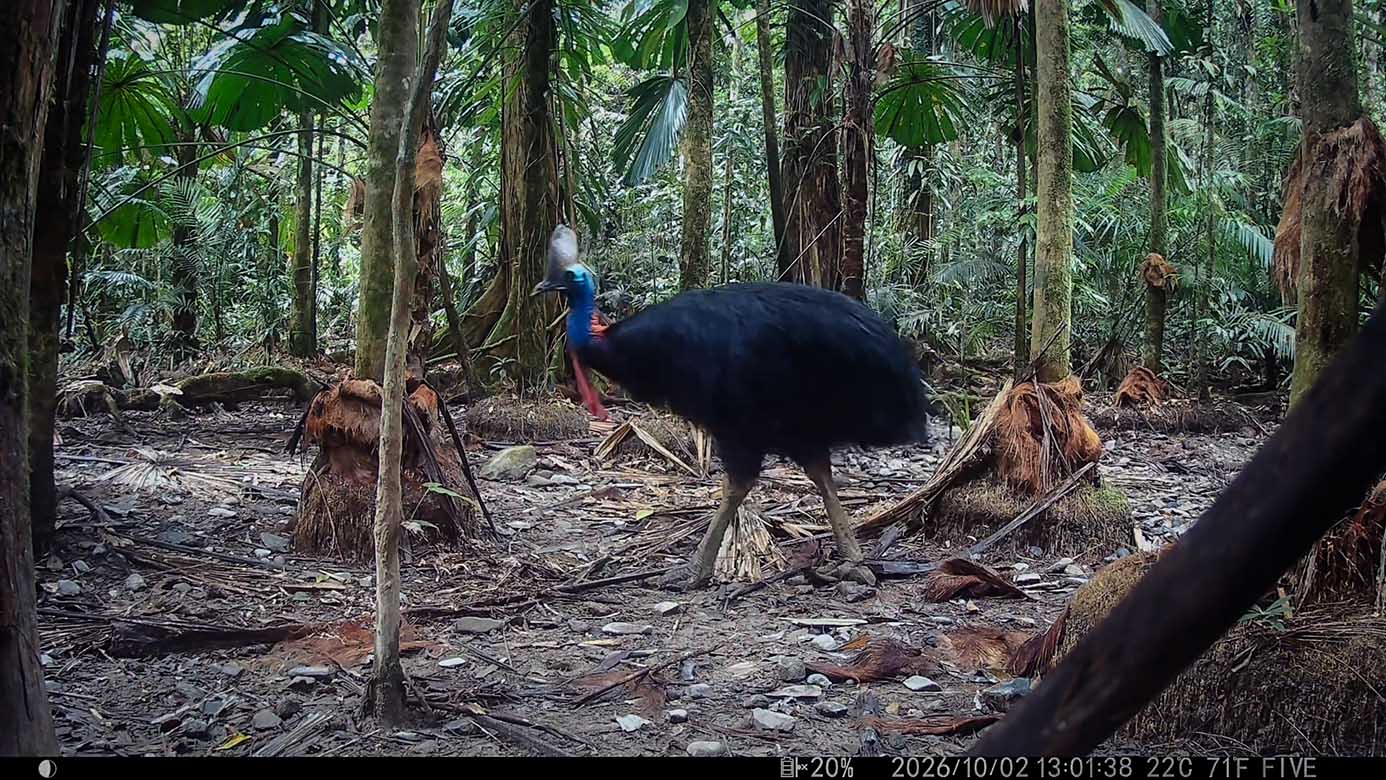
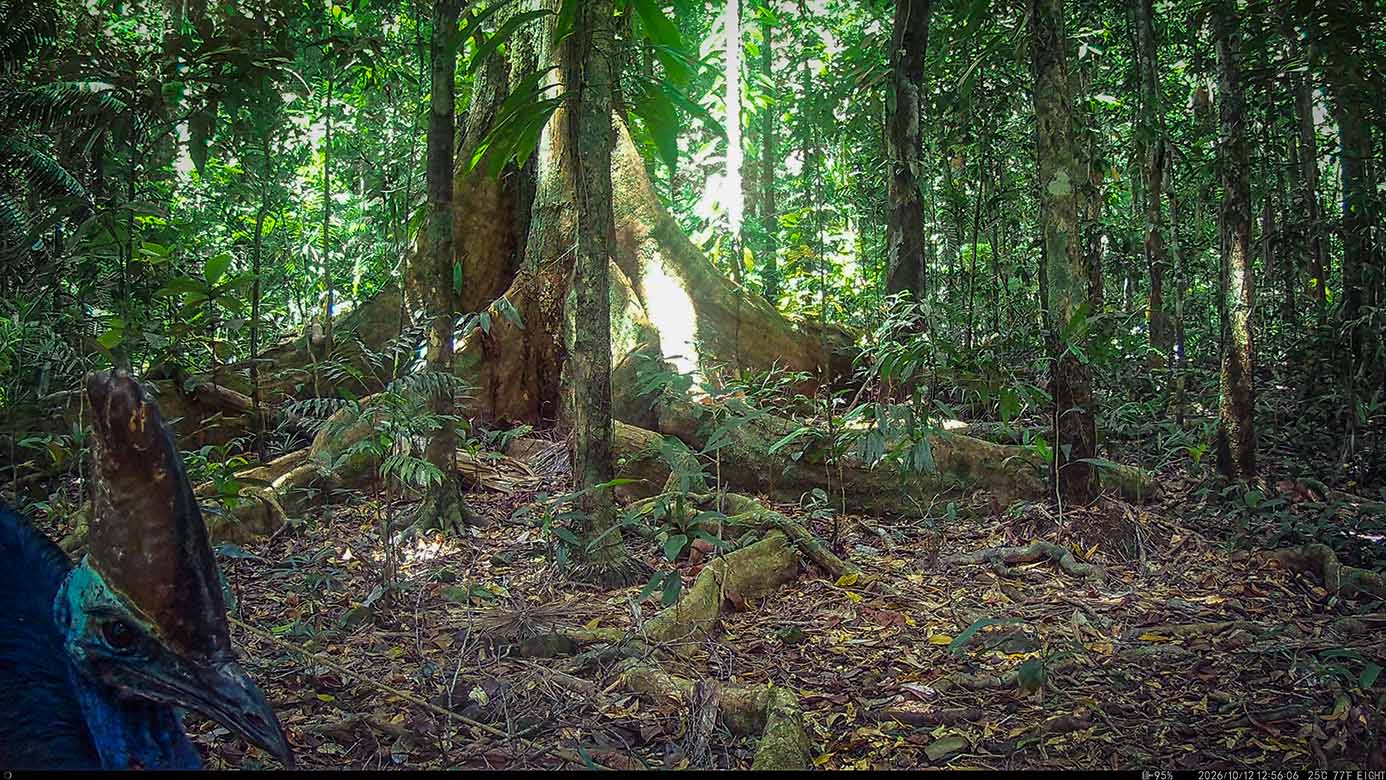
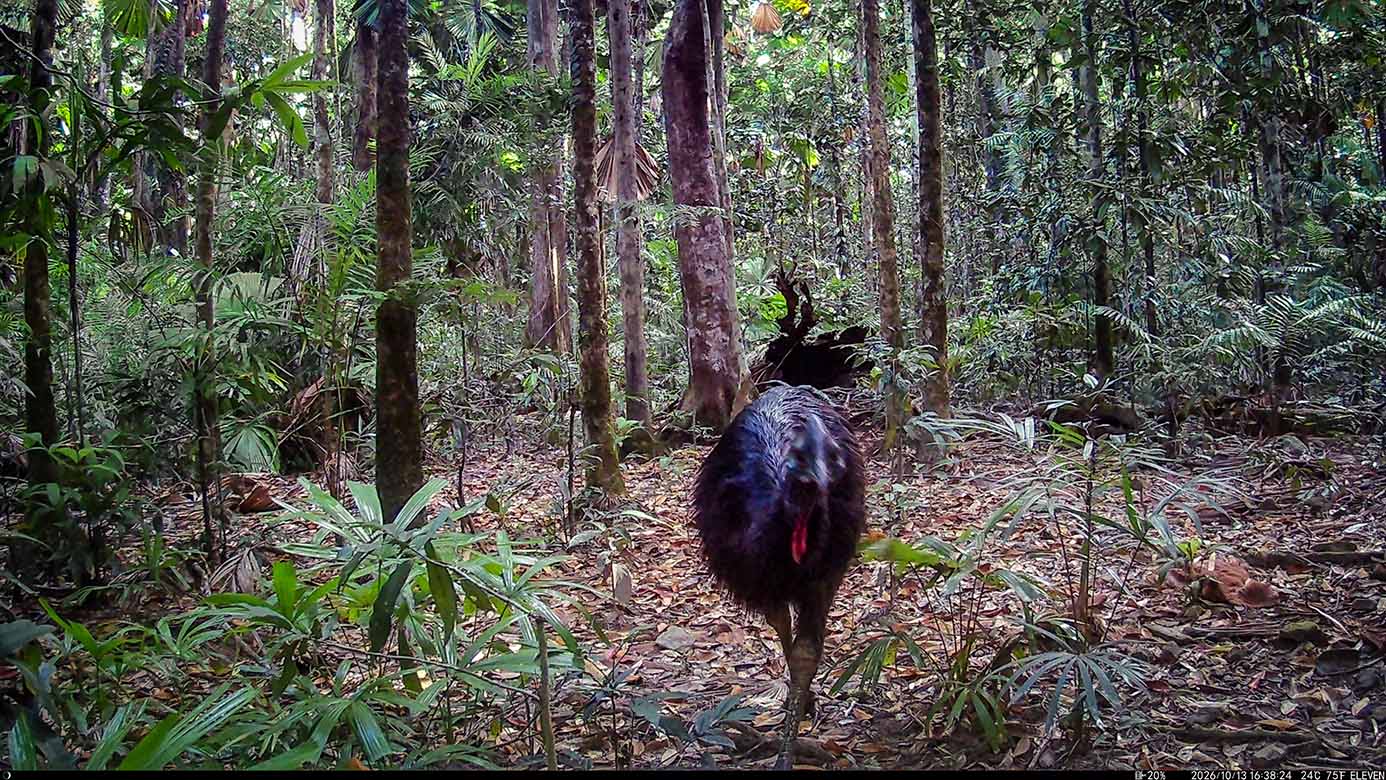
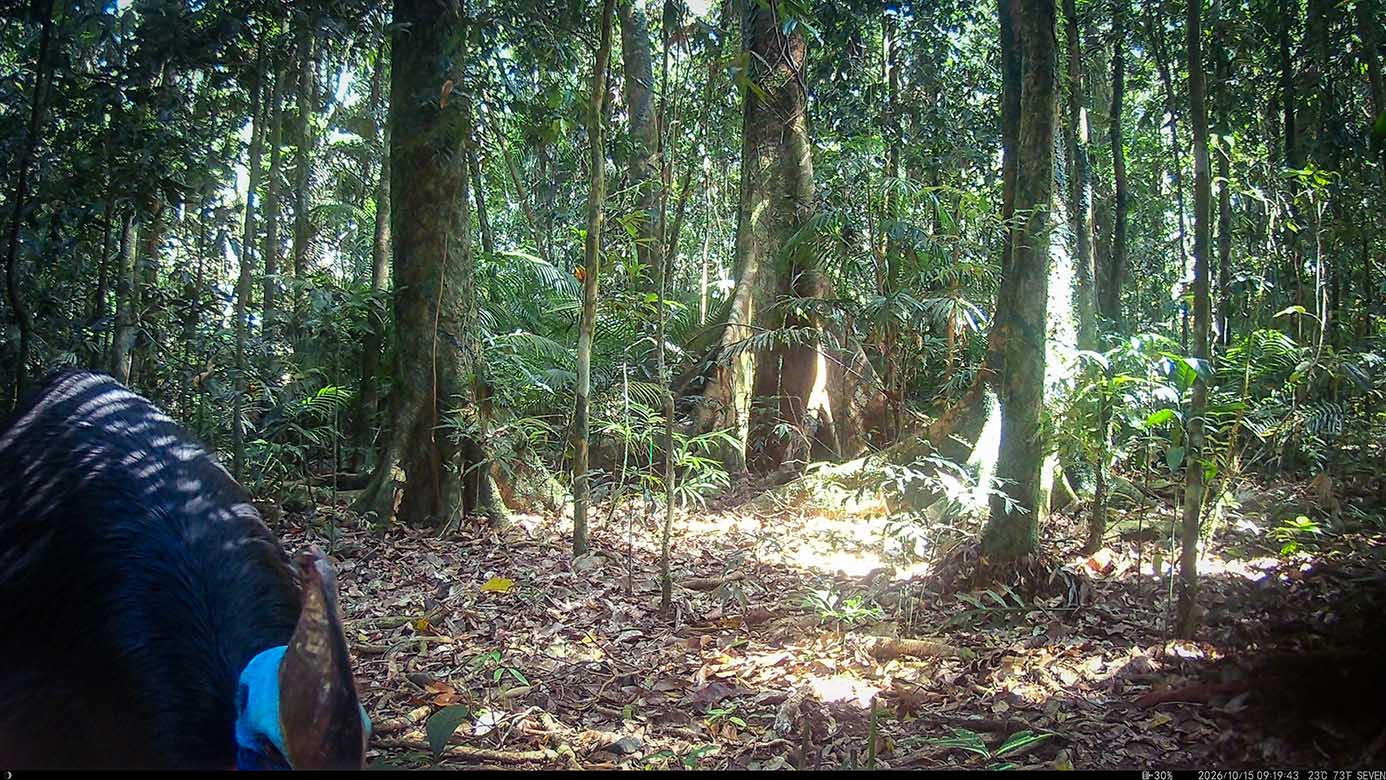
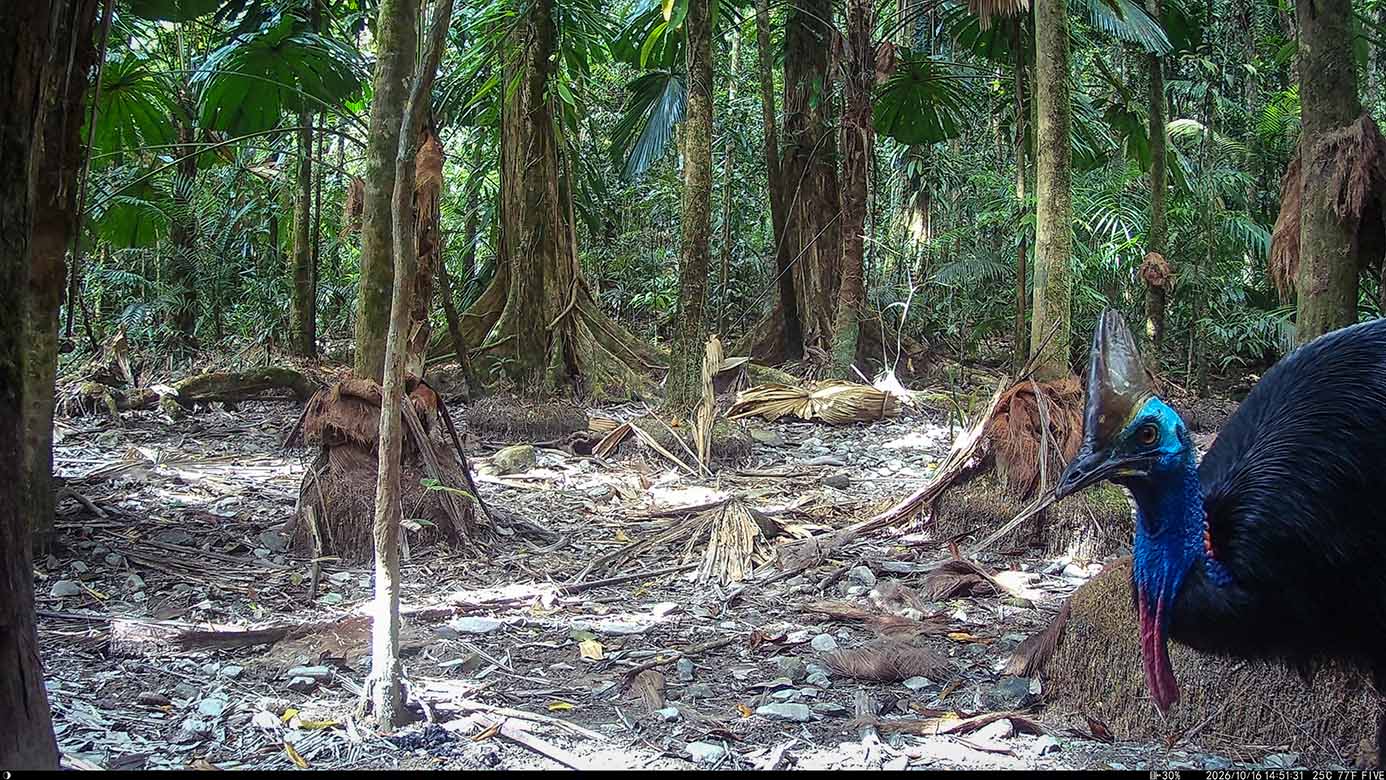
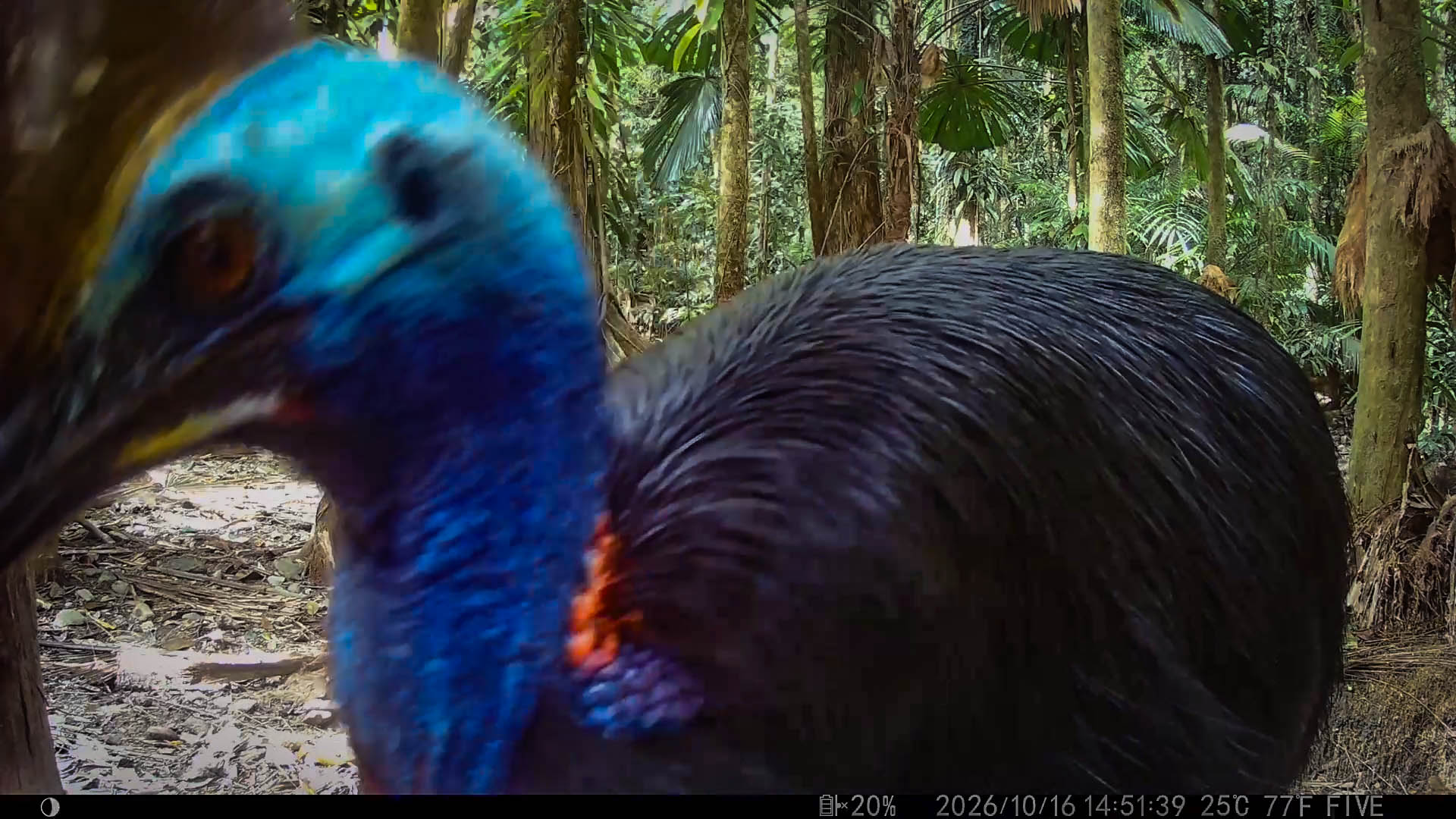
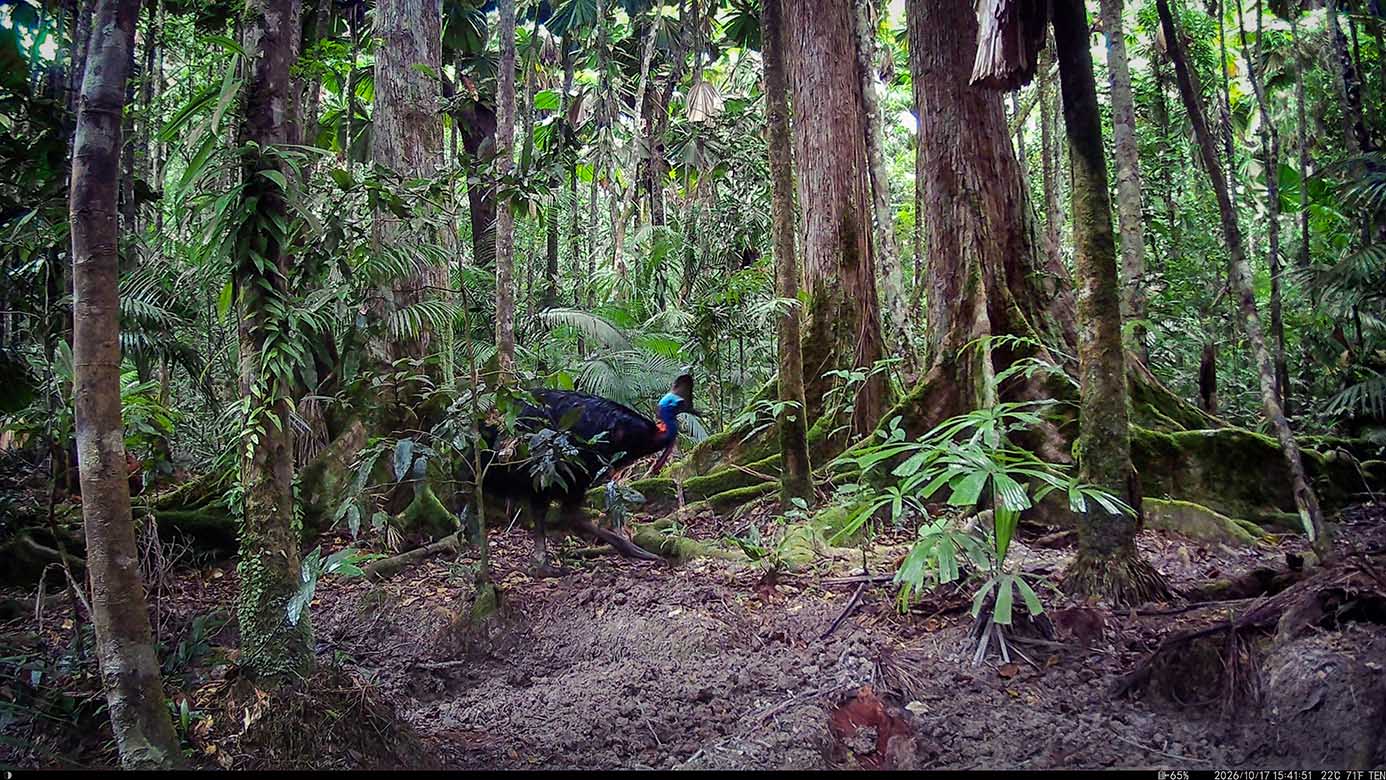
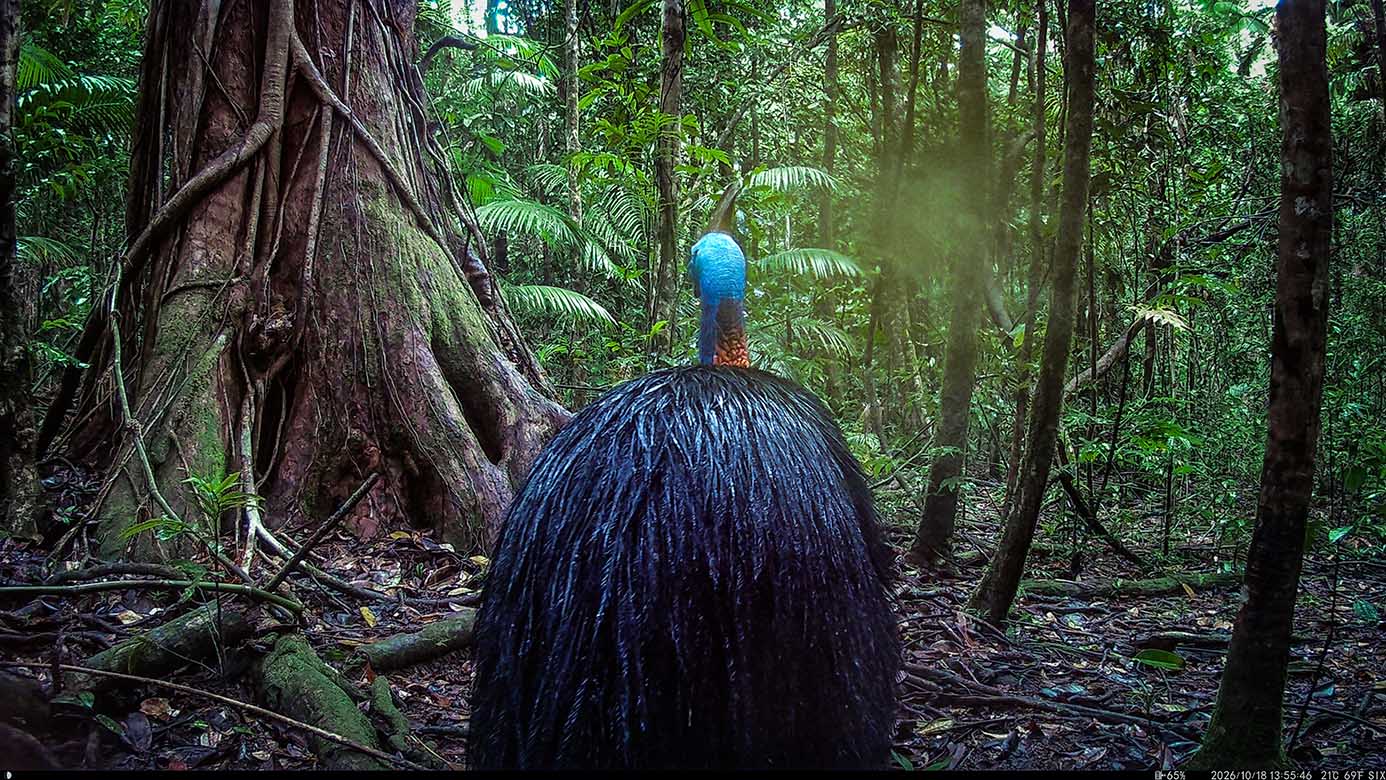
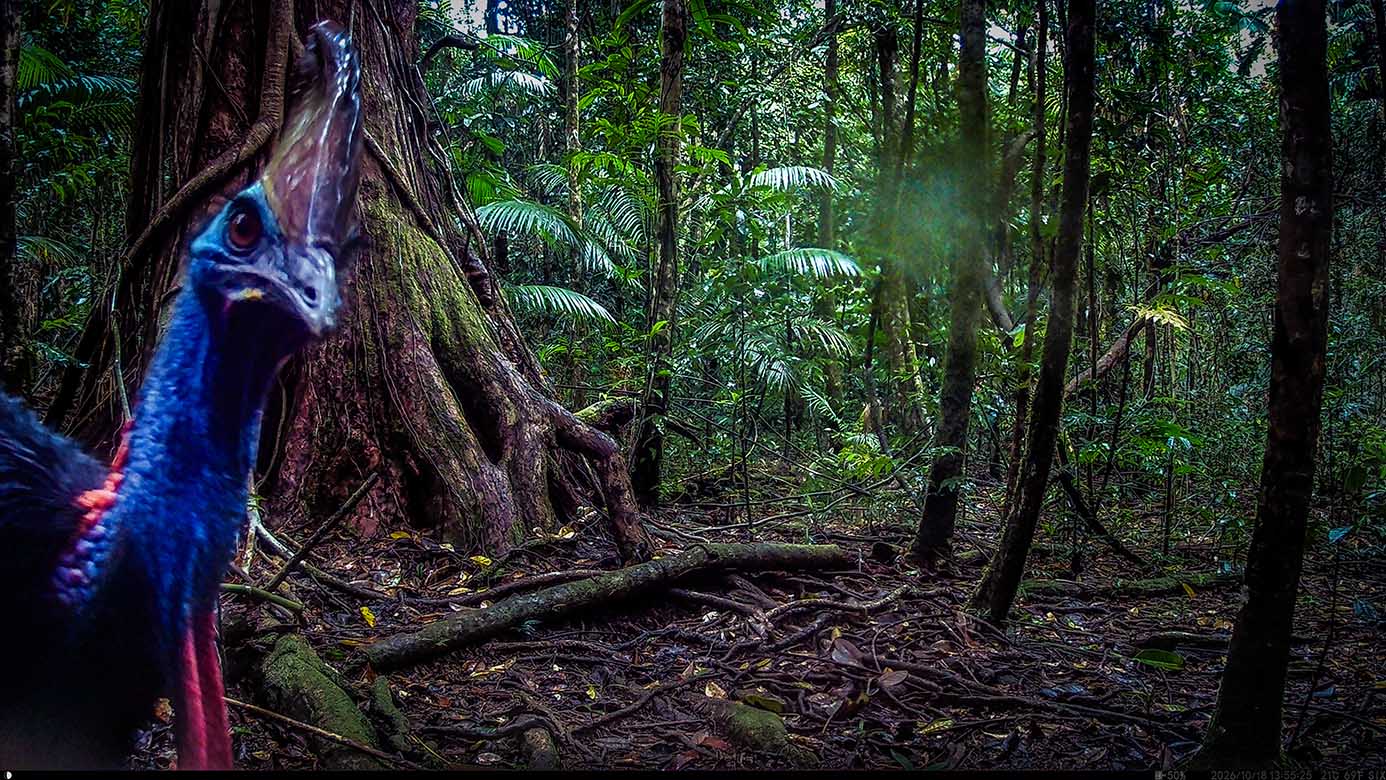
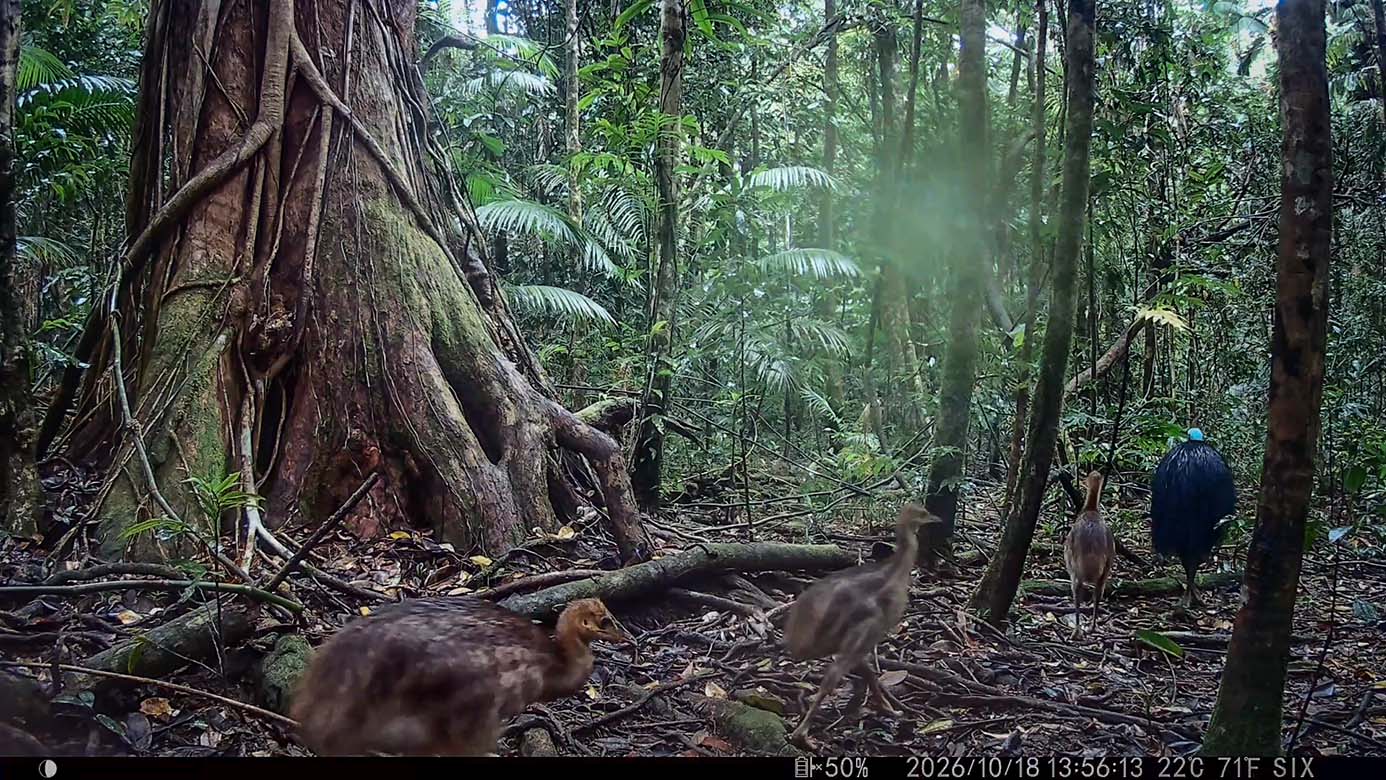

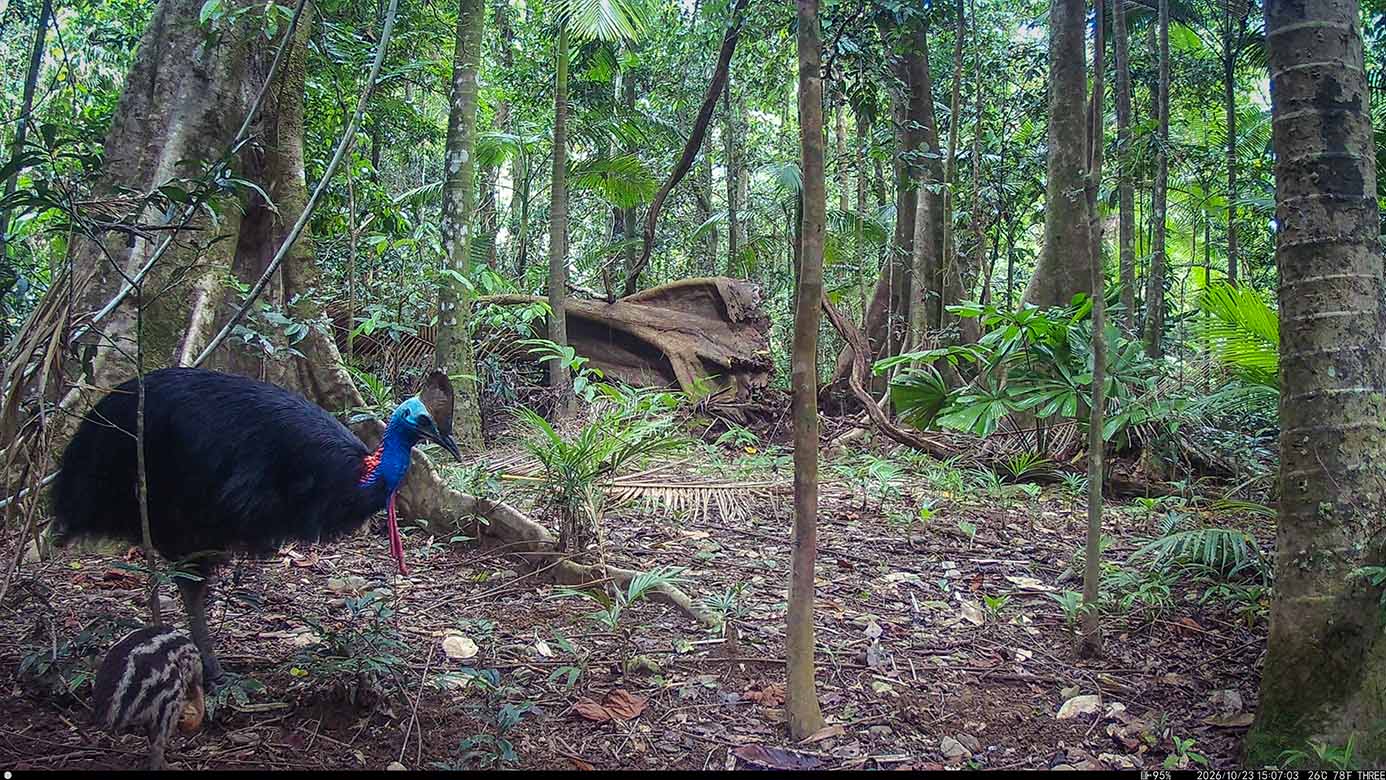
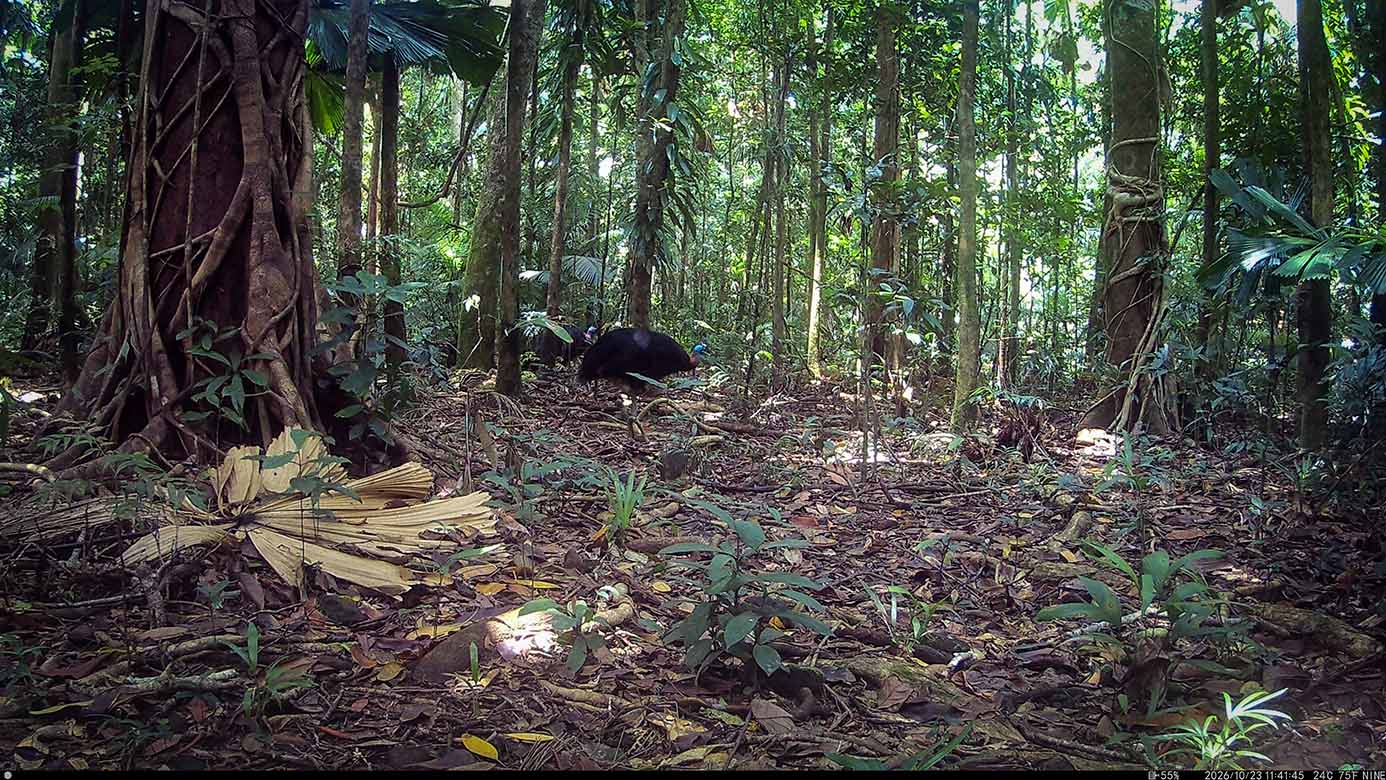
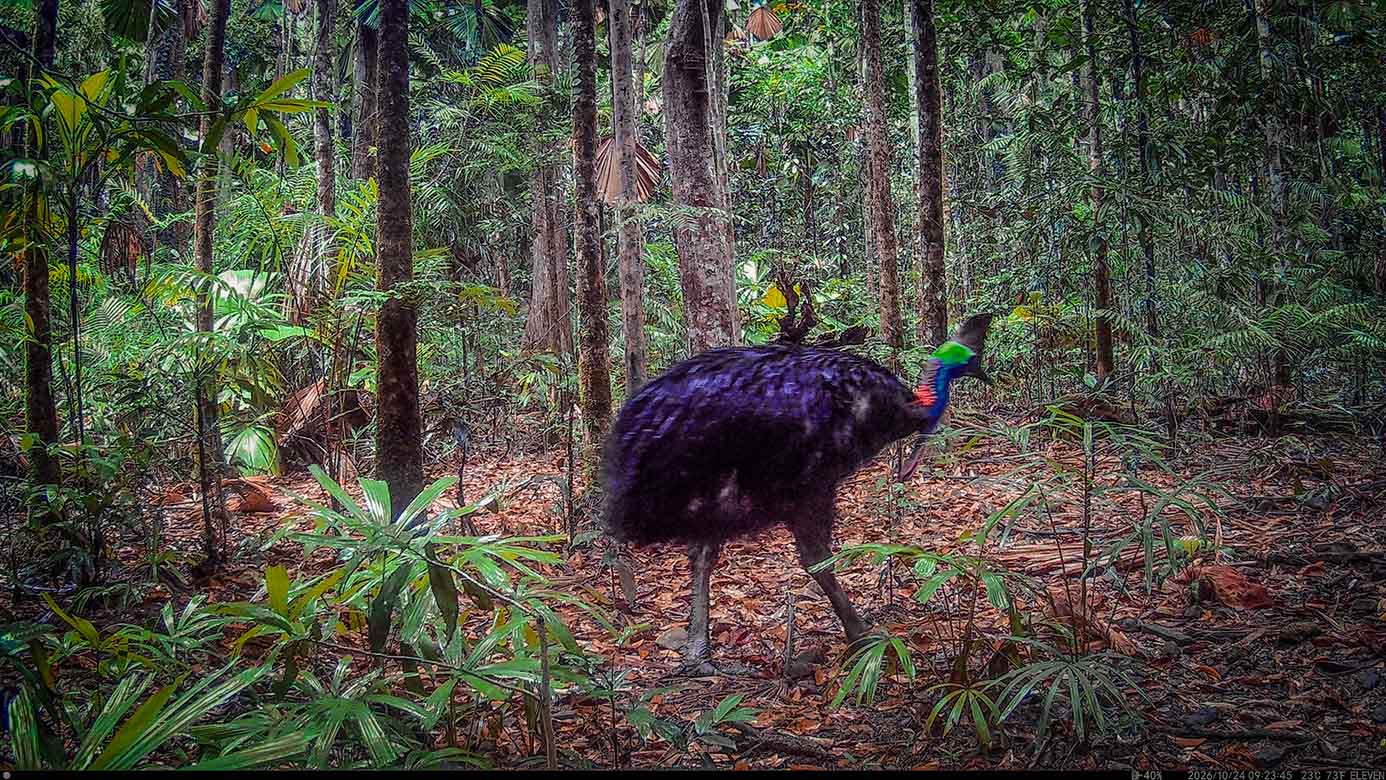
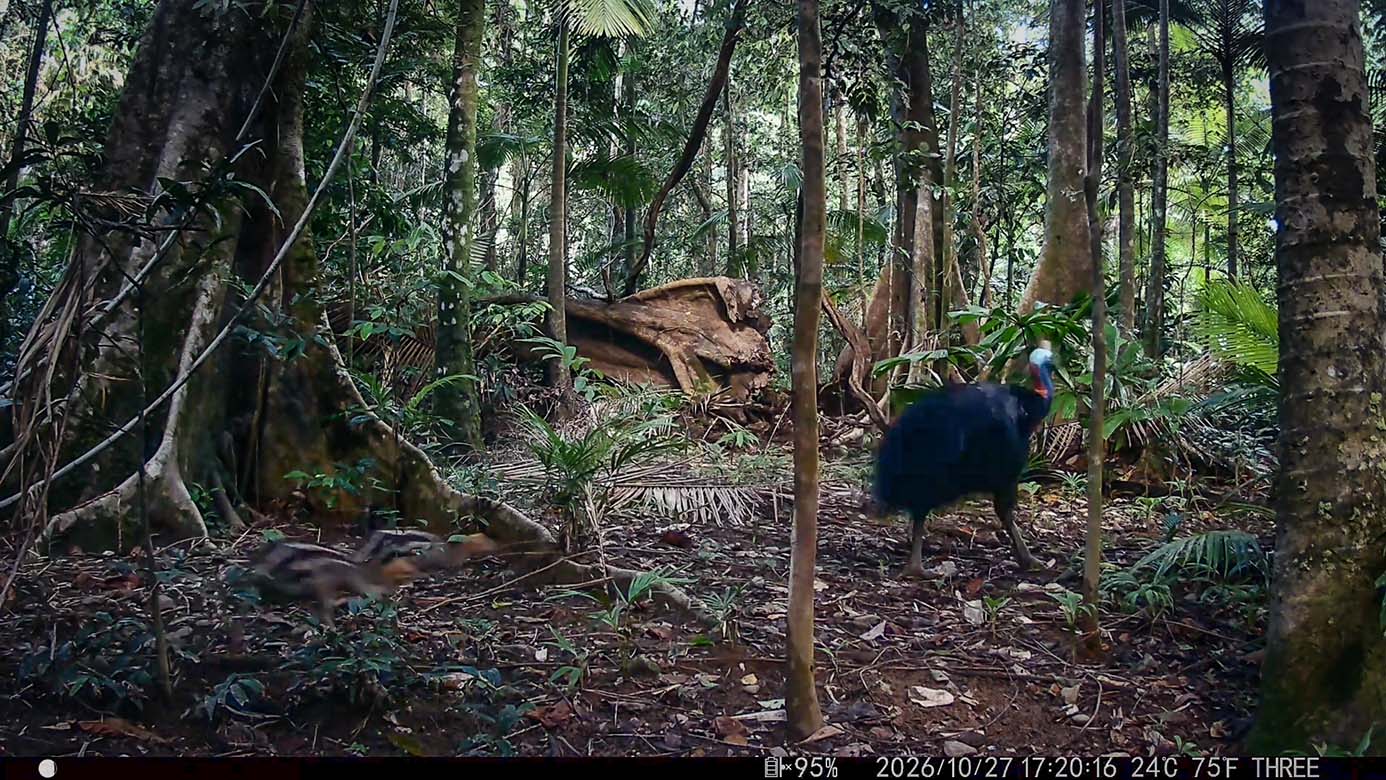
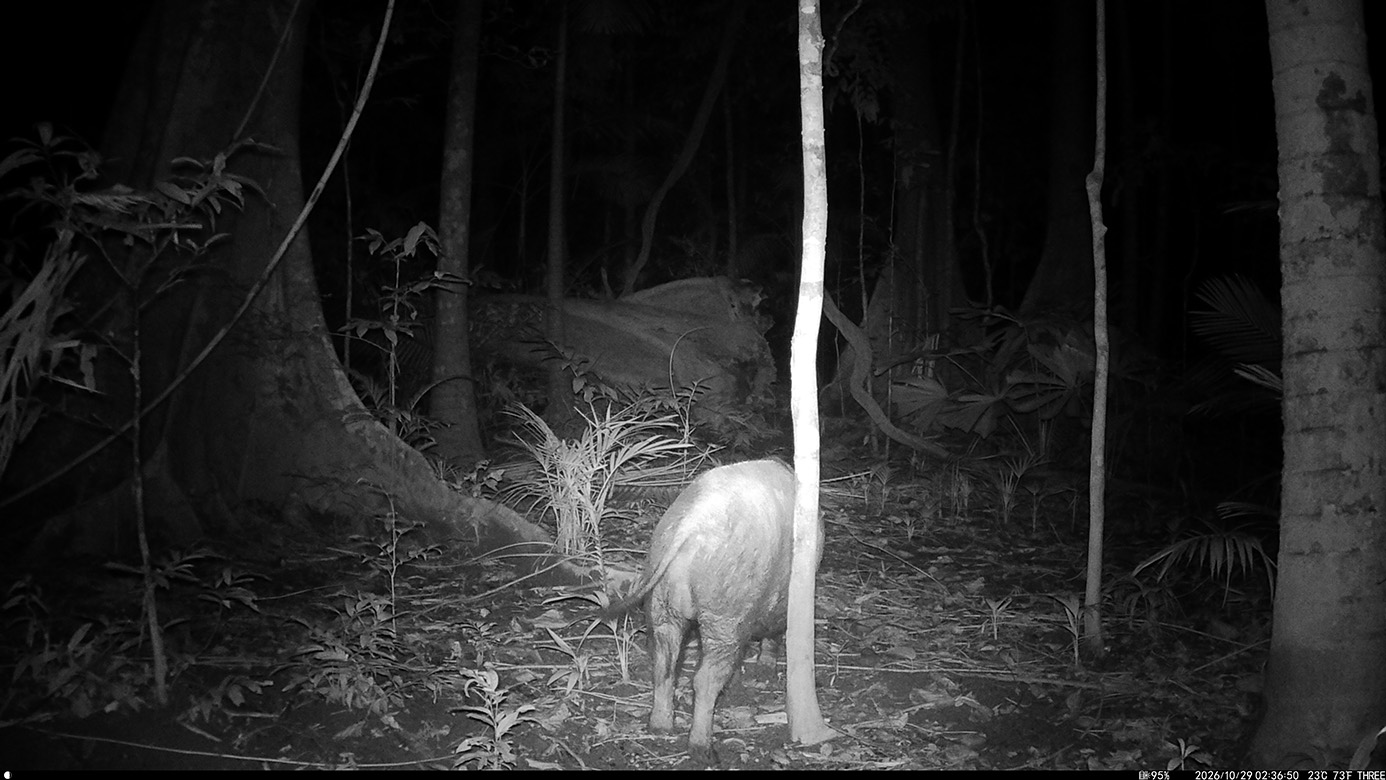
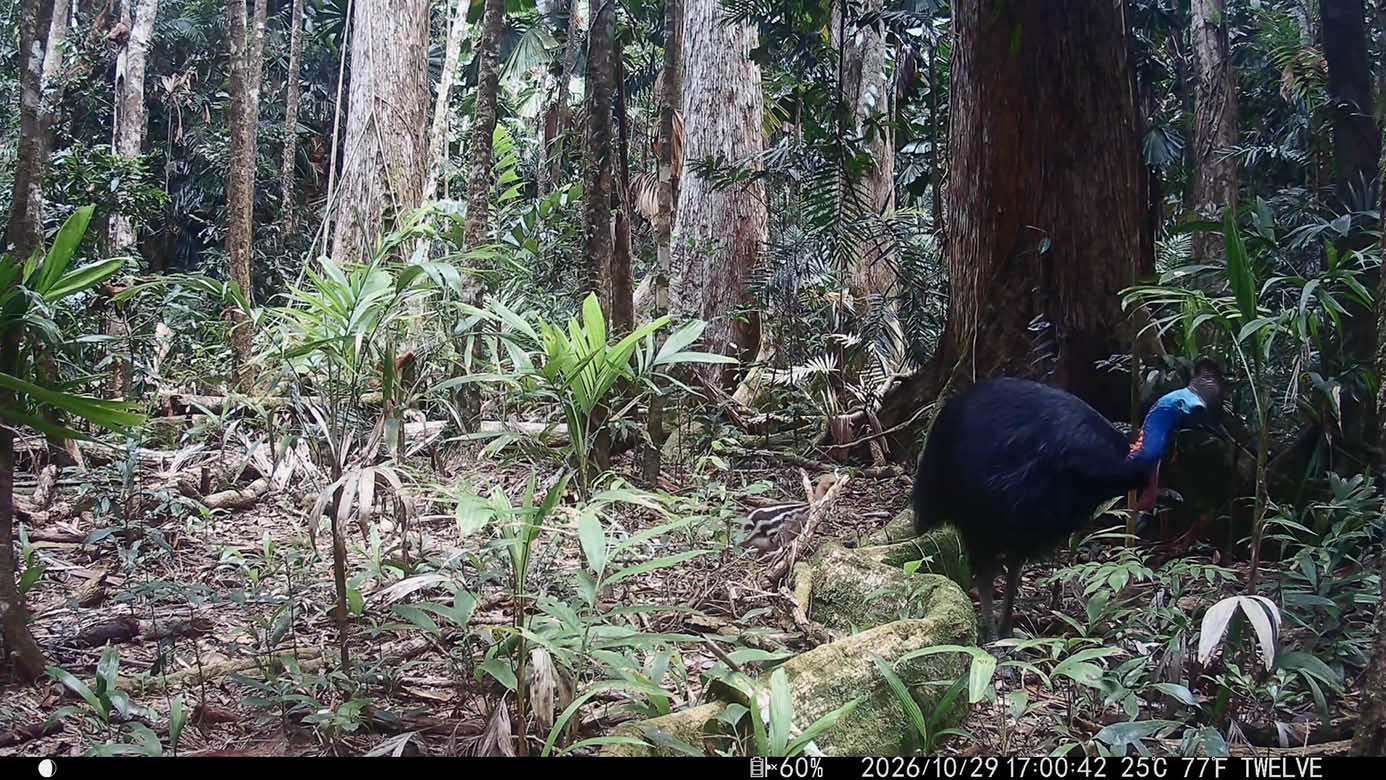
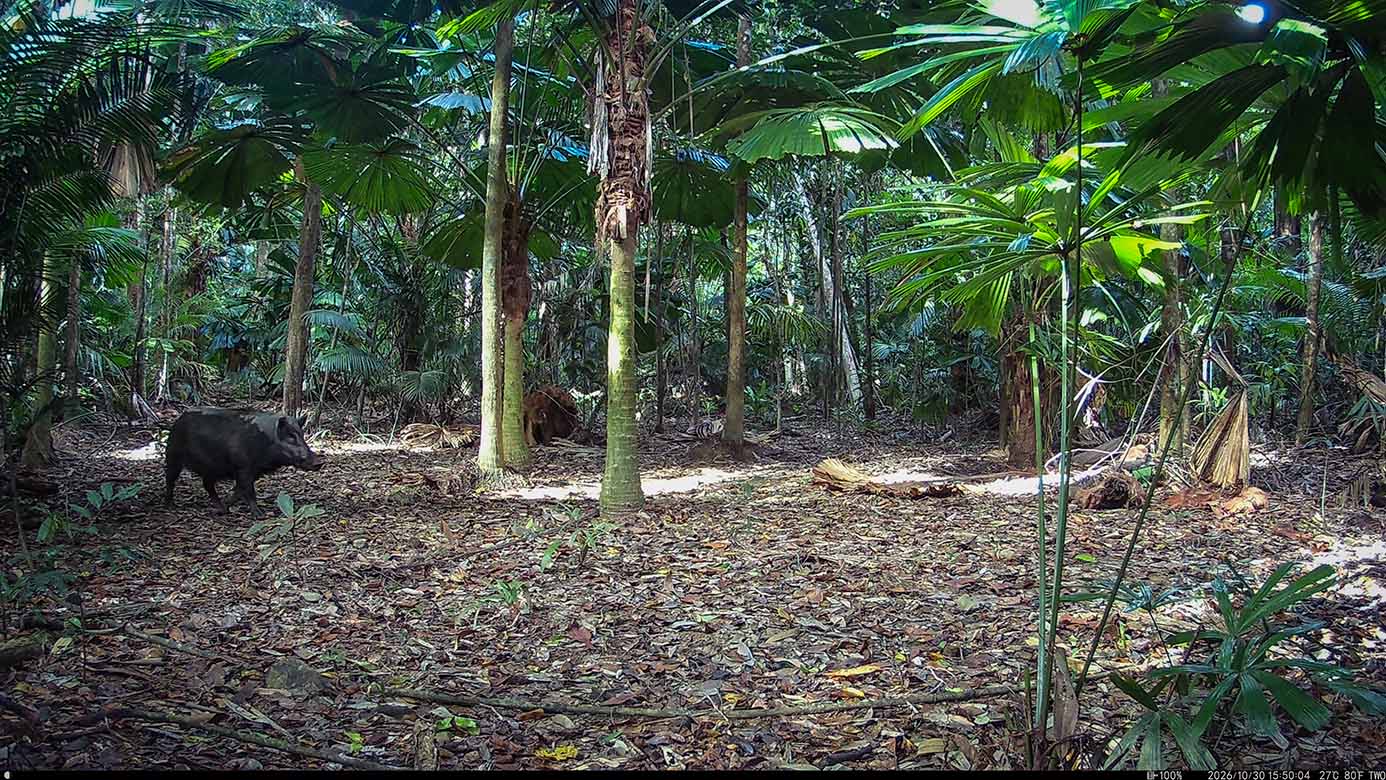
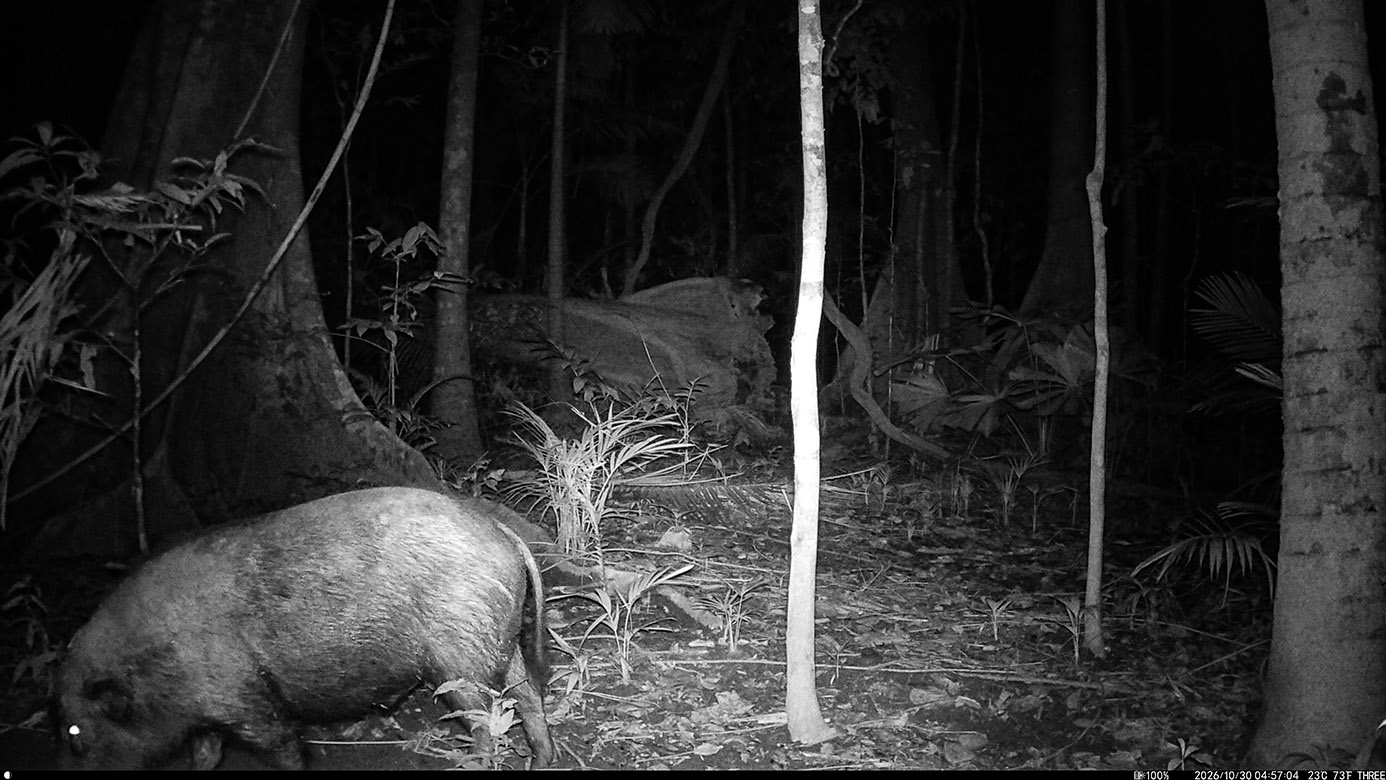
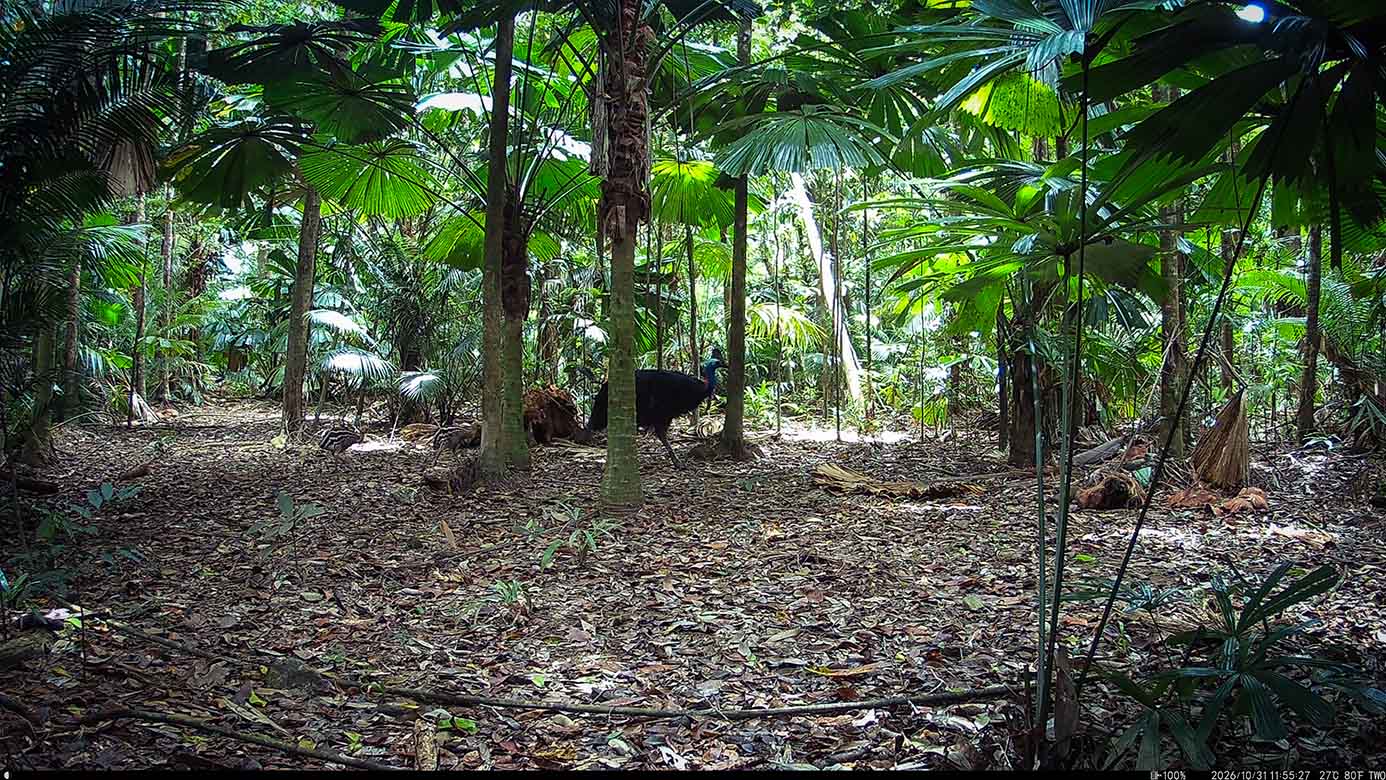
Keeping up with the cassowaries …
Taiga, Jupiter, Neptune & Pluto
Luna
Ila
Manu & Arnfired
Crinkle-Cut, Adam & Sally
Delilah & Scratch
Daintree Rainforest Dingoes …
Feral-pigs in paradise!
Protecting the Daintree from anger dressed-up as charity
In The Anger Machine: The November Leigh Report, the Hon. Dr. Andrew Leigh MP, Assistant Minister for Productivity, Competition, Charities and Treasury, attributes increasing global anger to the broad public defection from news and information delivery via television and print media, towards interactive social media, which fuels the relationship between anger and attention by increasing viewing time via algorithms crafted to feed posts with richer comments and shares from the full database of inflammatory content. The type of content prioritised by algorithms also reveals that moral-emotional language is most effective at capturing attention, particularly within ideological groups, reinforcing the collective conviction that the group shares the same outrage and an angry feed motivates and informs its audience how to compose the next angry outburst.
Anger directed towards a remedy, differs starkly from outrage seeking someone’s suffering; just as charity distinguishes from cruelty and crime. Anger can be noble, when directed at reforming outstanding injustice, but destructive when driven towards punishment or revenge and even self-perpetuating, when its anti-social platform depends upon keeping an audience enraged, whilst providing a powerful means of recruitment that weaponises the weight of the campaign to circumvent democracy and the rule of law by portraying opponents and minorities as enemies.
The Federal Government is well into developing a Digital Duty of Care framework for online services used by Australians, that will require platforms to give people a choice between a friends’-based feed and a strangers’-based feed and the regulator, eSafety, would have a range of graduated enforcement provisions to ensure compliance.
How this will protect the people and communities of the lawfully established Cape Tribulation and Daintree Coast Local Plan Area from ongoing harassment and attrition, under the rallying cry to urgently Save the Daintree Rainforest from the relentless threat of development, remains unclear. Having already lost property after property to a relentless campaign of dishonesty and vilification, any attempt from the local community to defend itself seems to trigger aggressive threats of litigation from the campaigns’ ruthlessness and seemingly unlimited budgetary capabilities, accrued in the name of the charity but drawn off as if from a veritable war-chest.
The Commonwealth Charities Act 2013 already requires not‑for‑profit charities to pursue none of the disqualifying purposes, including the purpose of engaging in or promoting activities that are unlawful or contrary to public policy and the ACNC Commissioner already possesses sweeping powers to enforce compliance with the Australian Charities and Not-for-profits Commission Act 2012, but neither has utilised those powers protecting the people and communities of the Daintree Rainforest.
Nevertheless, since 9th December 1988, the bulk of the world-renowned Daintree Rainforest has been quarantined from development within the binding formality of World Heritage-listed Daintree National Park. Beyond the boundaries of this encompassing public estate, some of the lawfully established and long-pre-existing freehold property, having preserved much of its biological diversity and ecological integrity, is also World Heritage-listed and National Heritage-listed for Natural and Indigenous Cultural Heritage protection, whilst others are formally declared Protected Areas under the Nature Conservation Act 1992. Since 26 November 2021, the entire enclave has been legislatively protected by the Federal Government’s Environment Protection & Biodiversity Conservation (EPBC) Act 1999 upon the Threatened Ecological Communities List and whatever skerrick of development capability this minority freehold enclave retains, is subject to both Federal Ministerial approval under the EPBC Act and also State and Local Government approvals, in compliance with QLD’s Planning Act 2016, Biosecurity Act 2014, Local Government Act 2009, Aboriginal Cultural Heritage Act 2003, Vegetation Management Act 1999, Wet Tropics World Heritage Protection and Management Act 1993, Nature Conservation Act 1992 and all their subordinate regulations. Indeed, all landholders throughout this enclave, without exception, are legislatively required to protect their property’s natural and cultural heritage from activity that may cause harm.
Under this most stringent and prescriptive regulatory regime, the people and communities who are themselves legislated parts of the Cape Tribulation and Daintree Coast Local Plan Area, are not only required to protect the environment, but their capacity to do so and their fundamental right to subsist from fulfilling such obligation, relies upon the income-earning value of their environmental assets and the quality of their ongoing stewardship to sustain the sole source of conservation-cost-recovery from genuine ecotourism.
No matter how valuable, vulnerable or renowned the greater Daintree Rainforest is, nor how ‘special’ or coveted the privately-held portion, the very existence of the freehold enclave was lawfully established eighty-six-years before surrounding National Park was first gazetted in 1980 and it is not within the rights or entitlements of any non-government entity to attempt to unlawfully procure its alteration.
ACNC Governance Standard 1 requires that charities must demonstrate that they work towards their charitable purpose, however, a long history of activism within the Cape Tribulation and Daintree Coast Local Plan Area reveals a far less charitable purpose. Maligning this lawfully established community, as if it should never have existed and condemning its landholders as implicitly wrongful, to drive a multi-million-dollar fund-raising campaign that depletes the community, property by property, is prejudicial, invasive and subversive.
The environmental values held within contained freehold boundaries of properties are an undeniable testament to incumbent and preceding landholders’ protective competencies, which required no charity to achieve beyond that which had already been discharged. Greatly overstating environmental importance and vulnerability to the threat of imminent and unrecoverable harm, to fan the flames of public outrage and subsequently enrich fund-raising largesse, exacerbates the impropriety of uncharitable dishonesty.
Imputing that Cape Tribulation and Daintree Coast landholders are in any way lacking in ‘rightfulness’ or legitimacy, is as dishonest, offensive and uncharitable as inferring that conservation and restoration are contingent upon those landholders surrendering their properties to allow the environment to be protected forever by ‘rightful’ successors. Indeed, it would be far more charitable and cost-effective for the millions of dollars donated for conservation and restoration of the environment upon these properties to be distributed to the incumbent landholders, leaving the environmental asset of community custodianship intact.
Crowd-funding manipulation almost certainly provokes the willingness of both prospective donors to donate and also besieged landholders to relinquish ownership. Falsely advertising that properties with globally important environmental values were wrongfully excluded from National Park, but can be saved along with endangered and iconic species like Southern Cassowaries and Bennett’s Tree Kangaroos, almost certainly cajoles the target audience into desiring what they may have previously lacked reason to want, inciting an inflamed emotional response, whilst perpetuating dishonest standards of success, with compounding algorithms and other social networking mechanisms, such as ‘likes’, ‘shares’, and ‘comments’, undoubtedly exerting leverage upon any such manipulation.
ACNC Governance Standard 3 requires charities to not commit a serious offence (such as fraud) under any Australian law. The QLD Criminal Code – Section 408C, defines fraud thus:
(1) A person who dishonestly—
(a) applies to his or her own use or to the use of any person—
(i) property belonging to another; or
(ii) property belonging to the person, or which is in the person’s possession, either solely or jointly with another person, subject to a trust, direction or condition or on account of any other person; or
(b) obtains property from any person; or
(c) induces any person to deliver property to any person; or
(d) gains a benefit or advantage, pecuniary or otherwise, for any person; or
(e) causes a detriment, pecuniary or otherwise, to any person; or
(f) induces any person to do any act which the person is lawfully entitled to abstain from doing; or
(g) induces any person to abstain from doing any act which that person is lawfully entitled to do; or
(h) makes off, knowing that payment on the spot is required or expected for any property lawfully supplied or returned or for any service lawfully provided, without having paid and with intent to avoid payment;
commits the crime of fraud.
Grossly exaggerating imminent environmental calamity to enrage public reaction for urgent acquisition of coveted property possessing desirable attributes, which lawfully belong to another, is inherently fraudulent. Indeed, the very existence of the coveted attributes is evidence of the incumbent property-owner’s successful protection. Upon settlement, the property remains the same as it was when acquired and if protected forever upon acquisition, so it must have been protected upon disposal and it is fraudulent to assert or infer otherwise.
Because of the extraordinary beauty, rarity, primitiveness and endemism of the world’s oldest rainforest, public generosity is readily persuaded by the vital importance of a world-class protection, particularly in an affluent and well-education society such as Australia, but fanning the flames of philanthropic largesse by grossly overstating the scope of environmental irreplaceability and impending calamity, to not only harvest lucrative environmental pay-dirt, but to leave the environment poorer for its diminished and fragmented community custodianship, describes dishonest, fraudulent activity. Dishonestly promising unachievable protection of the world’s oldest rainforest, including critical habitat for the endangered Southern Cassowary, Bennett’s Tree Kangaroo and several endangered primitive flowering plants, derives benefits and/or advantages, pecuniary or otherwise for the staff of the fund-raiser, whist inflicting cumulative losses upon the environmental attributes of the people and communities of the Cape Tribulation and Daintree Coast Local Plan Area.
Cassowaries are Endangered Species, both federally and also under Queensland law. Bennett’s tree-kangaroos are classified as ‘near threatened’ upon the IUCN Red-list and all plant species with a declared conservation status remain legislatively declared, regardless of a property’s change of ownership. Promising that habitat values in urgent need of protection will henceforth be ‘protected forever’ under the fund-raiser’s ownership is dishonest, whereas gaining a benefit or advantage, pecuniary or otherwise, from such dishonesty, aligns with the QLD Criminal Code definition of fraud. Gross misrepresentation of environmental values and landownership within the Cape Tribulation and Daintree Coast Local Plan Area clearly amasses colossal revenue, but when, through fraud, such a yield exceeds $100,000 or the offender carries on the business of committing the offence, statutory liability increases to a maximum penalty of 20-years imprisonment.
QLD Criminal Code – Section 44(c) – Definition of “seditious intention” – to excite His Majesty’s subjects to attempt to procure the alteration of a matter in the State as by law established otherwise than by lawful means:
Campaigning for the ‘protection’ of extraordinary natural values that extend way beyond the borders of coveted properties and across the much larger and world-renowned Greater Daintree Rainforest, transgresses beyond the entitlements of innocent intention as defined within Section 45 of the QLD Criminal Code, in so far as fundraising engages in enterprises to rally public support to procure the alteration of the lawfully established Cape Tribulation and Daintree Coast Local Plan Area into National Park and World Heritage-listing, property-by-property, without the delegated authority to lawfully do so.
QLD Criminal Code – Section 44(d) – Definition of “seditious intention” – to raise discontent or disaffection amongst the Sovereign’s subjects:
The central premise of the fund-raising campaign strategy appears to decry that the State had historically erred in its lawful establishment of the Cape Tribulation and Daintree Coast Local Plan Area, where it otherwise should rightfully have been declared National Park, robbing Sovereign subjects of their greater entitlements, but with enough support and raised revenue, the power of the people can and will right this erroneous wrongdoing, together.
As the only property that can be lawfully purchased within the Daintree Rainforest is from the Cape Tribulation and Daintree Coast Local Plan Area, this call-to-action implies that the State’s lawfully established Cape Tribulation and Daintree Coast Local Plan Area encompasses the threat from which the vastly larger portion of the world’s oldest rainforest must be protected. The urgent need touts donations for the fund-raiser to be the saviour of the world’s oldest rainforest, by replacing the dishonestly maligned existing owners of targeted properties, as the contingency from which the survival of the world’s oldest rainforest depends.
Broadcasting that the ‘world’s oldest rainforest’ is for sale and implying that it is wholly and solely owned by private-landholders, incites discontent and/or disaffection amongst the Sovereign’s subjects of the State. From a metropolitan perspective, where dreams of escape offer the best hope of re-uniting with nature and any aspect of nature worth defending begins beyond the periphery of the urban sprawl, campaigning for donations to protect the world’s oldest rainforest from the misrepresented wrongfulness of private-landownership, raises discontent and/or disaffection into a fighting purpose against the lawfully tenured Cape Tribulation and Daintree Coast Sovereign subjects of the State.
QLD Criminal Code – Section 44(e) – Definition of “seditious intention” – to promote feelings of ill will and enmity between different classes of the Sovereign’s subjects:
The 2021 Census found 684 citizens within the Cape Tribulation and Daintree Coast Local Plan Area and 25,422,104 throughout the rest of Australia. The residential disparity between those immersed within the Daintree Rainforest from those without, is 1:37,167. The seemingly relentless campaign of implied residential impropriety, to this massively skewed majority, brandishing the rarity, primitiveness, endemicity and irreplaceability of the Cape Tribulation and Daintree Coast Local Plan Area’s environmental values, including critical habitat for the endangered Southern Cassowary and Bennett’s Tree Kangaroo and several endangered primitive flowering plants, as an urgent call-to-action, whilst decrying that these values are in crucial need of protection from current ownership, uncharitably foments feelings of ill‑will or enmity towards those people and communities of the Cape Tribulation and Daintree Coast Local Plan Area, threatening the peace, order and good governance of this lawfully established portion of the State.
Also, purporting to conserve and restore parts of the Daintree Lowland Rainforest that are currently excluded from the protections of national park status, so it can be owned and managed by Traditional Owners, manifests through this outwardly proactive expression of restored Indigenous justice onto the incumbent landholders with vilifying racial and cultural discrimination. Whilst the people and communities of the Cape Tribulation and Daintree Coast Local Plan Area hold passionate views about the importance of their environment and also restored Indigenous rights, the very public and uncharitable way that they are derided as not rightful, in lieu of being predominantly non-Indigenous, with restored Indigenous ownership promised as being ‘protected forever’, incites hatred towards, serious contempt for, or severe ridicule of the existing landowners, further agitating feelings of ill‑will or hostility.
QLD Criminal Code – Section 52(1)(a) & (b) – Sedition with conspiracy to carry into execution a seditious enterprise, advisedly publishing seditious words or writings undertaken in order to carry out seditious intentions:
The multi-million-dollar business of campaigning dishonestly, to:
‘Save the Daintree’ reiteratively publishes that the Daintree Rainforest deserves the highest level of protection, however, the declaration of the Daintree National Park and World Heritage Area in 1988 excluded two-thirds of the Daintree Lowland Rainforest because it was freehold land and to resolve that concern, once the properties are acquired they are proposed for inclusion in the Daintree National Park (CYPAL) and protected under the Queensland Nature Conservation Act 1992.
In fact, the declaration of National Park within this locality occurred in 1980, when 17,000-hectares of State Forest and Timber Reserves was re-gazetted as Cape Tribulation National Park. The minority freehold enclave that was partially sub-divided in 1982, was long pre-existing through the granting of freehold title in 1894. The inscription of Queensland’s Wet Tropics onto the World Heritage List was ratified on the 9th December 1988, across all of the Cape Tribulation National Park (at the time) and some of the adjacent freehold properties, also. Any expression of concern for latent environmental vulnerability upon freehold properties from within the Cape Tribulation and Daintree Coast Local Plan Area, is arguably seditious, as it is all well and truly protected via federal declaration as an Endangered Ecosystem Community under the EPBC Act 1999, as well as the most rigorous legislative and regulatory compliance requirements for environmental protection found anywhere in the world, but with a permanent, self-funded and self-motivated residential custodianship in situ. Also, if there were any legitimate concerns for more protection, the State is well equipped with legislative instruments, such as the Compulsory Declaration of a Nature Refuge, which provides the same legislative protection of National Parks, but also protects the landholder’s interests from being injuriously affected by a restriction or prohibition imposed under the declaration or regulation on the land-holder’s existing use of the land, whereupon the land-holder is entitled to be paid by the State the reasonable compensation because of the restriction or prohibition that is agreed between the State and the land-holder or, failing agreement, decided by the Land Court.
So long as fund-raisers remain unauthorised by the State, the organisational apparatus that seeks procurement of alteration of the Cape Tribulation and Daintree Coast Local Plan Area into something else, through the seemingly endless barrage of dishonest and uncharitable words and writings expressive of seditious intention, published to cultivate crowd-changing influence via donations into the self-proclaimed protective purpose of the registered ‘charity’, certainly resembles a seditious enterprise with conspiracy to carry the procurement into effect.
QLD Criminal Code – Section 359B – What is unlawful stalking, intimidation, harassment or abuse
Loitering near, watching, approaching or entering a place of residence, work or visitation; publishing offensive, harassing or abusive material on websites, social media platforms or online social networks on more than one occasion and in a way that will be found by, brought to the attention of and cause detriment to people and communities of the Cape Tribulation and Daintree Coast Local Plan Area, intimidating, harassing or threatening with harm causing apprehension or fear, aligns with the definition of unlawful harassment or abuse within the QLD Criminal Code.
Asserting that it purchases freehold land from the Daintree Lowland Rainforest for conservation to be owned and managed by Traditional Owners, is offensive to people and communities targeted for urgent acquisition, but appears to carry a circumstance of aggravation that is prejudicial and at least partially motivated by the race distinction between the landholders of the coveted properties and that of the campaigners’ preferred successors.
QLD Criminal Code – Section 469 – Wilful damage
The reputation and property of the Cape Tribulation and Daintree Coast Local Plan Area are heavily protected by a passionate custodial community under binding regulation. The people and communities that are constituent parts of the legal definition of ‘environment’ are also well-aware that their long-term economic, social, environmental and cultural well-being are inextricably intertwined with the care and protection of their income-earning ecological assets, however, there is no disputing that these determined ‘Save the Daintree’ campaigners seek to deplete land from the Cape Tribulation and Daintree Coast Local Plan Area on a property-by-property basis, into the ever-enriching and encroaching National Park estate. Such heavily publicised determination meets the unambiguous definition of ‘wilfulness’. From the local community perspective of the ever-diminishing Cape Tribulation and Daintree Coast Local Plan Area, such uninvited deterioration conforms to the definition of ‘damage’ and taken together, ‘wilful damage’.
Any person who wilfully and unlawfully destroys or damages any property is guilty of an offence which, unless otherwise stated, is a misdemeanour and the person is liable, if no other punishment is provided, to 5-years imprisonment. If the offender was wholly or partly motivated to commit the offence by hatred or serious contempt for a group of persons based on race, the offender is liable, if no other punishment is provided, to imprisonment for 7 years.
These campaigns seem to uncharitably hold the people and communities of the Cape Tribulation and Daintree Coast Local Plan Area in very low esteem and seek to methodically fragment the enclave and deplete its custodial community of ecological assets, jurisdictional integrity and conservation cost-recovery capability. Purporting to protect parts of the Daintree Lowland Rainforest so it can be owned and managed by Traditional Owners, denigrates the integrity and reputation of the people and communities of the Cape Tribulation and Daintree Coast Area, causing it to be viewed less favourably in the court of public opinion and causing serious harm to the individual landholder and wider custodial community’s reputation, exposing them to hatred, contempt or ridicule.
Daintree Rainforest Foundation Ltd has been registered by the Australian Charities and Not-for-profits Commission and successfully entered onto the Register of Environmental Organisations. Donations made to the Daintree Rainforest Fund support the Daintree Rainforest community custodianship and are eligible for a tax deduction under the Income Tax Assessment Act 1997.