
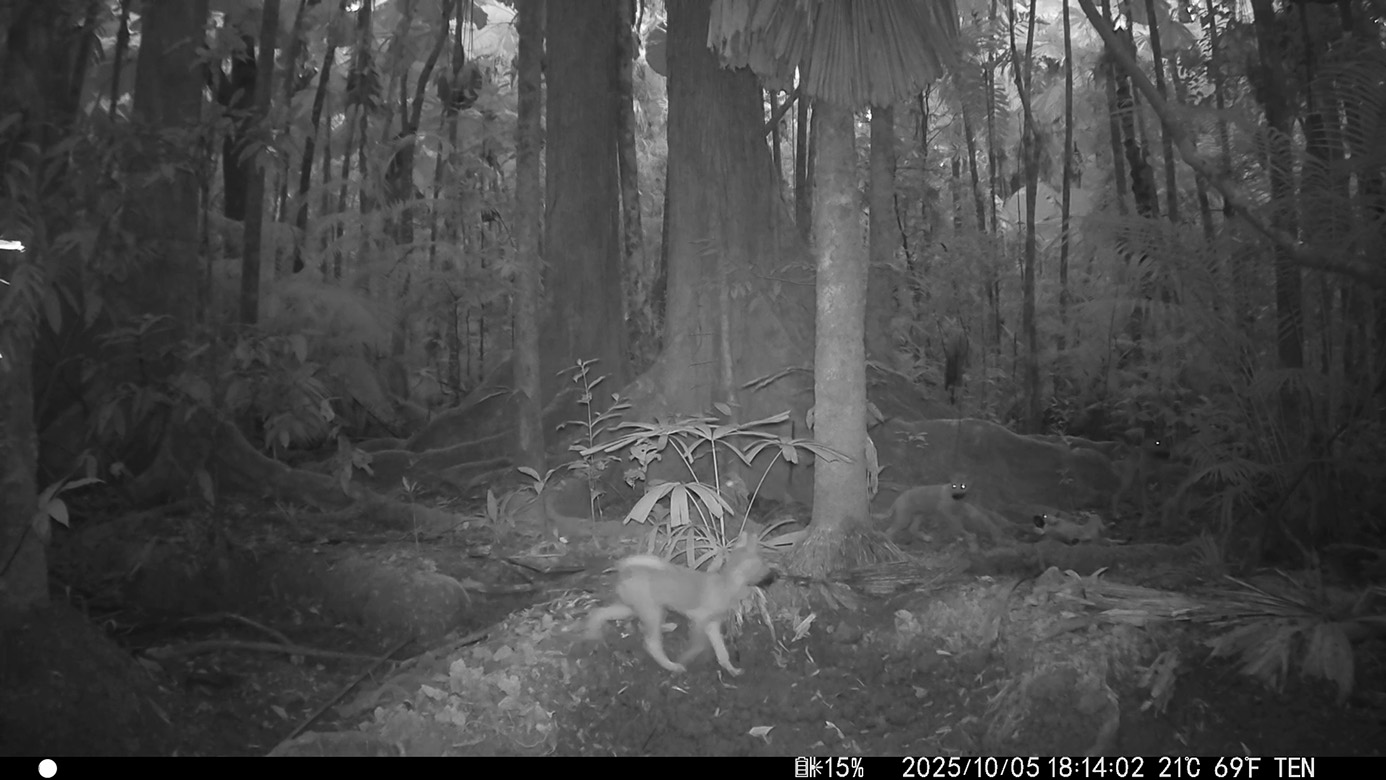
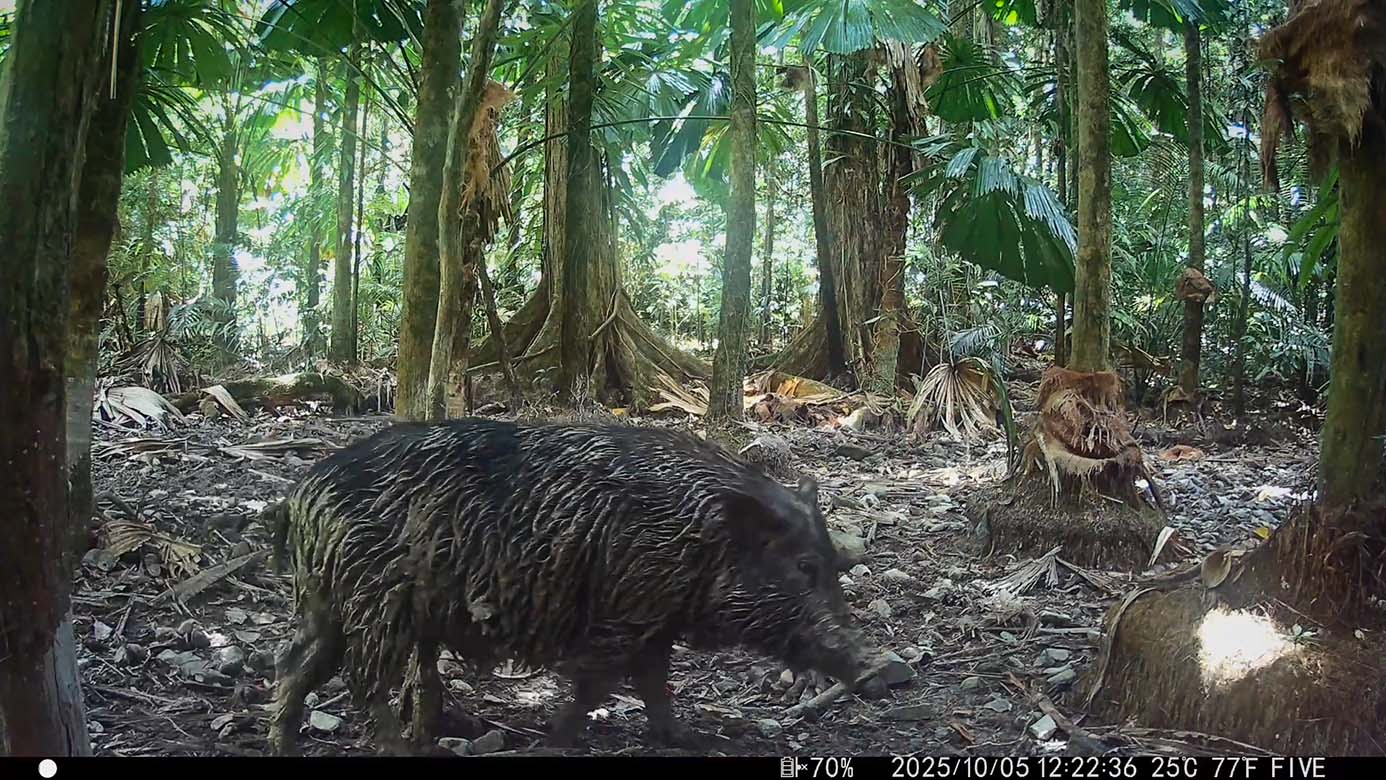
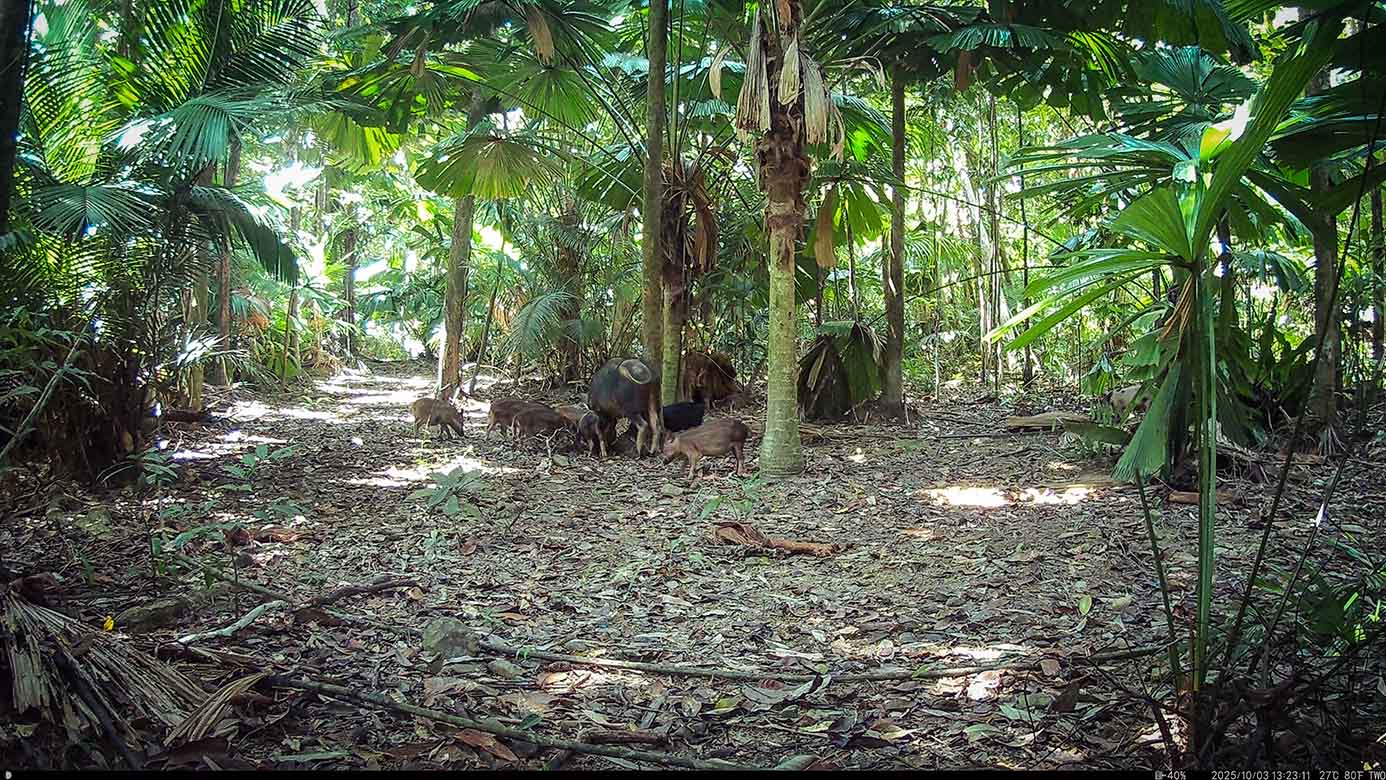
Camera Traps – October 2025 accrued 55-cassowaries, 43-dingoes and 56-feral pigs. Against the cumulative monthly average, cassowary numbers fell by 43%, dingo numbers increased by 2% and feral-pig numbers plummeted by 71%. Against October 2024, cassowary sightings rose by 104%, dingo numbers increased by 78% and feral-pig sightings decreased by 78%.
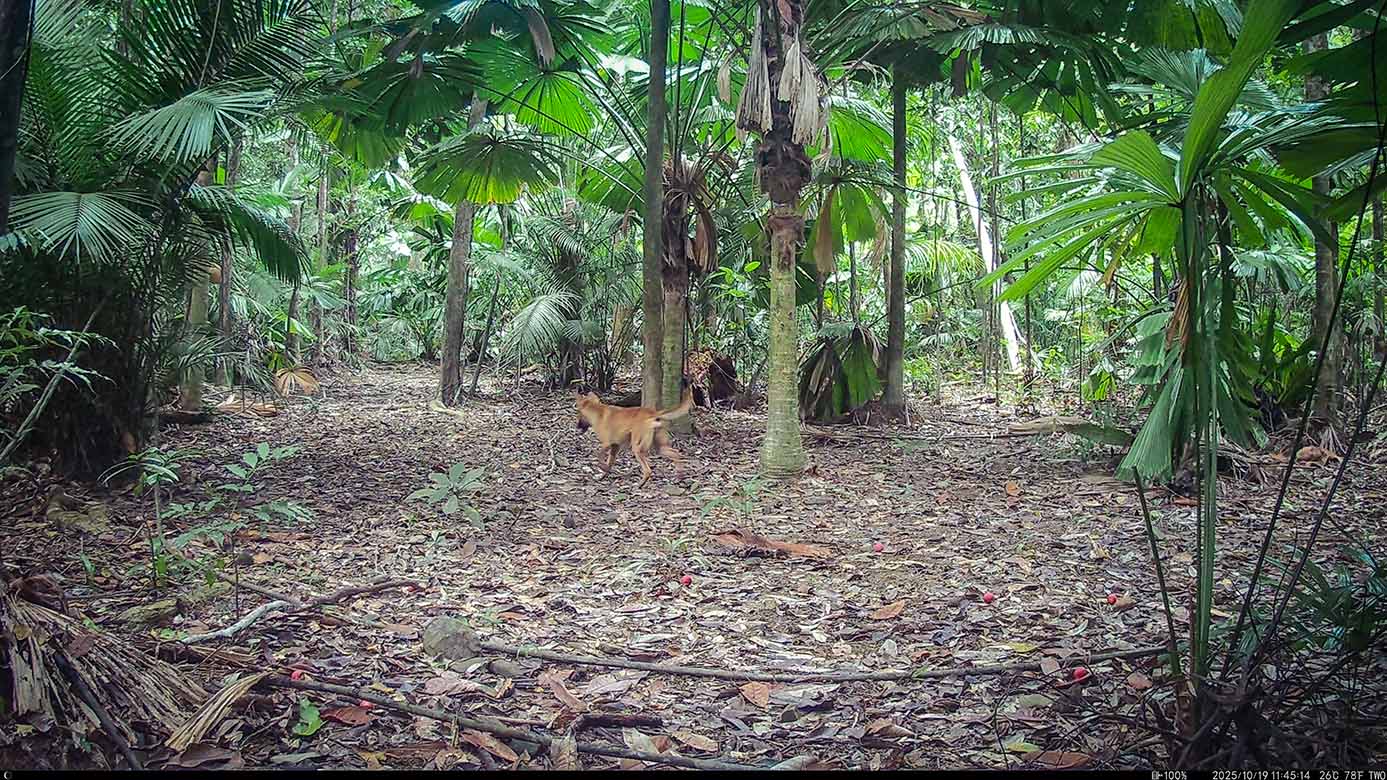
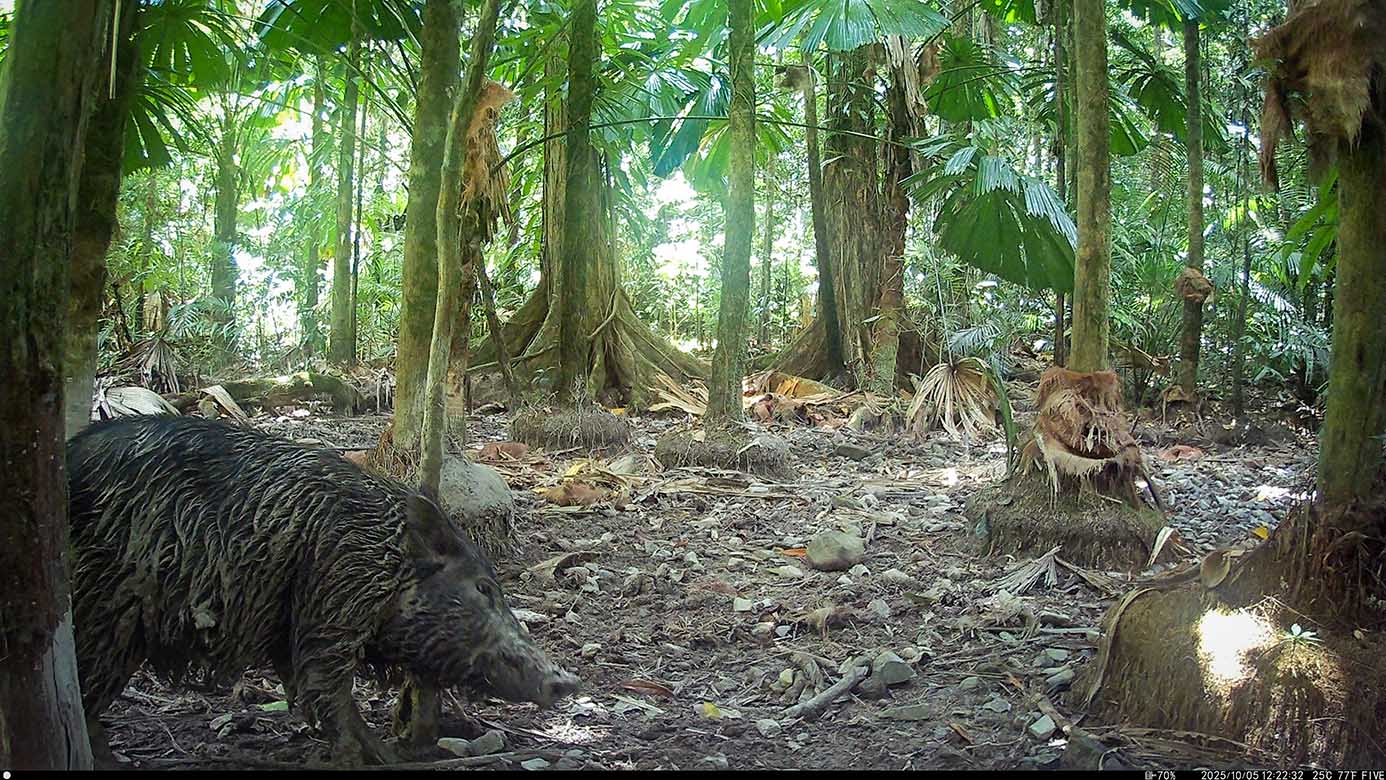
Image highlights from Camera Traps – October 2025
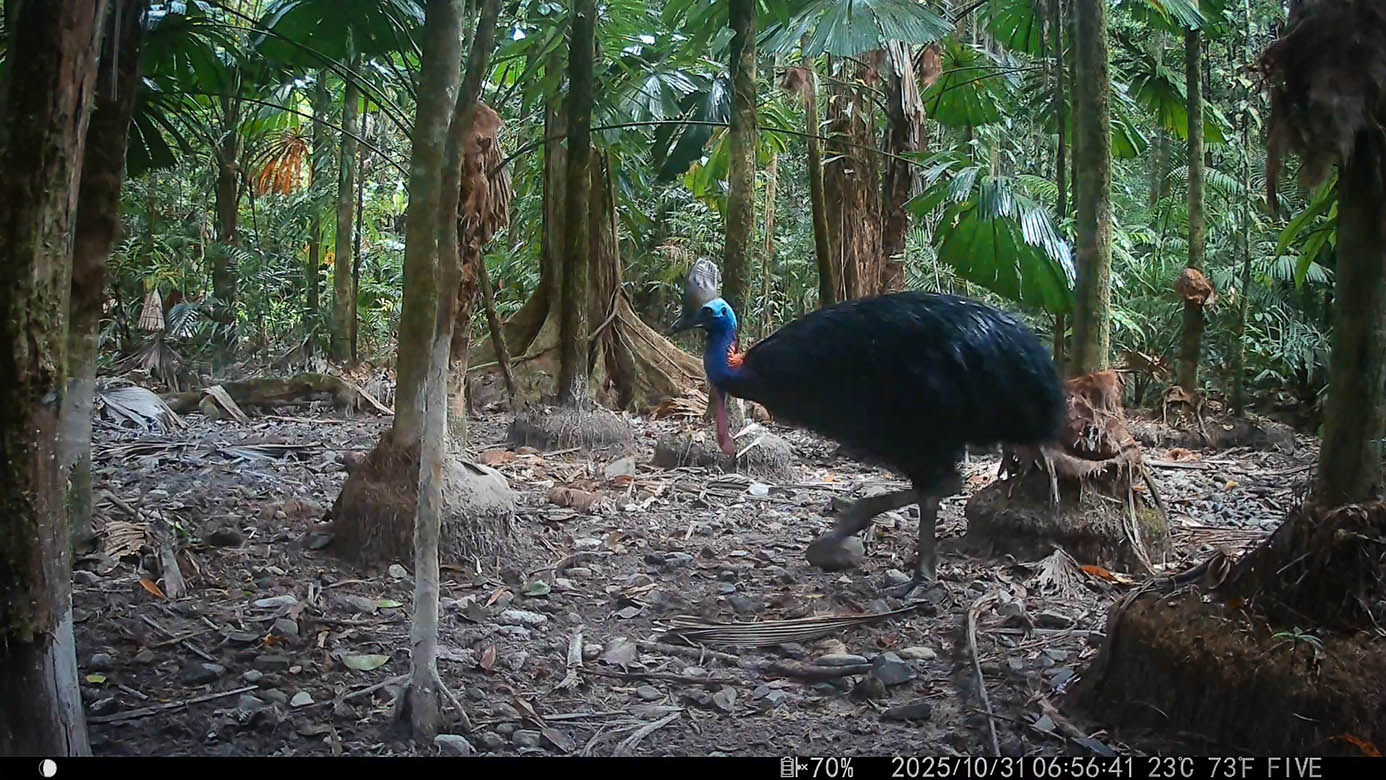
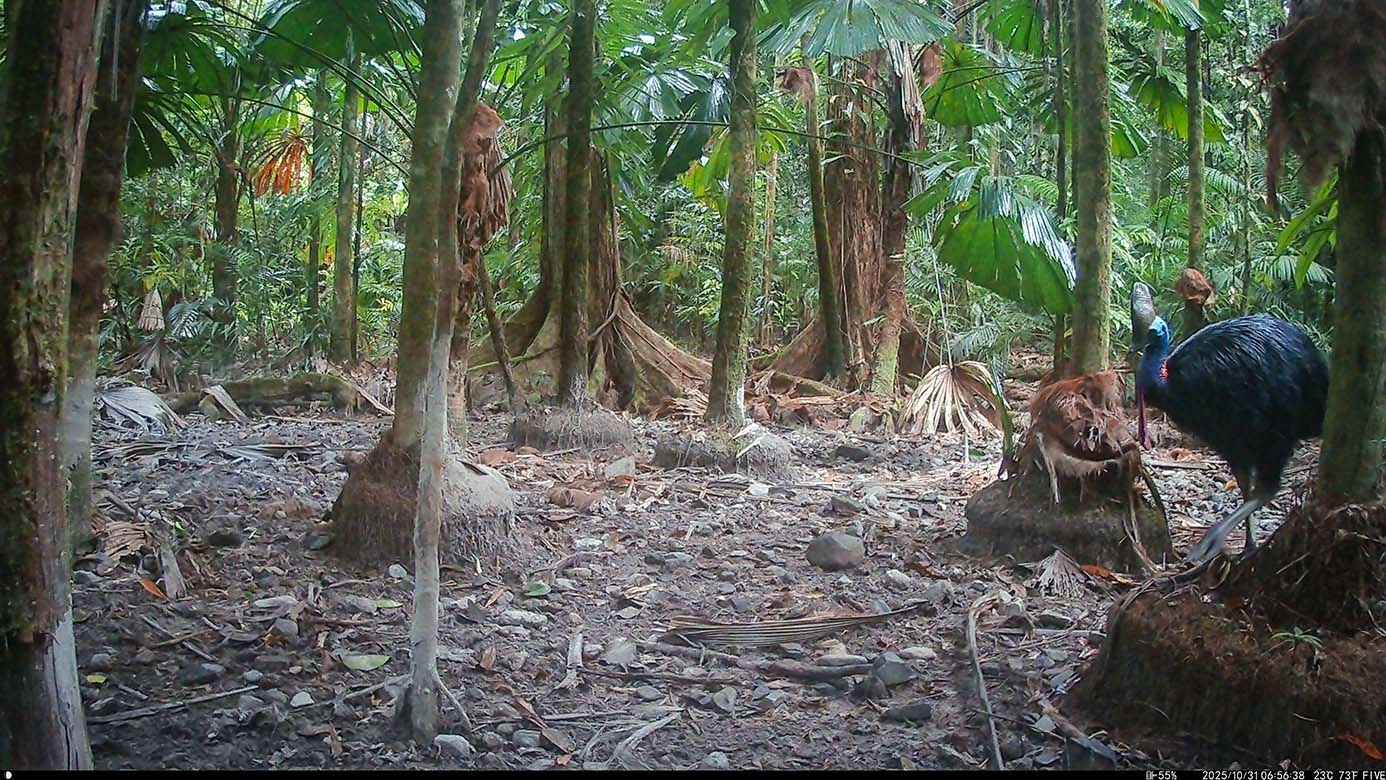
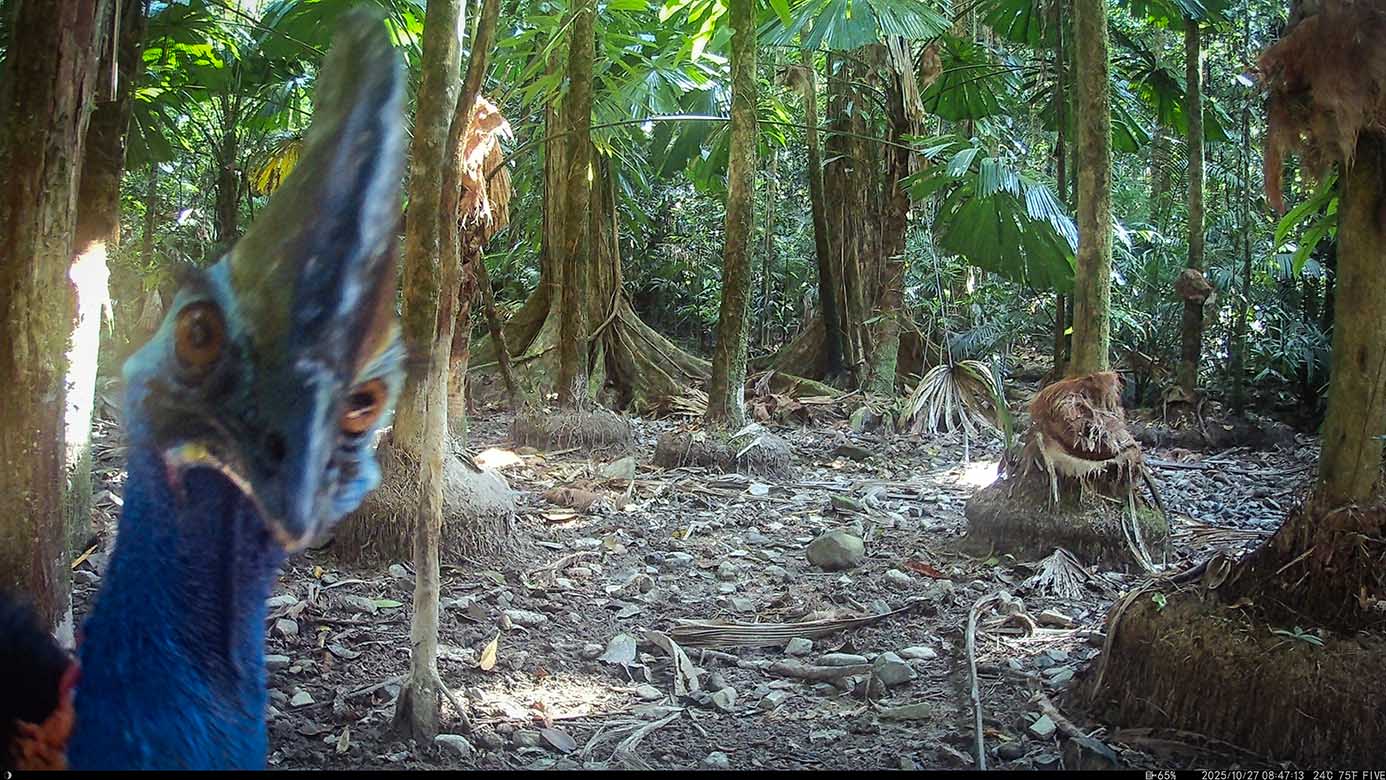
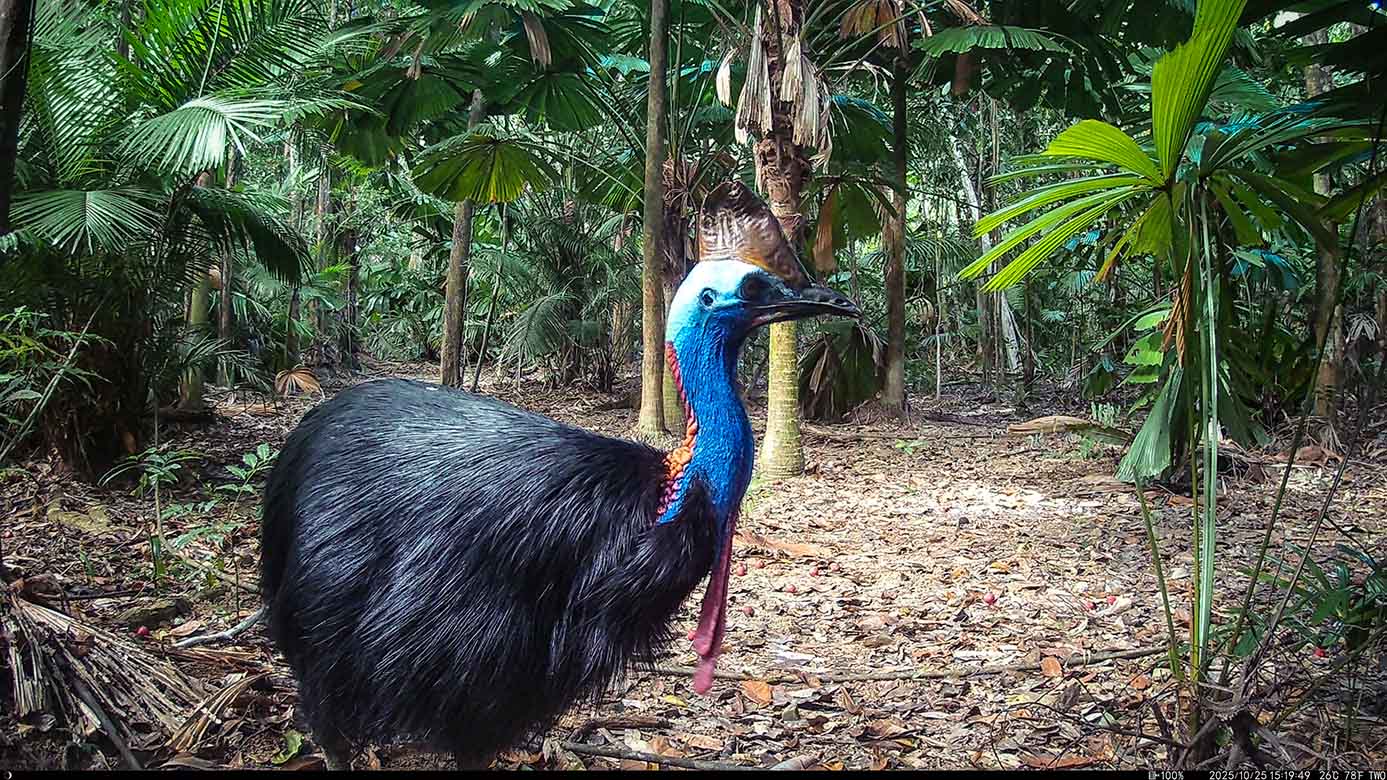
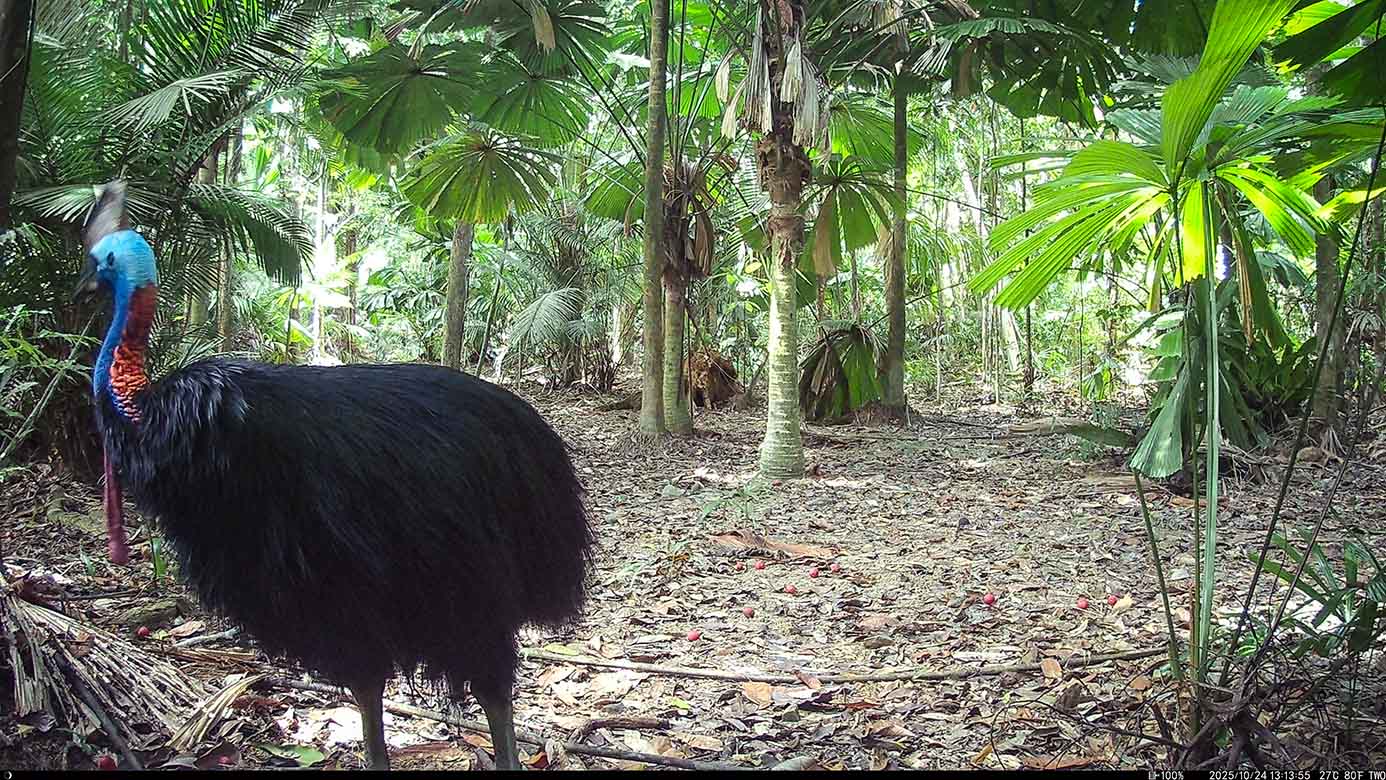
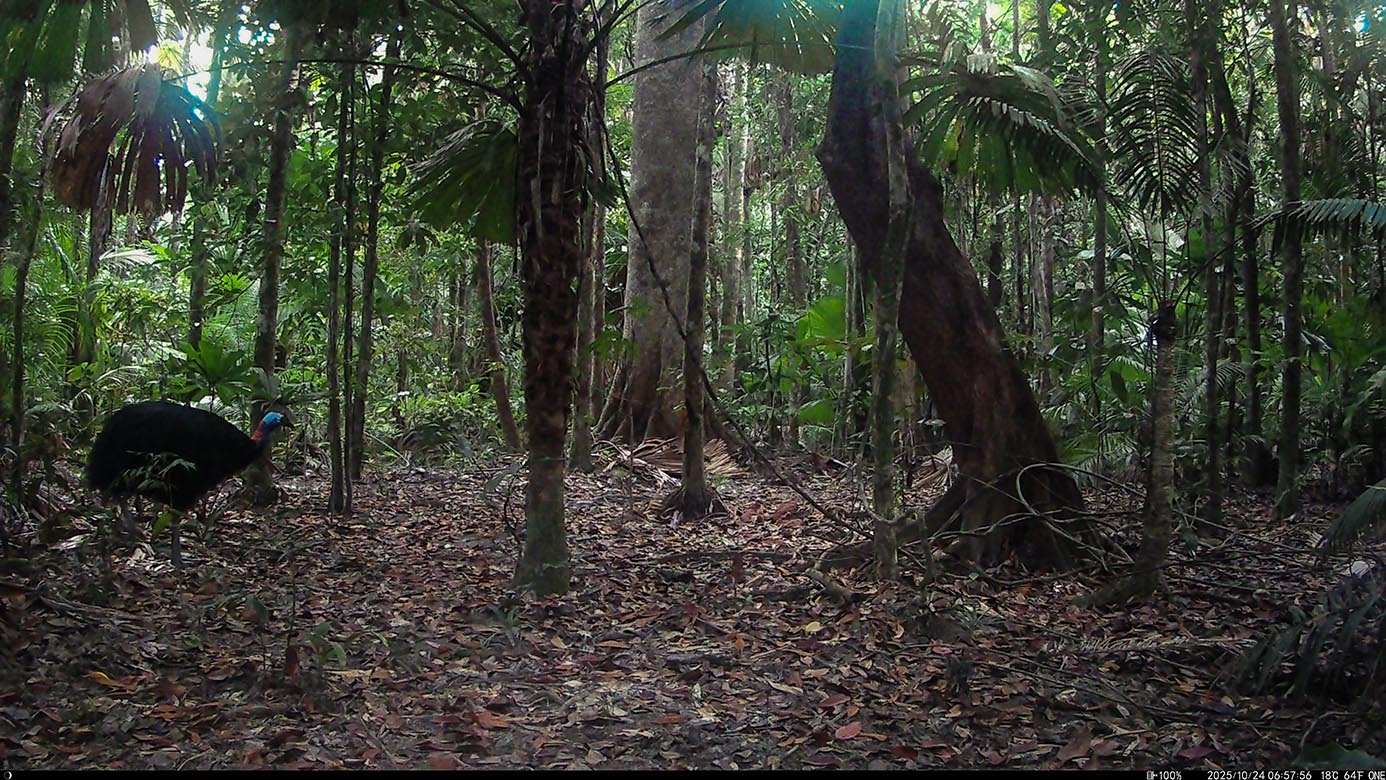
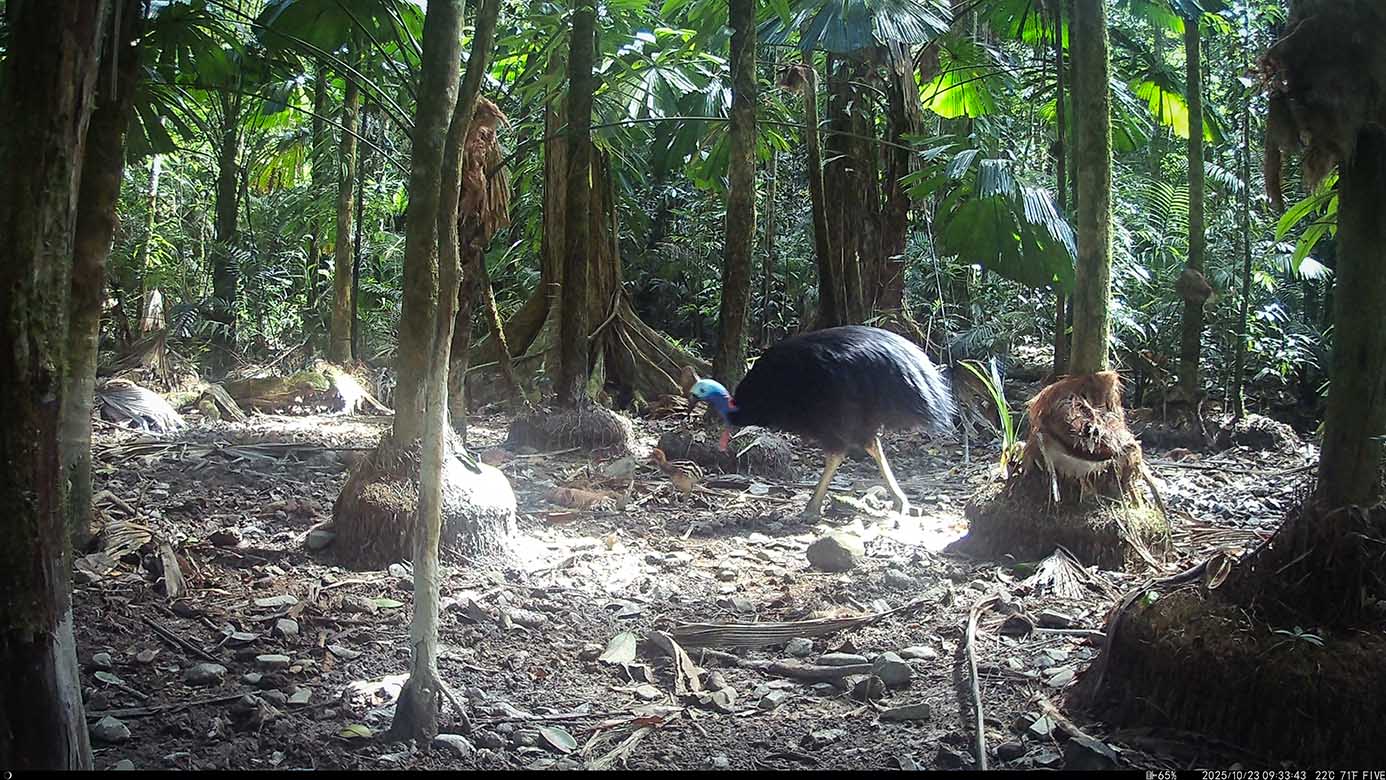
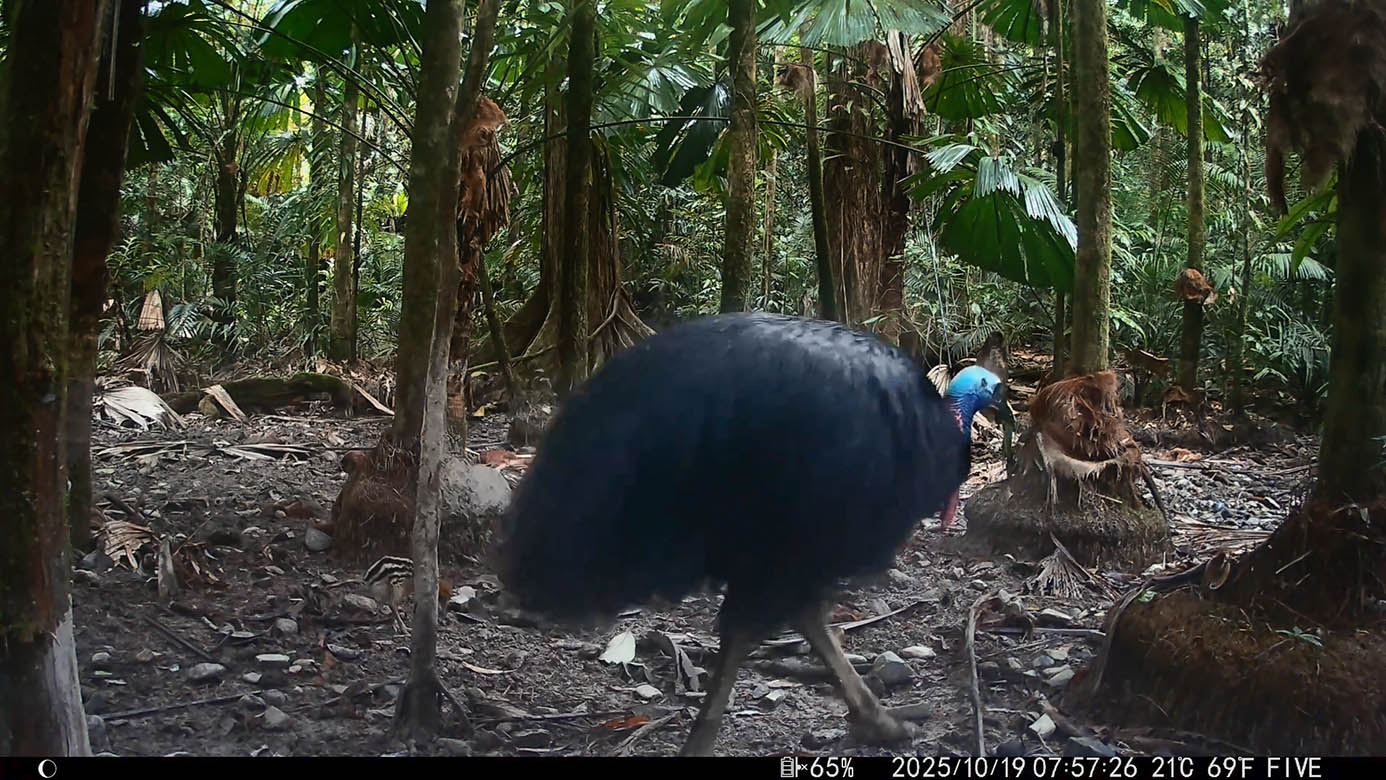
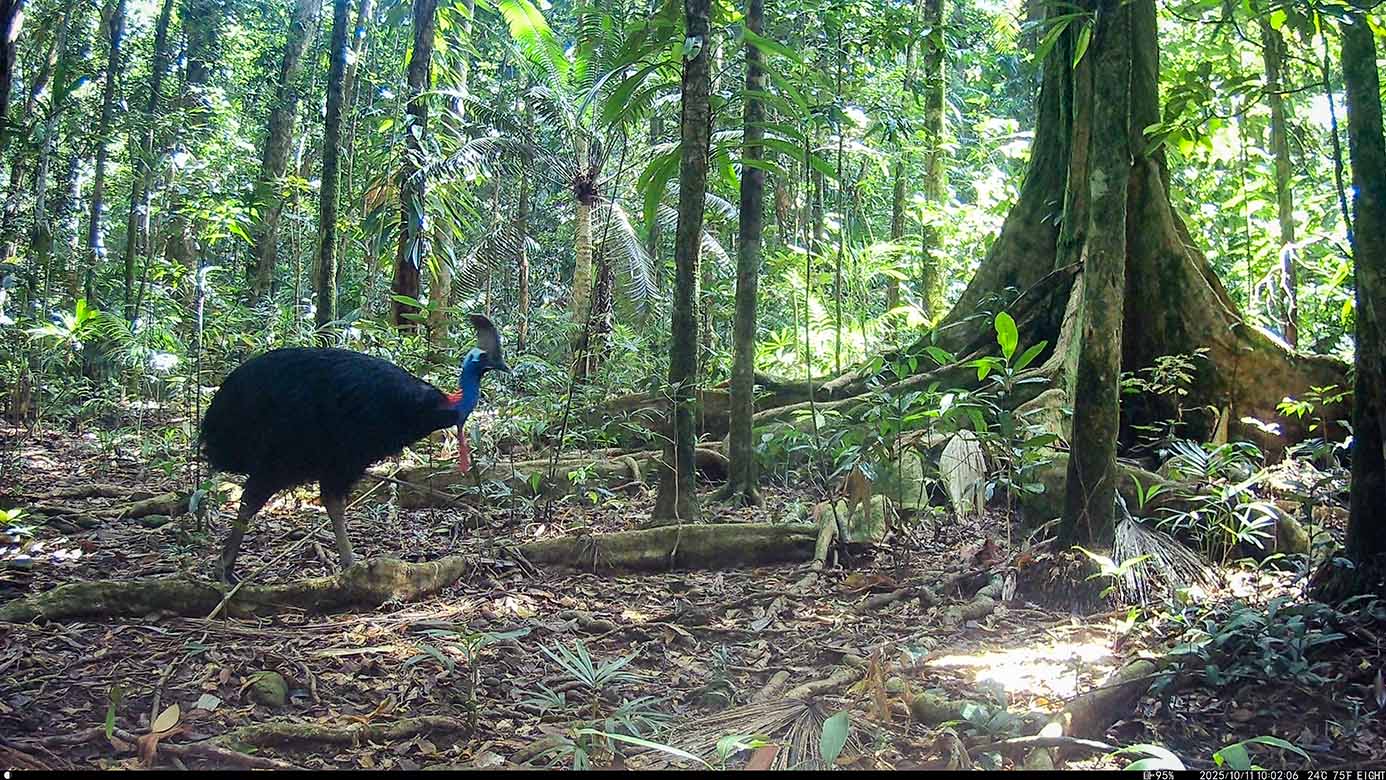
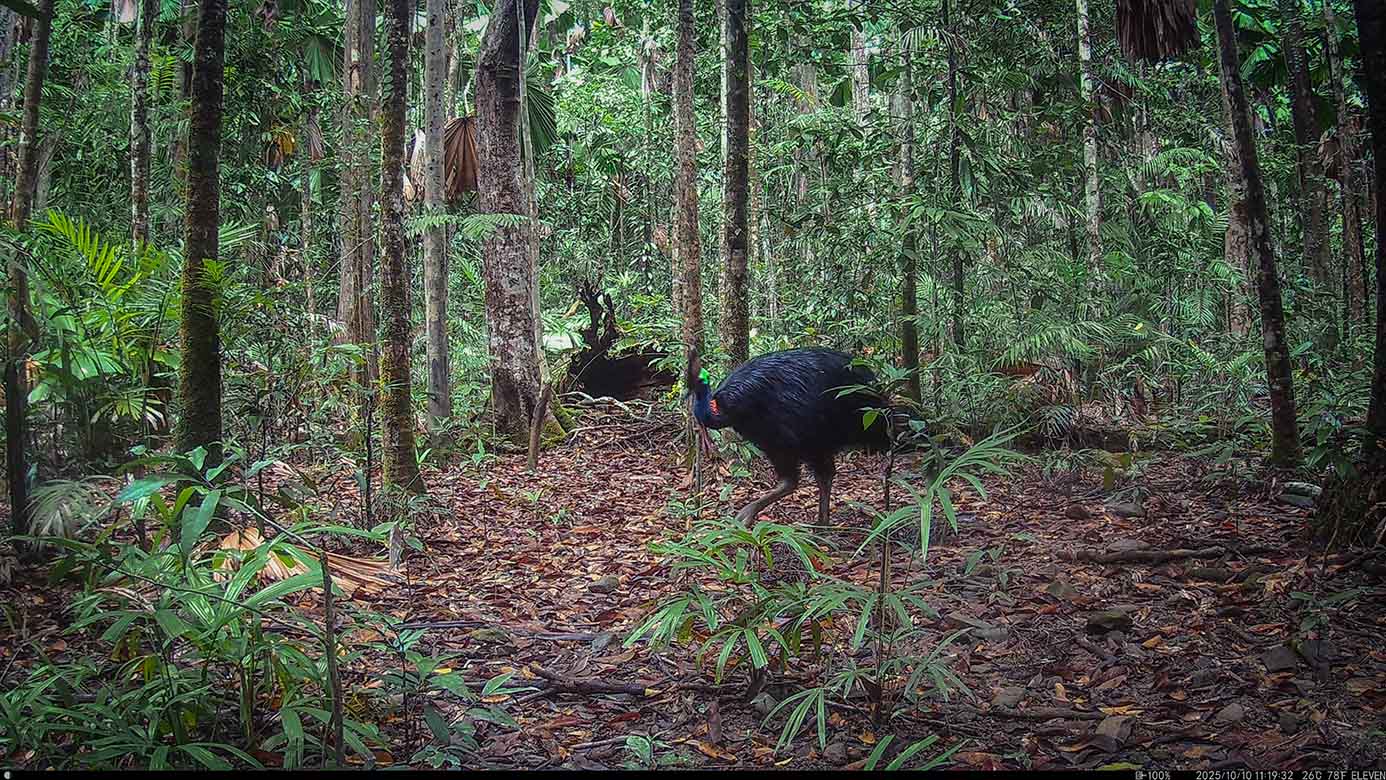
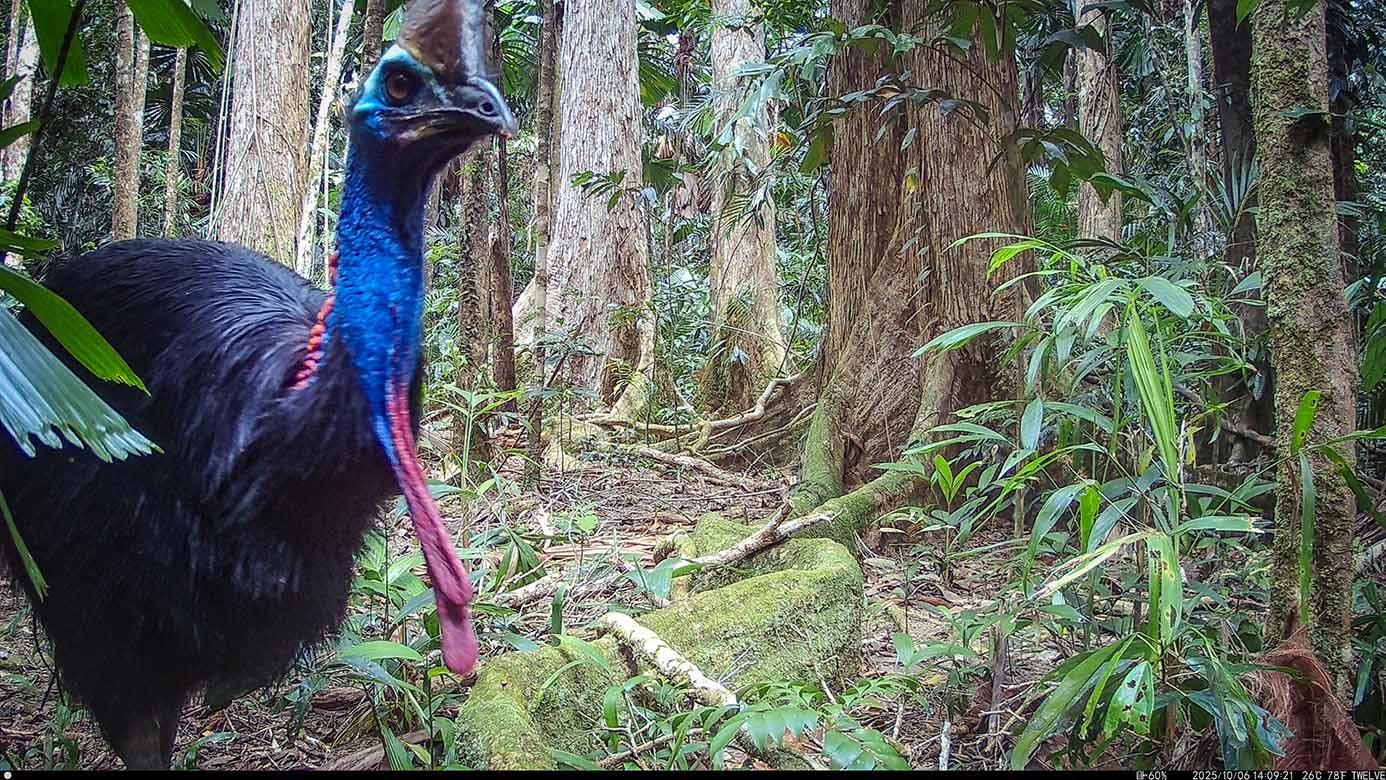
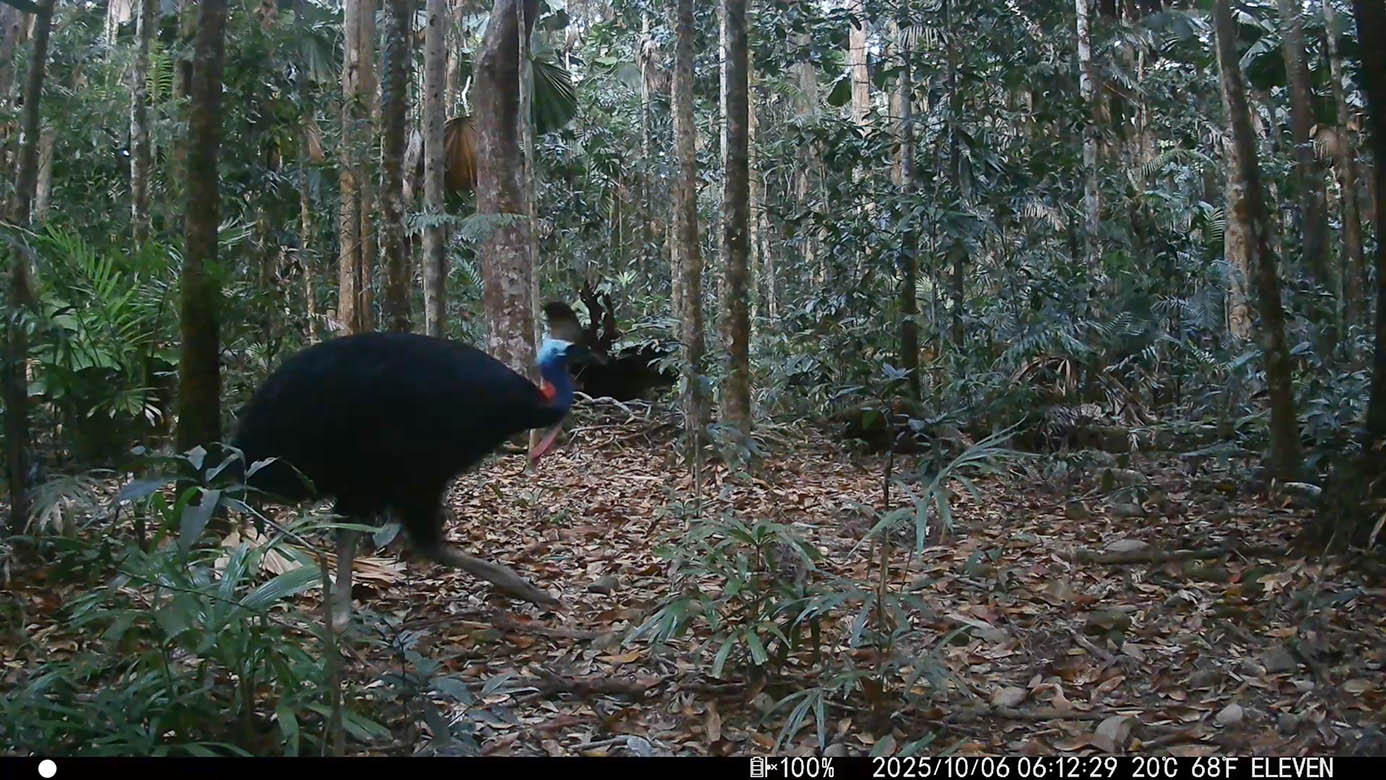
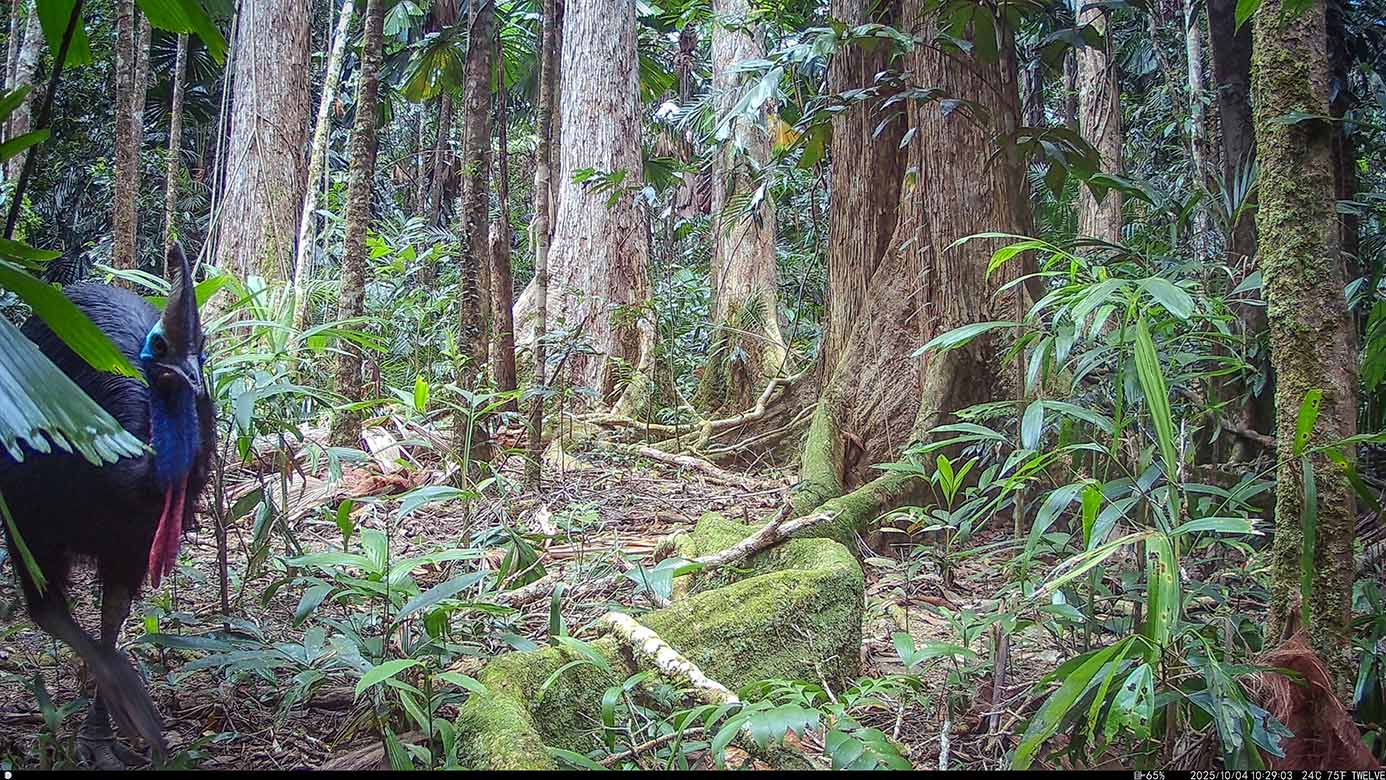
Keeping up with the cassowaries …
Taiga has revealed his new chick: Vlad (the impaler)!
Luna
Manu – no longer with Baloo
Crinkle-Cut & Wobbly
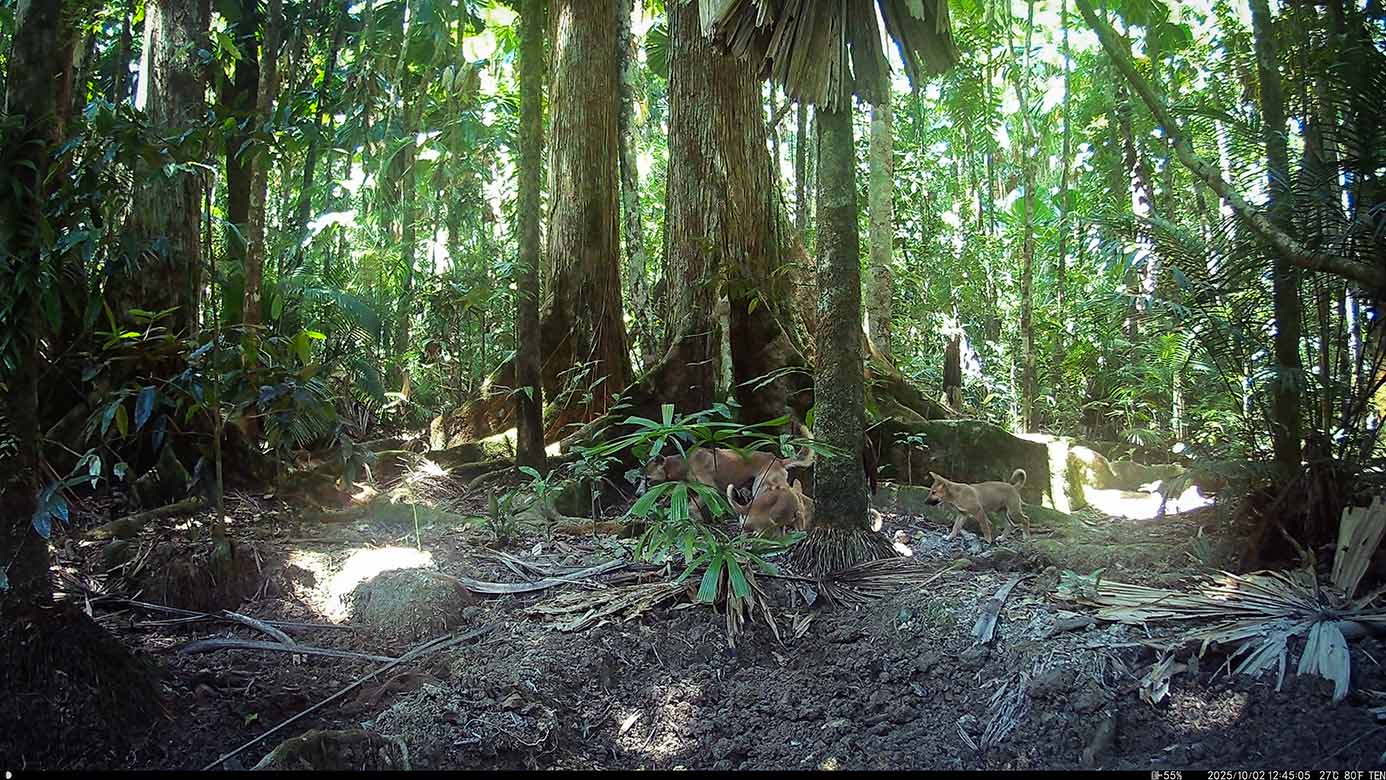
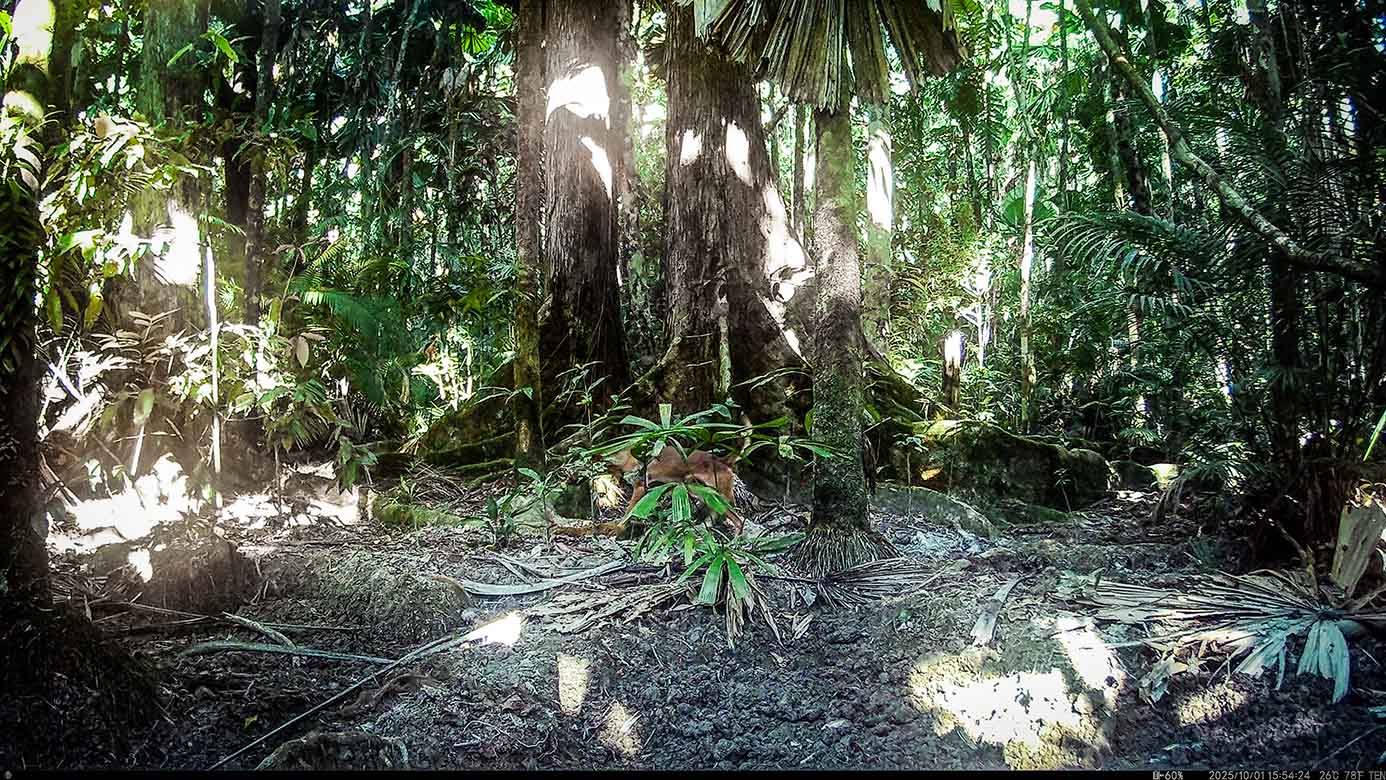
Daintree Rainforest Dingoes …
What does a pestilence of feral-pigs do to the health of a tropical rainforest?
An article published in Nature on 15th October 2025 – Aboveground biomass in Australian tropical forests now a net carbon source – portends that the carbon sink capacity of North Queensland’s intact tropical forests may be in decline. A 49-year analysis from Australia’s largest available tropical forest inventory data-set, containing about 10,000 stems from 474 species over twenty half-hectare plots, which represents about 1/100,000th of the total area of North Queensland’s tropical rainforests across a latitudinal range of some 1,130-KM between Iron Range and Mackay, indicates that productivity has been overtaken by the rate of death and decay.
What the authors are saying, is that climate change and associated increase in cyclone frequency and severity, is the principal cause of decline in the state of health of Australia’s tropical forest environment and clearly, Australia needs to lift its game.
However, it is not just woody above-ground standing biomass that sequesters organic carbon, as it is a major component of all organisms living on Earth – producers extract it from the air in the form of carbon dioxide, while consumers are sustained by its digestion.
In the world’s oldest rainforest, cassowaries digest a colossal quantity of fruit that is otherwise incapable of being safely ingested by anything else, for its highly toxic protective necessity, but rendered independently unviable until defecated onto the ground with cassowary-restored viability and preferentially beneath an opening in the upper-canopy, to grow under the spotlight until the opening is closed. Cassowaries have been providing this exclusive canopy-healing territorial service for 60-million-years, tying the structural integrity of the ecosystem into such rigour that cyclones are maintained as replenishing assets rather than catastrophic liabilities.
In 1898, the self-governing colony of Queensland unceremoniously removed the human inhabitants from this ancient ecosystem, after seventy-millenia of accrued custodial excellence, robbing the rainforest of its understanding, appreciation and most valuable asset. Commercial logging then systematically stripped around 70% of the tree species via 115-years of unconstrained logging enthusiasm, to greatly value-add to the highly lucrative business of unpaid human labour. Feral-pigs took up the vacancy of this forced human extirpation and proceeded to undermine the structural integrity of the ancient rainforest by digging through the root structure across twelve-hours of every day.
Another recent study has revealed that by uprooting carbon trapped in soil, wild pigs are releasing around 4.9 million metric tonnes of carbon dioxide annually across the globe, which is the equivalent of 1.1 million cars!
How much energy does the Daintree Rainforest have to surrender to sustain the estimated 30,000-feral-pigs, which are known to eat cassowary eggs and predate upon juvenile cassowaries? How many cassowaries are robbed of sustenance by the 30,000-feral-pigs taking up the cassowaries-share of available habitat and to what extent does that reduction weaken forest integrity?
Daintree Rainforest Foundation Ltd has been registered by the Australian Charities and Not-for-profits Commission and successfully entered onto the Register of Environmental Organisations. Donations made to the Daintree Rainforest Fund support the Daintree Rainforest community custodianship and are eligible for a tax deduction under the Income Tax Assessment Act 1997.