
Camera Traps – November 2025 accrued 25-cassowaries, 17-dingoes and 16-feral pigs. Technical problems plagued the month’s tally, with only half of the 12-cameras delivering any data. Against this technological failing, cumulative monthly averages fell across the board, with cassowary sightings 75% down, dingoes dropped by 59% and feral-pig numbers plummeted by 92%. Against November 2024, cassowary sightings dropped by 52%, dingo numbers fell by 72% and feral-pig sightings also decreased by 94%.
Image highlights from Camera Traps – November 2025
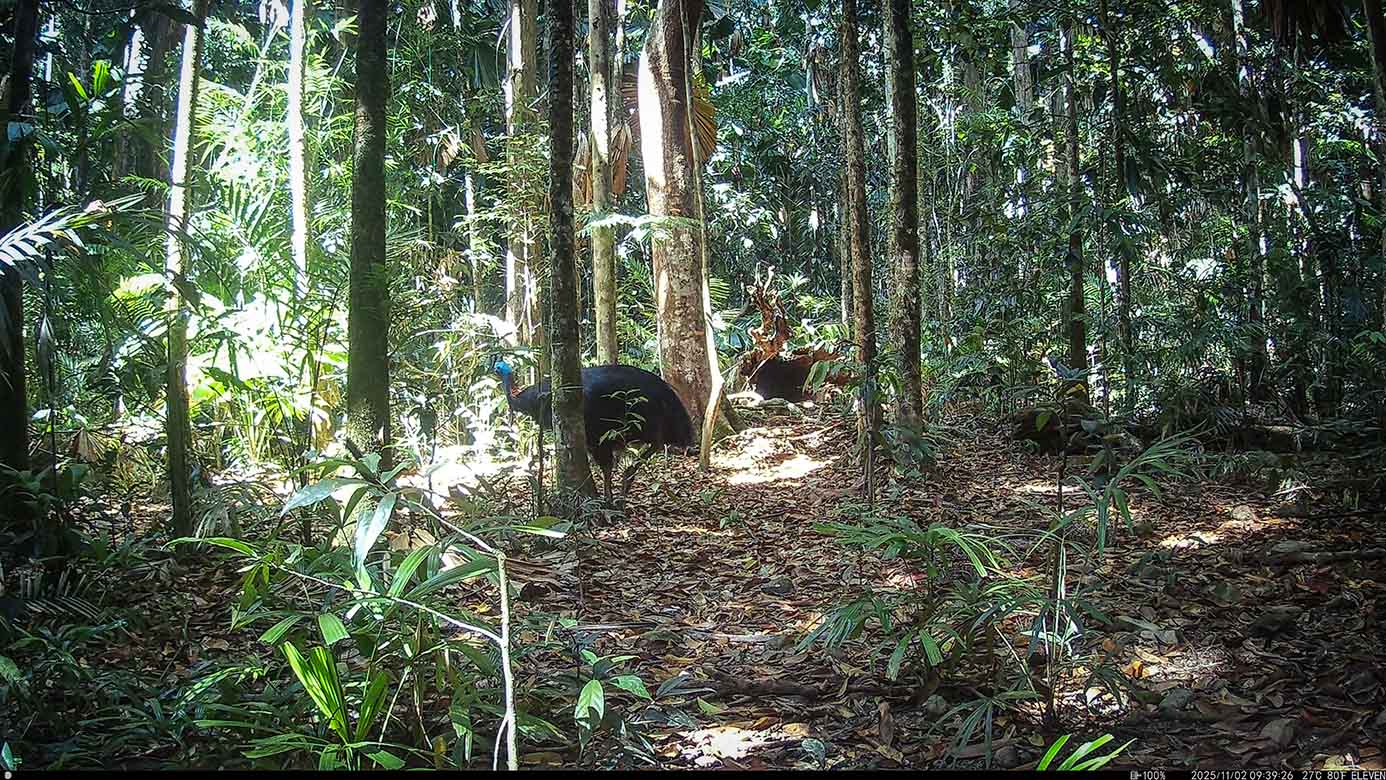
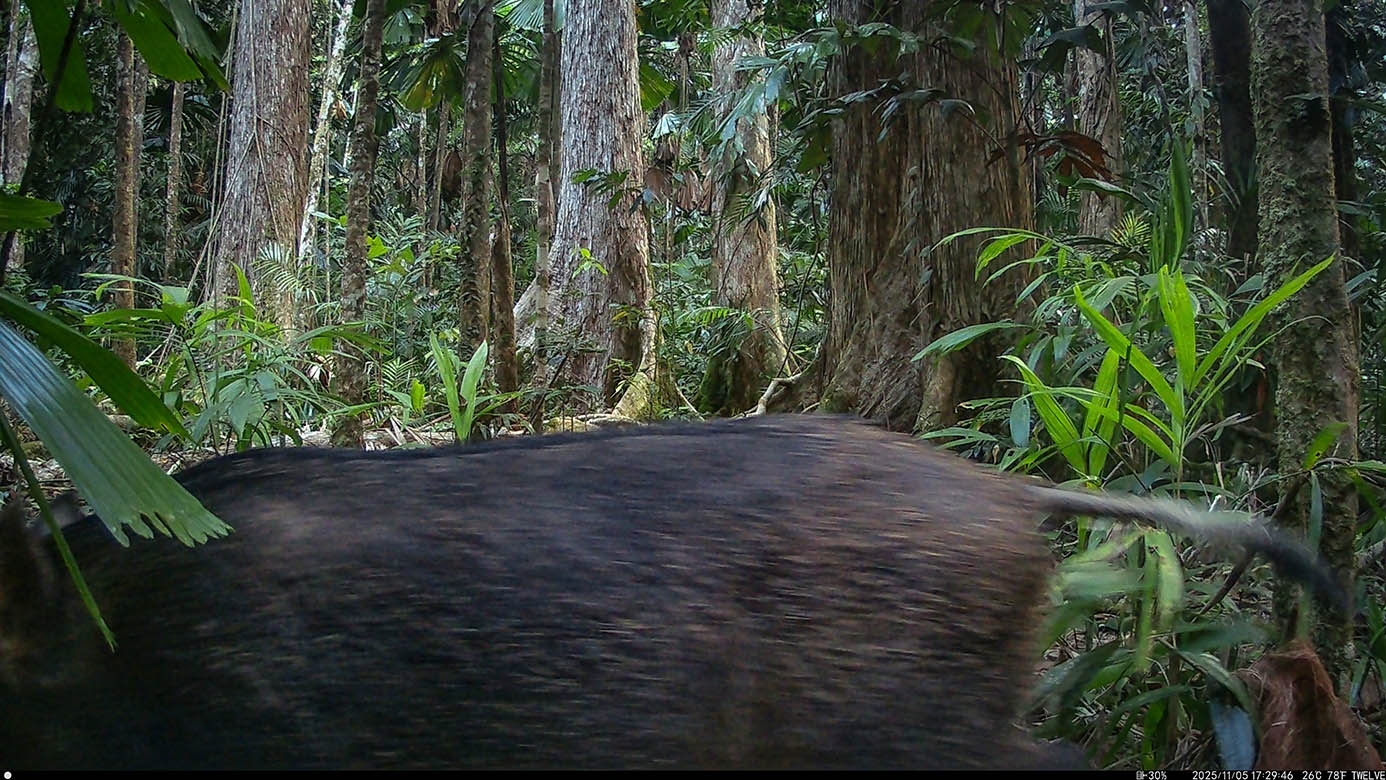
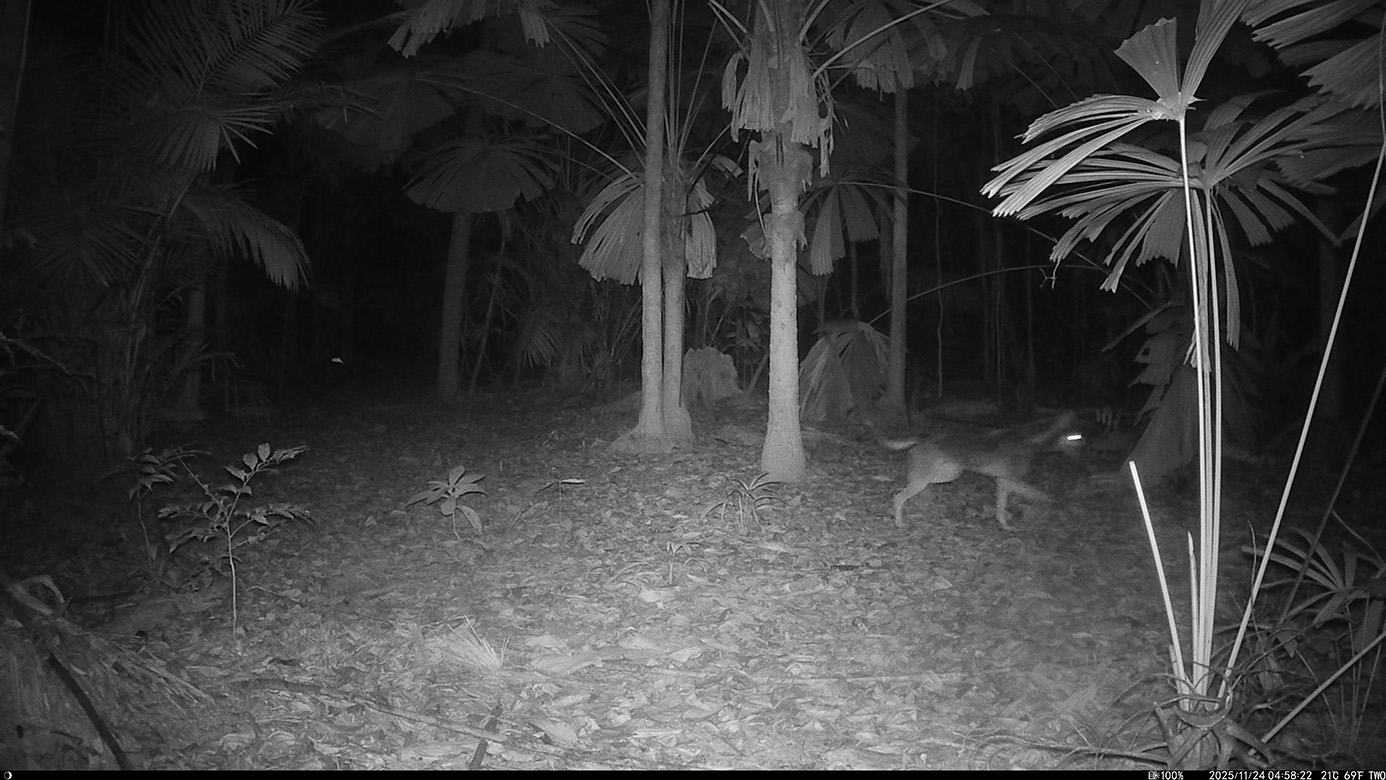
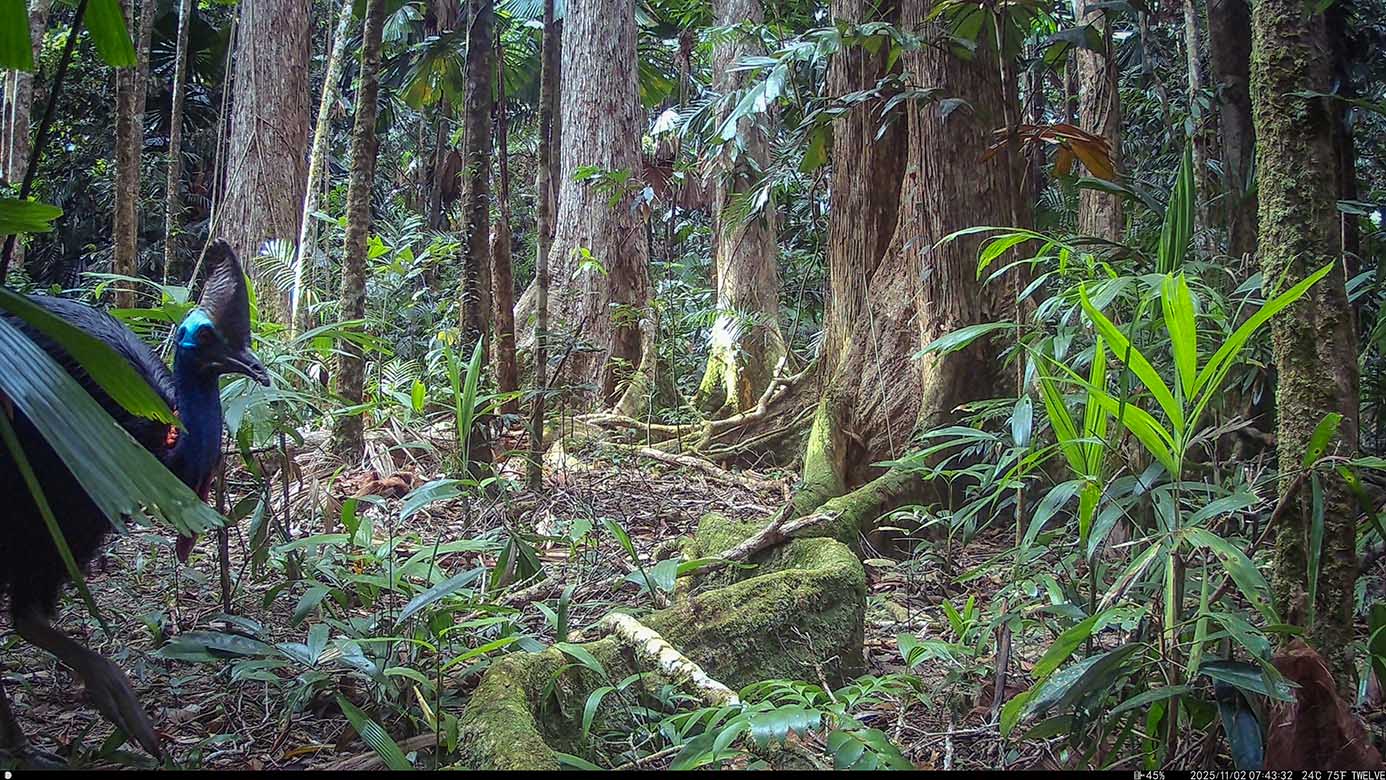
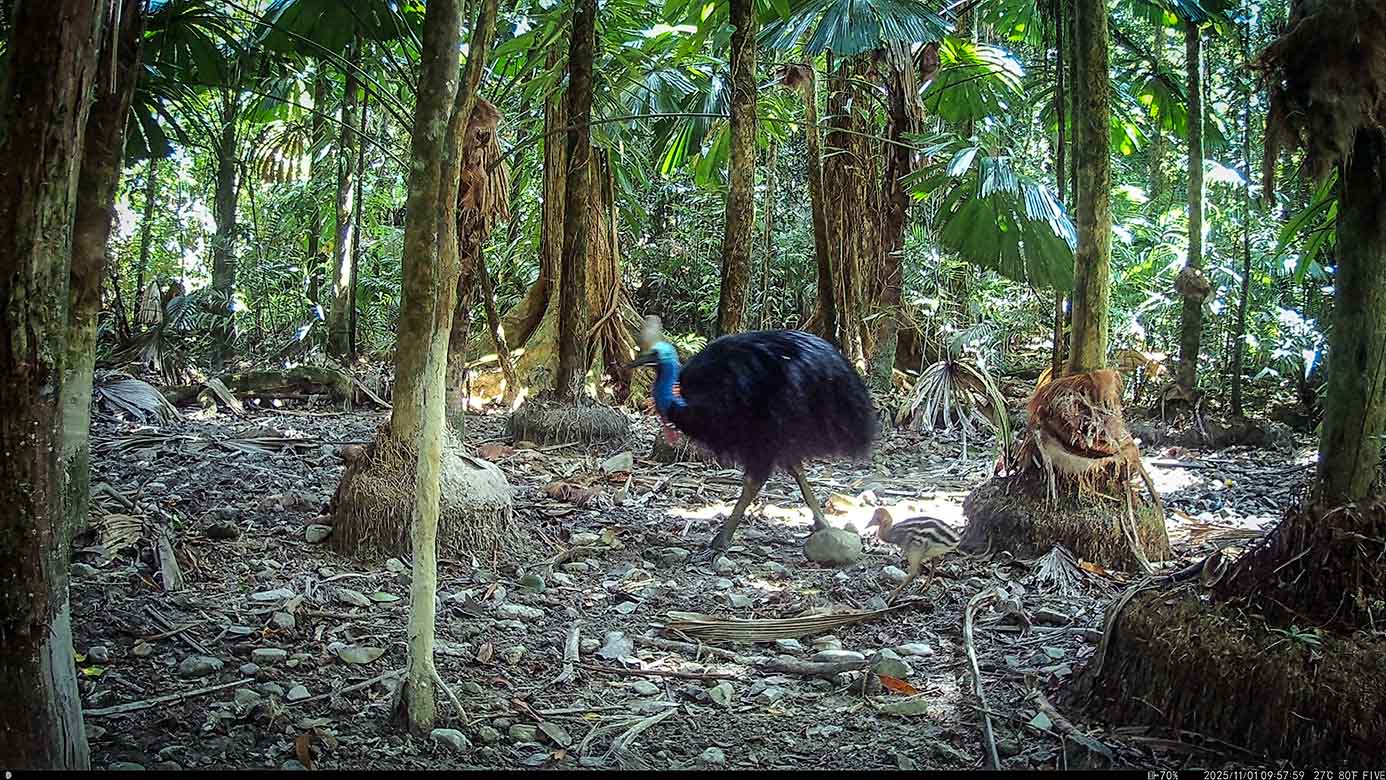
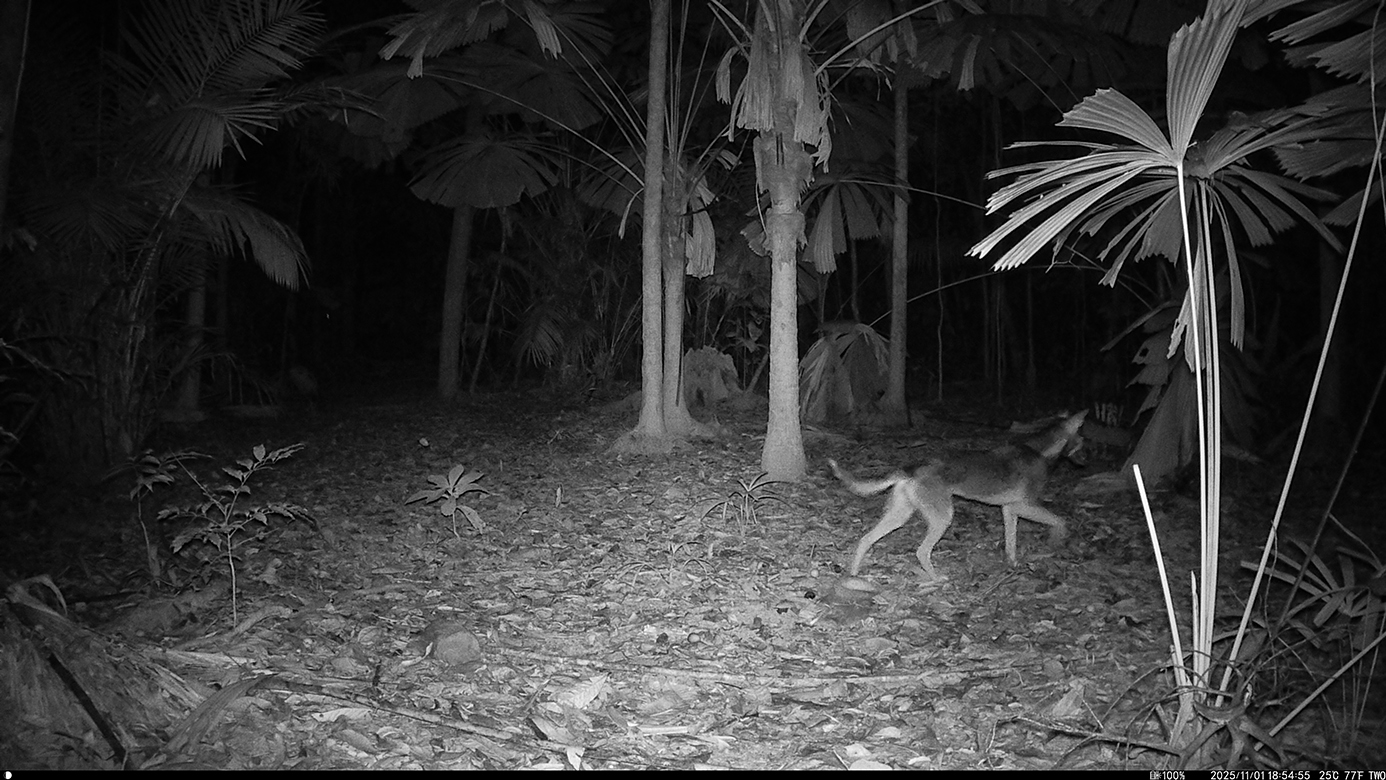
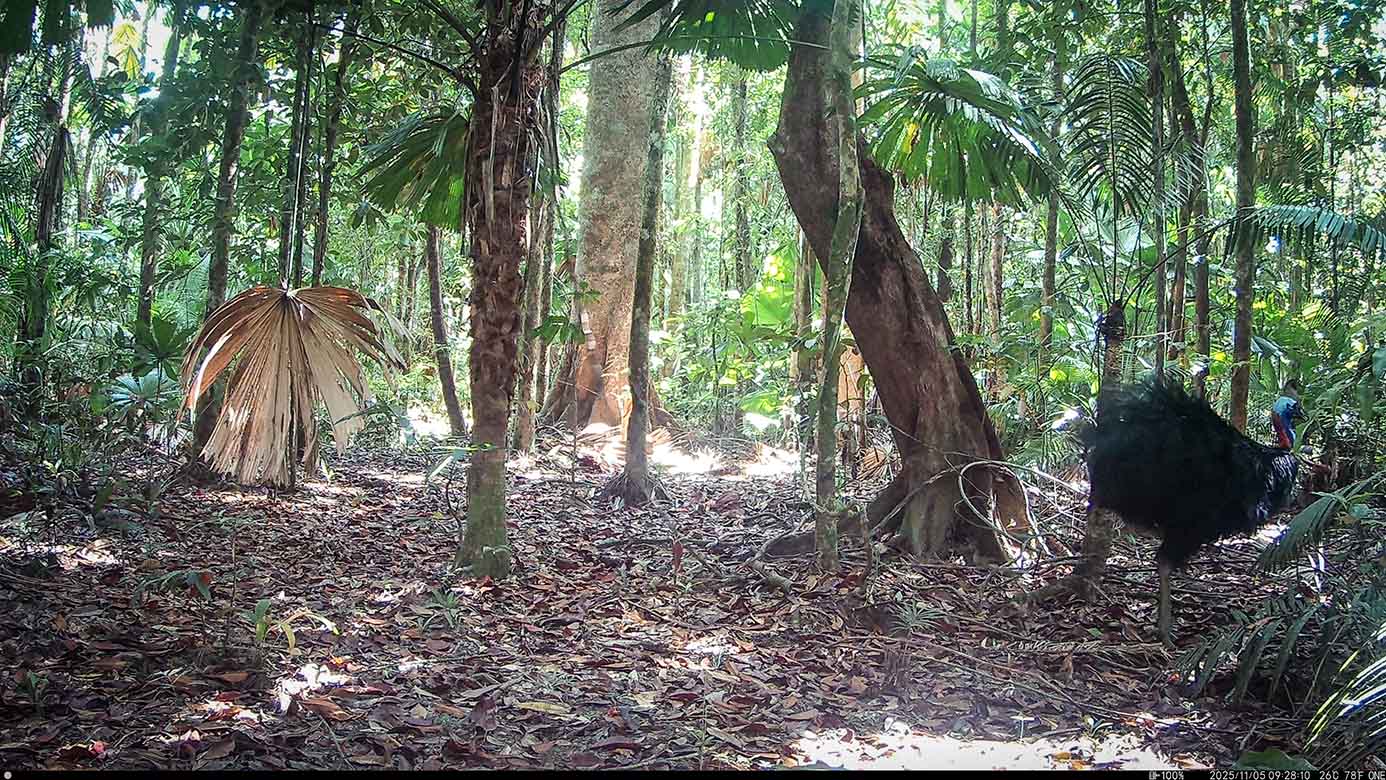
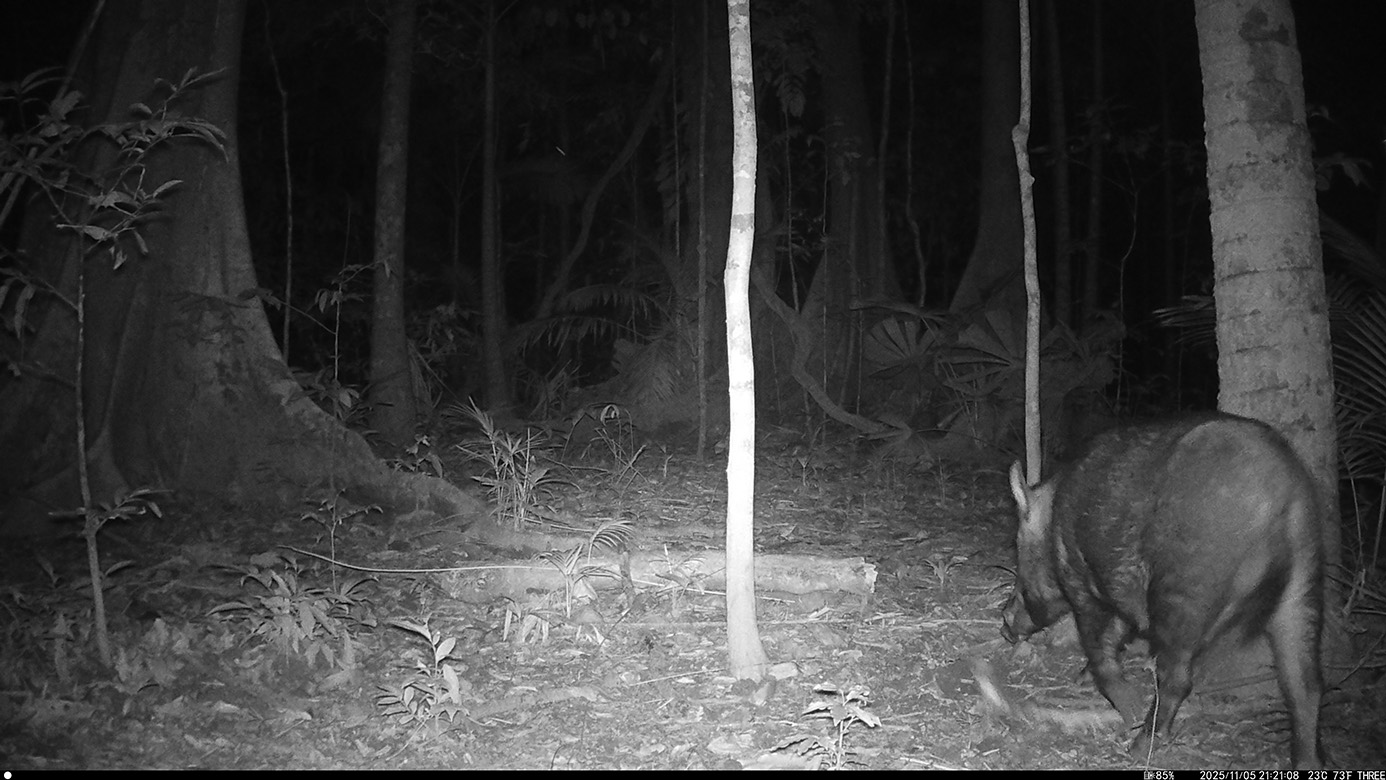
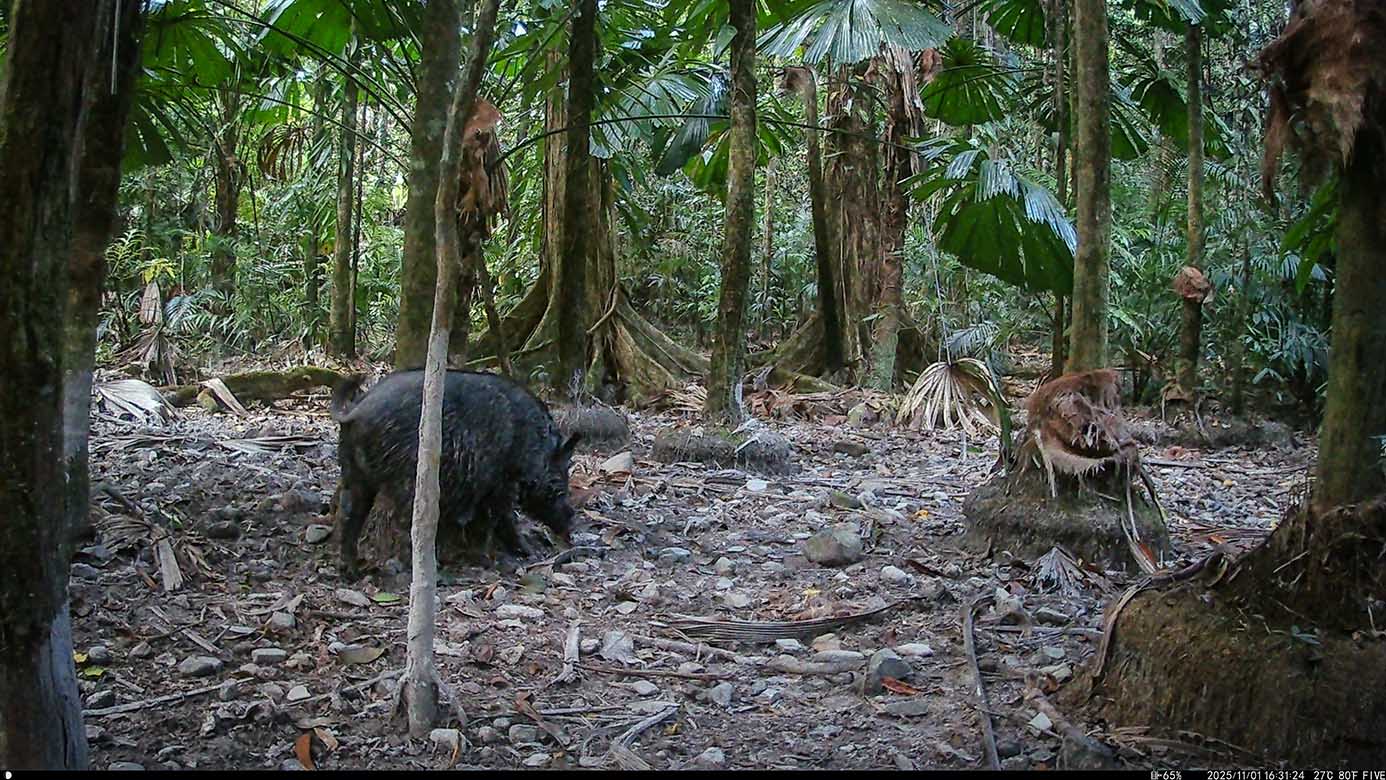
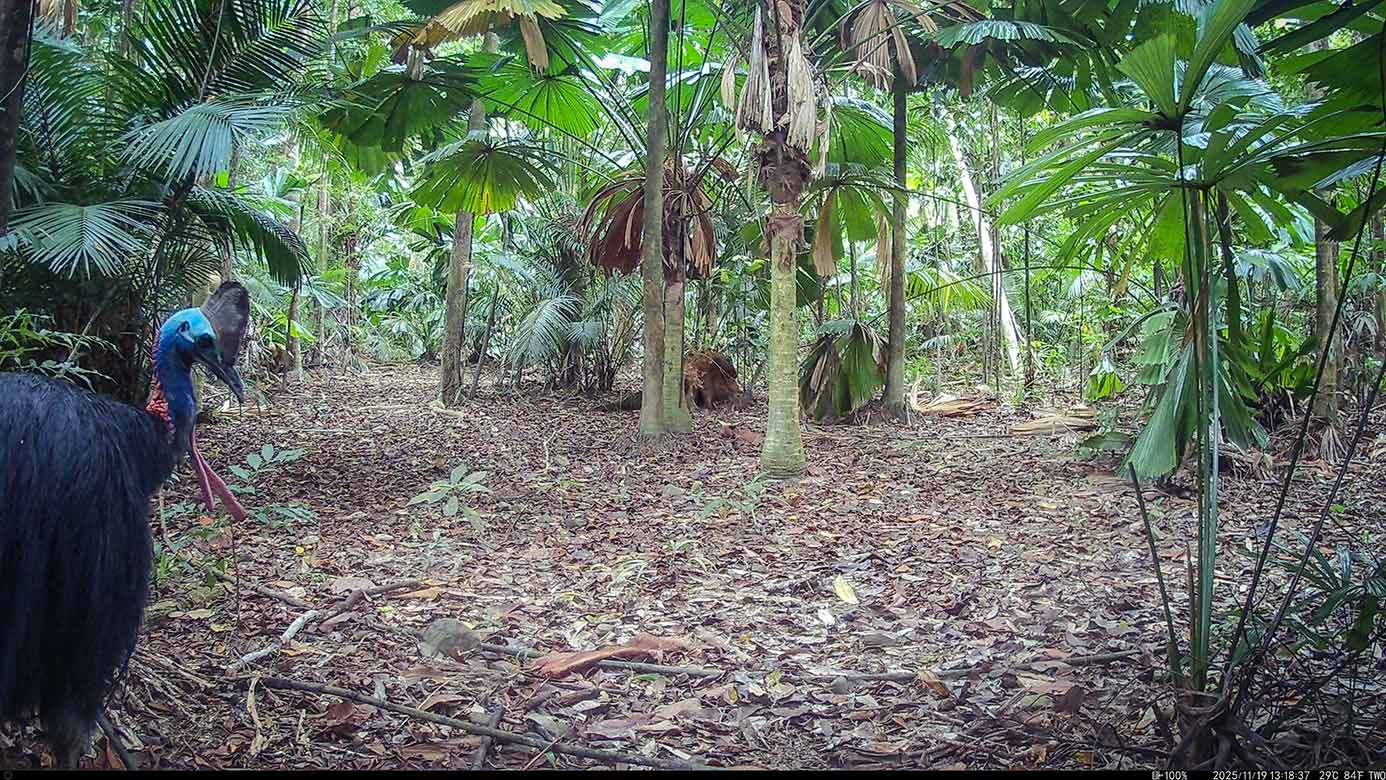
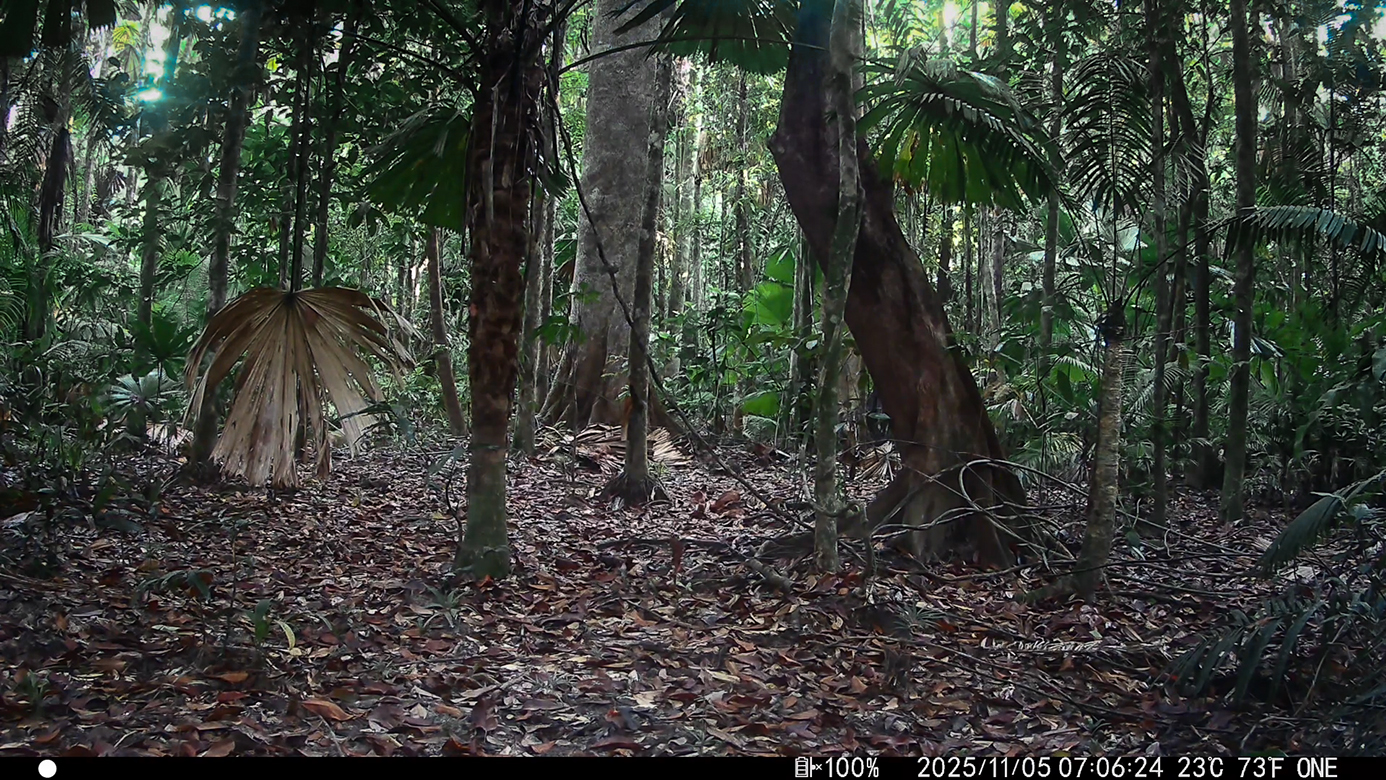
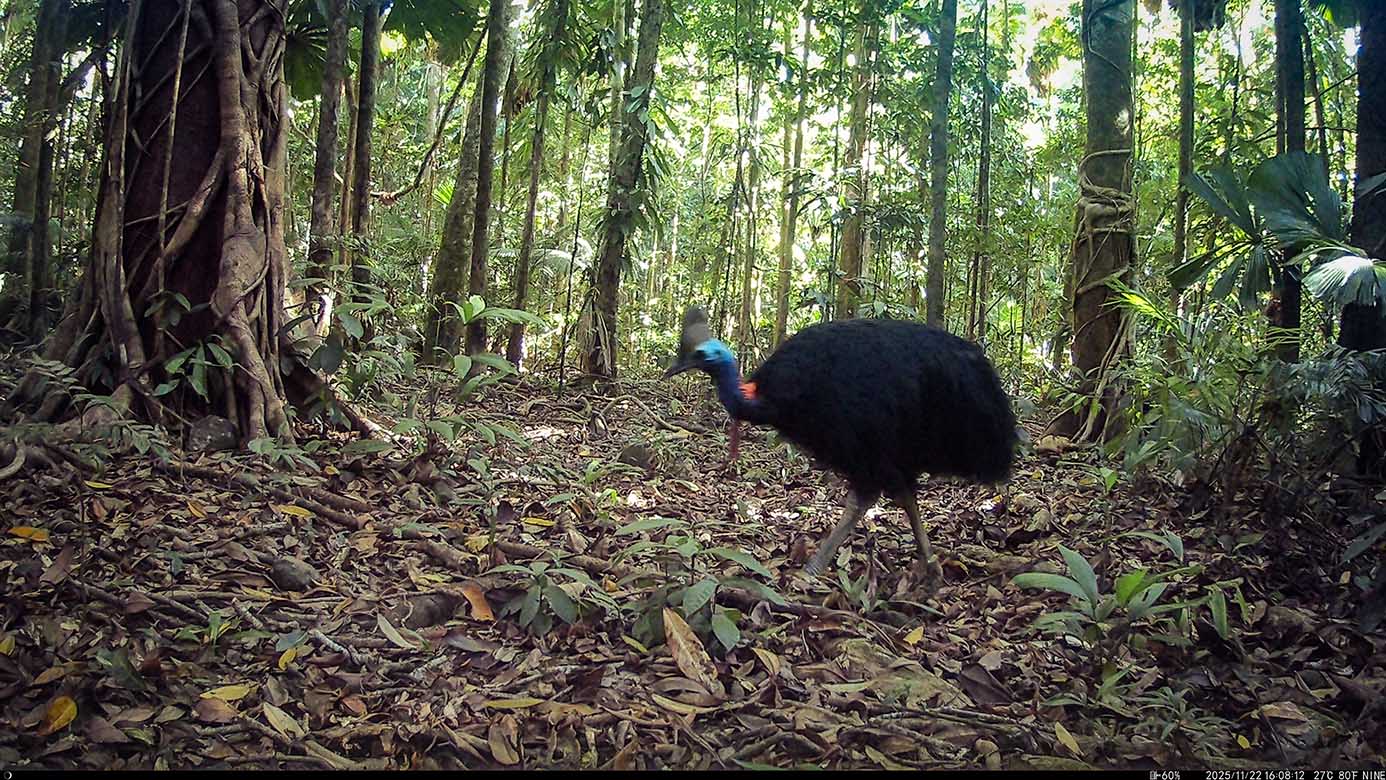
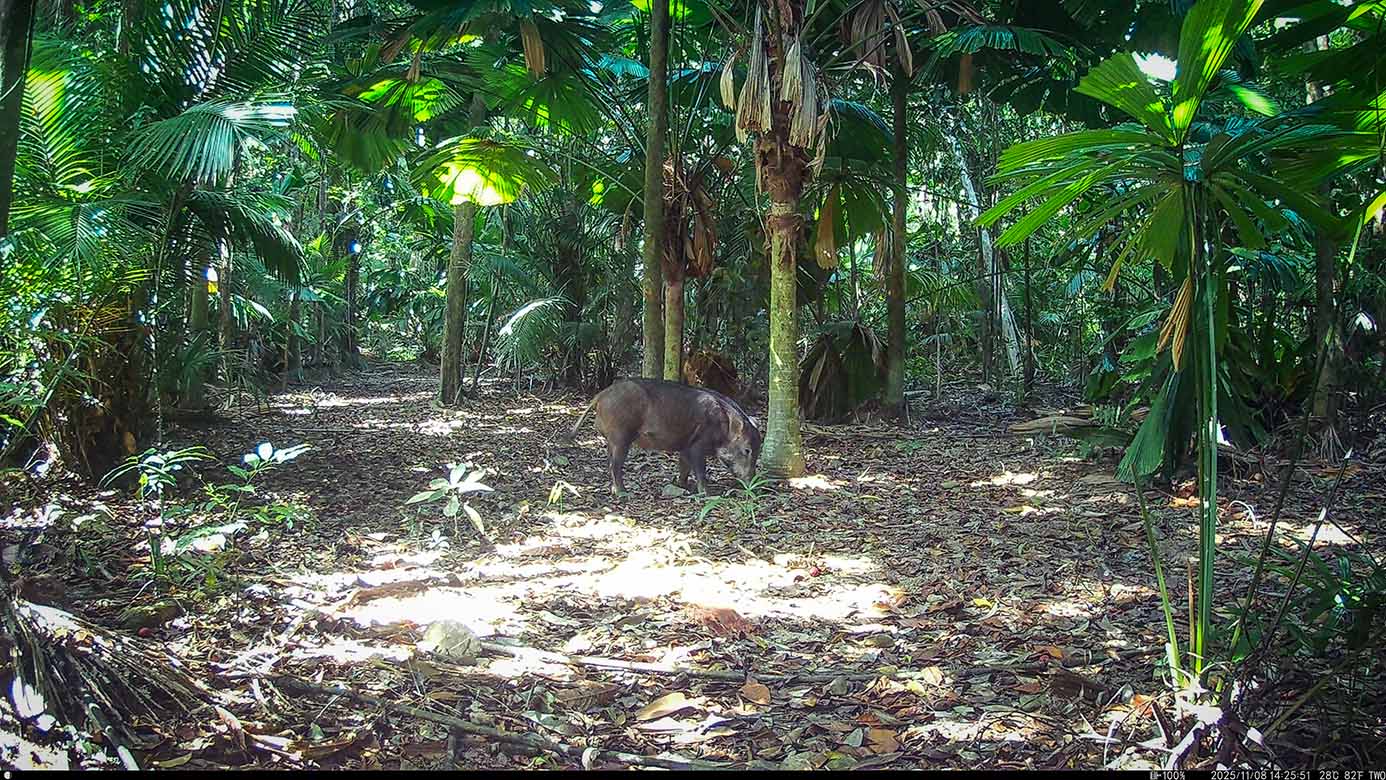
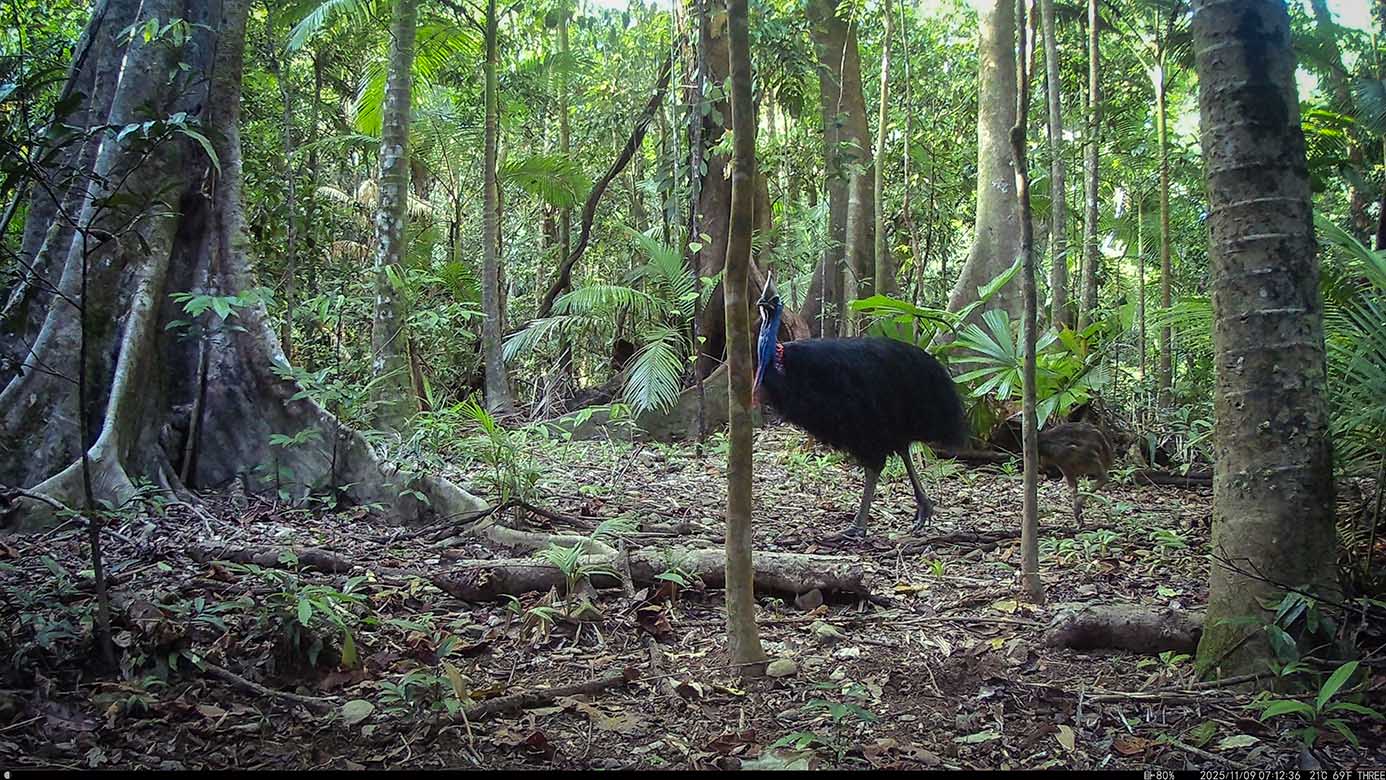
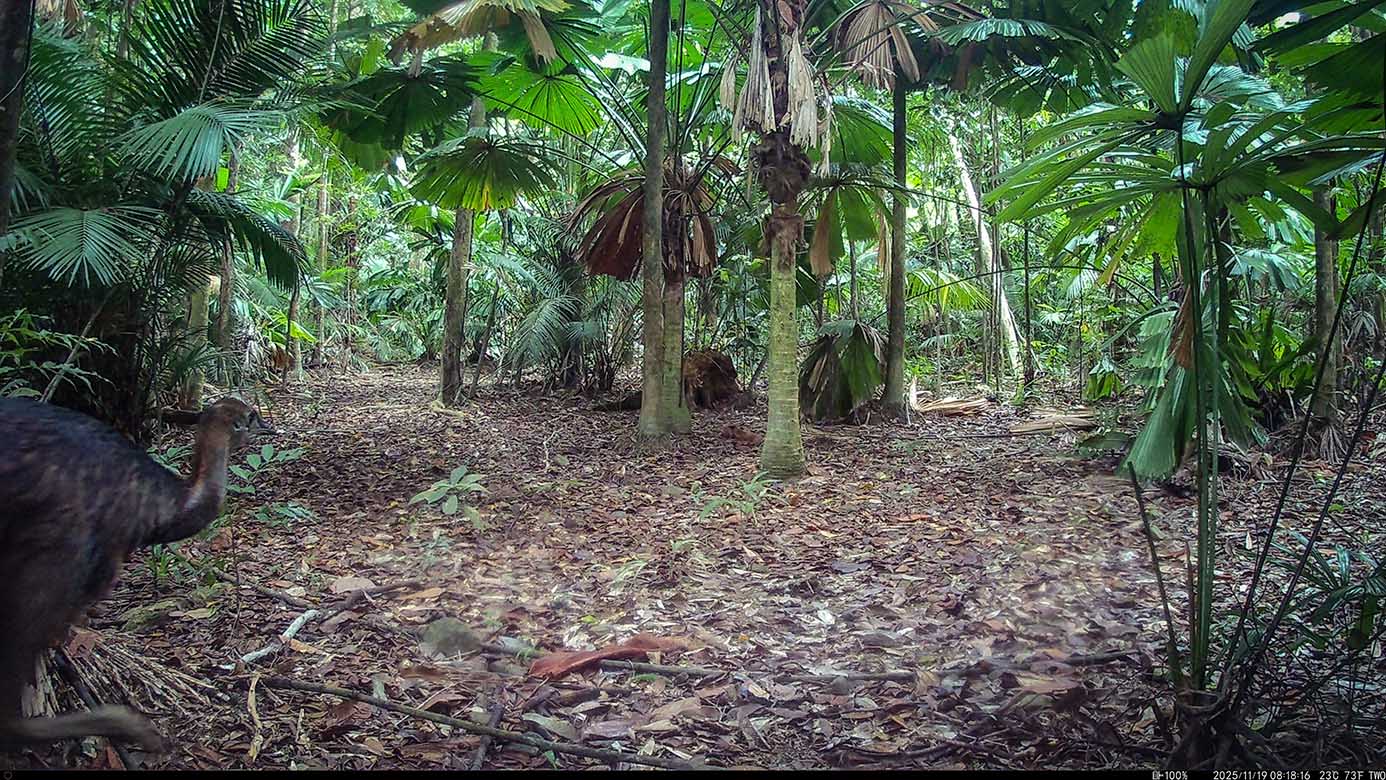
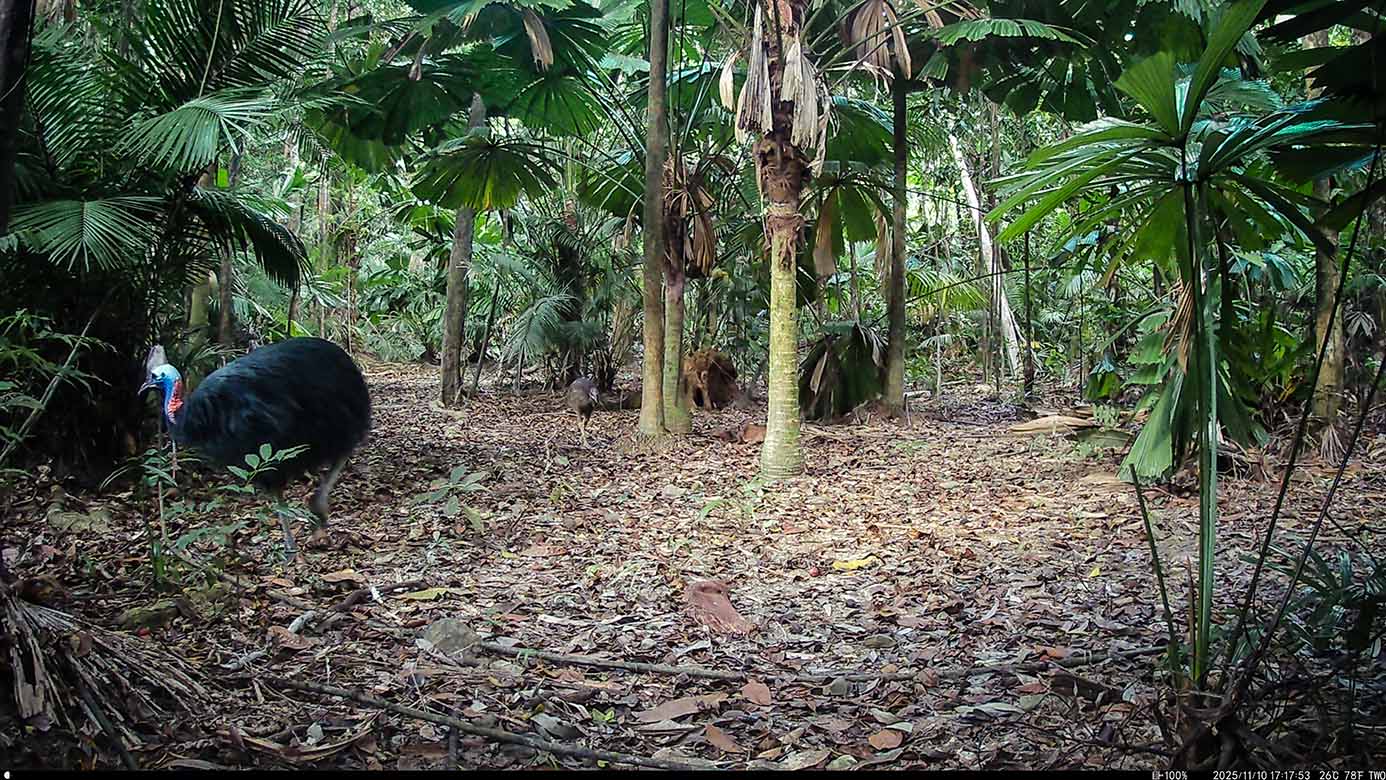
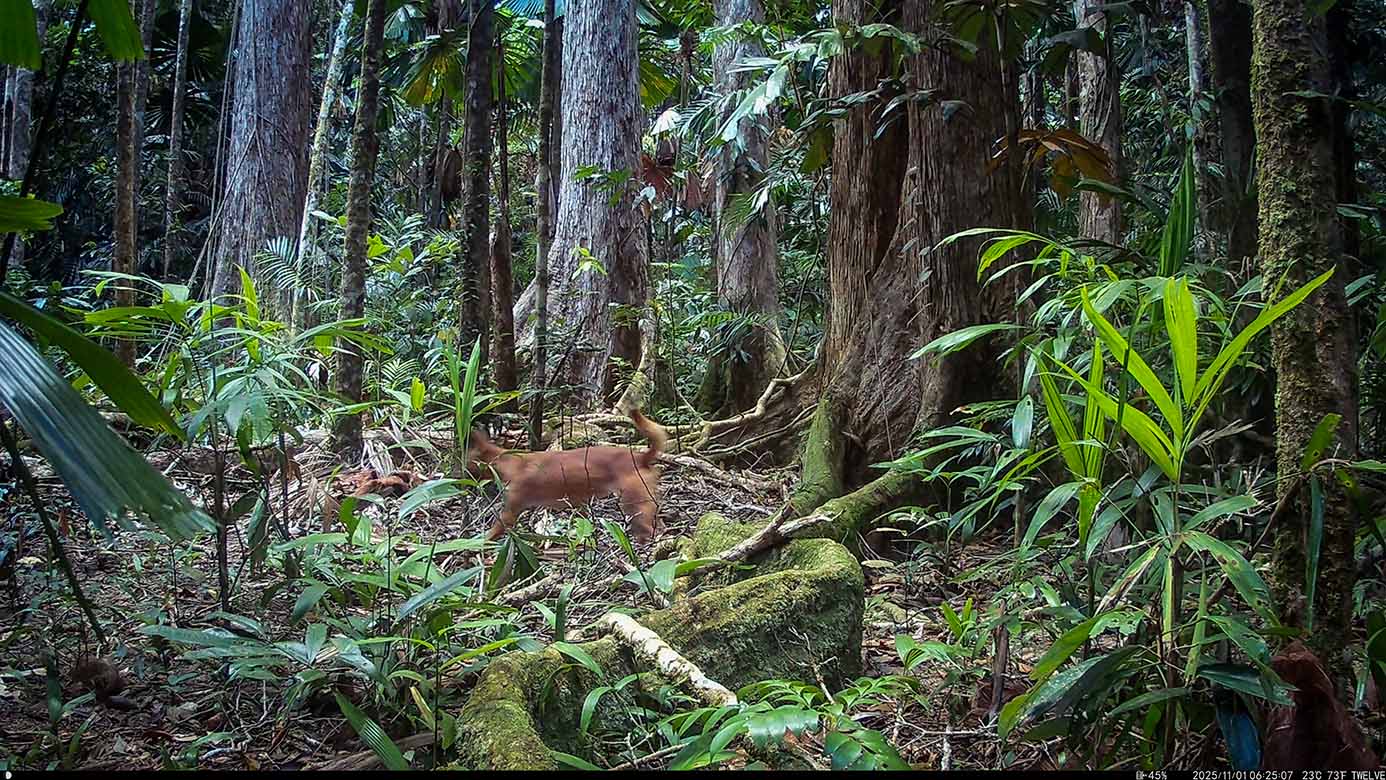
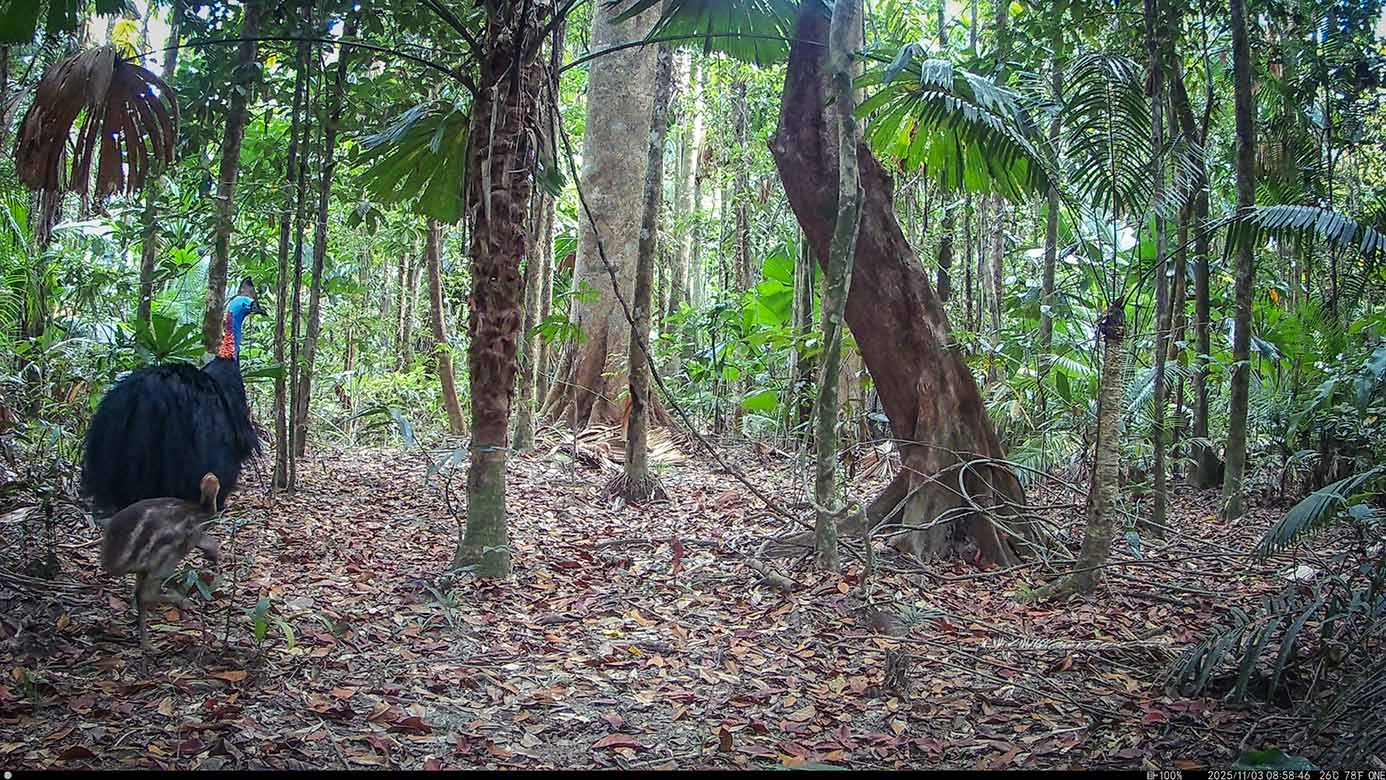
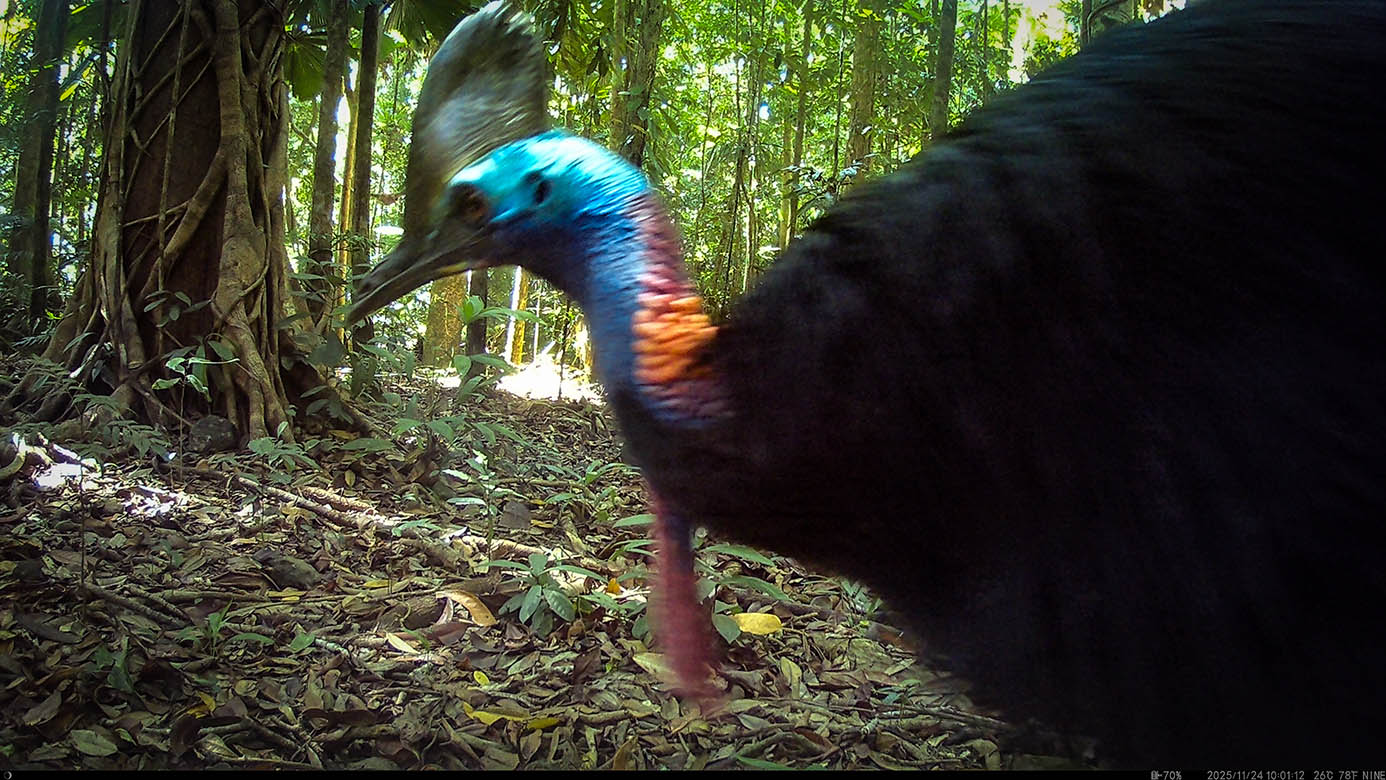
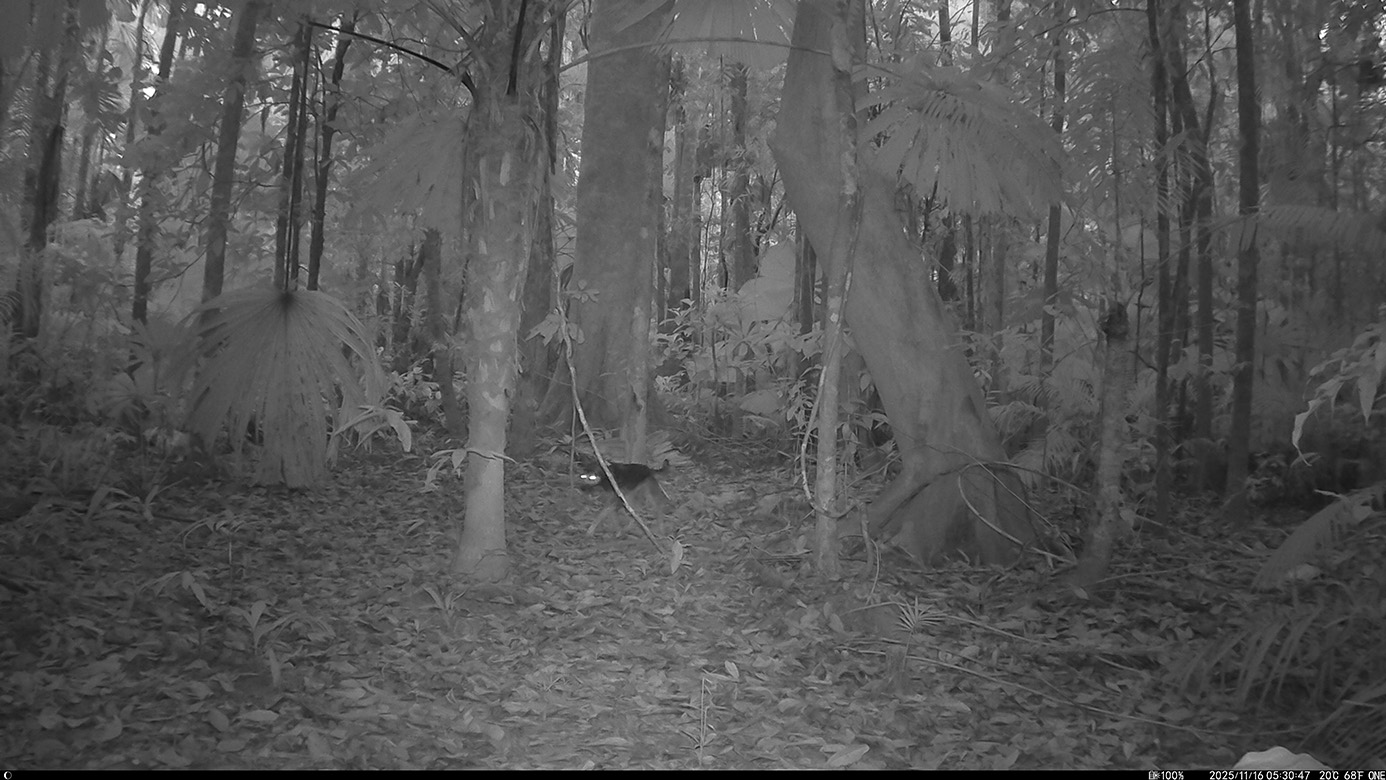
Keeping up with the cassowaries
Taiga with his latest offspring: Vlad!
Baloo – now independent from Malu
Luna!
A community information session on the Daintree Ferry Replacement and Land-side Infrastructure Project was held on 20th November 2025, featuring a panel of representatives from Douglas Shire (Council), Durack Civil (land-side infrastructure contractor) and Birdon Pty Ltd (ferry design, build and operator). Anyone who couldn’t attend this session has been encouraged to send their questions through to Council, so that the community’s concerns are better understood.
Alas, Foundation resident directors were unable to attend, but gratefully accept Council’s invitation to lodge their questions and hereby appeal to Council to amend the ferry policies and practices that have historically inflicted profound damage upon the residential and business communities within the attraction.
The Daintree Futures Study (DFS) 2000 is the most comprehensive policy framework and associated data-set for ferry-operations and impacts ever established and its primary objectives are:
- conservation of the Daintree’s outstanding biodiversity, natural and cultural values (especially World Heritage values) for current and future generations;
- provision of appropriate services for residents; &
- provision of appropriate management regimes and infrastructure to support a high-quality tourism industry which maximises returns to the local community.
The DFS verified that there is a significant issue of competitive equity between the local community’s provision and maintenance of nature-based tourism facilities and those on public lands and a need to adjust ferry charges to achieve a better balance between the costs paid by public site users and those who visit private destinations. Varying ferry prices and management can influence equity to local residents and businesses, as well as collecting user-fees for environmental management and providing and maintaining visitor facilities and infrastructure services where user-pays at individual sites is inefficient. Against the acknowledged importance of providing ferry priority to travellers, overnight stays and group tours that support the local community’s conservation economy, the DFS recommended that the ferry pricing structure should be changed to:
- Self-drive: $20 per vehicle (30-day pass non-transferable)
- Transfer buses: $4 per person
- Tour buses: $4 per person
- Residents: Current pricing retained.
Council asserts that the Daintree Ferry subsidises general rates by providing a revenue stream. In 2000. the DFS established that the net revenue raised through ferry fees far exceeded the operating costs paid to the contractor by around $500,000 per annum. In 2020, Council reported that the Daintree Ferry generated revenue for Council beyond operational and associated costs, netting an estimated $1.15-million annually. The ferry-fee for a single vehicle crossing has increased by 364% since 2000, but none of this revenue has supported the DFS objectives of conservation, residential service-provision or visitor management and infrastructure within the destination. Indeed, such expenditures are essentially precluded by the DAINTREE FERRY REVENUE GENERAL POLICY, which is constrained in its upper limit at four million dollars, fed from the ferry’s annual surplus by a maximum of five hundred thousand dollars per-year, whilst the major portion runs into Council’s operational fund.
This surplus from over-charging on the ferry meets the definition of a tax, characterised by a compulsory extracture of money by a public authority for public purposes, which is not exclusively a payment for ferry-transportation services rendered. In consideration of the 2005 decision of the Supreme Court of Queensland by Justice Moynihan in Douglas Shire Council v Queensland Ombudsman, the relevant principle was that a local government authority cannot impose an additional fee on a service or facility with the specific intention of directing funds towards another particular purpose that is unrelated to the service or facility being charged. In this case, the Court ruled that the portion of the accrued ferry-fees, which was not “for” the provision of the ferry service, was hence not authorised within the power given by s 262.3(c) of the Local Government Act 2009.
Since World Heritage-listing on 9th December 1988, when the Daintree Rainforest community held a veritable monopoly of tourism access and management potential between the road network and the famed Daintree Rainforest, about forty-percent of community-lands have been commandeered unto public ownership, with boardwalks and visitor facilities funded upon strategically acquired properties, seizing tourism advantage away from the local community onto these heavily subsidised facilities. Commercial Activity Permits were almost exclusively restricted to day-tour operators out of the regional accommodation centres, whilst the Wet Tropics Management Authority (WTMA) implemented a policy of re-directing tourism beyond sustainable levels to appropriate areas south of the Daintree River, with tens-of-millions-of-taxpayer-dollars invested into competing travel destinations and experiences to drive this re-direction policy towards fruition, whilst ferry-fees for entry into the area skyrocketed.
To help appreciate the magnitude of injurious impact, Councillors and staff may imagine the reciprocal scenario if a $51 per-vehicle levy were imposed for entry into and exit from Port Douglas. On top of such an extracture, if forty-percent of Port Douglas prime tourism real-estate were acquired and fitted with tourism accommodation, food and beverage, to compete directly with the private-sector, but subsidised for the illusion of free-entry, travellers would be hard-pressed to justify patronising private properties for their relatively exorbitant expense.
Major works for widening approaches to allow dual-lane loading onto a four-lane ferry, will undoubtedly incur substantial costs, as will the impost of additional staffing for safe management of the dual-lane-loading, all of which fall under the cost-recovery entitlements currently authorised within the DAINTREE FERRY REVENUE GENERAL POLICY, which will inevitably increase the burden of expense for visitor-access across the Daintree River and subsequently into the business community within the destination with compounding injurious affect.
Douglas Shire constituents have been advised that design for these major upgrades was informed by GEO technical investigation, Flora/Fauna survey, Protected Plant survey, Ecological Assessment, Enviro-Management Plan, Cultural Heritage assessment, Hydrographic survey, Flood Modelling report & Preparation of Development Application, but not from any socio-economic impact assessment upon the residents and business community within the attraction, despite the history of profound injurious affect.
Minimising ferry-fees upon travellers pre-committed to patronising local ecotourism businesses, whilst increasing fees for travellers that are intent on by-passing local enterprises in favour of publicly-funded National Park facilities and services, will swing tourism in a supportive direction of the aforementioned DFS objectives. However, for the influence of the big players within regional tourism industry that may be major beneficiaries of the existing policy arrangement, it would be prudent for Council to engage an expert consultancy in socio-economic analysis to forensically determine the magnitude of historic impact and the potential for optimised improvement, so that this next phase in ferry-development does not inadvertently fall into this deeply inscribed rut of historical wrongdoing.
Within the existing policy framework, Council could exculpate itself from any unintended wrongdoing by amending the DAINTREE FERRY REVENUE GENERAL POLICY to ensure that every dollar of surplus ferry funds goes into the reserve, that the upper limit is removed and the aforementioned DFS objectives are included as legitimate aspects of the Daintree Gateway Master Plan’s purpose of improving the experience for visitors and increasing economic benefit for local communities and businesses within the Daintree-Cape Tribulation area.
Daintree Rainforest Foundation Ltd has been registered by the Australian Charities and Not-for-profits Commission and successfully entered onto the Register of Environmental Organisations. Donations made to the Daintree Rainforest Fund support the Daintree Rainforest community custodianship and are eligible for a tax deduction under the Income Tax Assessment Act 1997.