
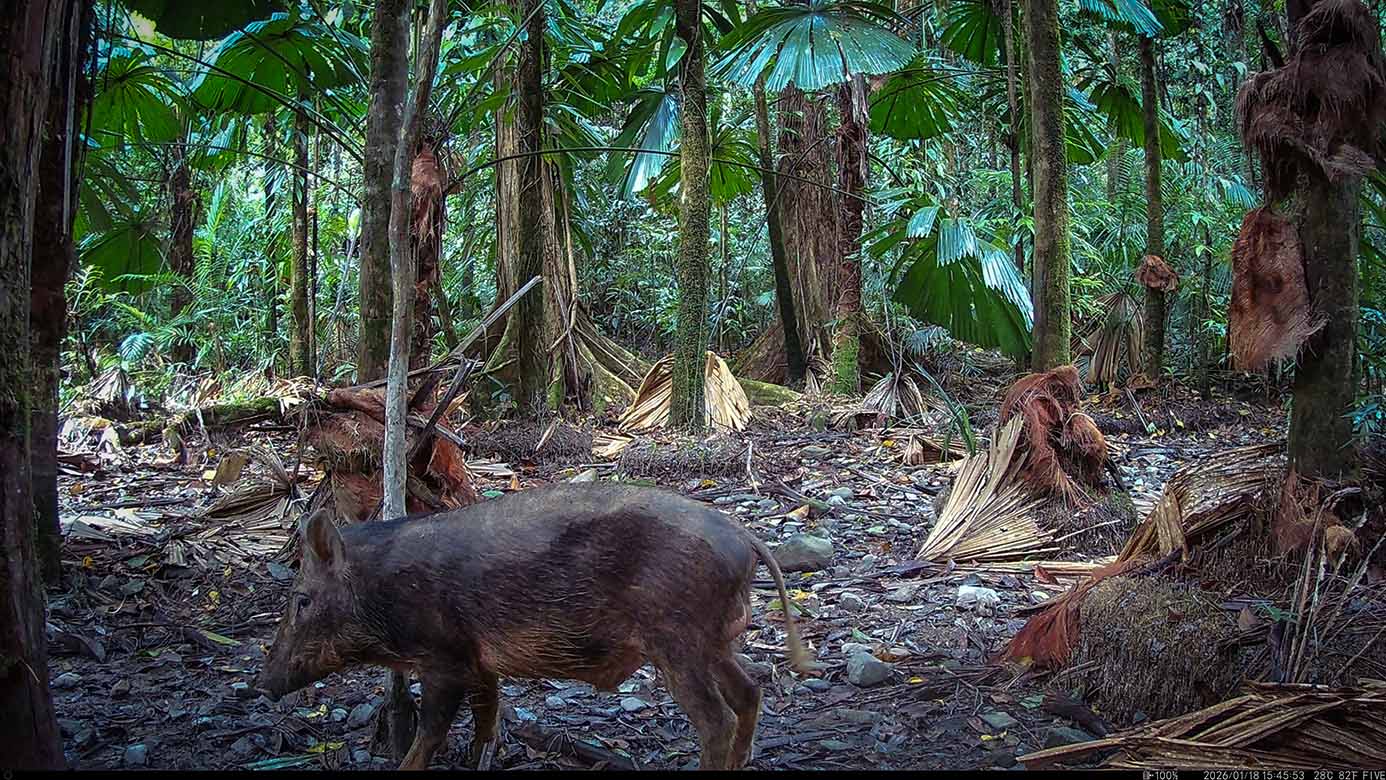
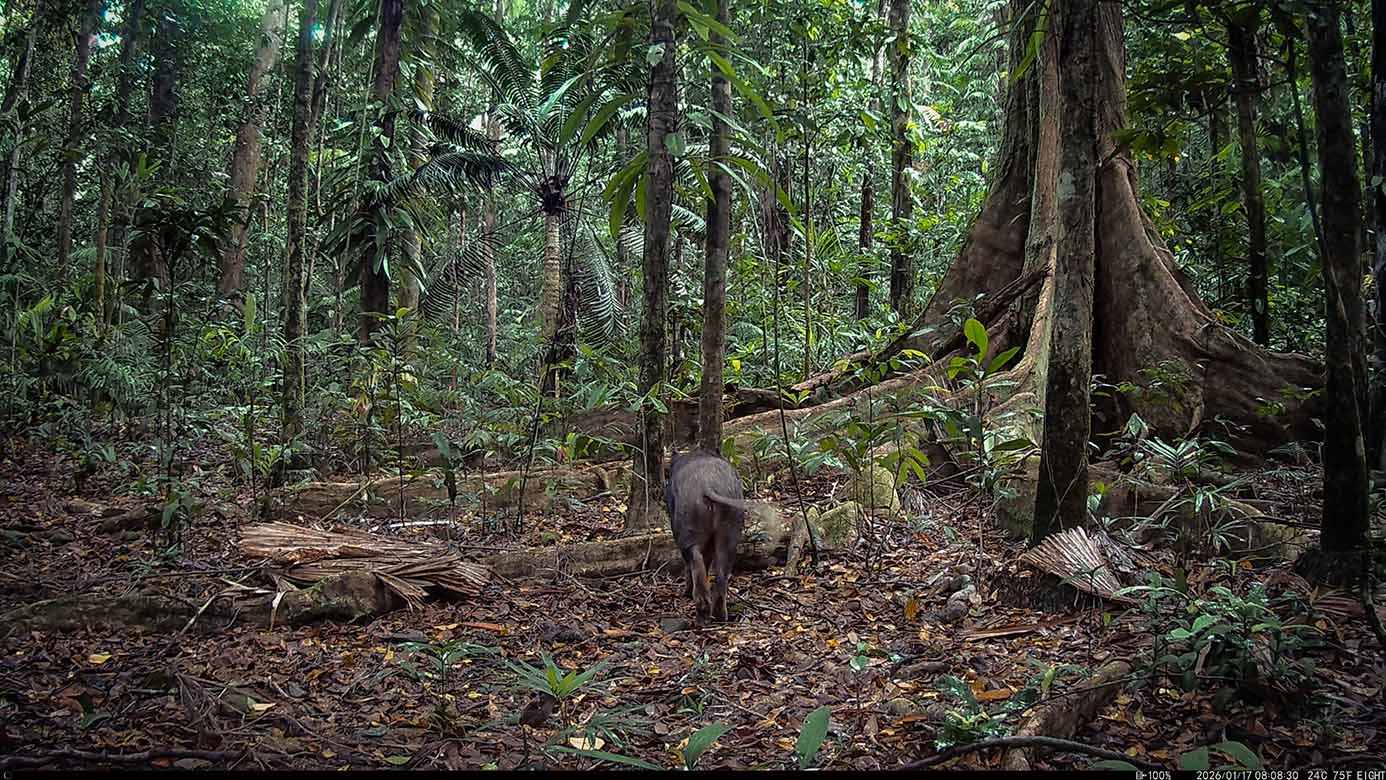
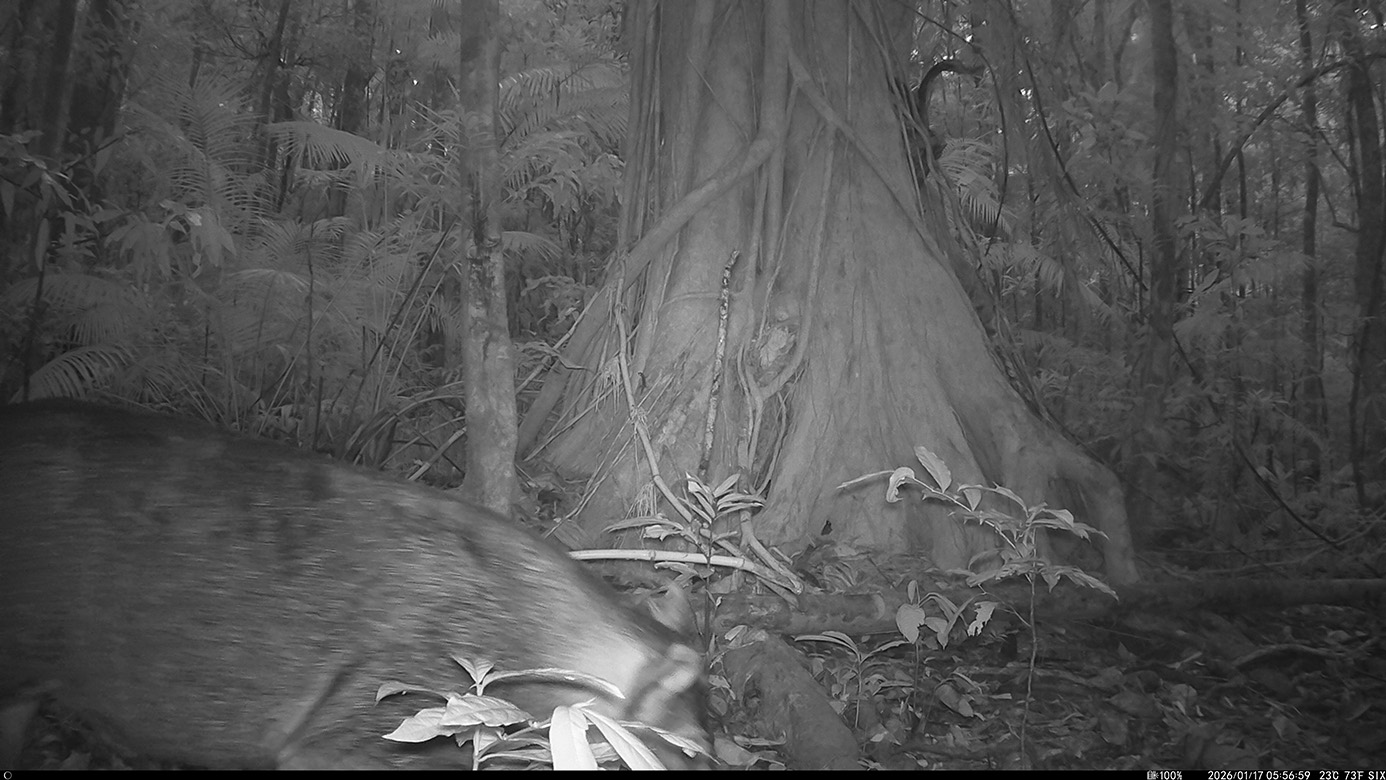
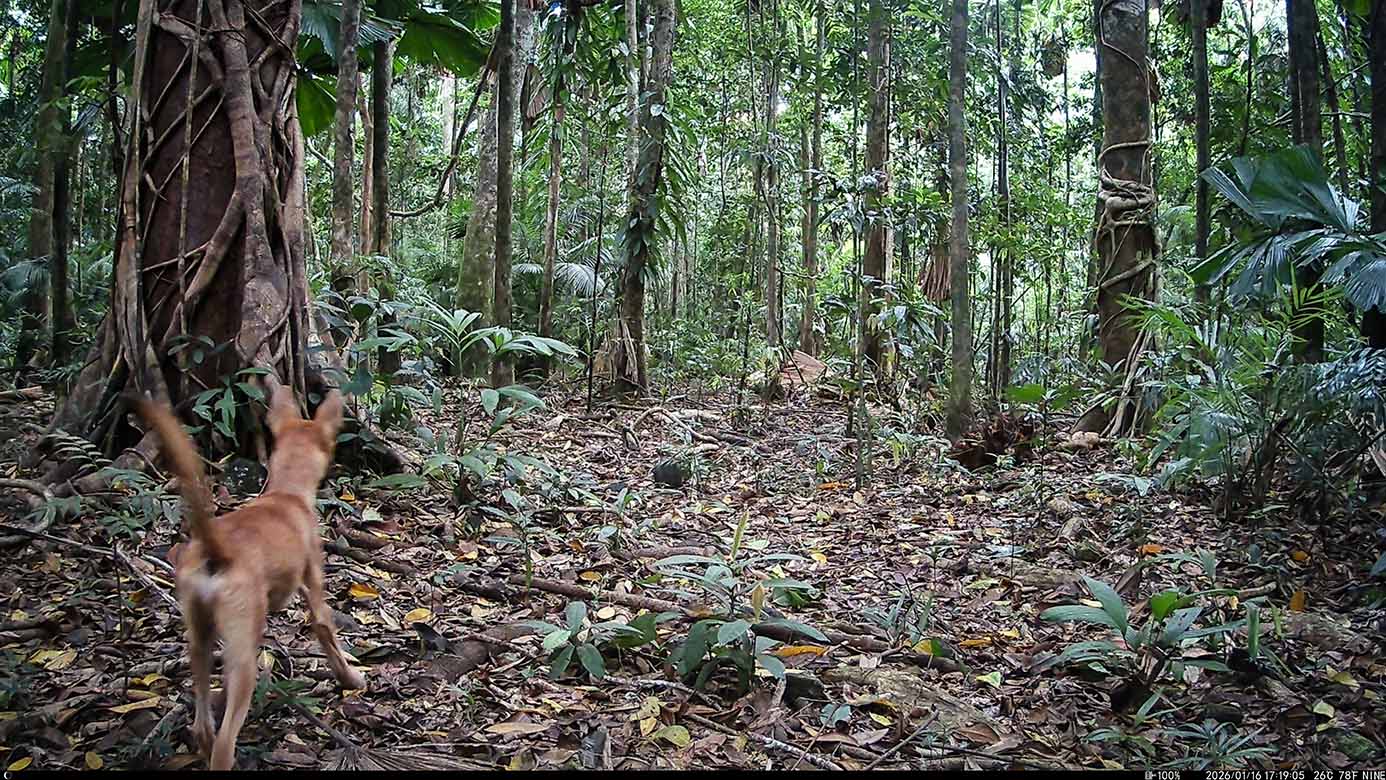
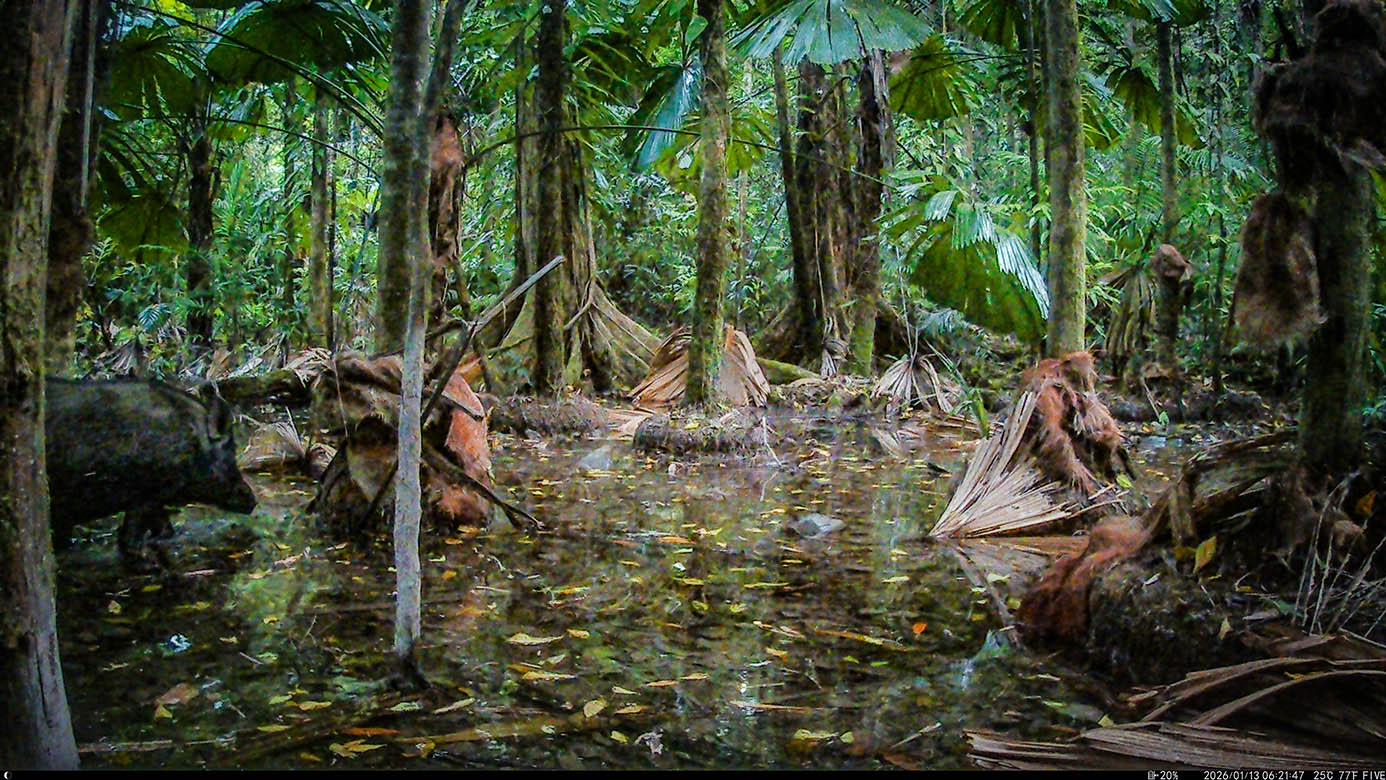
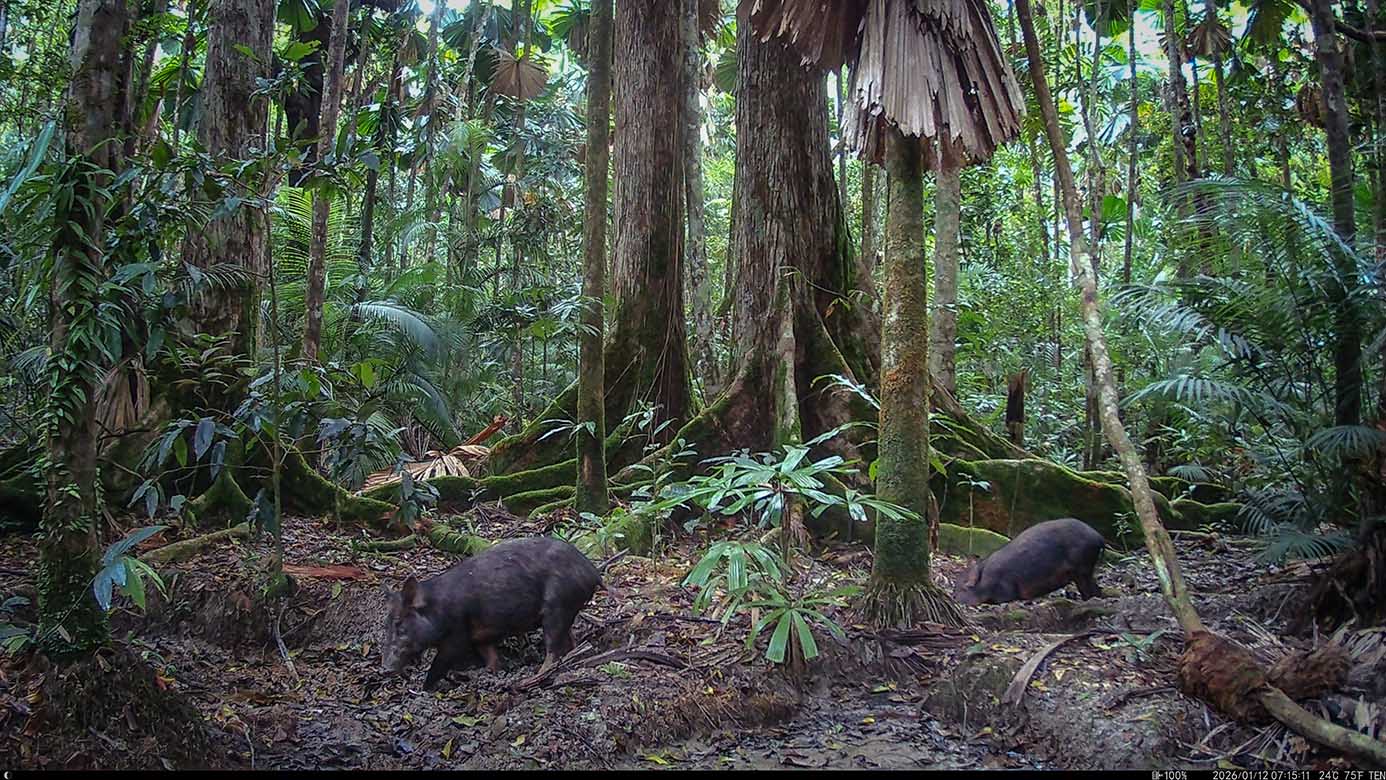
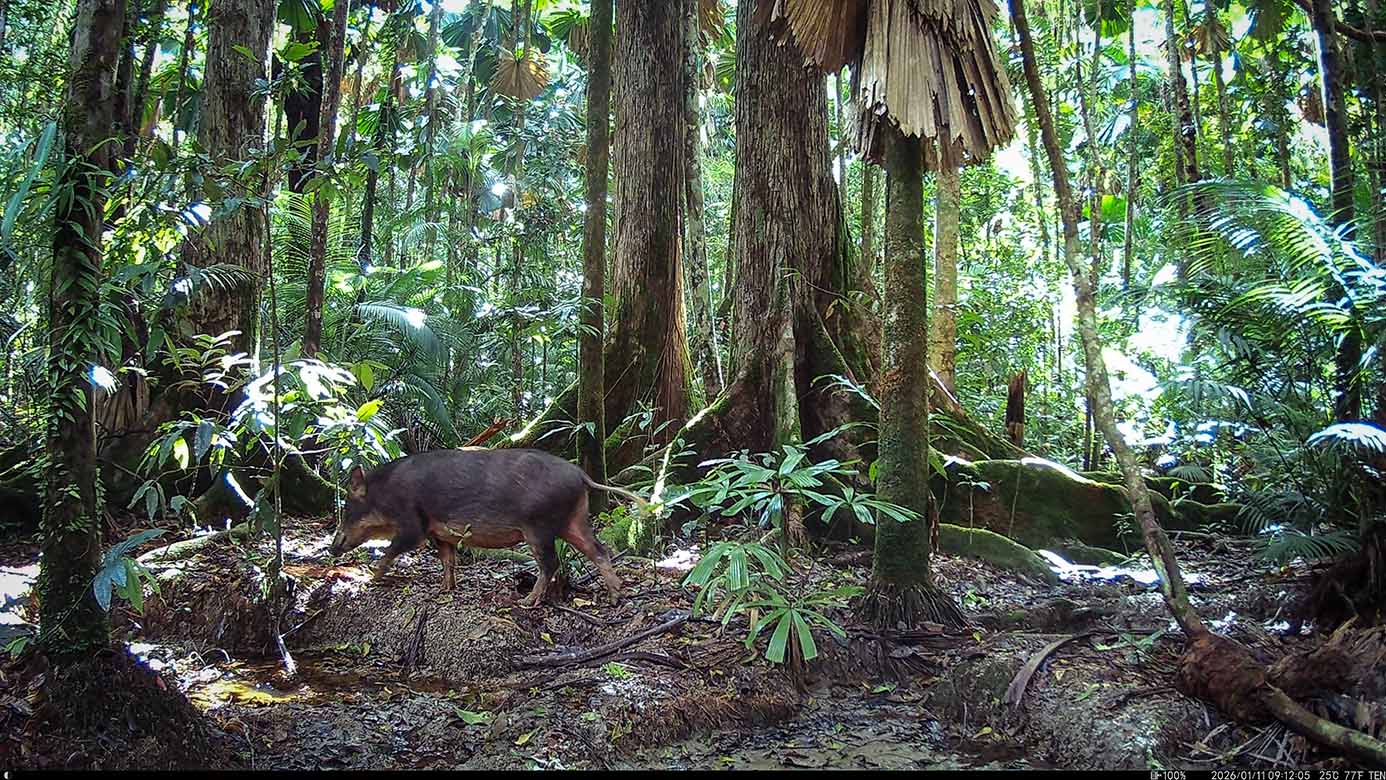
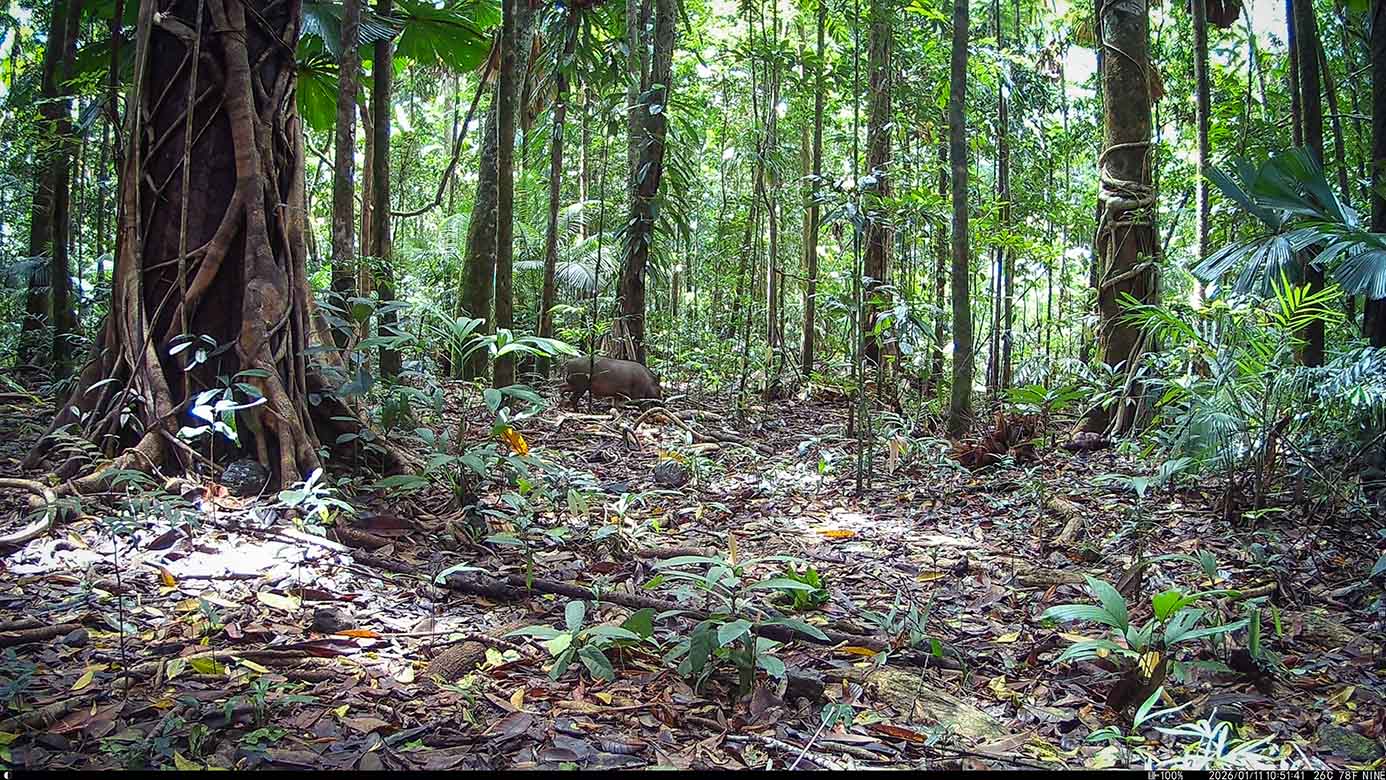
Camera Traps – January 2026 accrued 238-cassowary sightings, 19-dingoes and 295-feral pigs. Against cumulative monthly averages, cassowary numbers increased by 131%, dingoes fell by 54% and feral-pigs increased by 53%. Against January 2025, cassowary numbers rose by 79%, dingoes decreased by 84% and feral-pigs rose by 25%.
Image highlights from January 2026
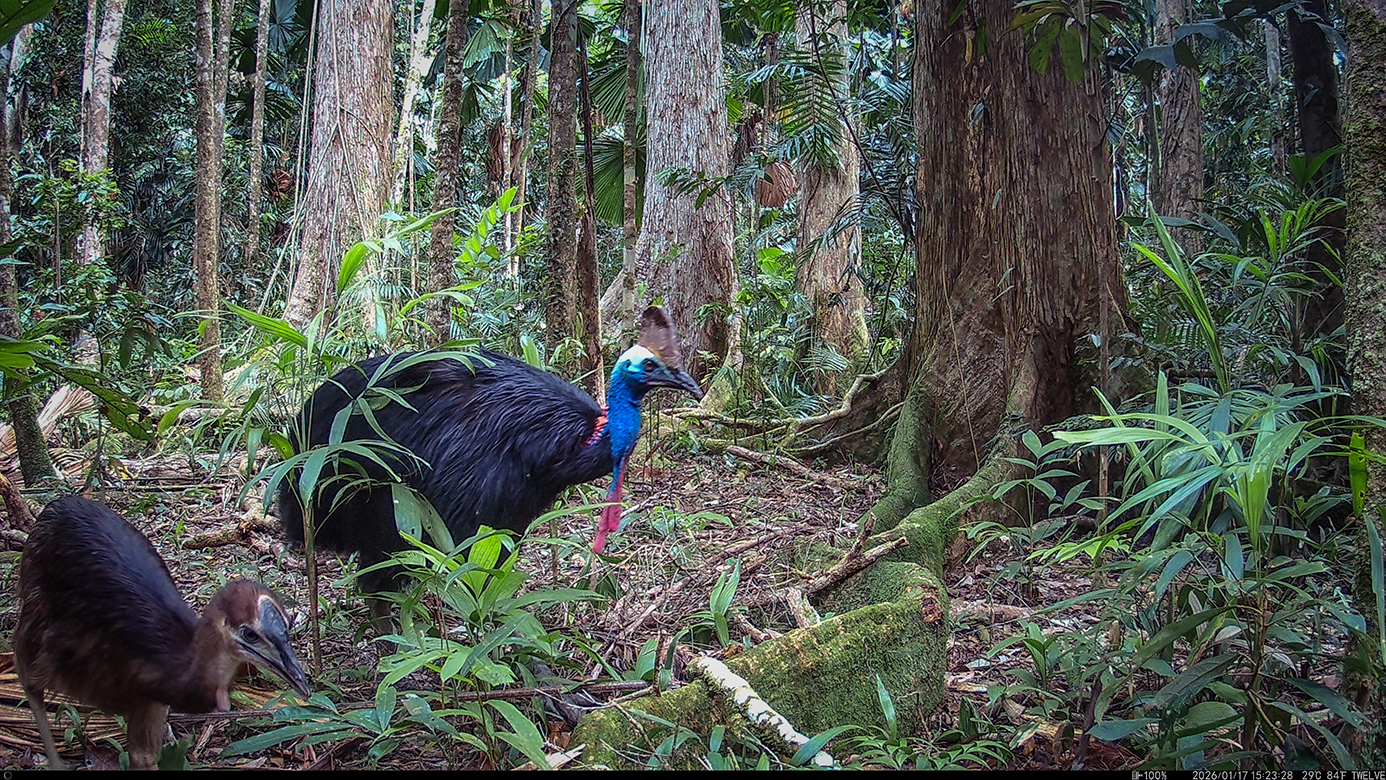
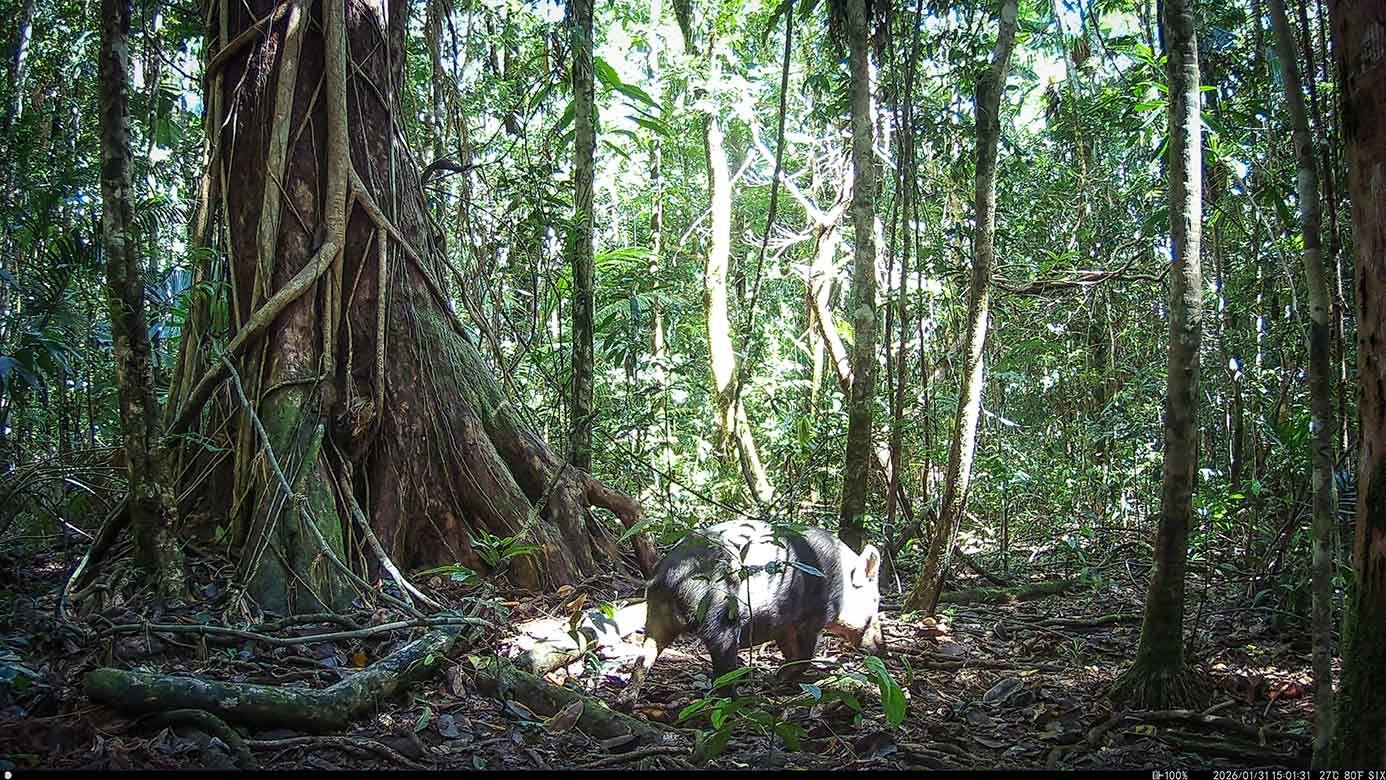
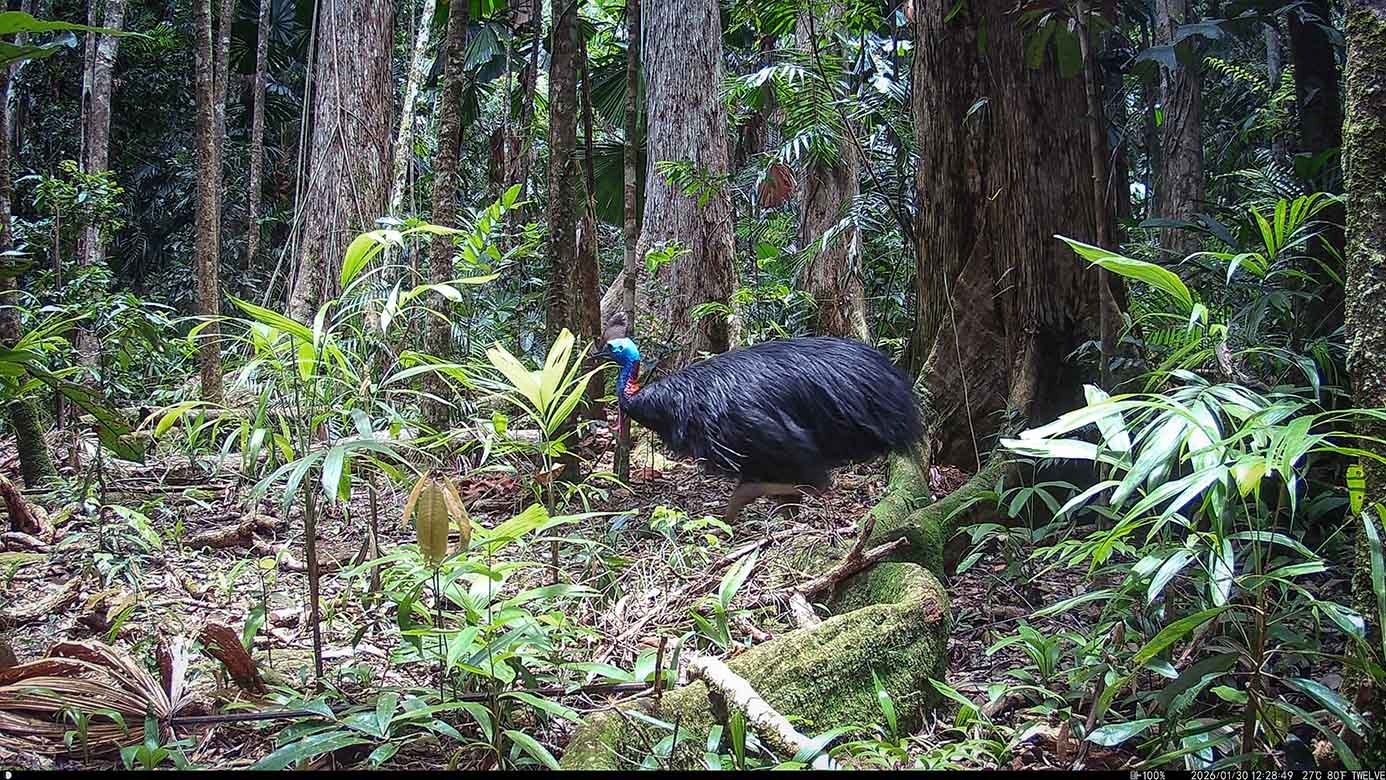
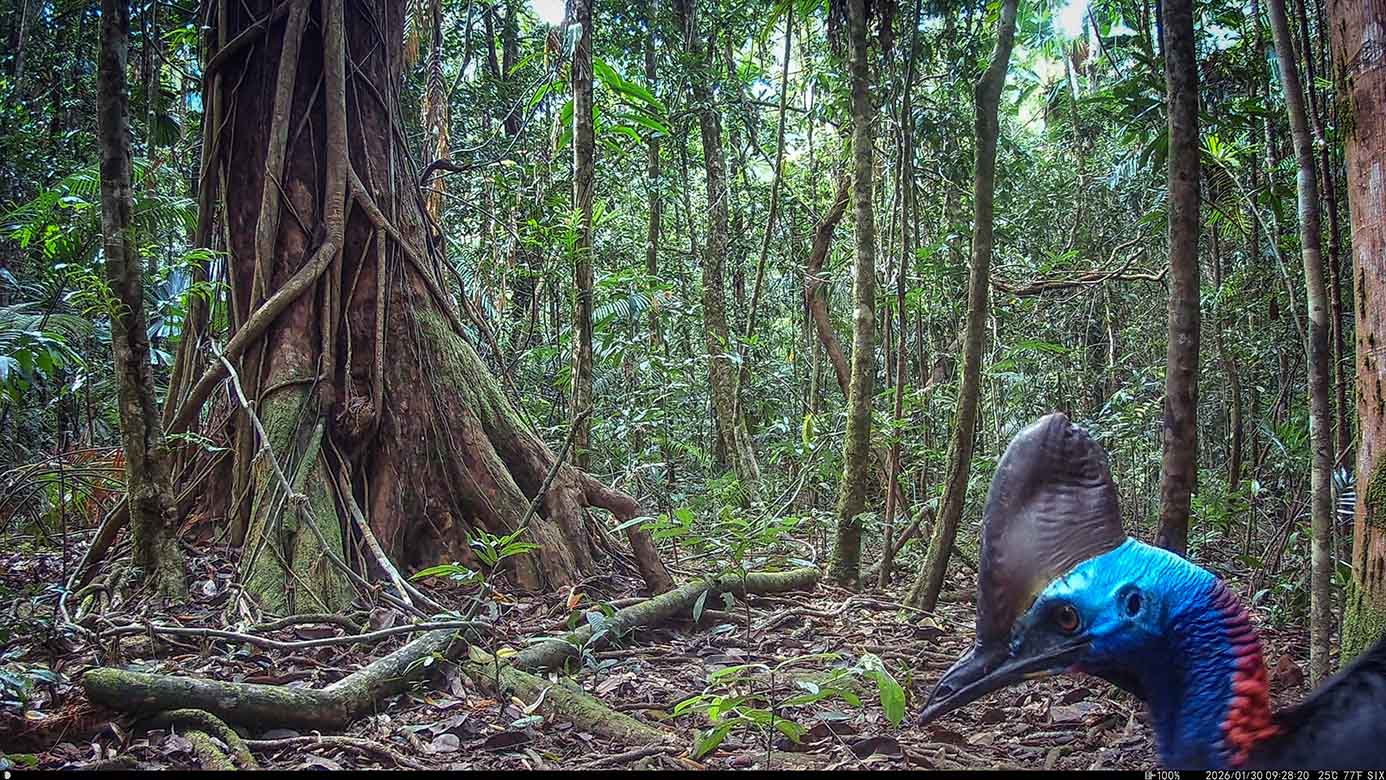
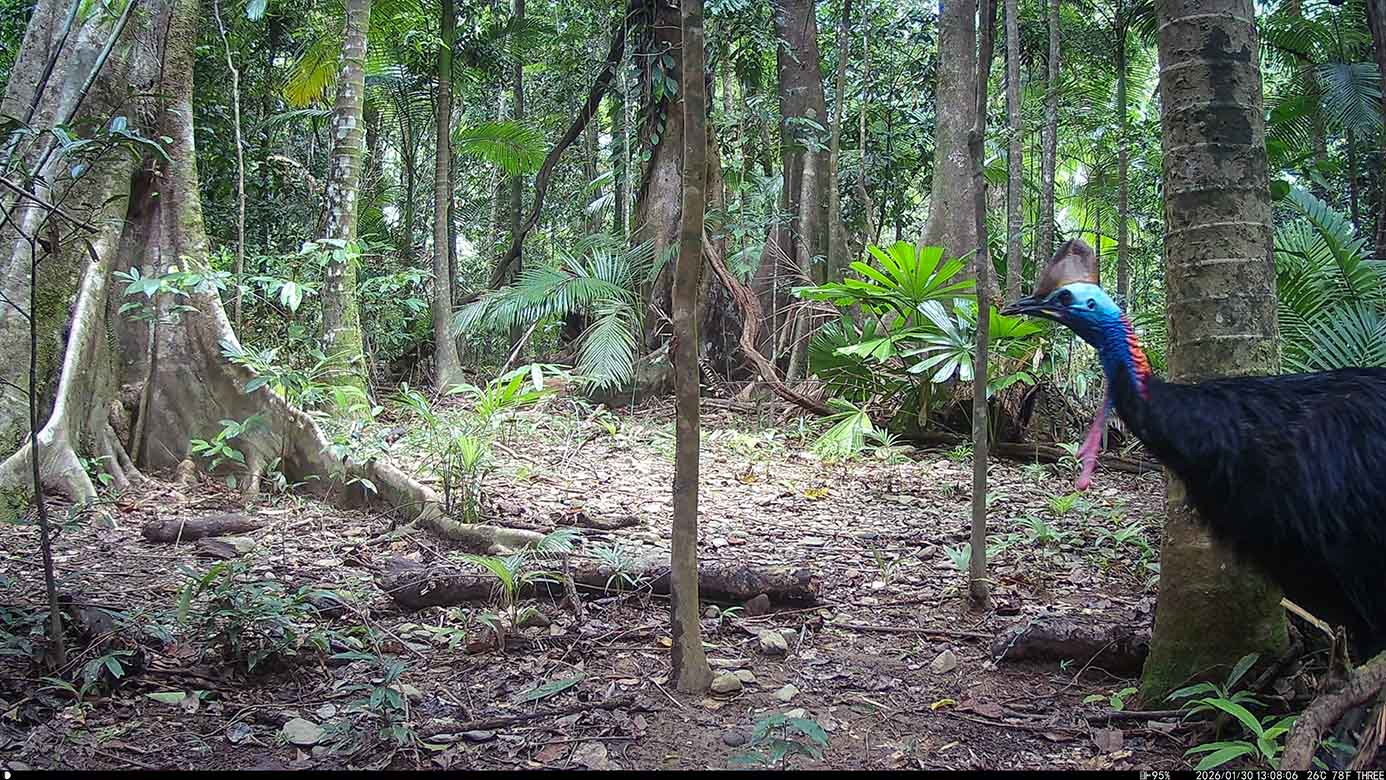
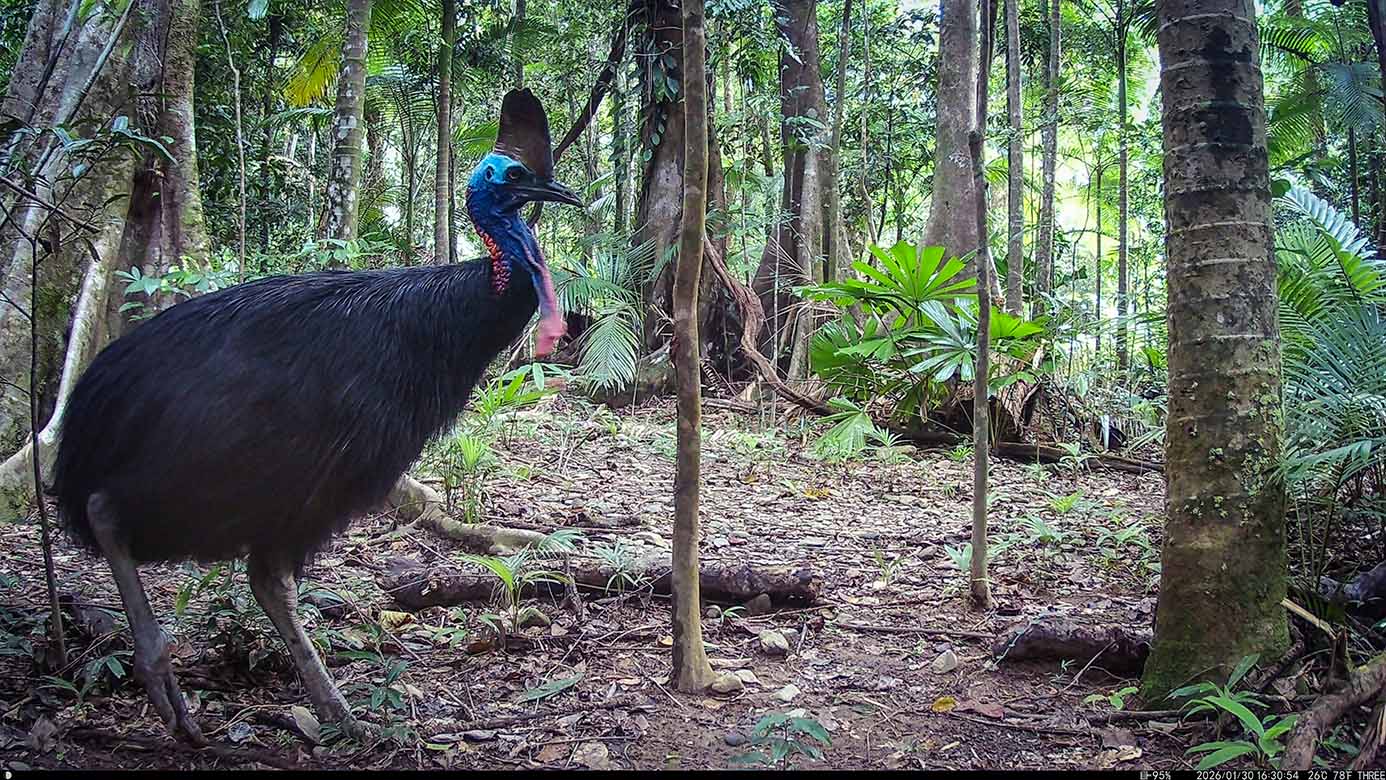
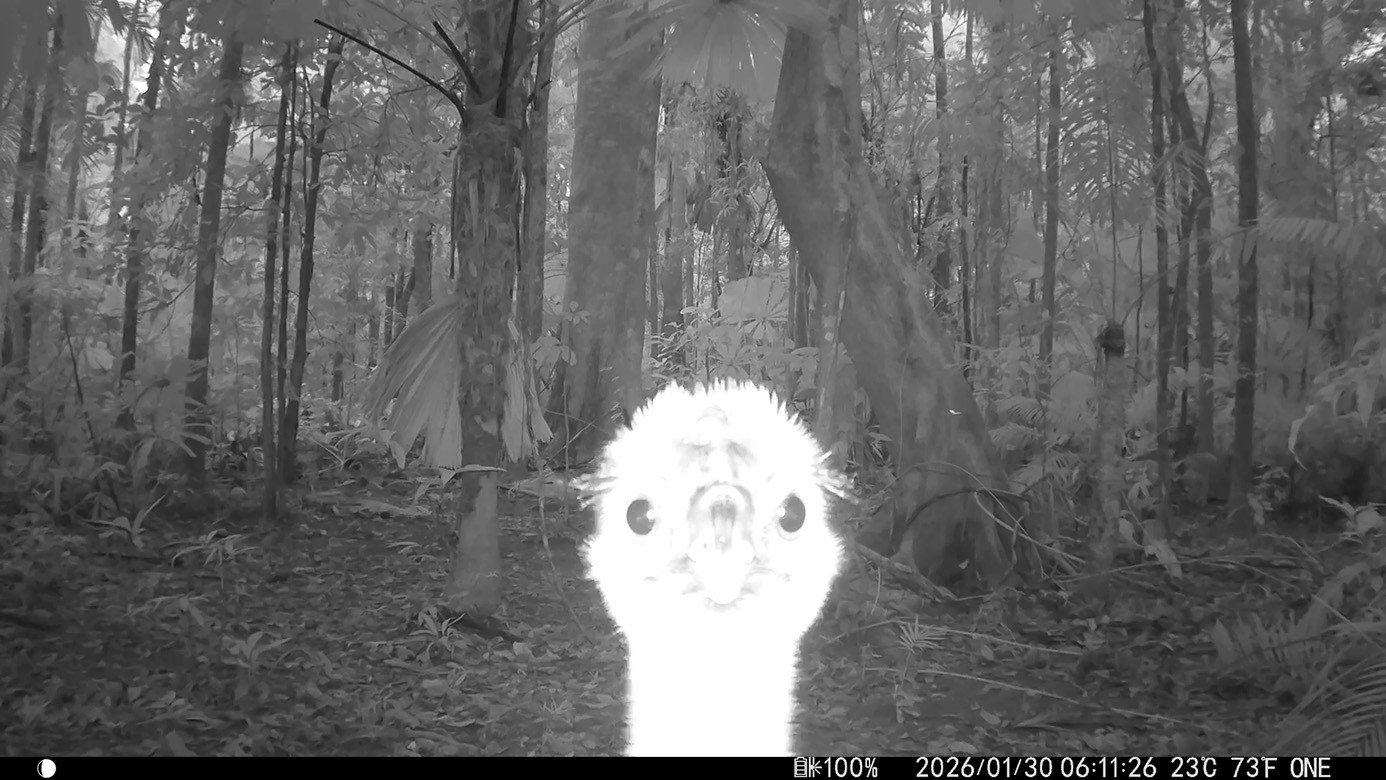
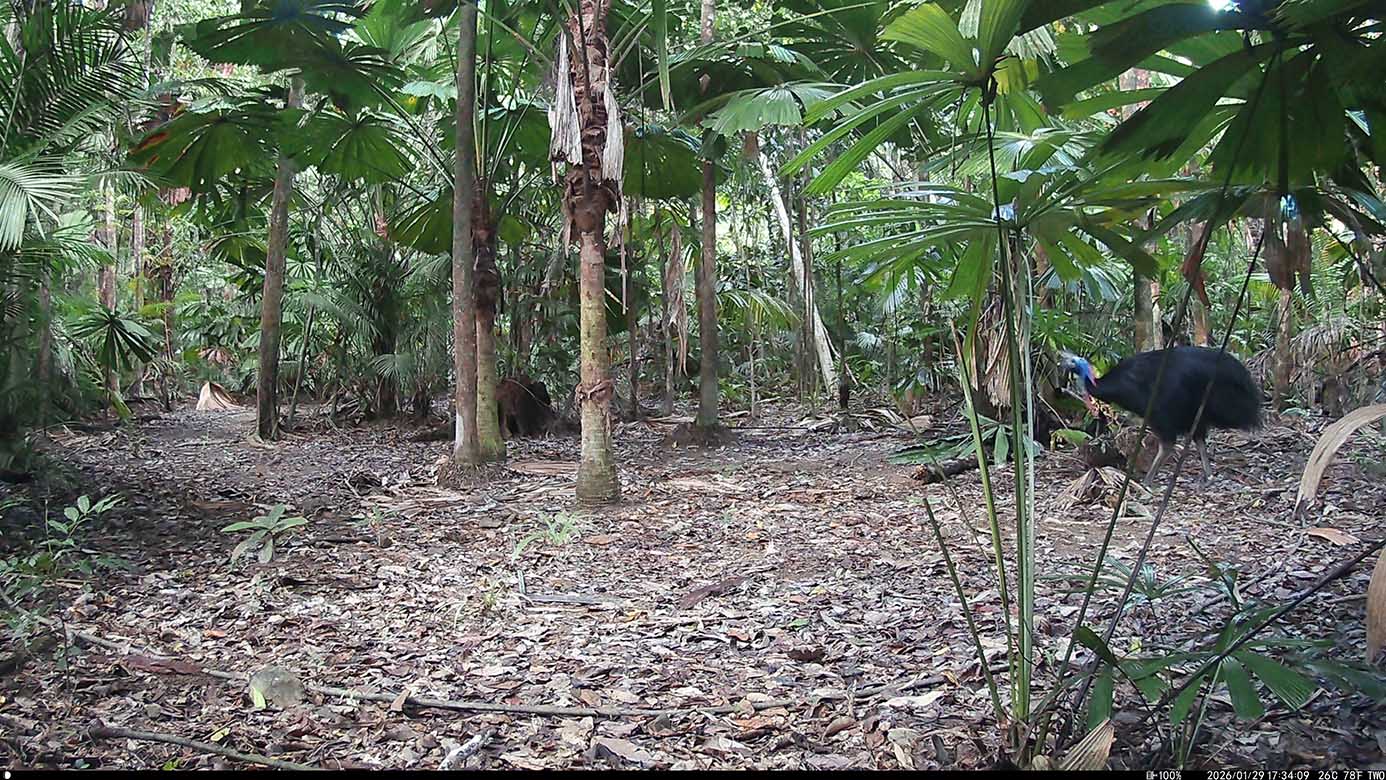
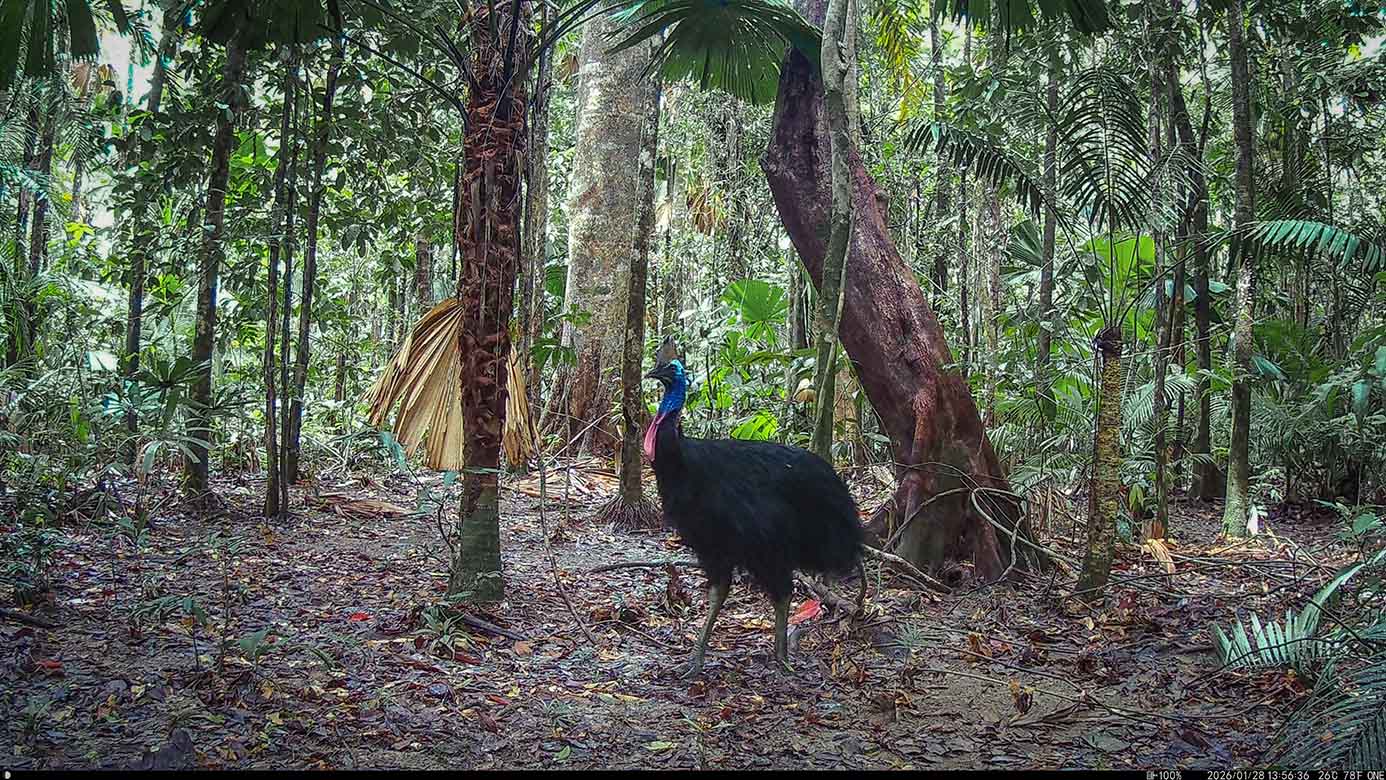
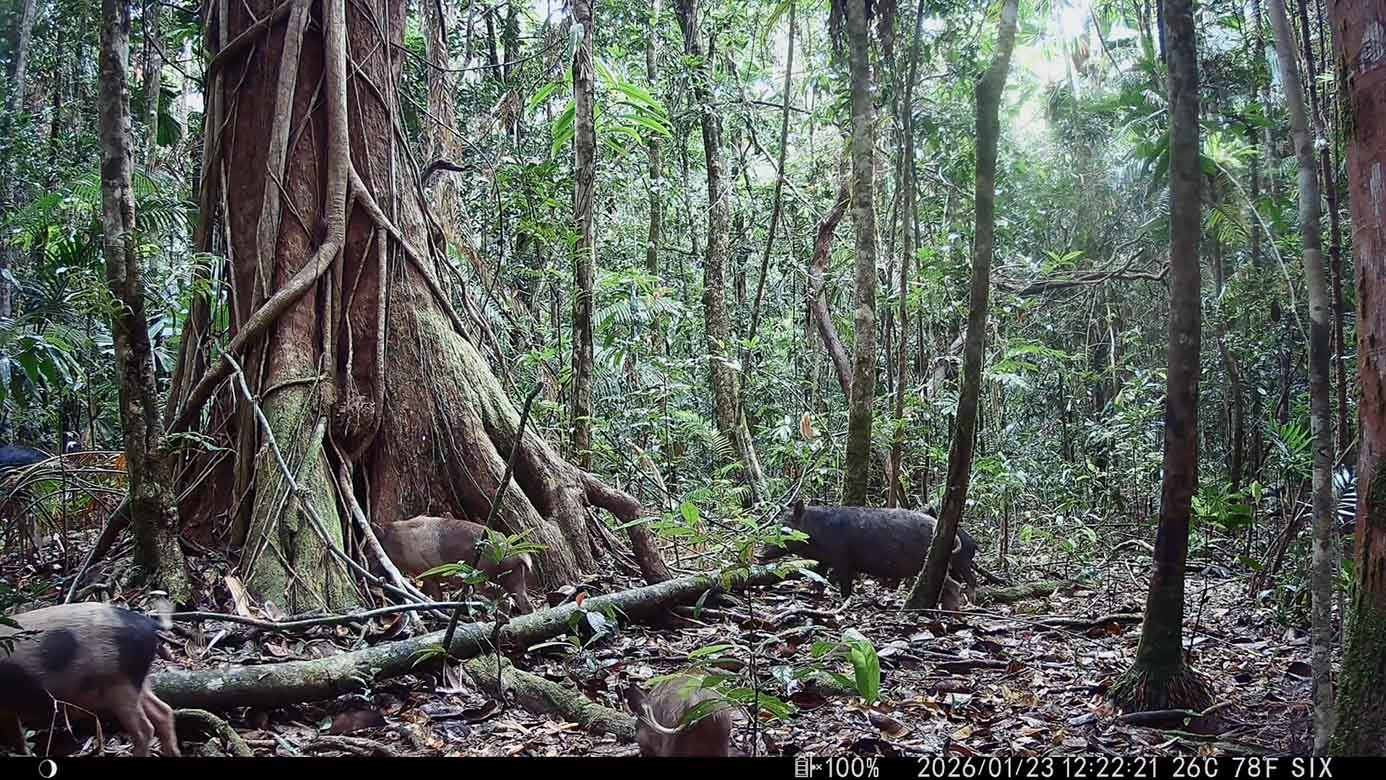
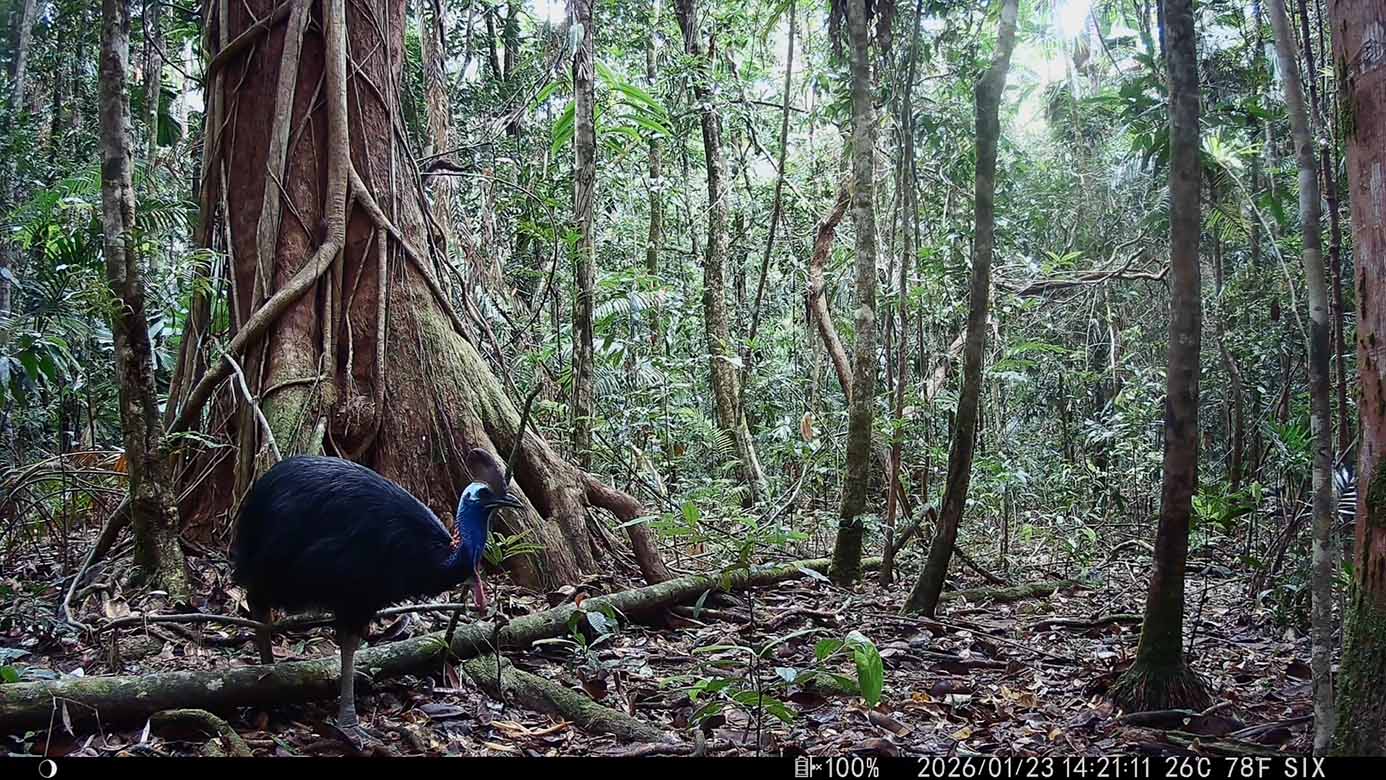
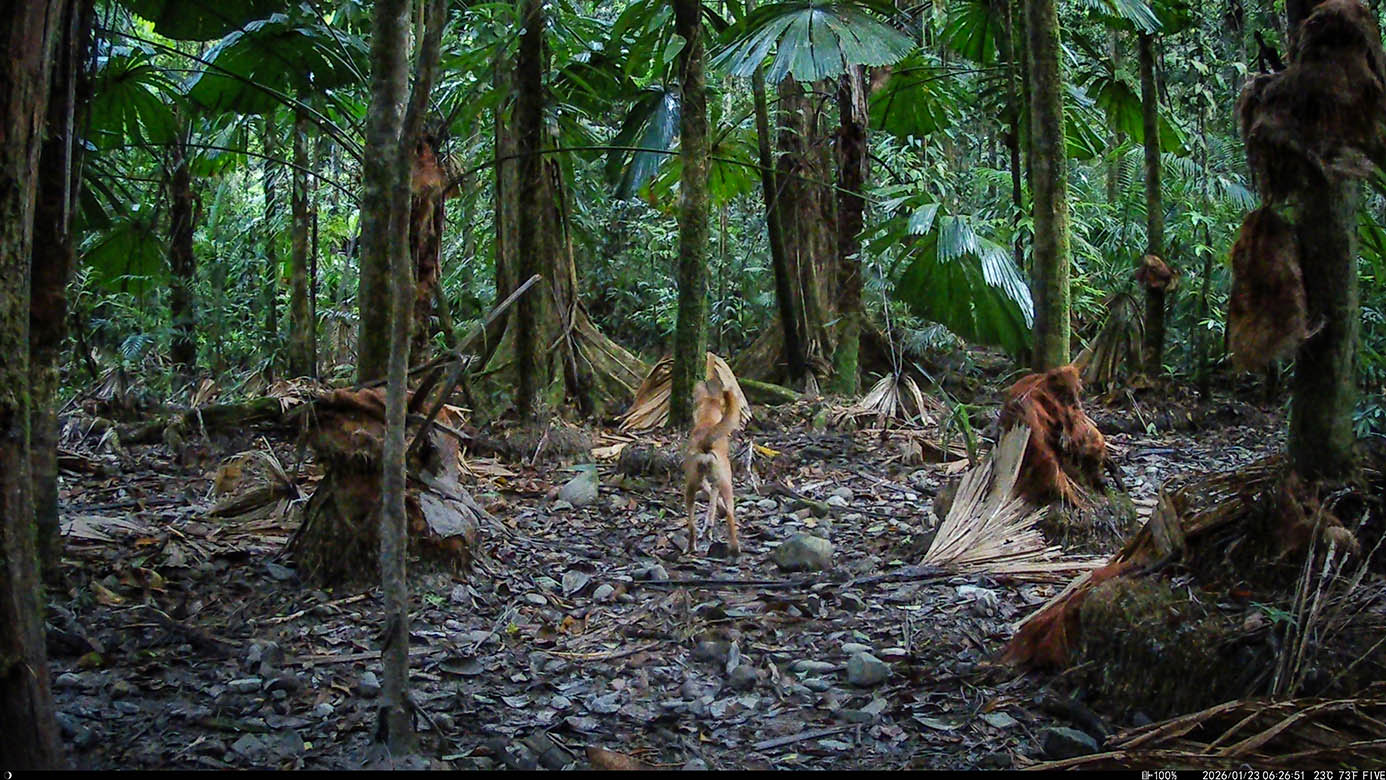
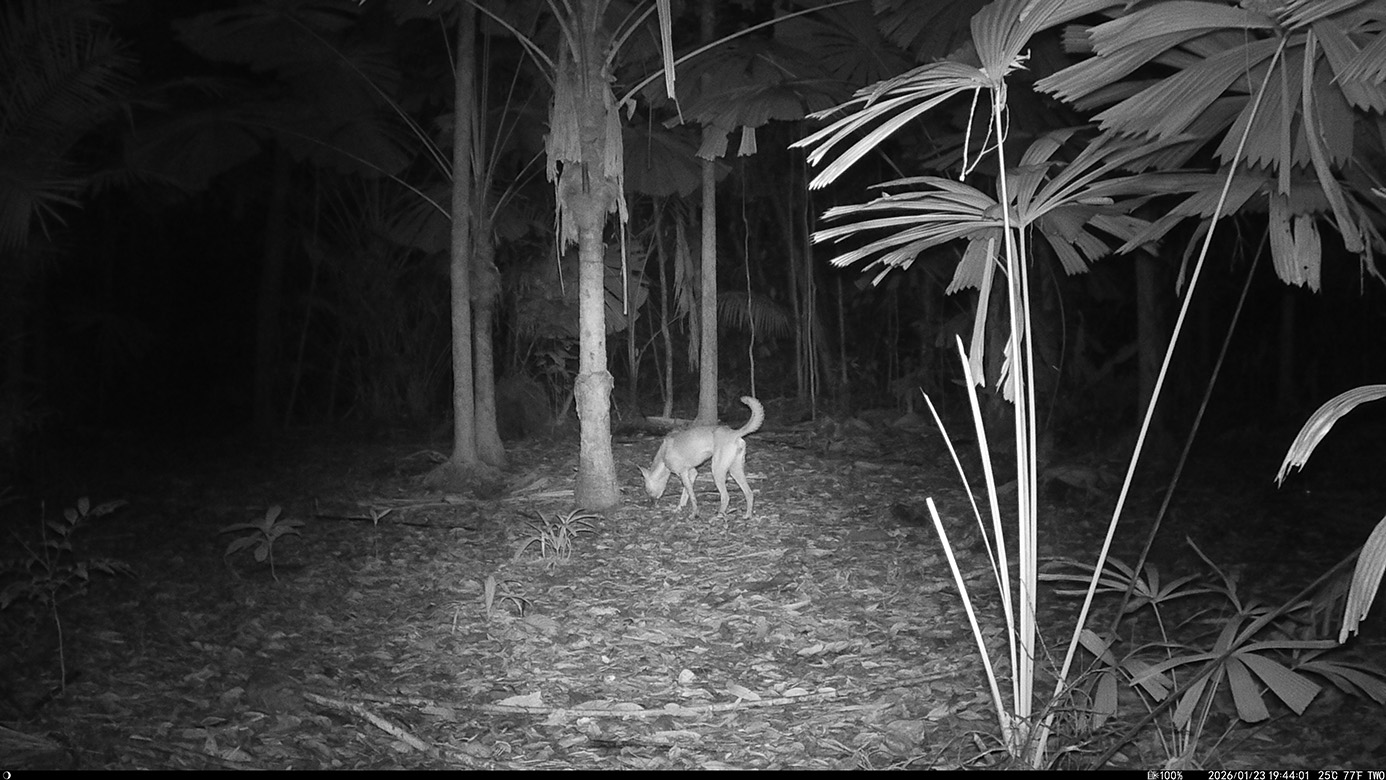
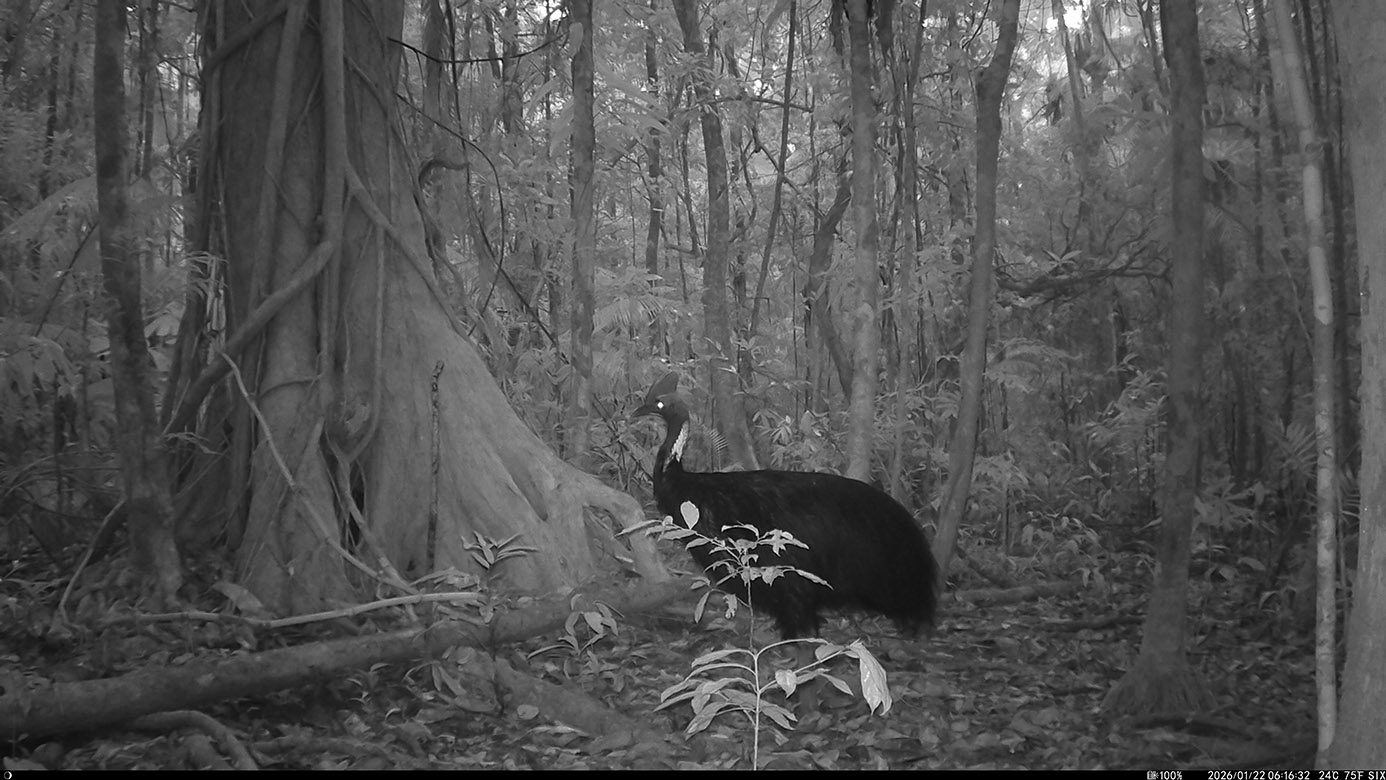
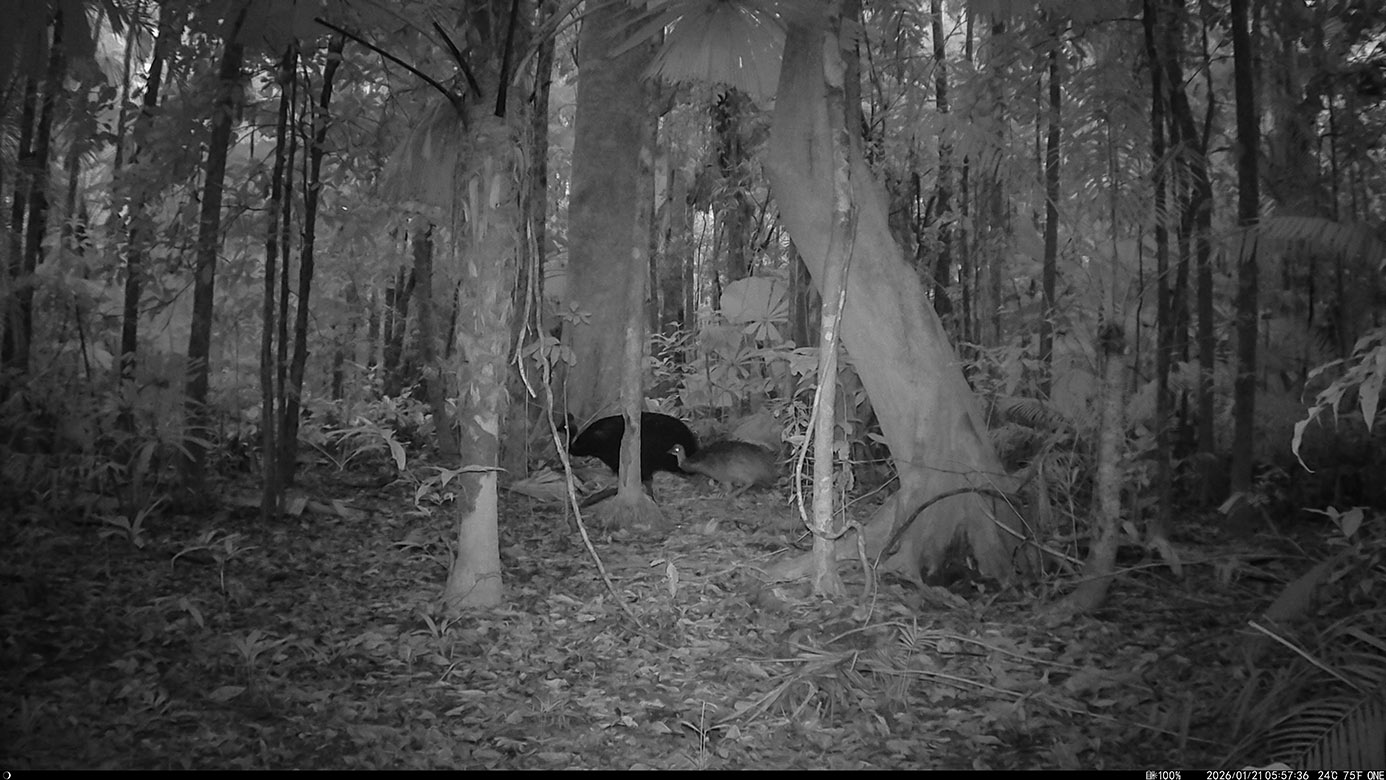
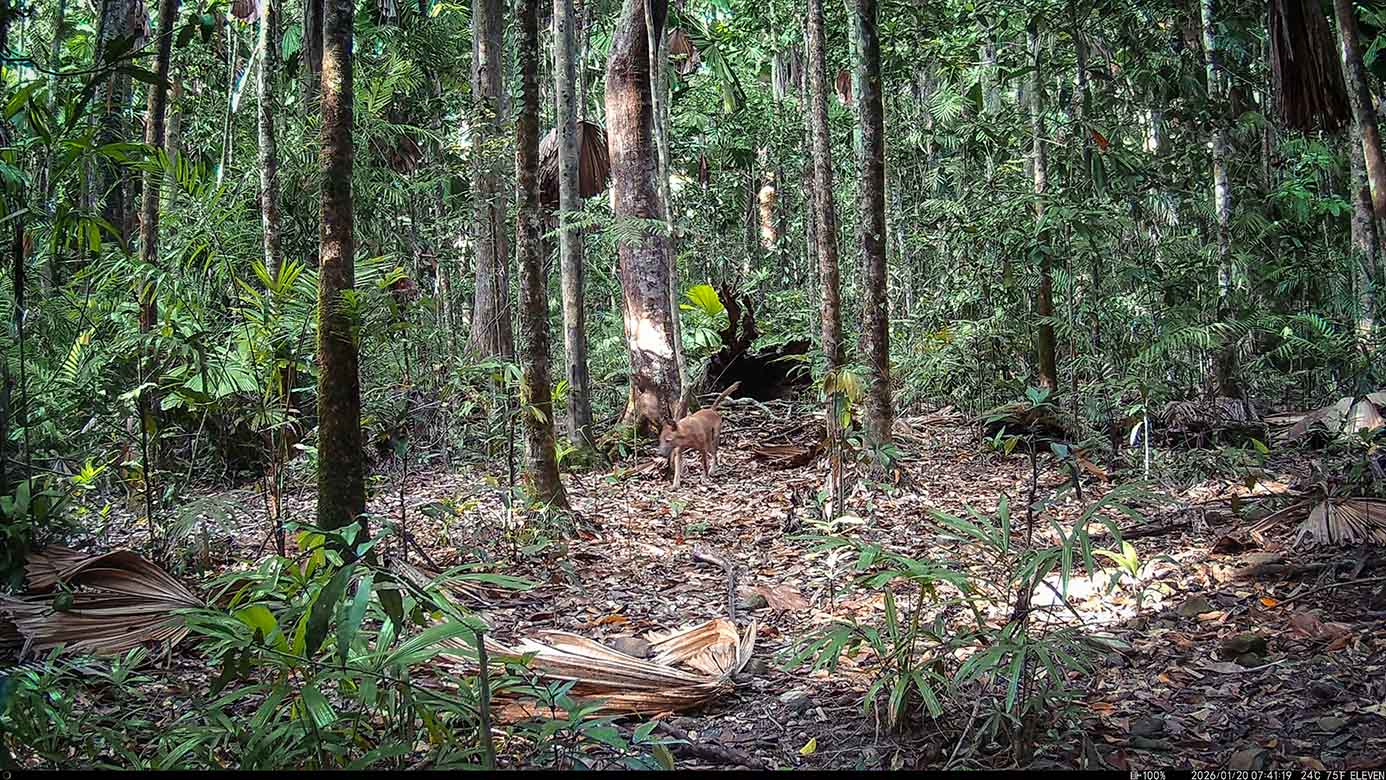
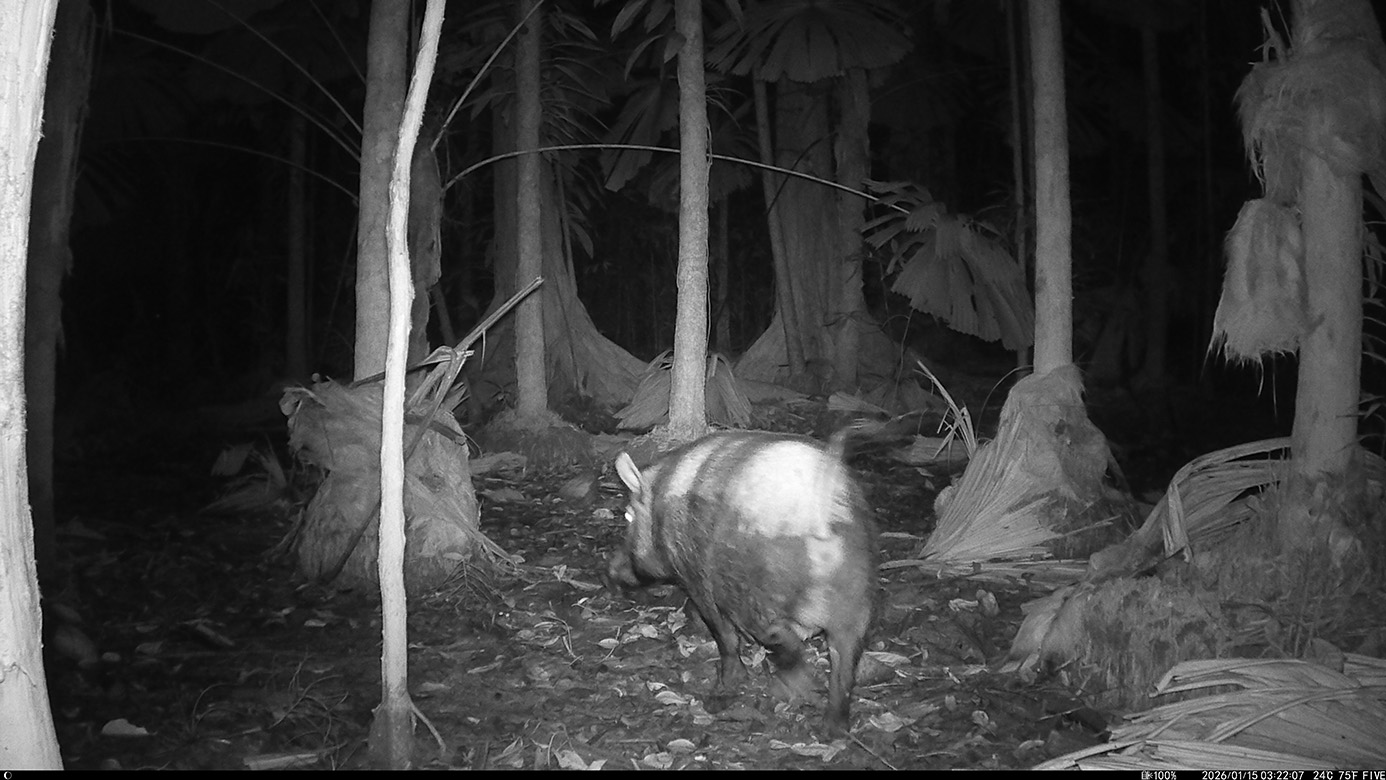
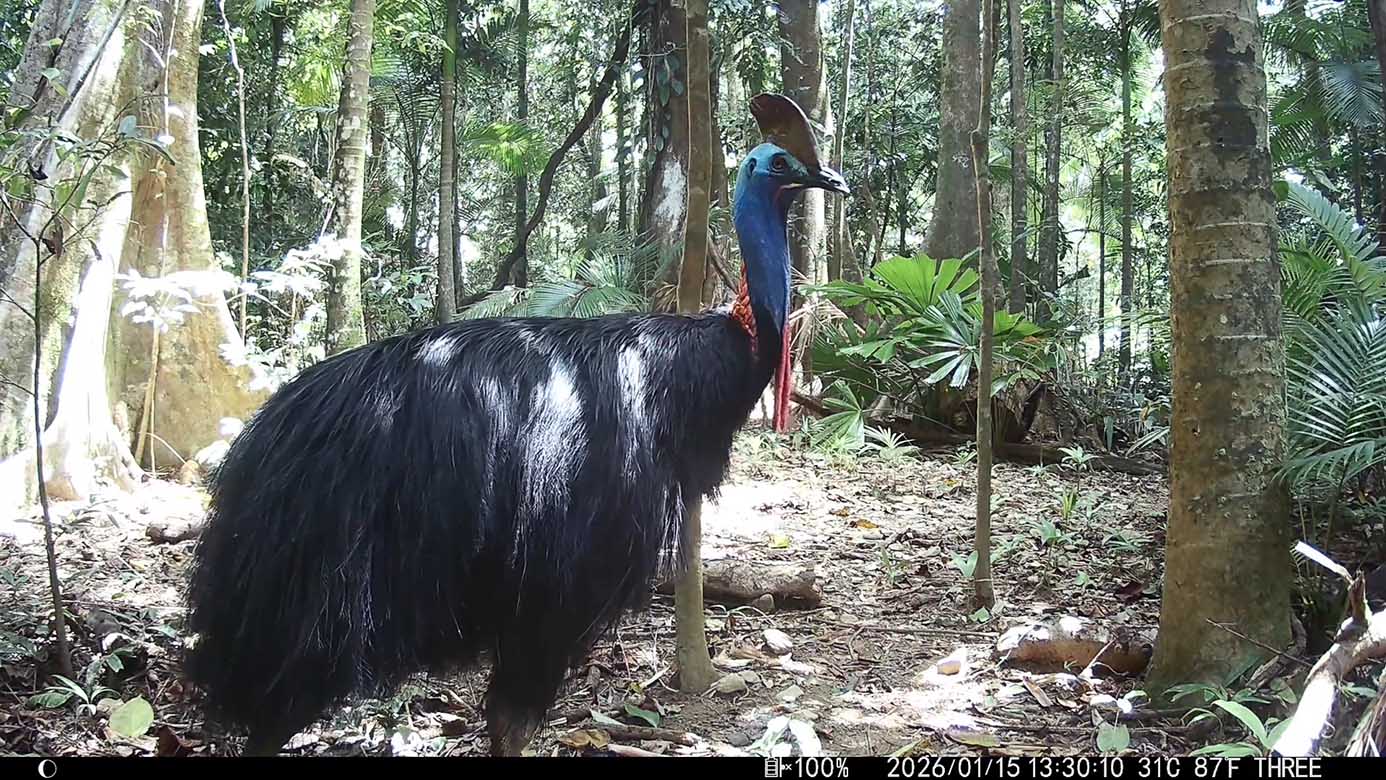
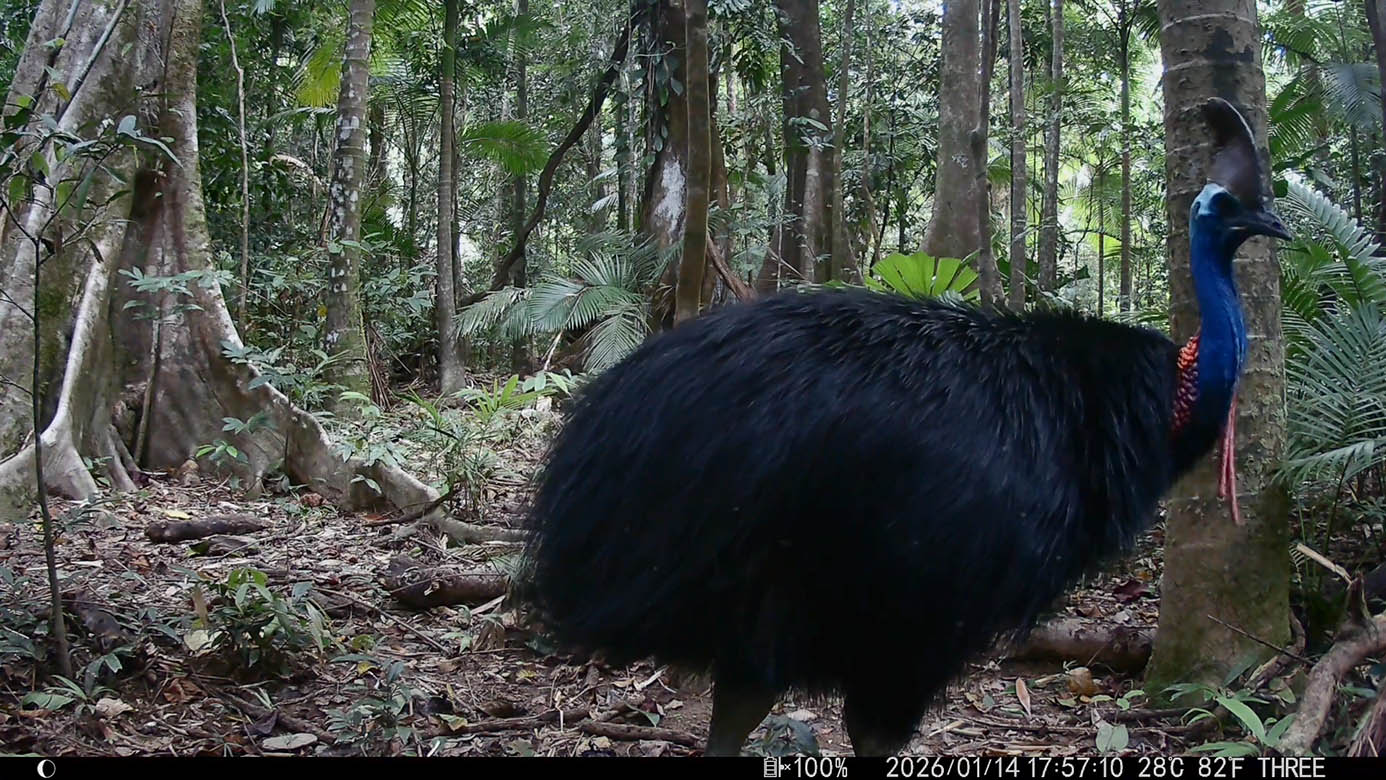
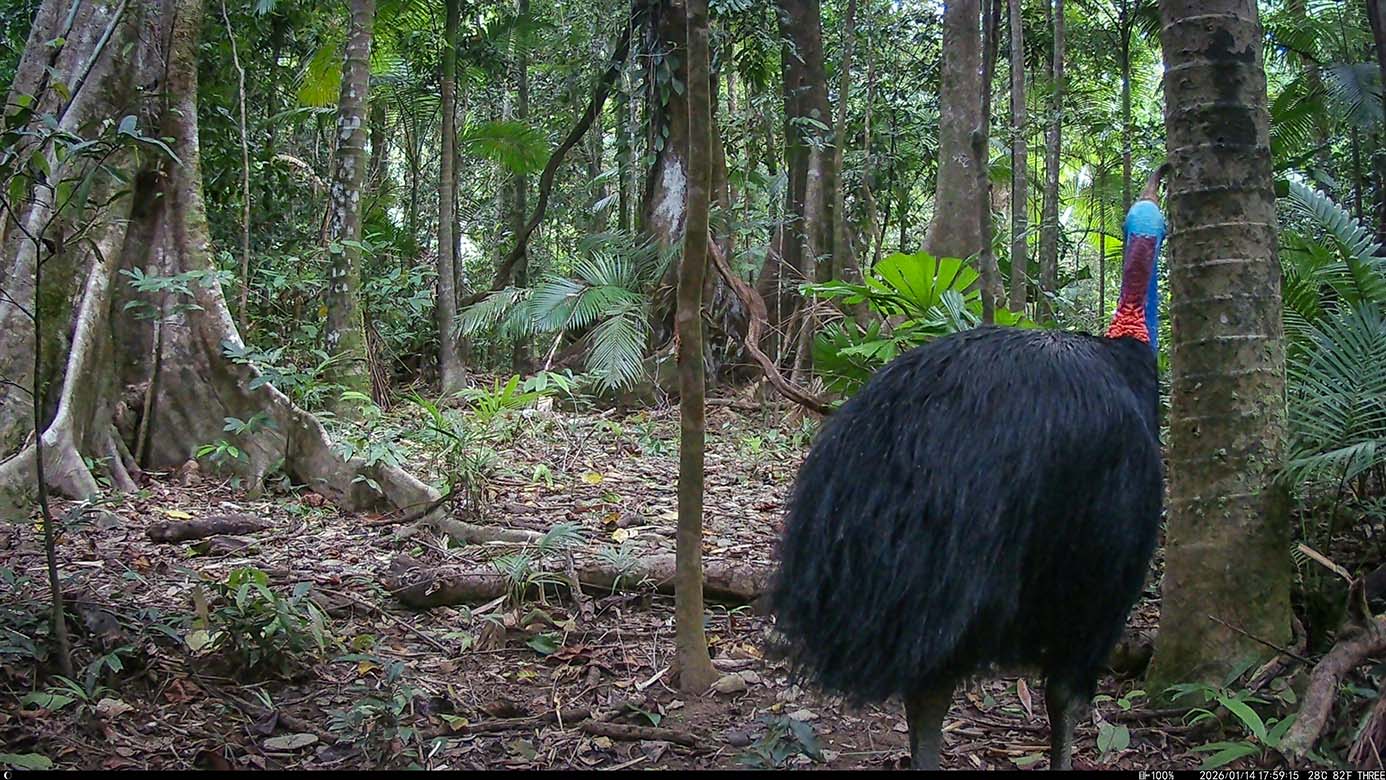
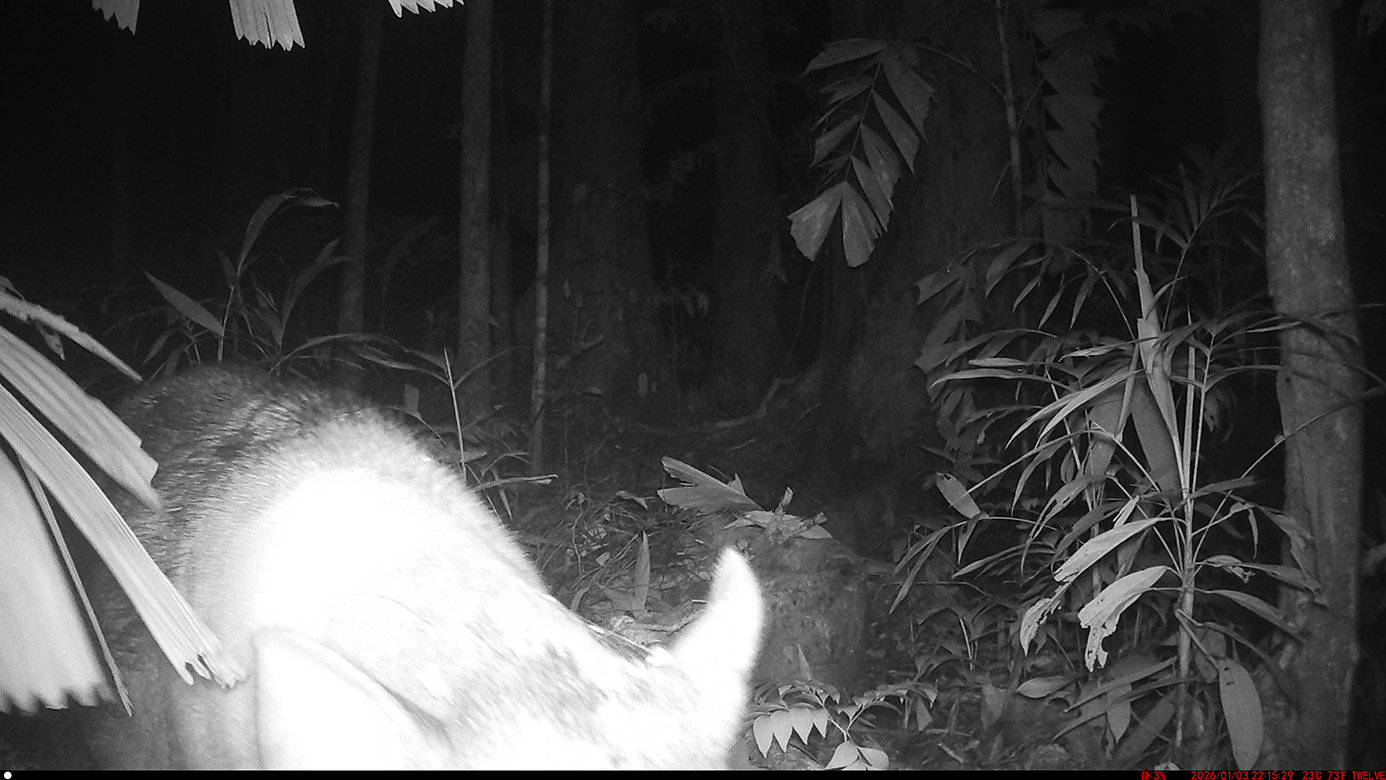
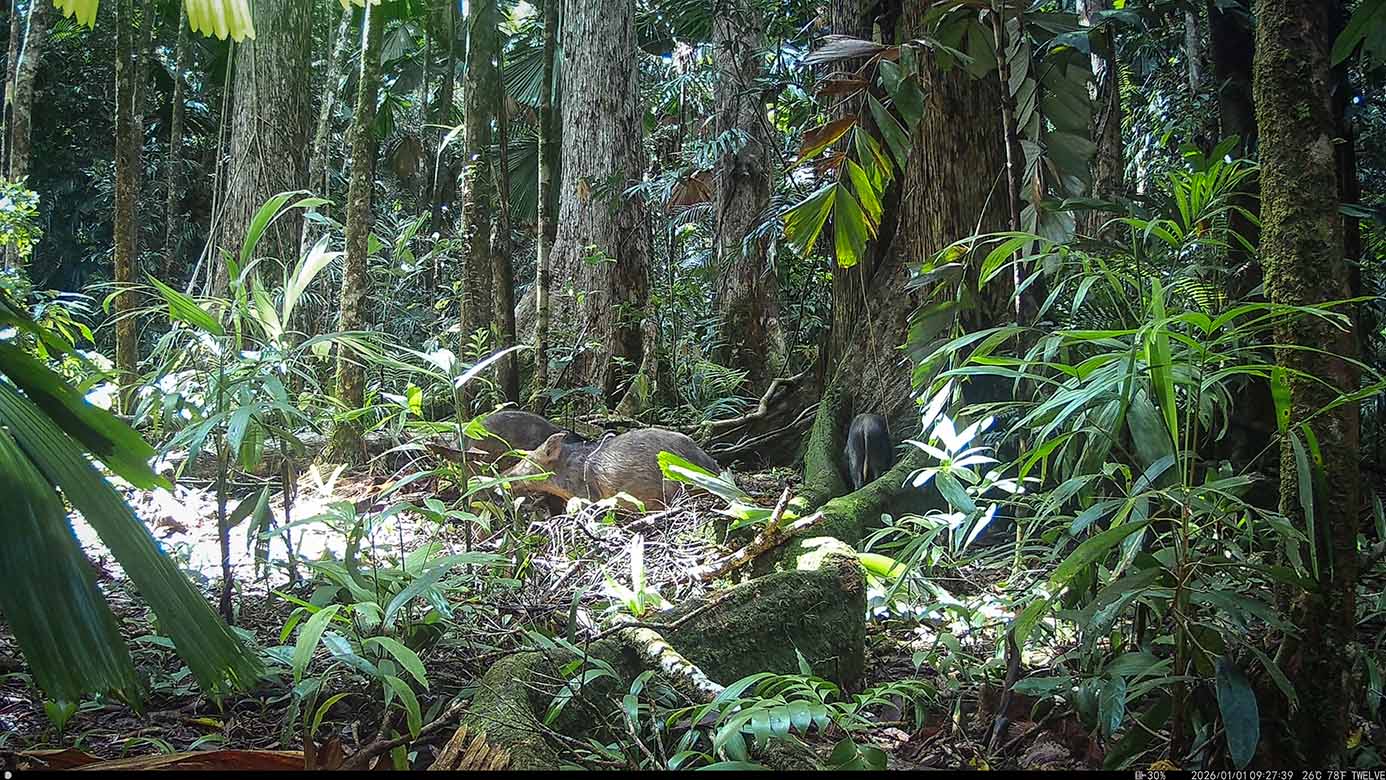
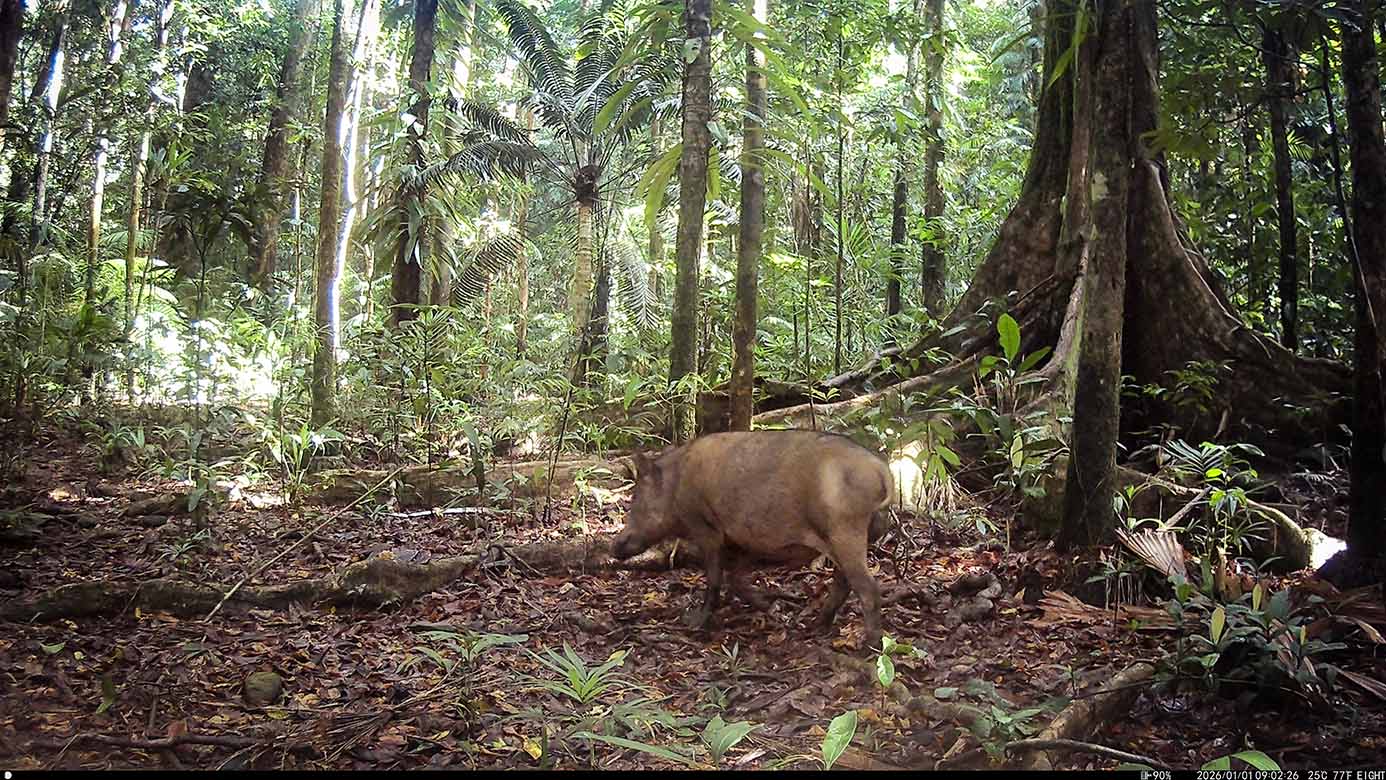
Keeping up with the cassowaries …
Delilah
Taiga
Big Bertha
Scaramanga
Scratch
Crinkle-Cut & Wobbly
MAINTAINING A CONSERVATION ECONOMY
Over the full-course of this long-term Daintree Rainforest Camera Trap Project, cassowary sightings have increased by 70%, dingoes have risen by 5%, whilst feral-pigs have multiplied by 270%. Admittedly, this study collects data from a mere 3/400ths of one percent of the overall Wet Tropics World Heritage Area, but arguably from the least damaged portion at the biological centre of irreplaceability, which also happens to have an environmental foundation advantageously equipped with a full-time human inhabitancy. Monitoring, documenting and reporting the state of the environment from the most vigilantly monitored portion of the world’s oldest rainforest, confers that such damage and degradation is almost certainly occurring across the broader expanse of the entire Wet Tropics World Heritage Area.
Incidentally, this heavily monitored and human-occupied portion of the Wet Tropics World Heritage Area, receives no recurrent or indicative budgetary funding from government whatsoever, but pays annual rates that were greatly increased upon compulsory World Heritage-listing. That is to say, the full costs of managing this World Heritage-property, including monitoring, documenting and reporting its cassowary, dingo & feral-pig activity, is met wholly and solely by the genuine ecotourism patrons of Daintree Rainforest & Cooper Creek Wilderness and donors to the Daintree Rainforest Foundation LTD‘s Daintree Rainforest Fund.
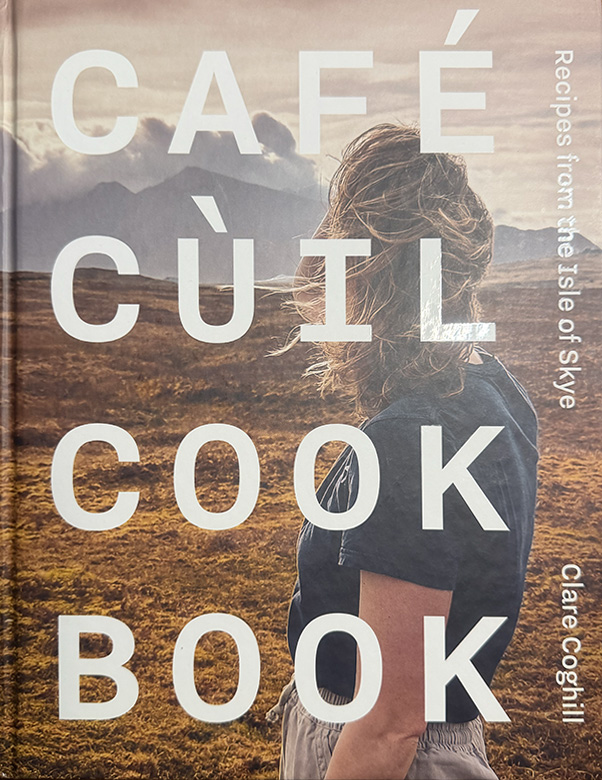
David and Clair recently traveled from the Isle of Skye in Scotland’s remote north-west to the Daintree Rainforest in Far North Queensland for a 4-hour Greater Wilderness Experience, as an exclusive private charter. Way beyond their significant contribution to the property’s conservation economy, they were so absorbed and intrigued by their guided immersion, that they purchased a copy of our 2.3-KG, 330-page manifesto, A Stray Liana and along the way, the inhabitant guide learned that this visiting couple had published a book of their own, Café Cùil Cookbook, which, in a cross-cultural exchange, now occupies pride of place within our World Heritage kitchen.
These monthly Camera Trap Reports are made possible by the generous members and donors of the Daintree Rainforest Foundation Ltd, which has been registered by the Australian Charities and Not-for-profits Commission and successfully entered onto the Register of Environmental Organisations. Donations to the Daintree Rainforest Fund support Daintree Rainforest community custodianship and are eligible for a tax deduction under the Income Tax Assessment Act 1997.