
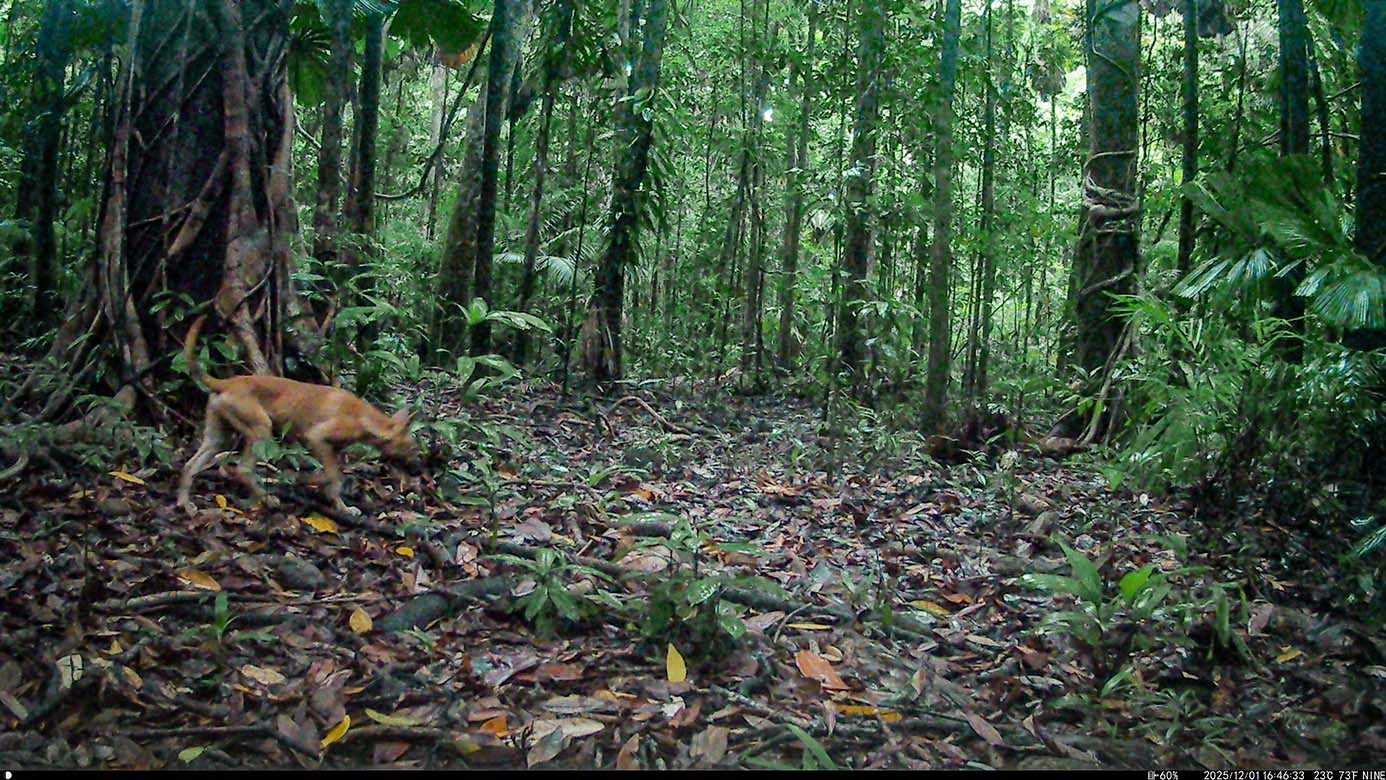
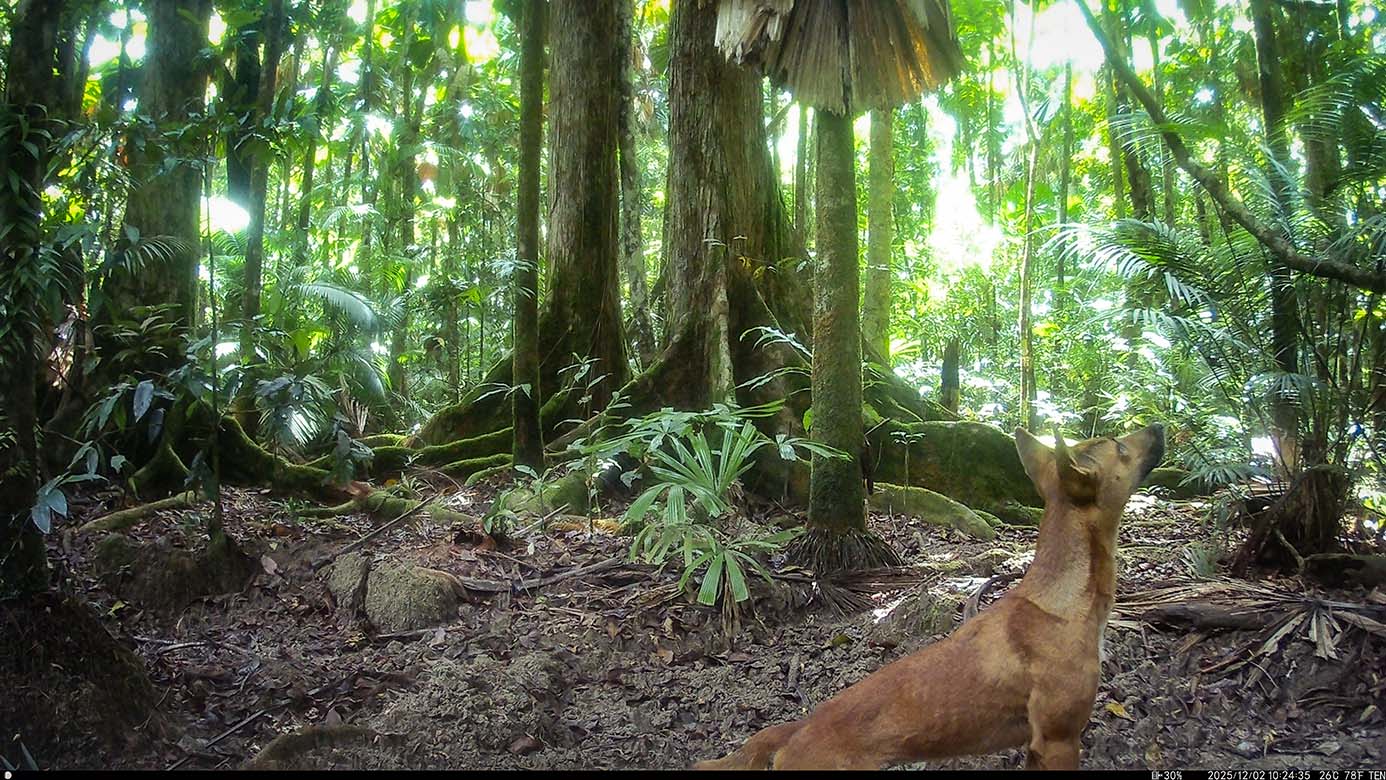
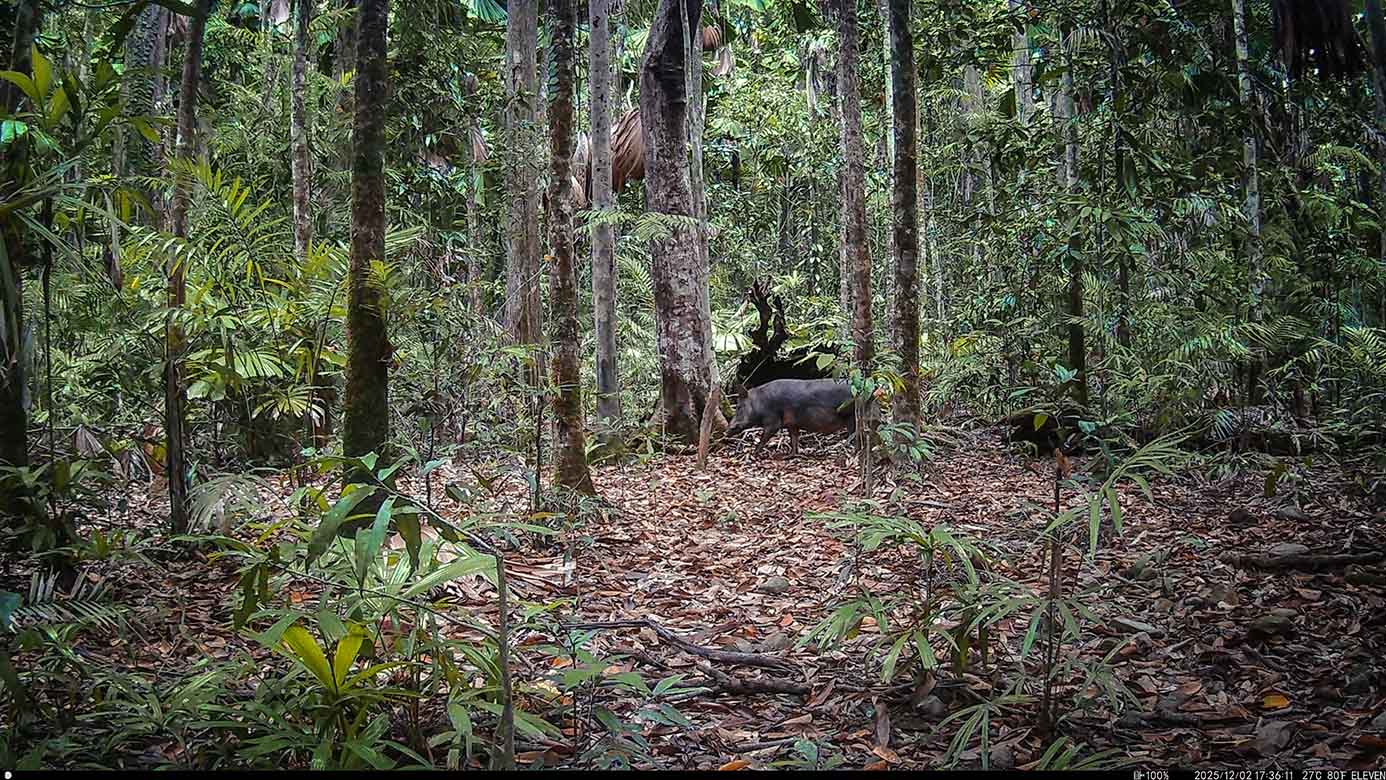
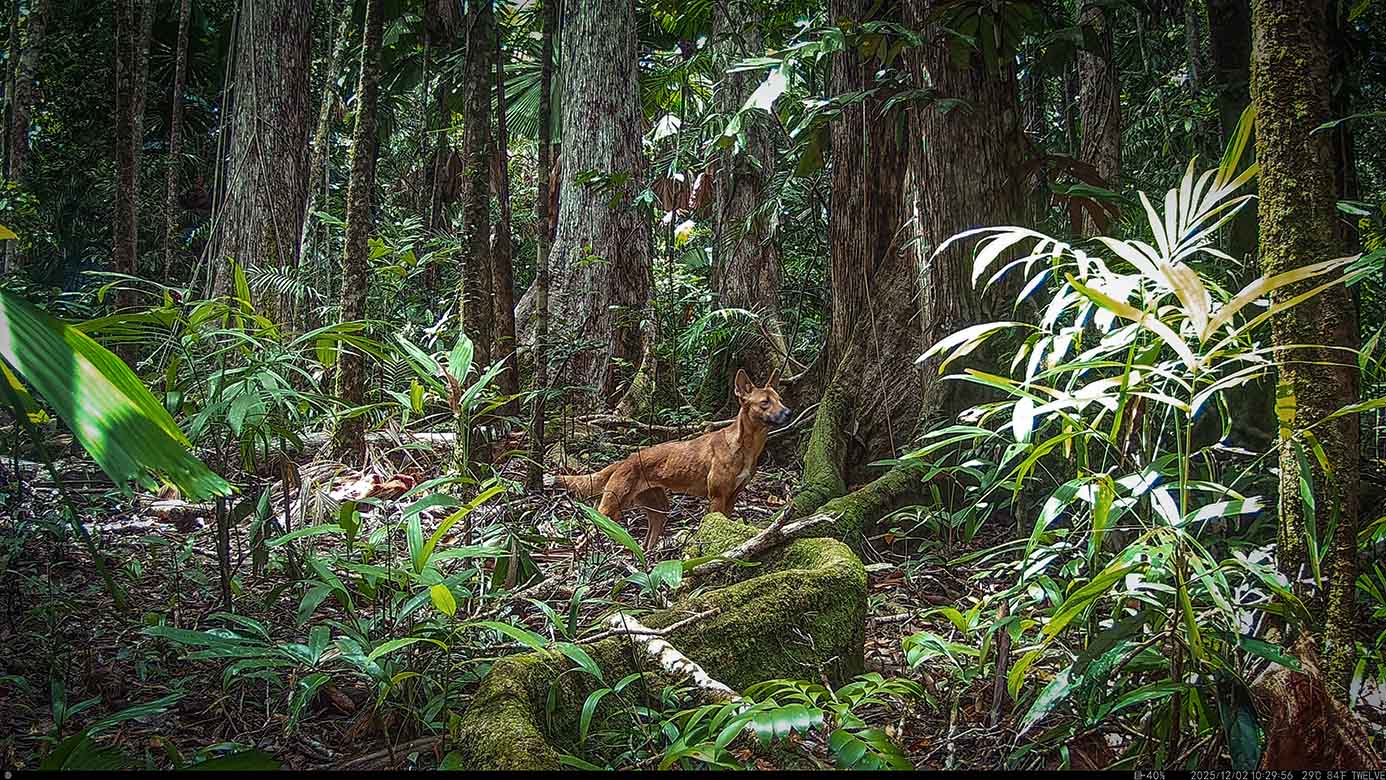
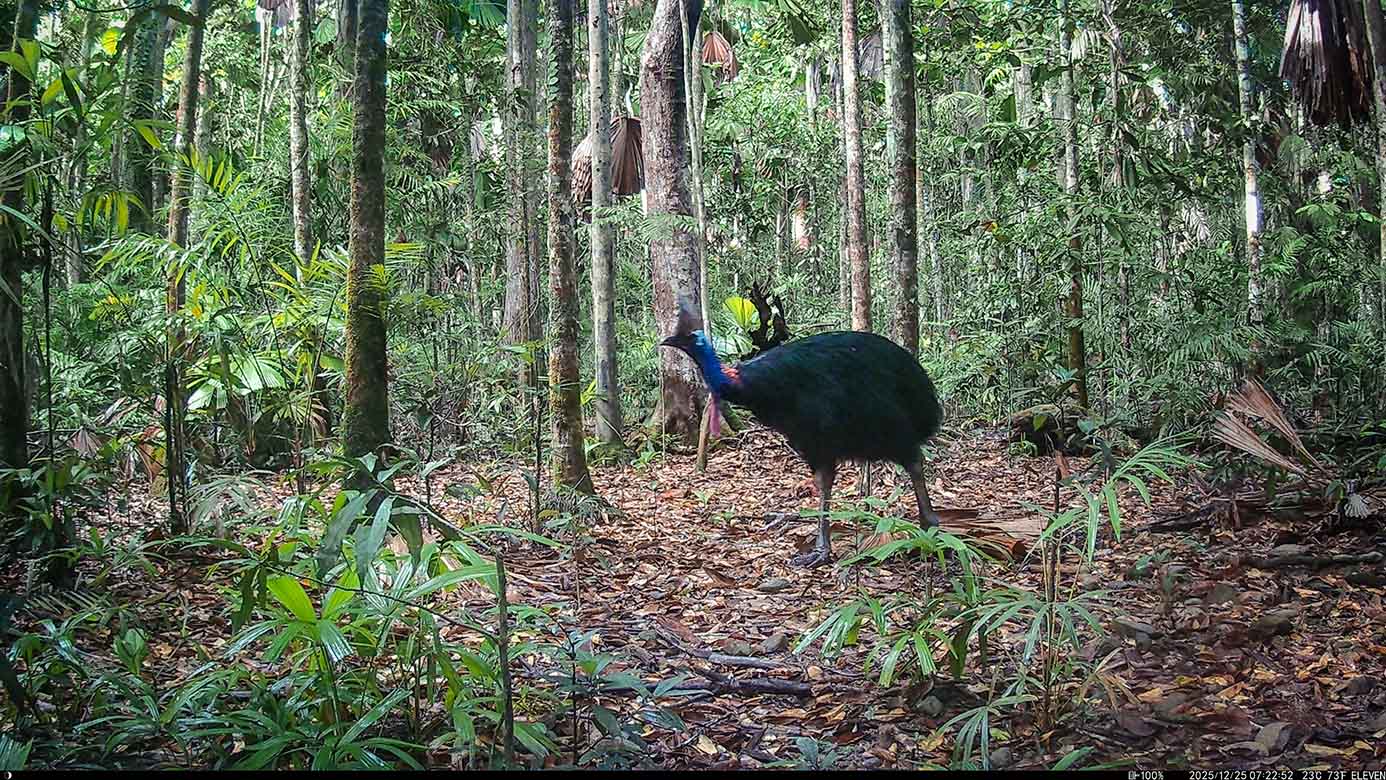
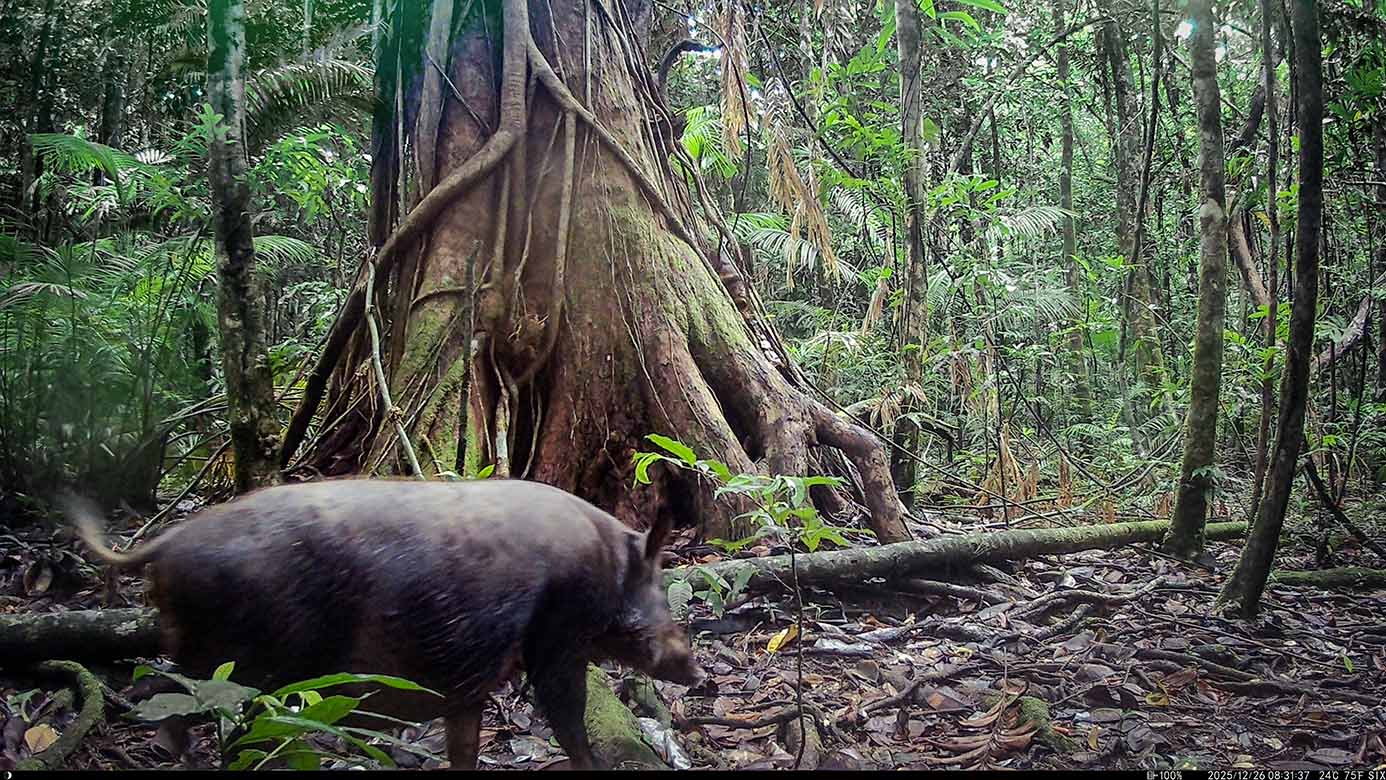
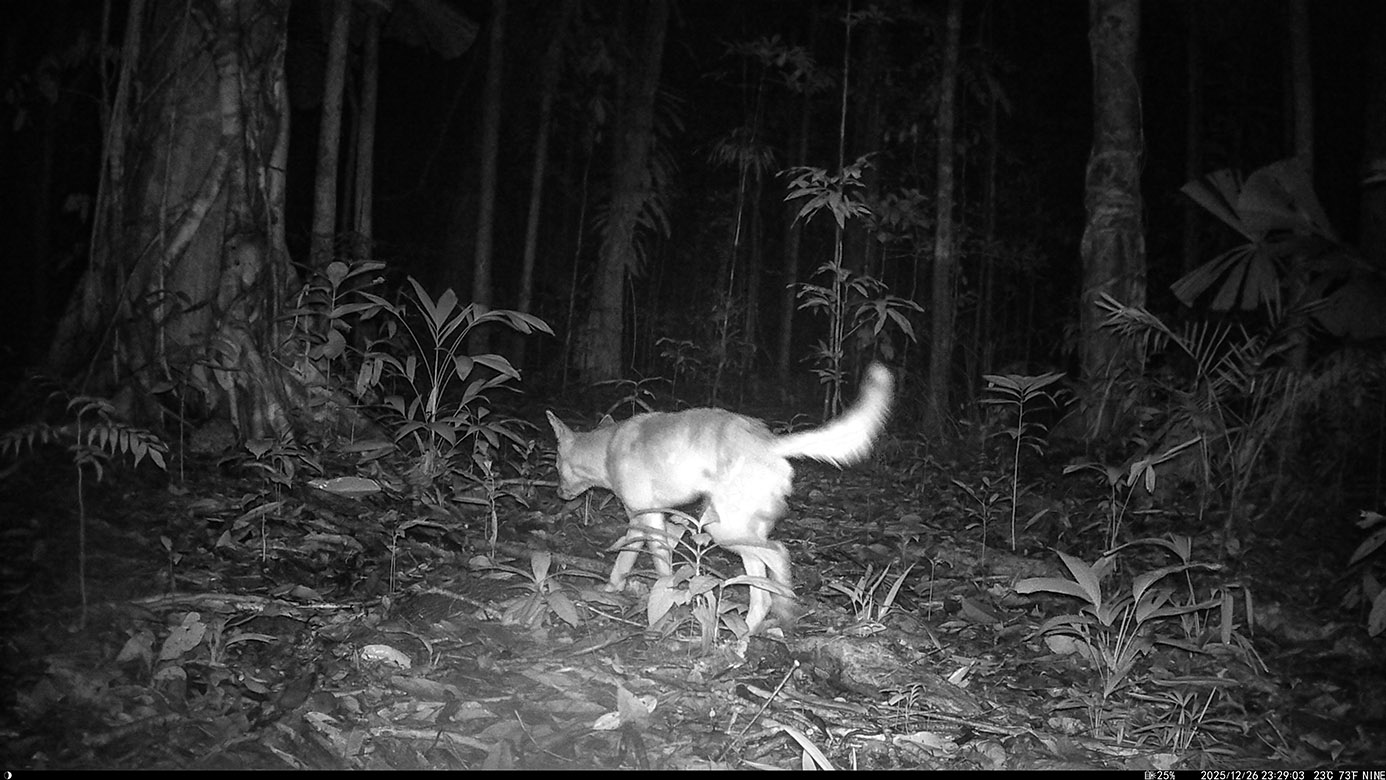
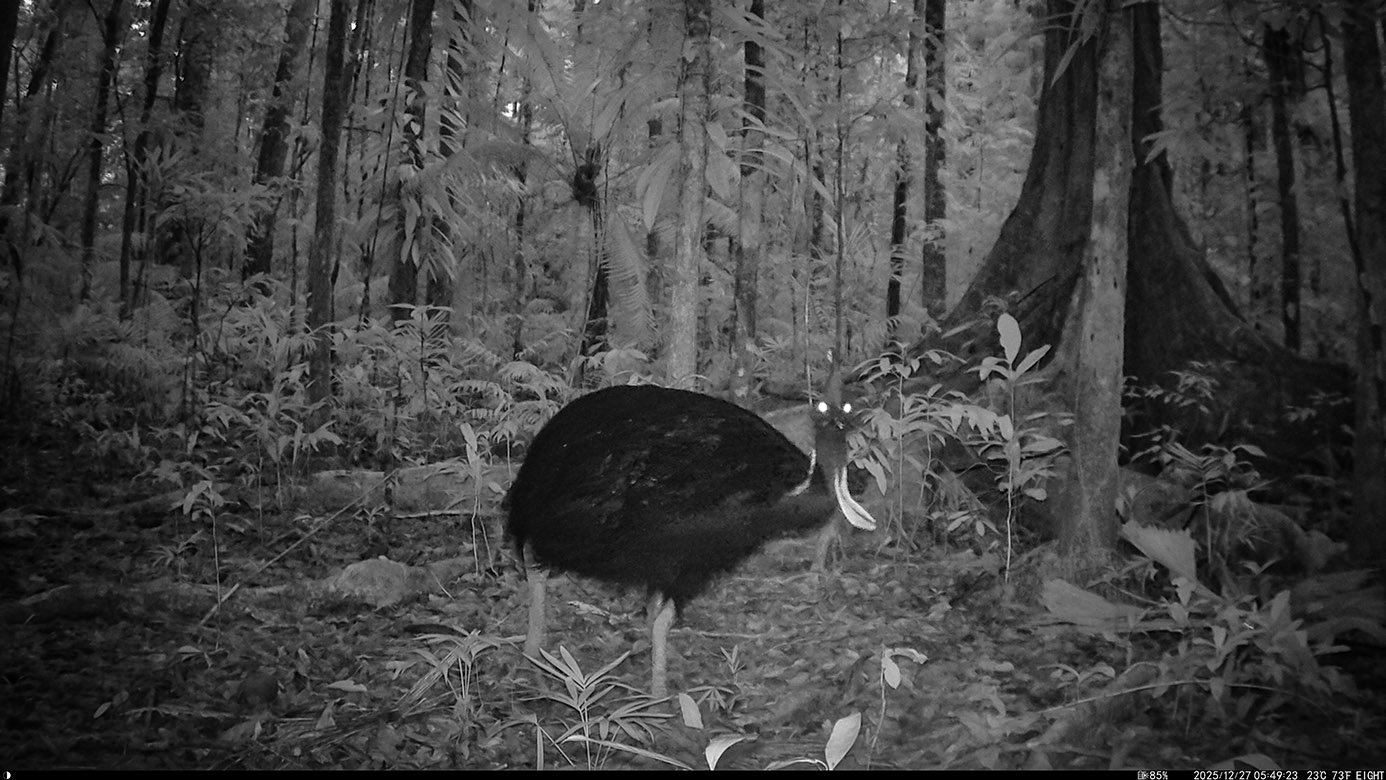
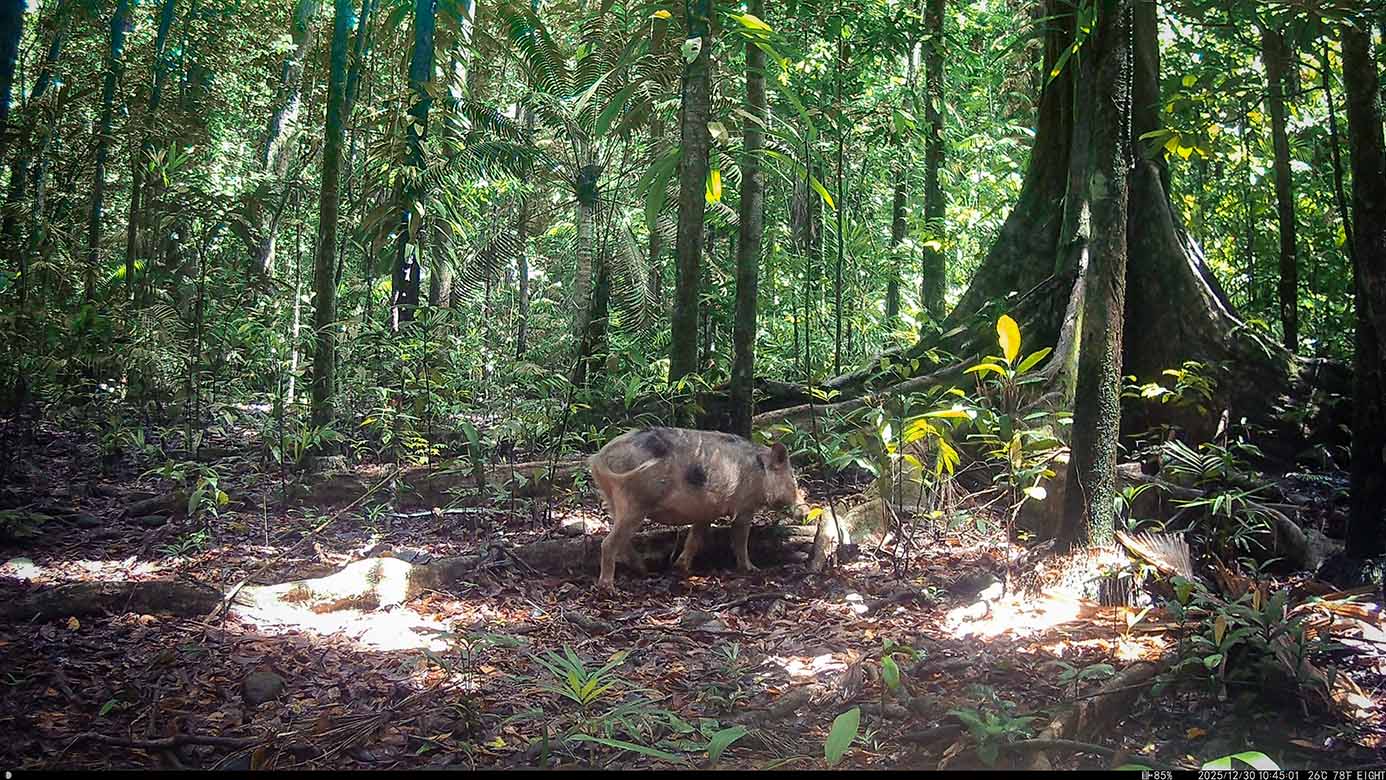
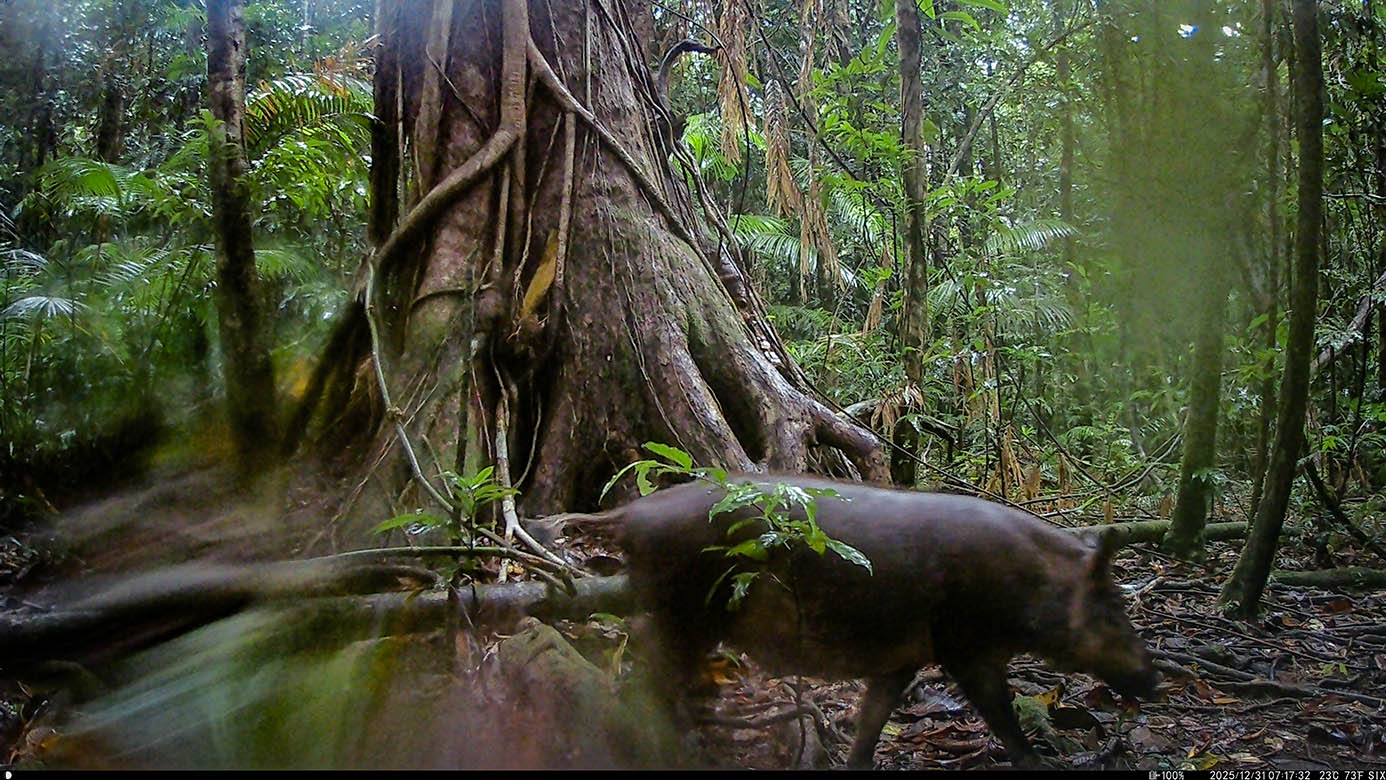
Camera Traps – December 2025 accrued 23-cassowary sightings, 23-dingoes and 122-feral pigs. Against the cumulative monthly average, cassowary numbers fell by 77%, dingoes dropped by 43%, whilst feral-pig numbers also diminished by 36%. Against December 20234, cassowary numbers fell by 73%, dingo sightings dropped by 41% and feral-pig numbers diminished by 68%.
Image highlights from December 2025
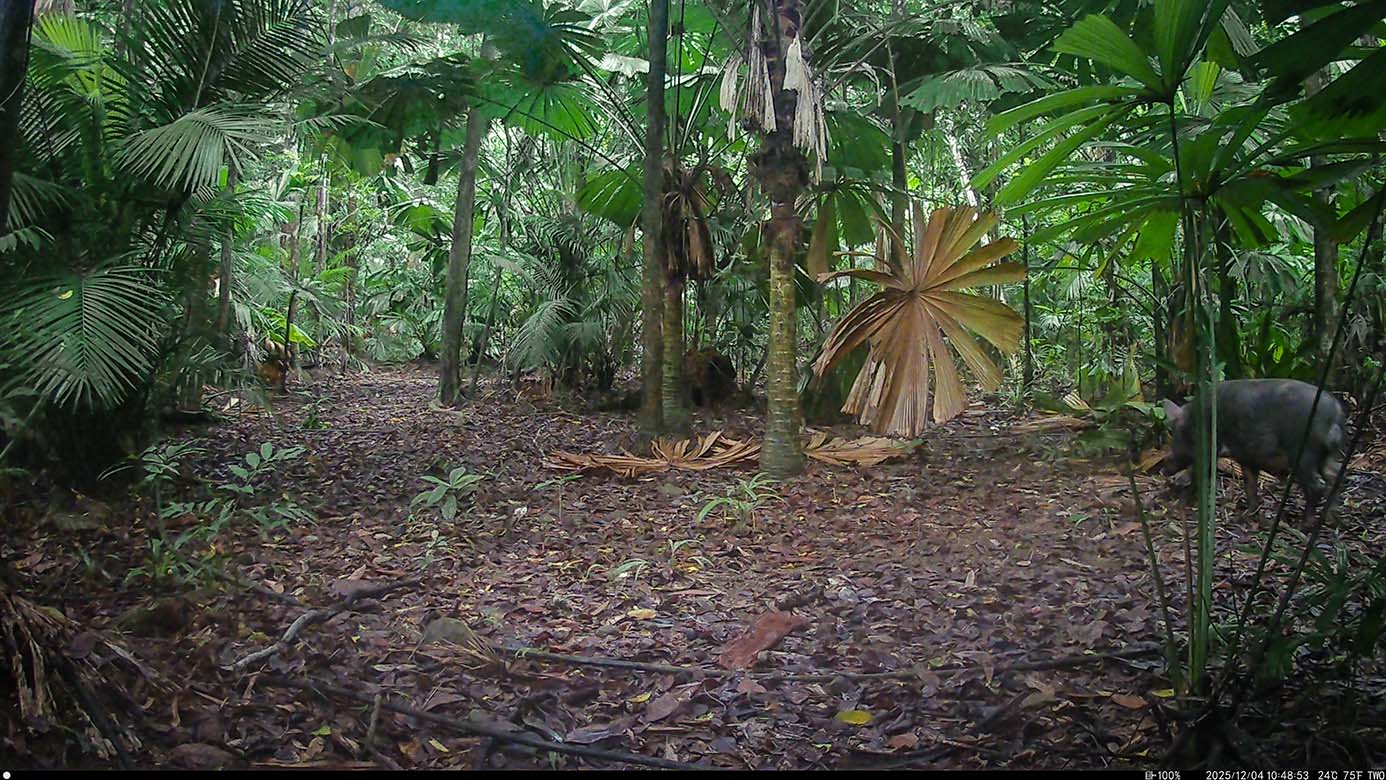
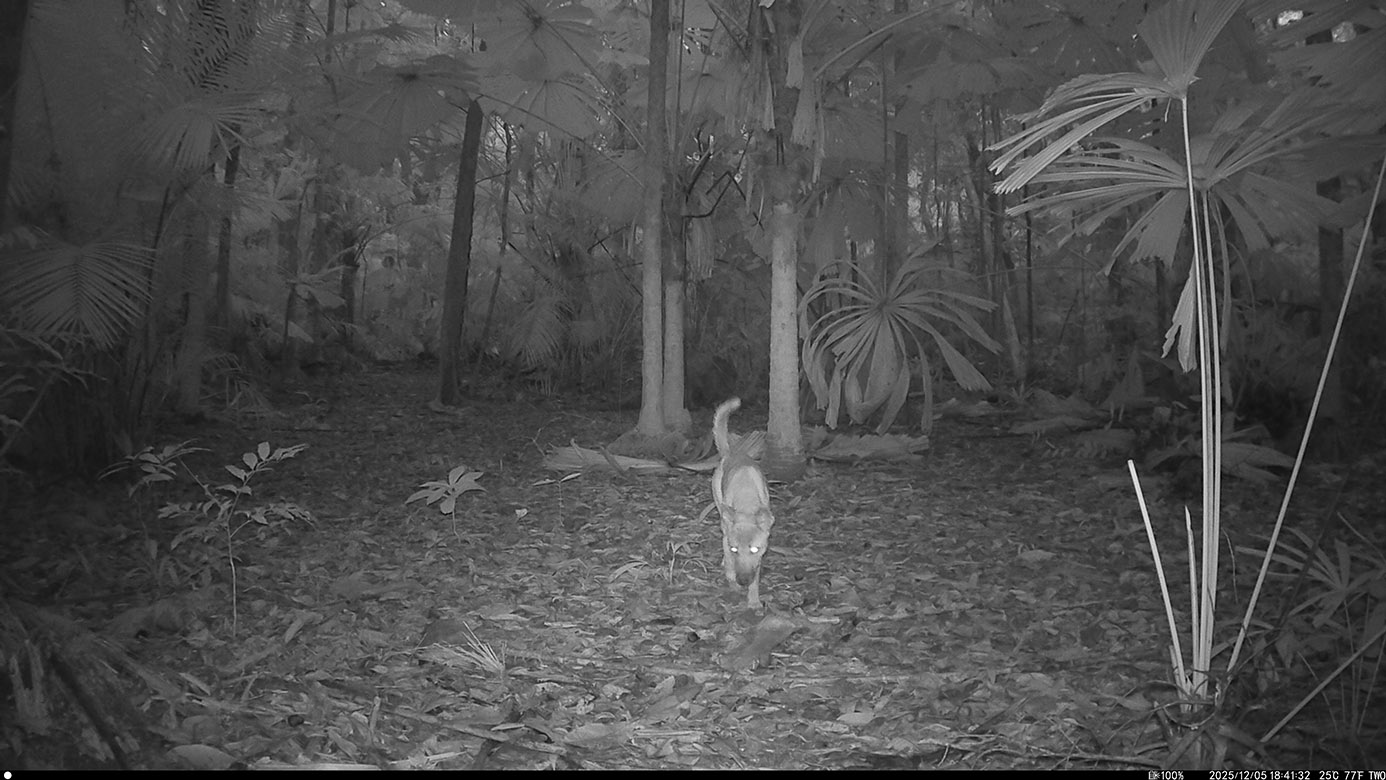
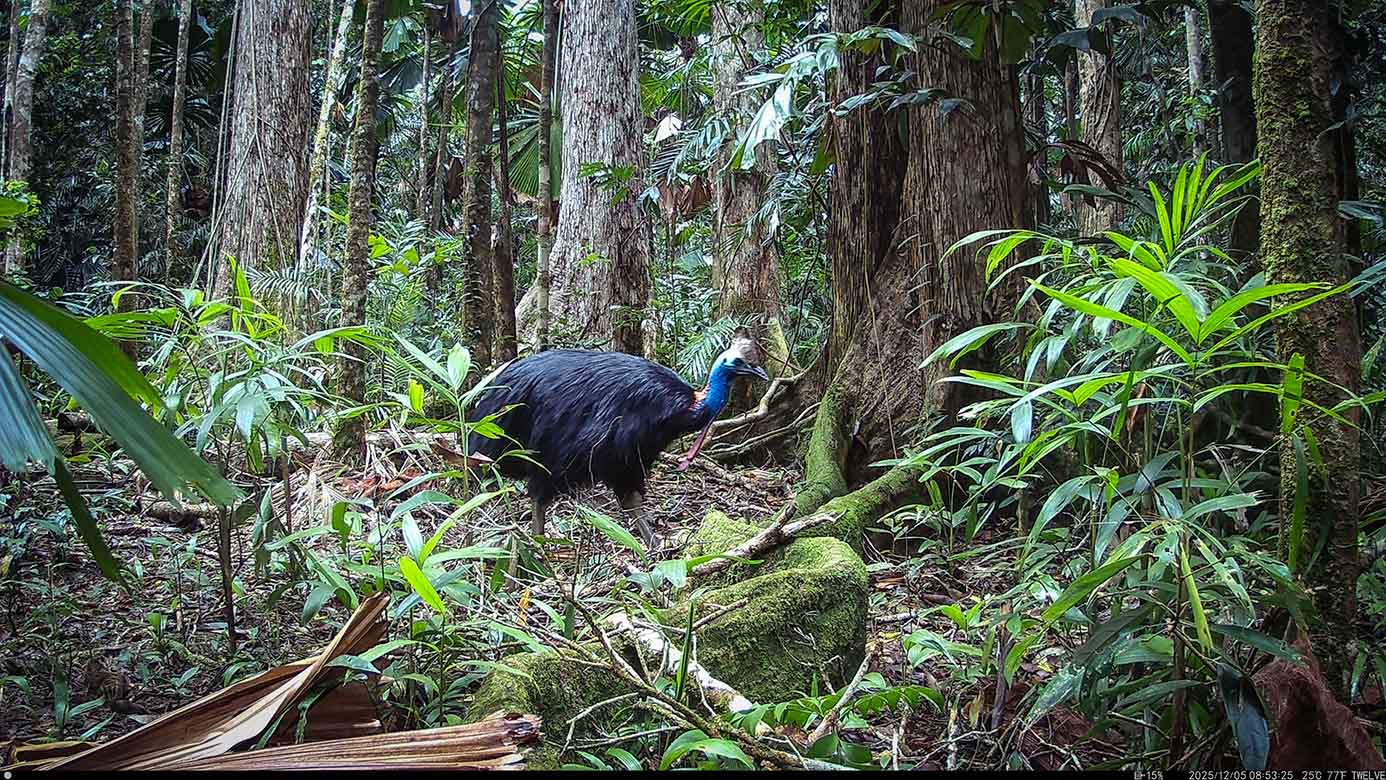
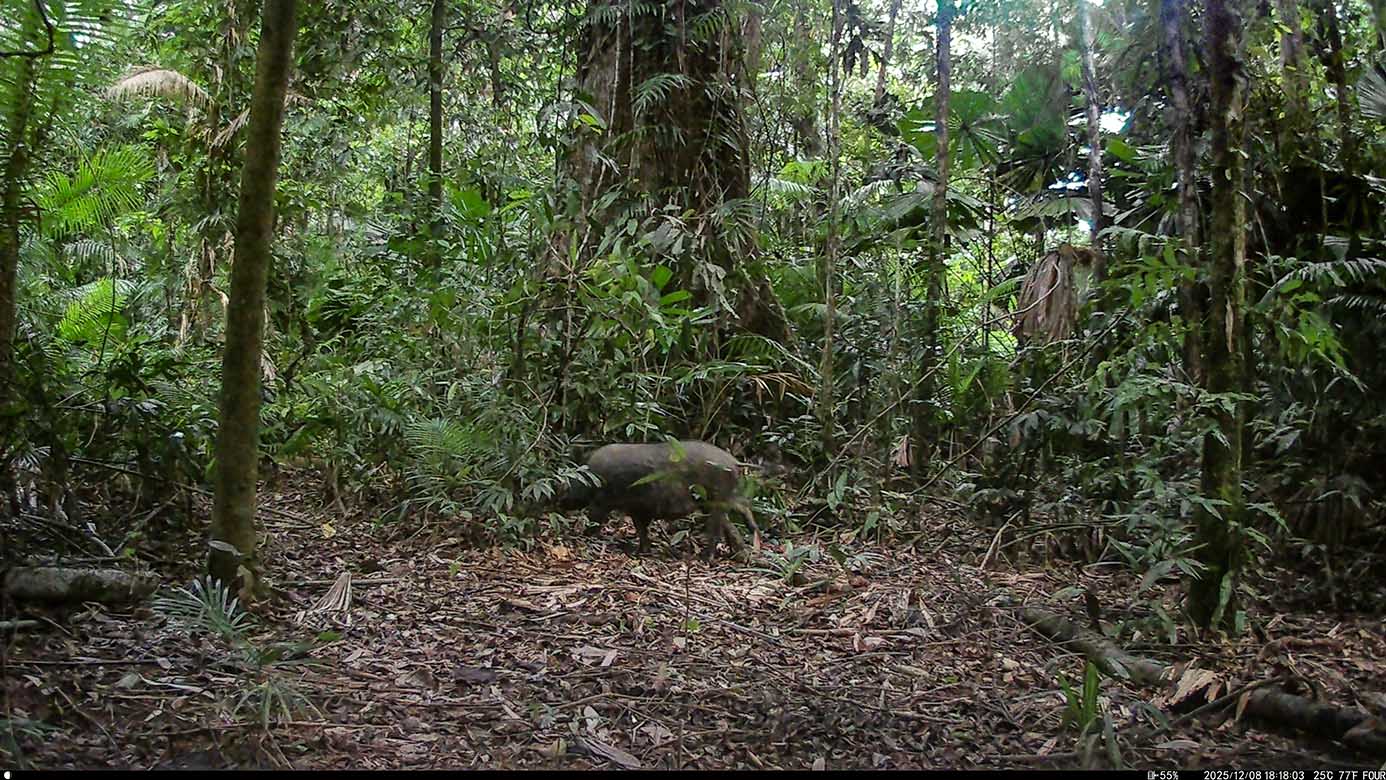
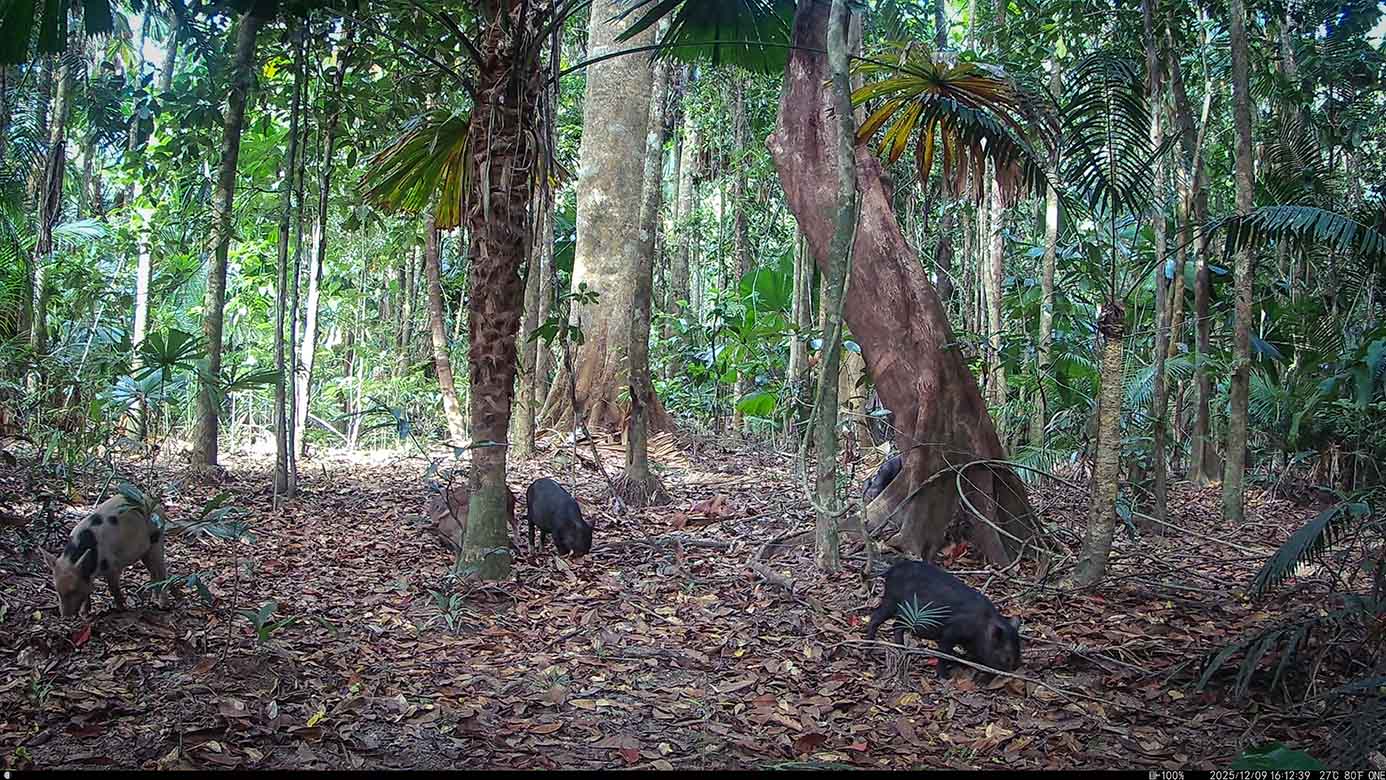
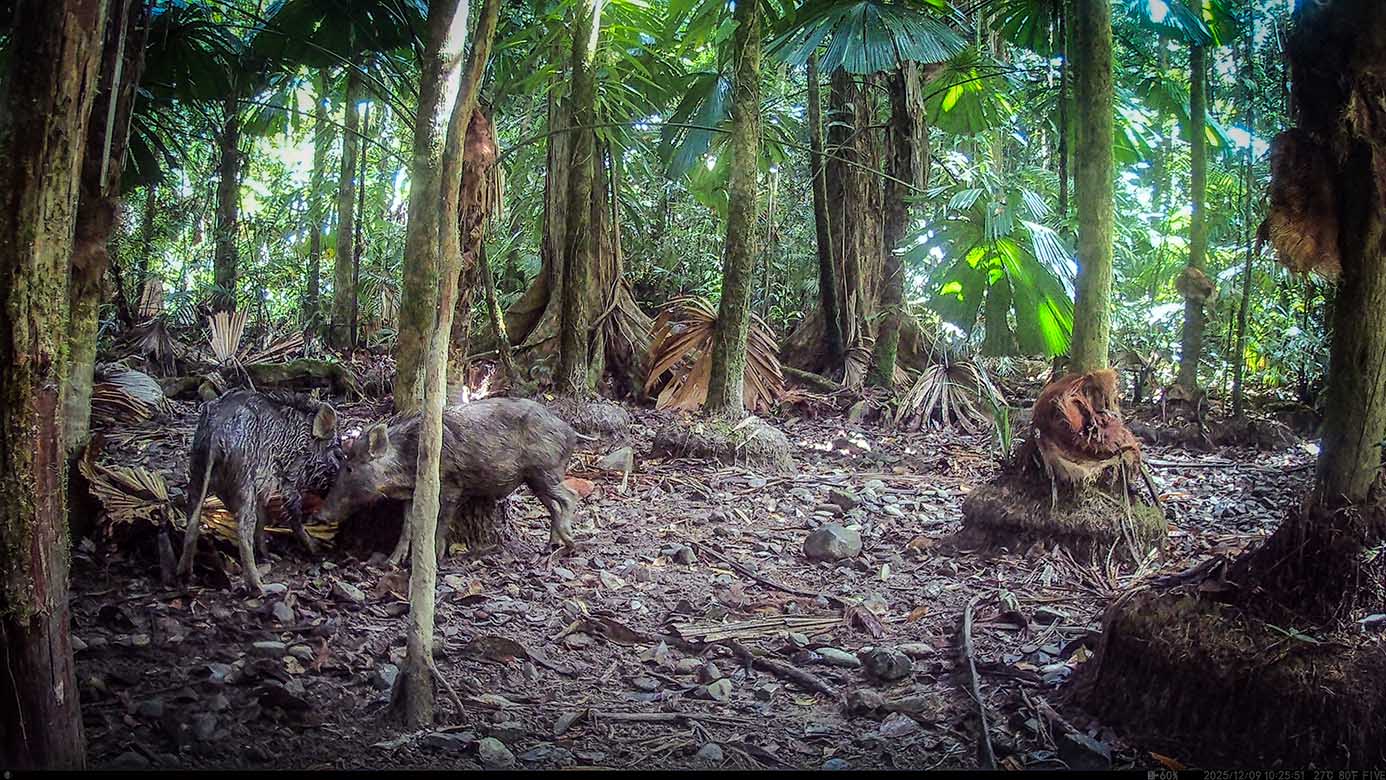
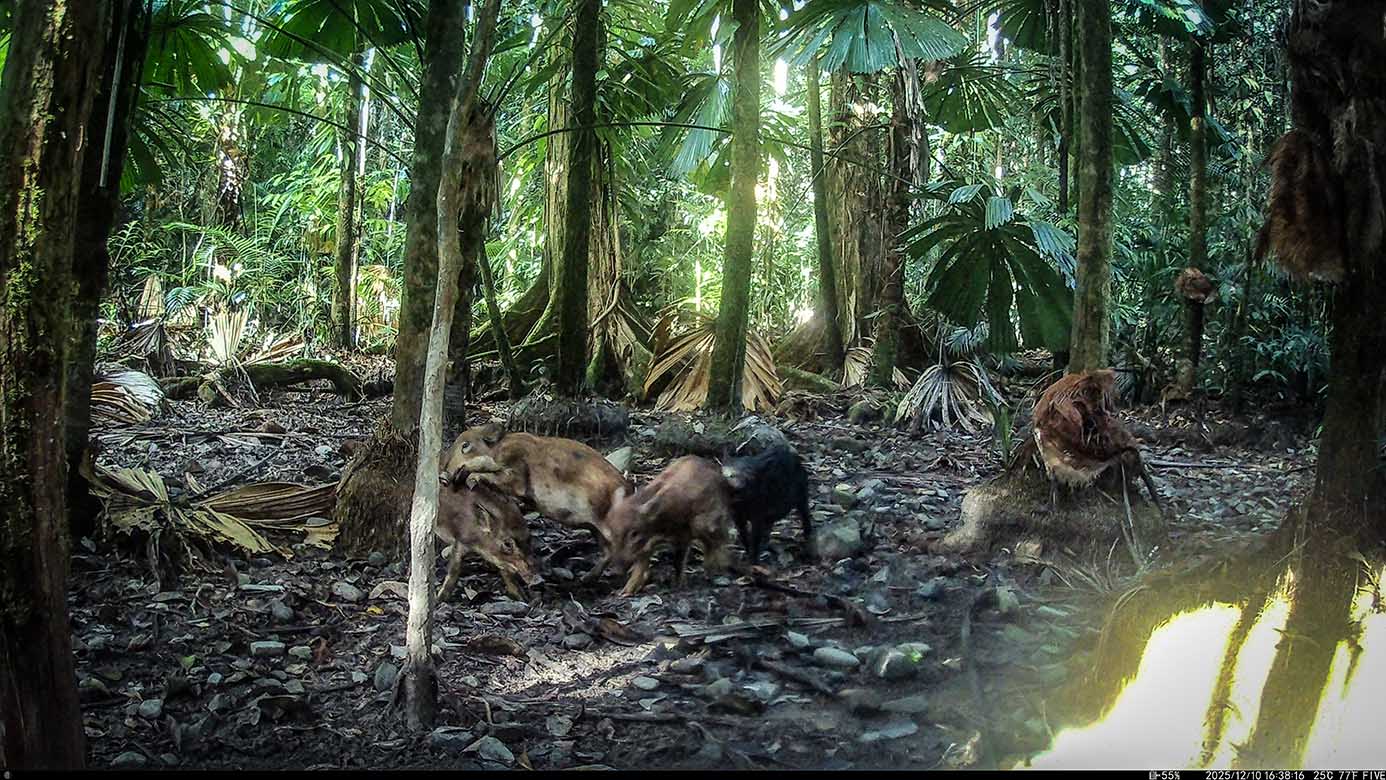
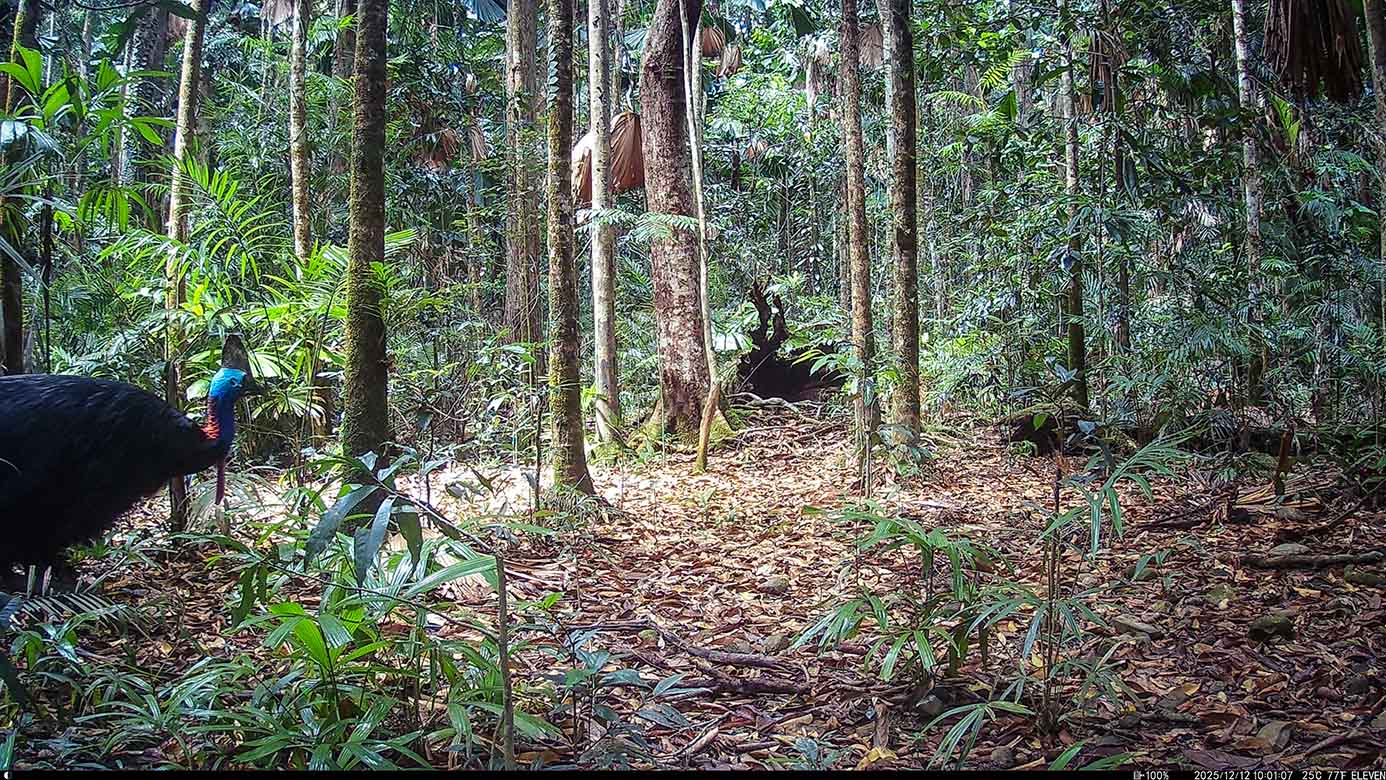
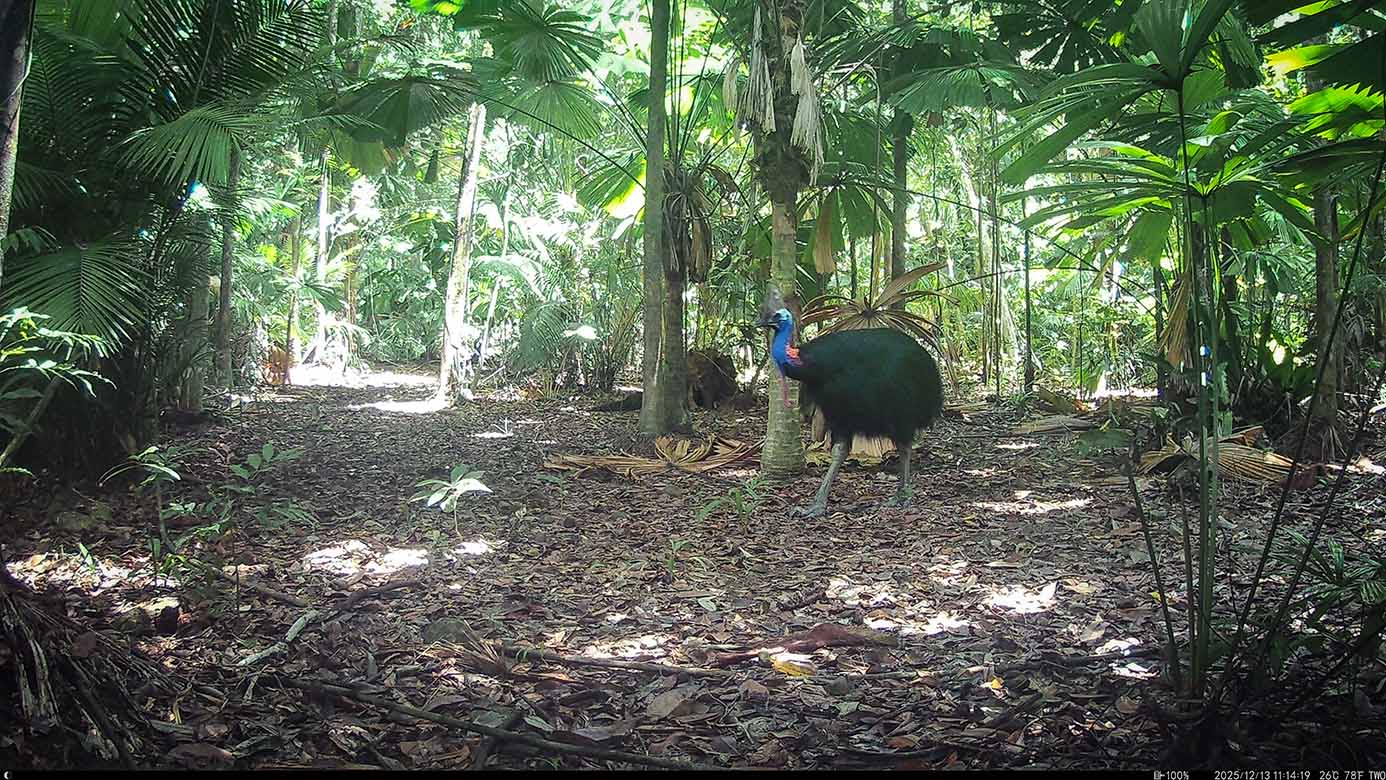
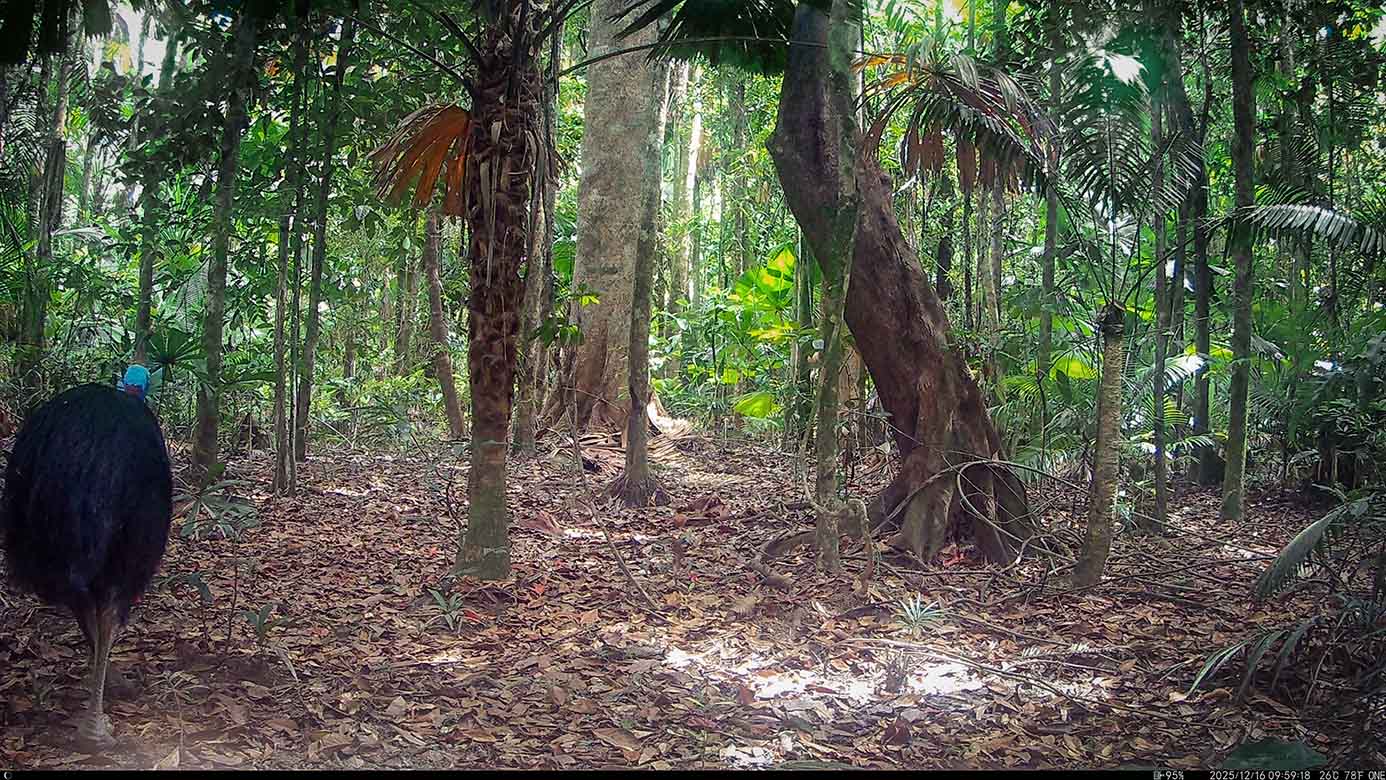
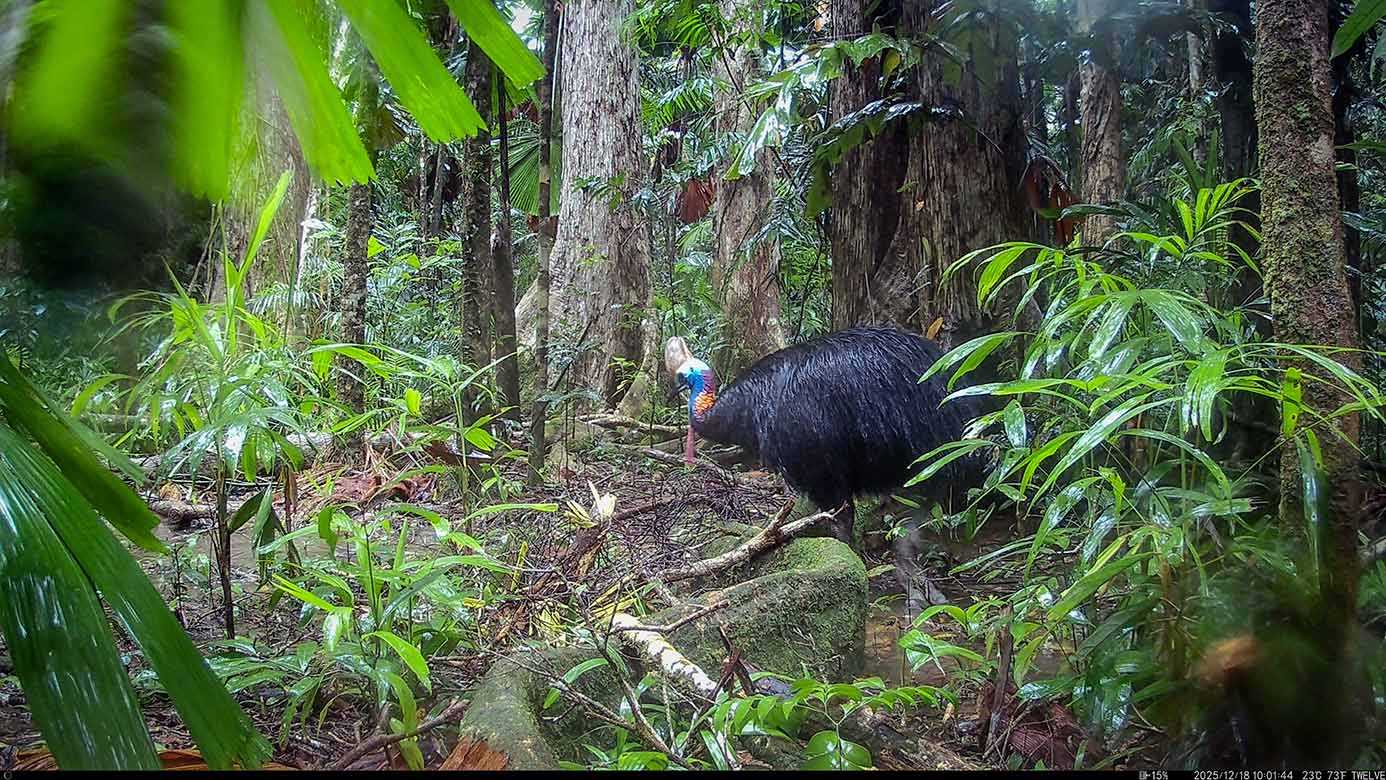
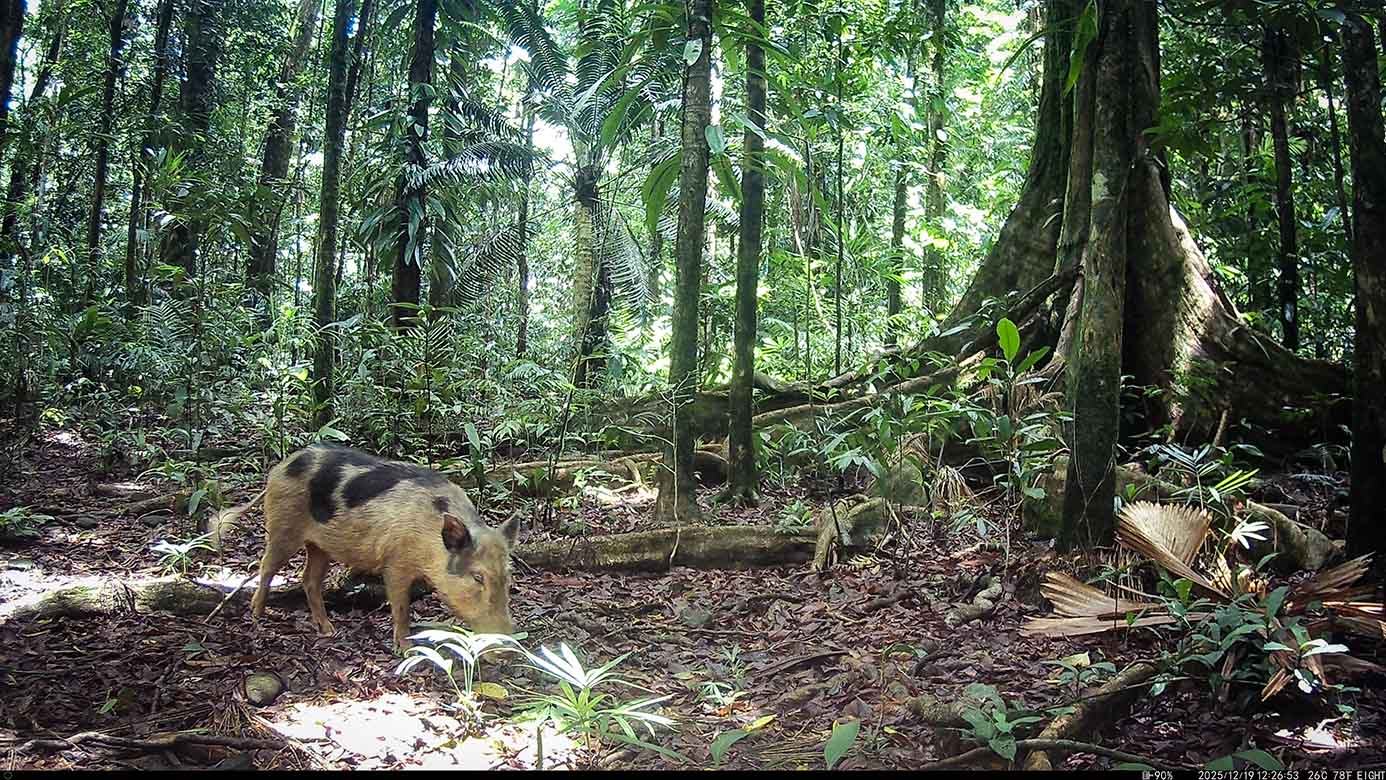
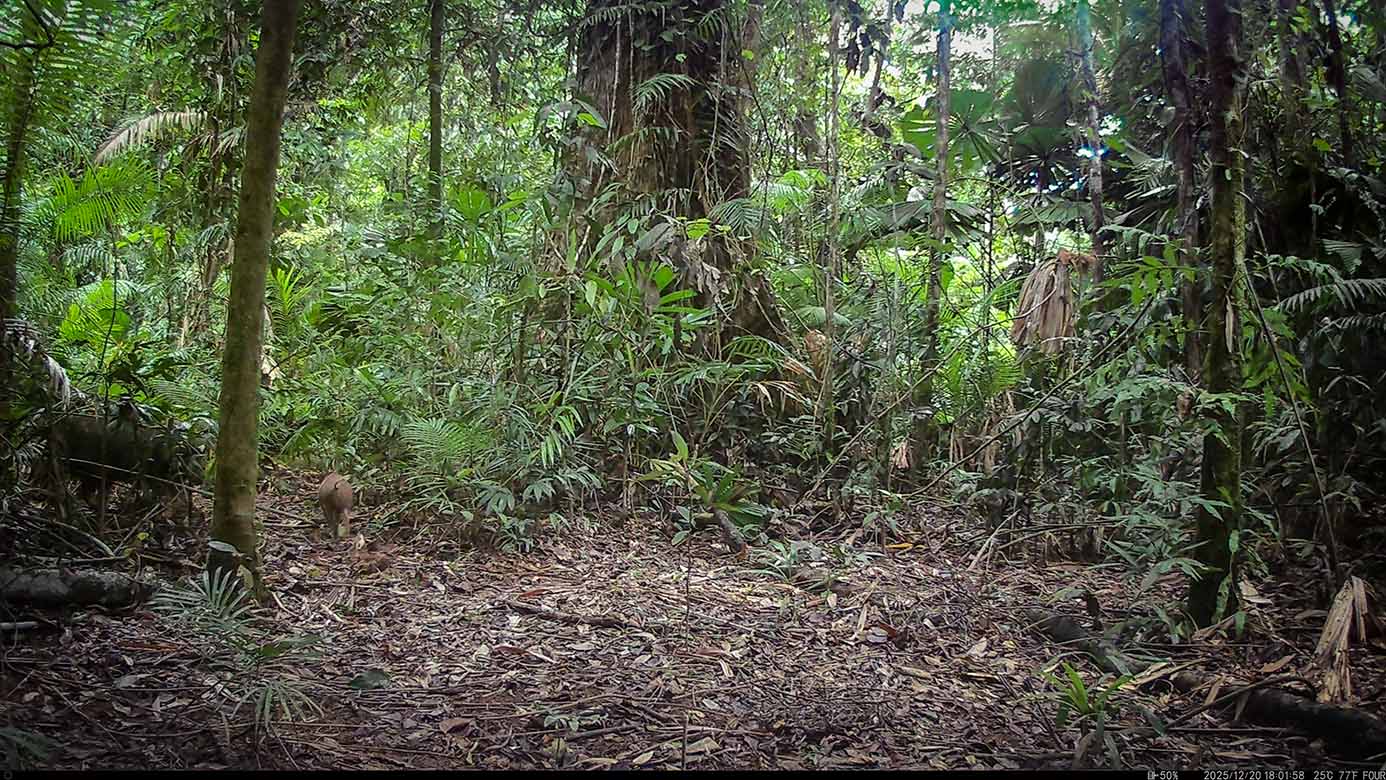
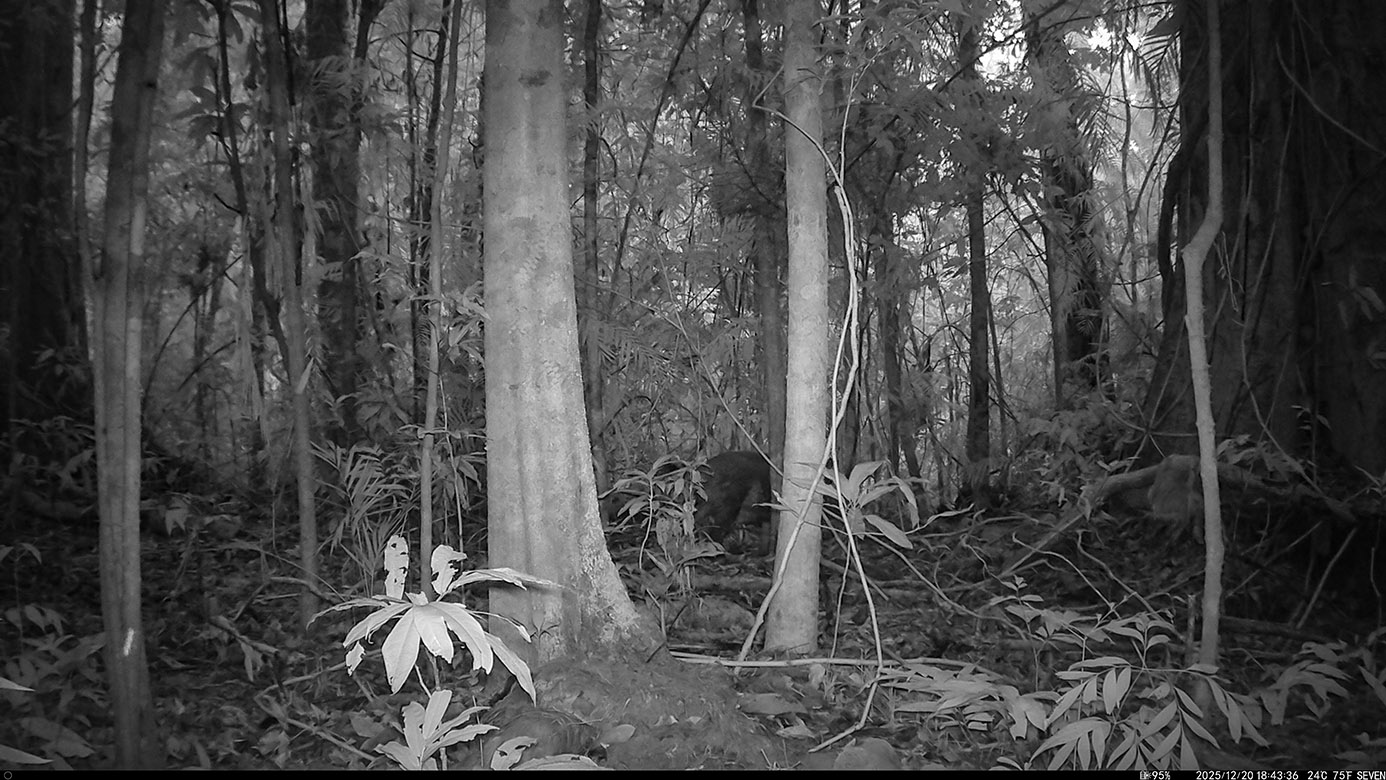
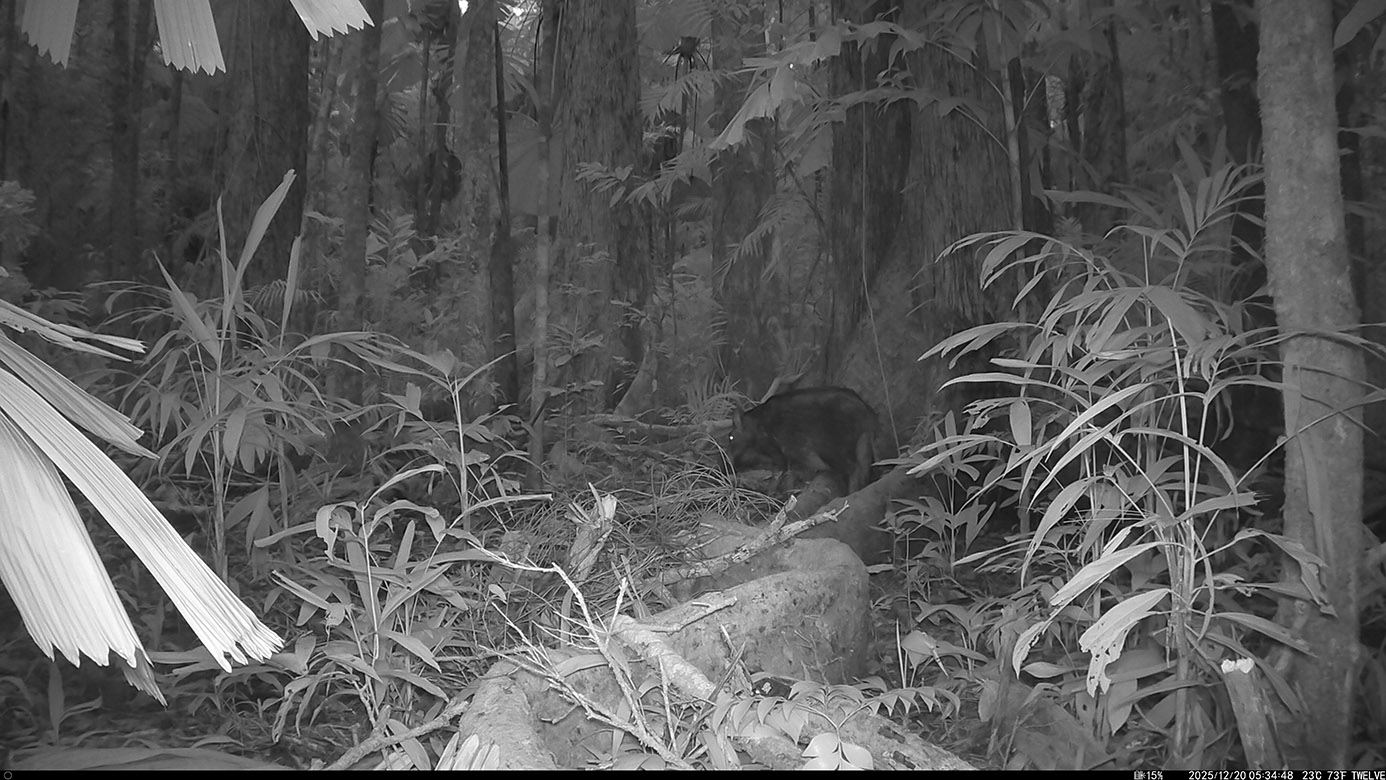
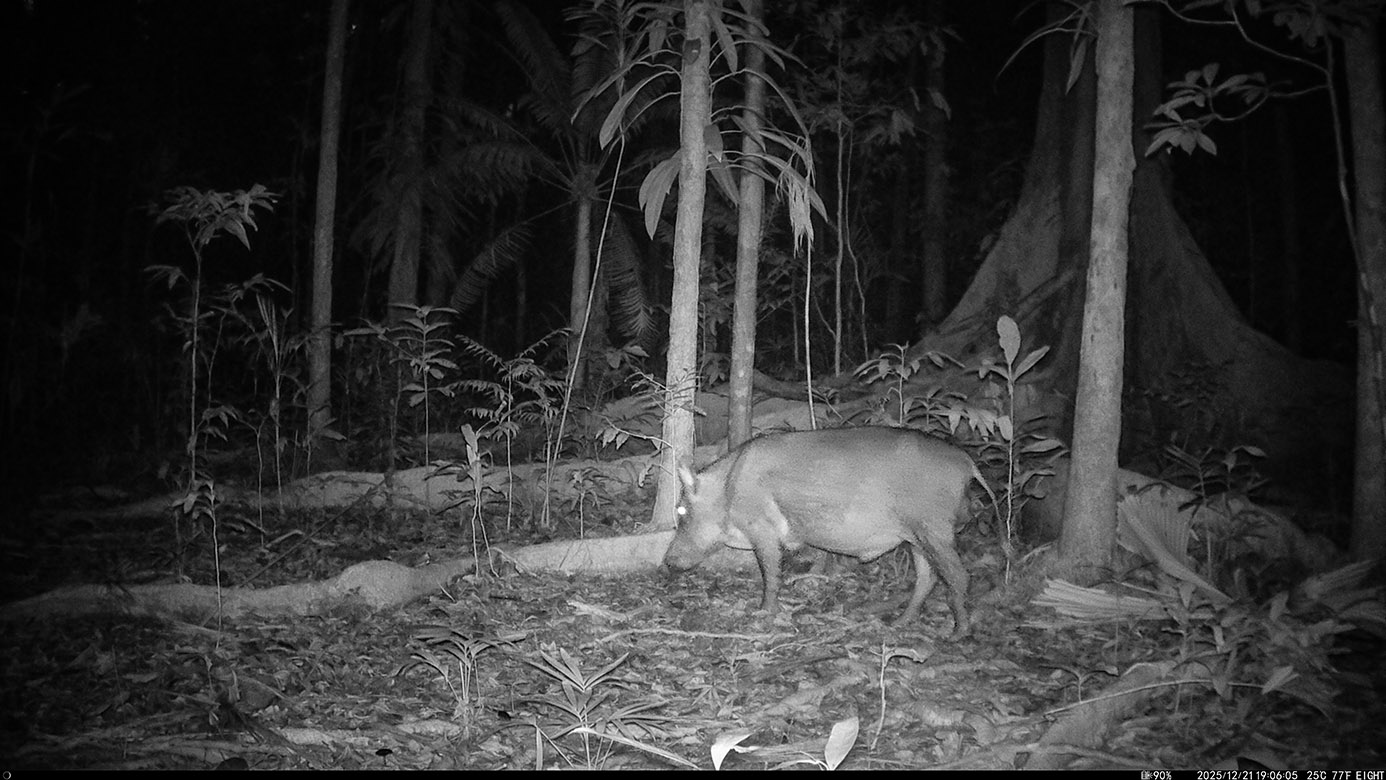
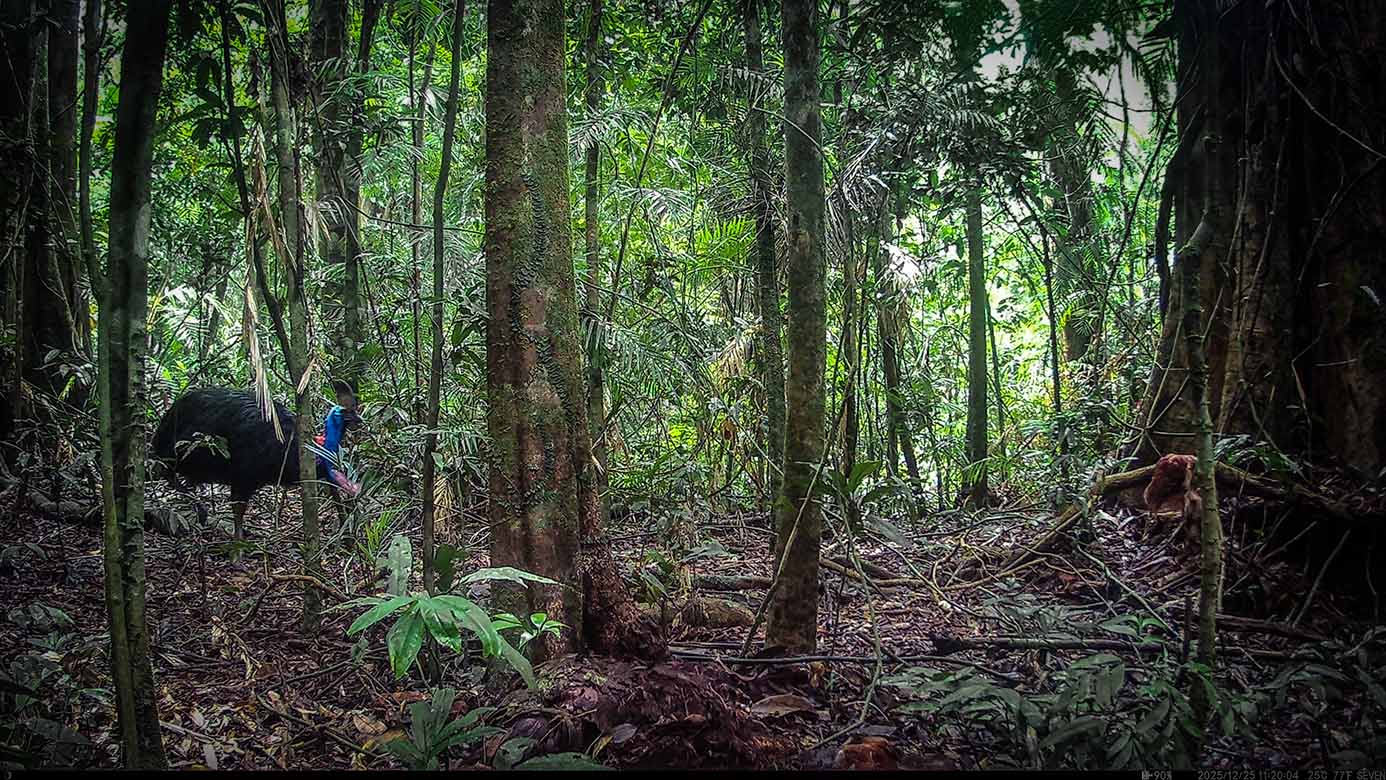
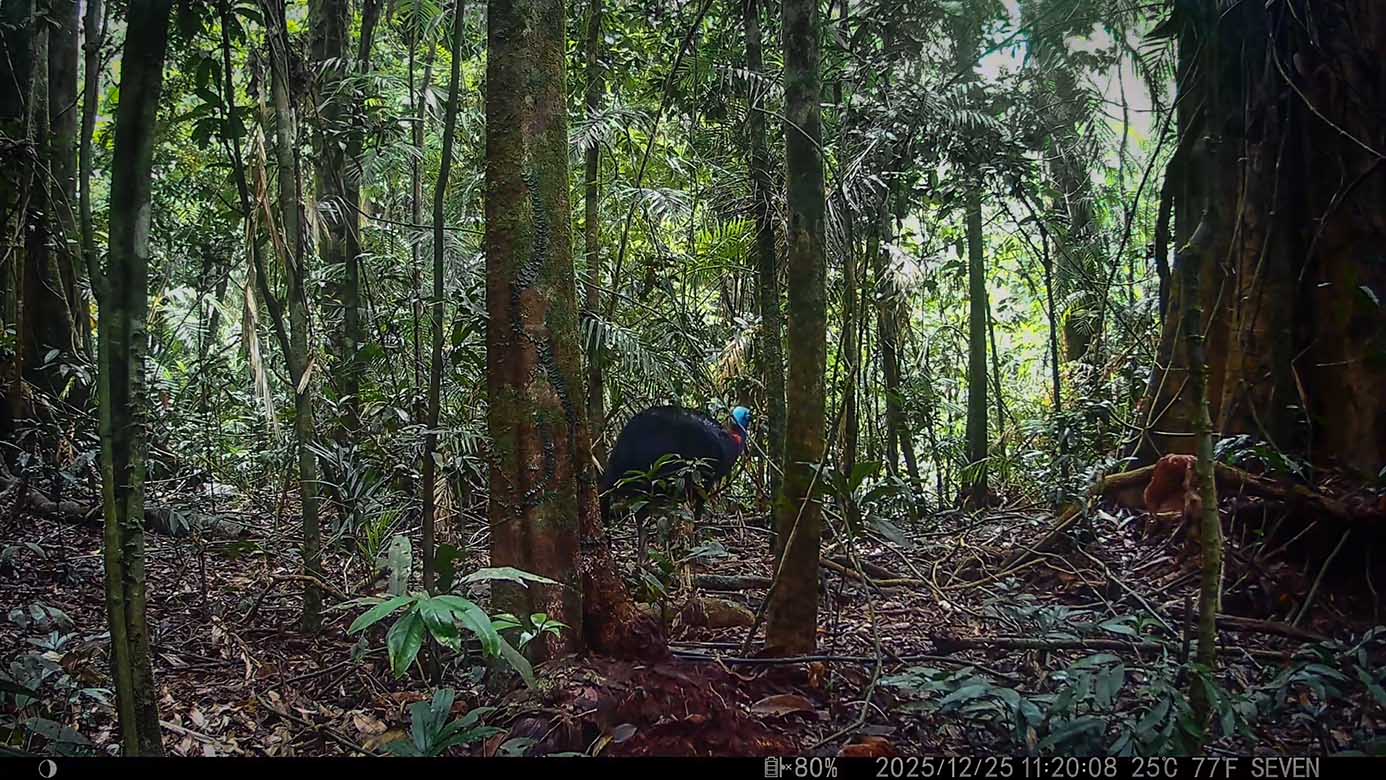
Keeping up with the cassowaries …
Keeping up with the cassowaries …
A new female cassowary, as yet, unnamed …
Matters of global environmental significance
Matters of global environmental significance
In June 2021, an expert panel convened by the Stop Ecocide Foundation proposed a legal definition of ecocide and called for an amendment to the Rome Statute of the International Criminal Court in order to make ecocide the fifth international crime. Defined as unlawful or wanton acts committed with knowledge that there is a substantial likelihood of severe and either widespread or long-term damage to the environment being caused by those acts; ecocide confers reckless disregard for damage which would be clearly excessive in relation to the social and economic benefits anticipated.
Under State authority, Douglas Shire Council can hardly be accused of reckless disregard for environmental damage caused by Tropical Cyclone Jasper in December 2023, and yet, subject to the provisions of the Disaster Management Act 2003, the Douglas Recovery Resilience Sub-Plan, endorsed by the Local Disaster Management Group, declared:
The environment is the foundation of everything in the shire – liveability, lifestyle and livelihoods. The Shire’s natural biodiversity ranges from rainforest and wet sclerophyll woodlands to mangrove forests and wetlands, to vegetated sand dunes and swale systems, reefs, foreshore areas, intertidal seagrass beds and estuarine creek and river systems; the air and water, as well as the mammals, birds, fish, insects, reptiles and amphibians that call it home. These diverse natural environments enhance the liveability of the shire, supporting lifestyles and livelihoods. Traditional Owners and locals are deeply aware of environmental changes to the local environment and impacts on how they engage with land and sea. This awareness of the influence of environmental changes on liveability is shared by local, state and federal government agencies and UNESCO.
Article 4 of the World Heritage Convention states:
Each State Party recognises that the duty of ensuring the identification, protection, conservation, presentation and transmission to future generations of the cultural and natural heritage referred to in Articles 1 and 2 and situated on its territory, belongs primarily to that State. It will do all it can to this end, to the utmost of its own resources and, where appropriate, with any international assistance and co-operation, in particular, financial, artistic, scientific and technical, which it may be able to obtain.
The Wet Tropics World Heritage Protection and Management Act 1993 established the Wet Tropics Management Authority with the object of ensuring that Australia’s obligation under the World Heritage Convention in relation to the wet tropics area is met.
Clearly, Australia’s World Heritage duty has fallen well and truly short of the mark, but so has international regulatory manoeuvring, with ecocide being deleted from the proposed amendment to the Rome Statute due to objections by the United Kingdom, France and the United States of America. Incidentally, these three Nation-States have collectively tested over 1,400 nuclear weapons around the world, atmospherically, exoatmospherically, underground and underwater, whereas Australia is a major international supplier of uranium. However, it is not only wanton acts committed with knowledge that cause severe and either widespread or long-term damage to the environment, it is also the cumulative impacts committed without knowledge or intention that requires urgent regulatory amelioration.
Every Nation-State that has extirpated indigenous human inhabitants from natural environments, has robbed those environments of understanding, appreciation, custodial expertise, foresight, altruism and ecological managerial finesse. Where that forced extirpation has led to the proliferation of feral-pests and weeds, the irresponsible Nation-State is culpable of ecocide. Likewise, where non-human secondary predators are relegated into de facto apex-predatorship, the subsequent over predation of lower-order consumers and producers manifests with ecocidal affect and in the case of Australia, has led to more species of mammal being driven to extinction in the last 150-years than the rest of the world combined.
Daintree Rainforest Foundation Ltd has been registered by the Australian Charities and Not-for-profits Commission and successfully entered onto the Register of Environmental Organisations. Donations made to the Daintree Rainforest Fund support Daintree Rainforest community custodianship and are eligible for a tax deduction under the Income Tax Assessment Act 1997.