
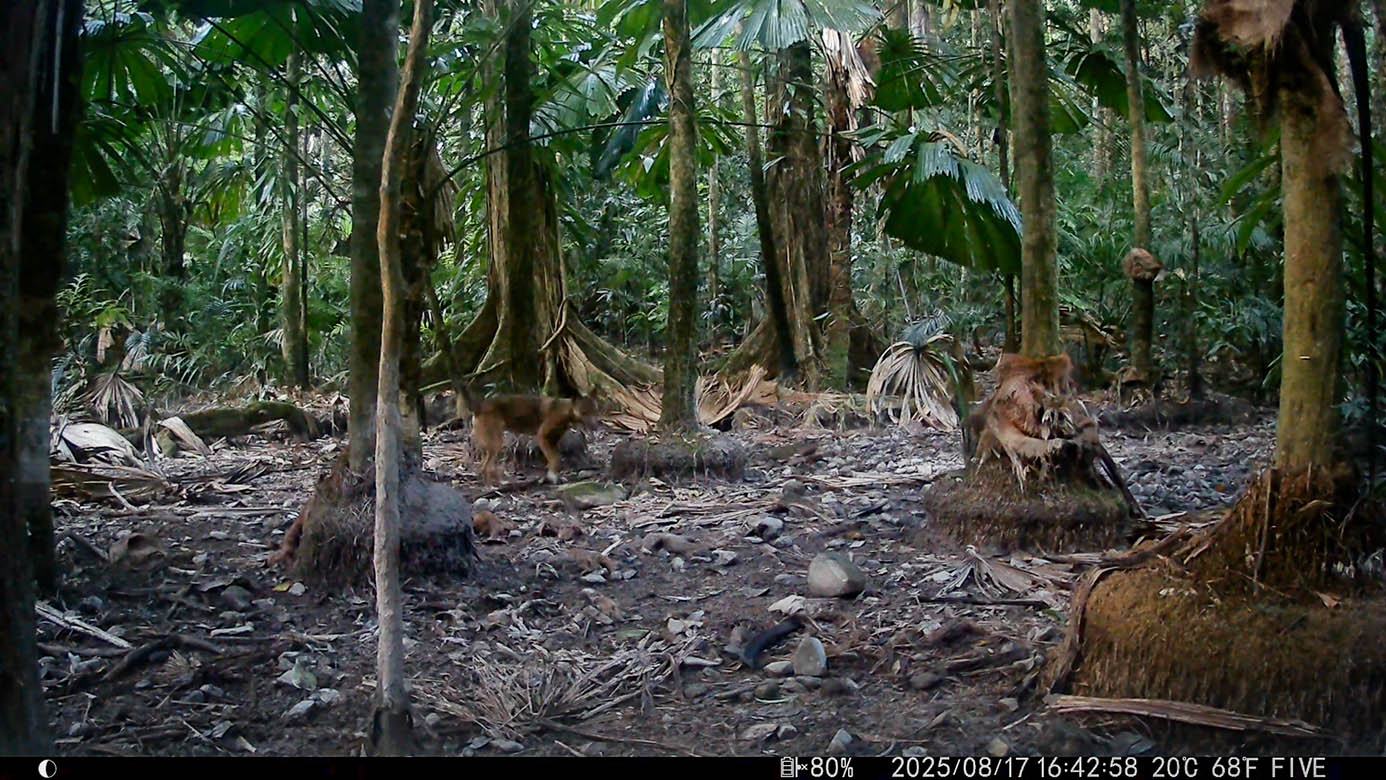
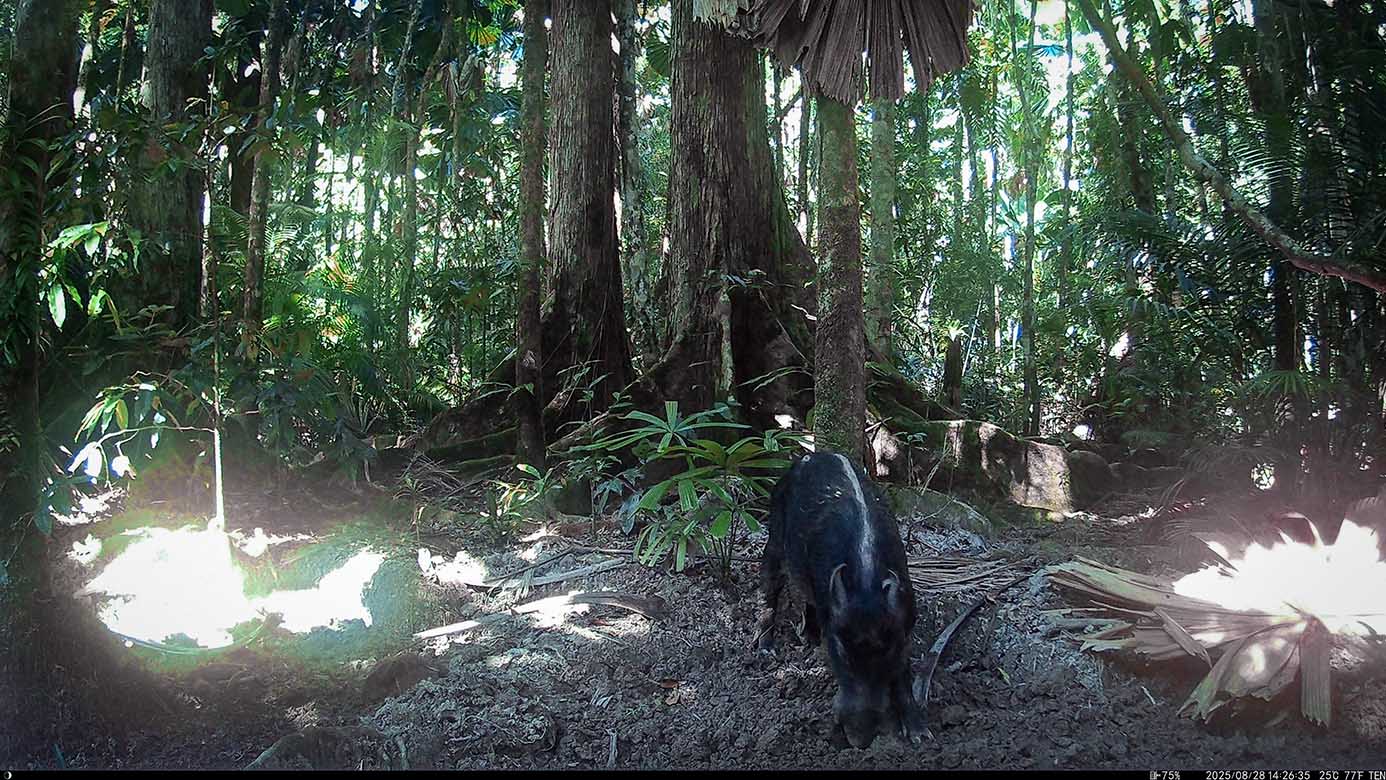
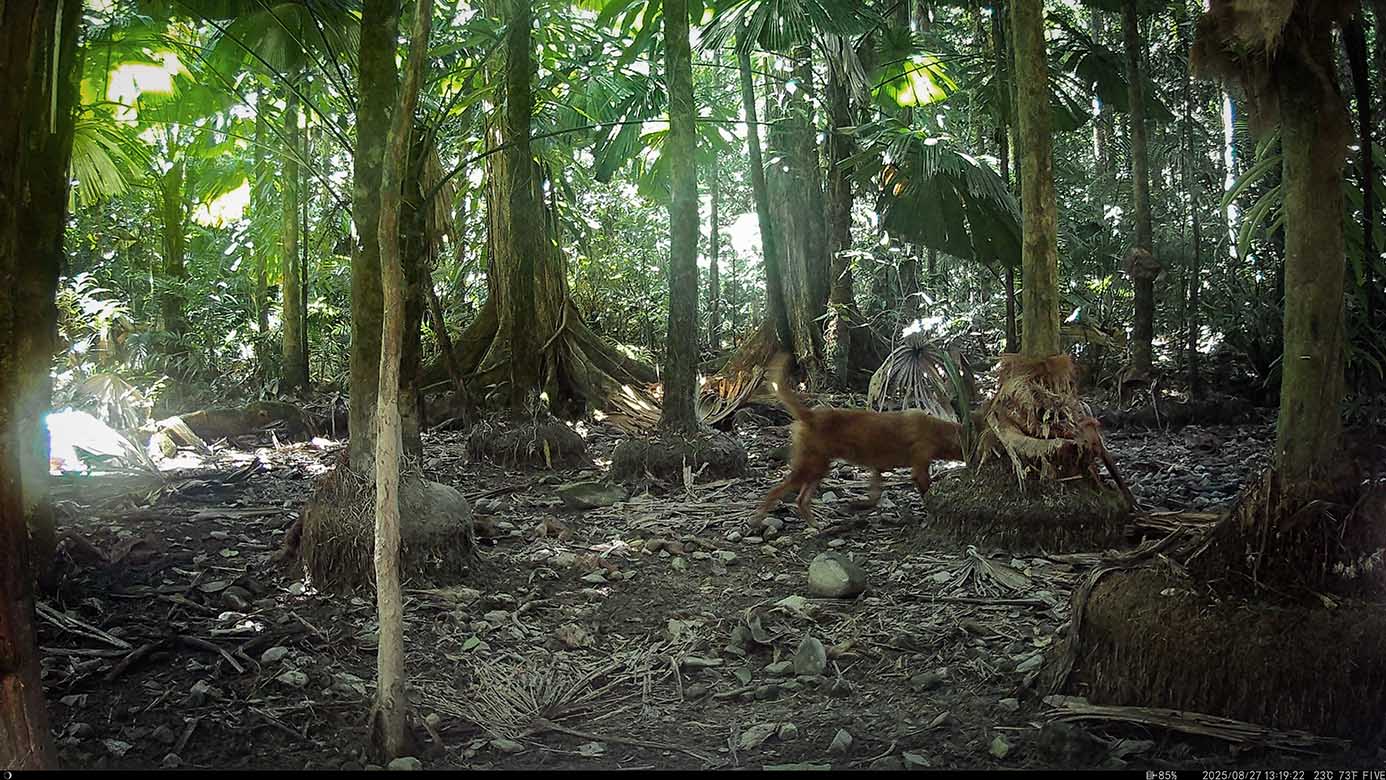
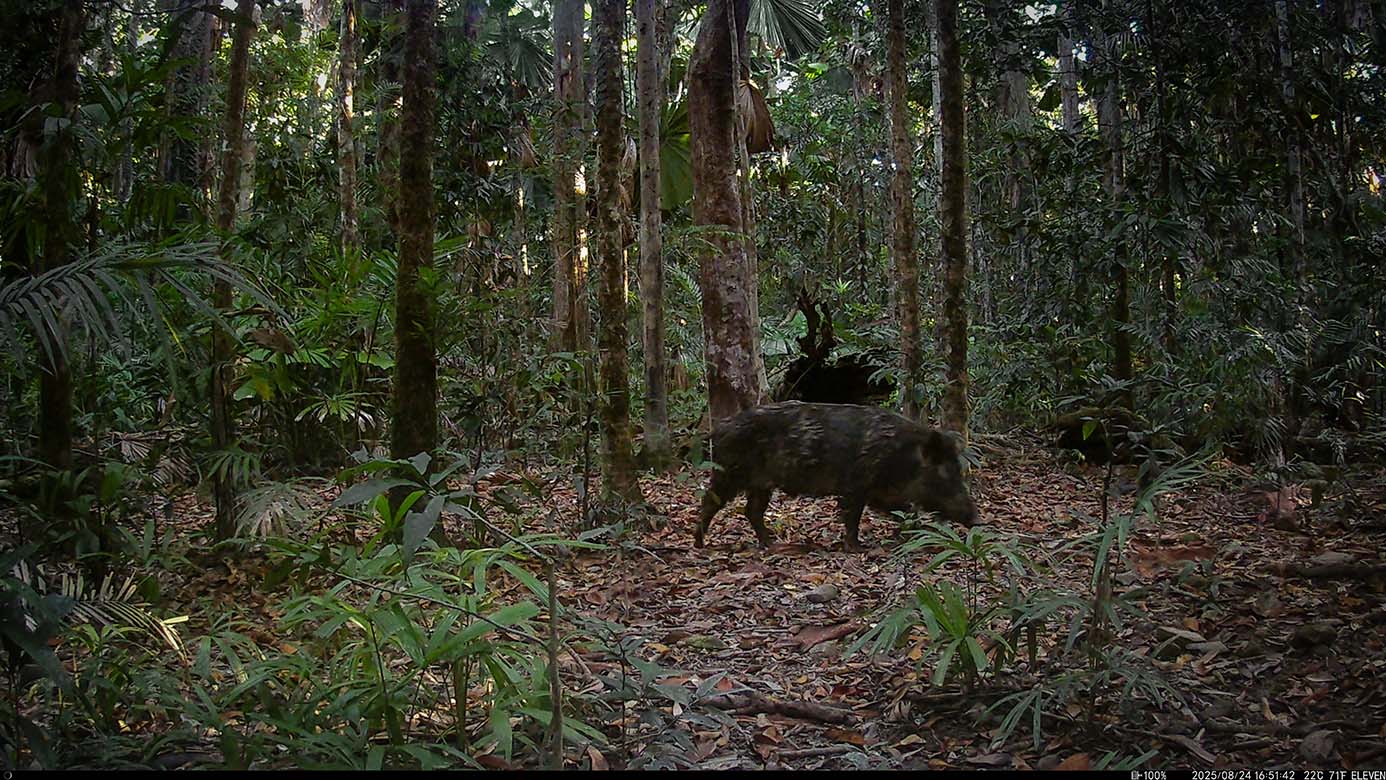
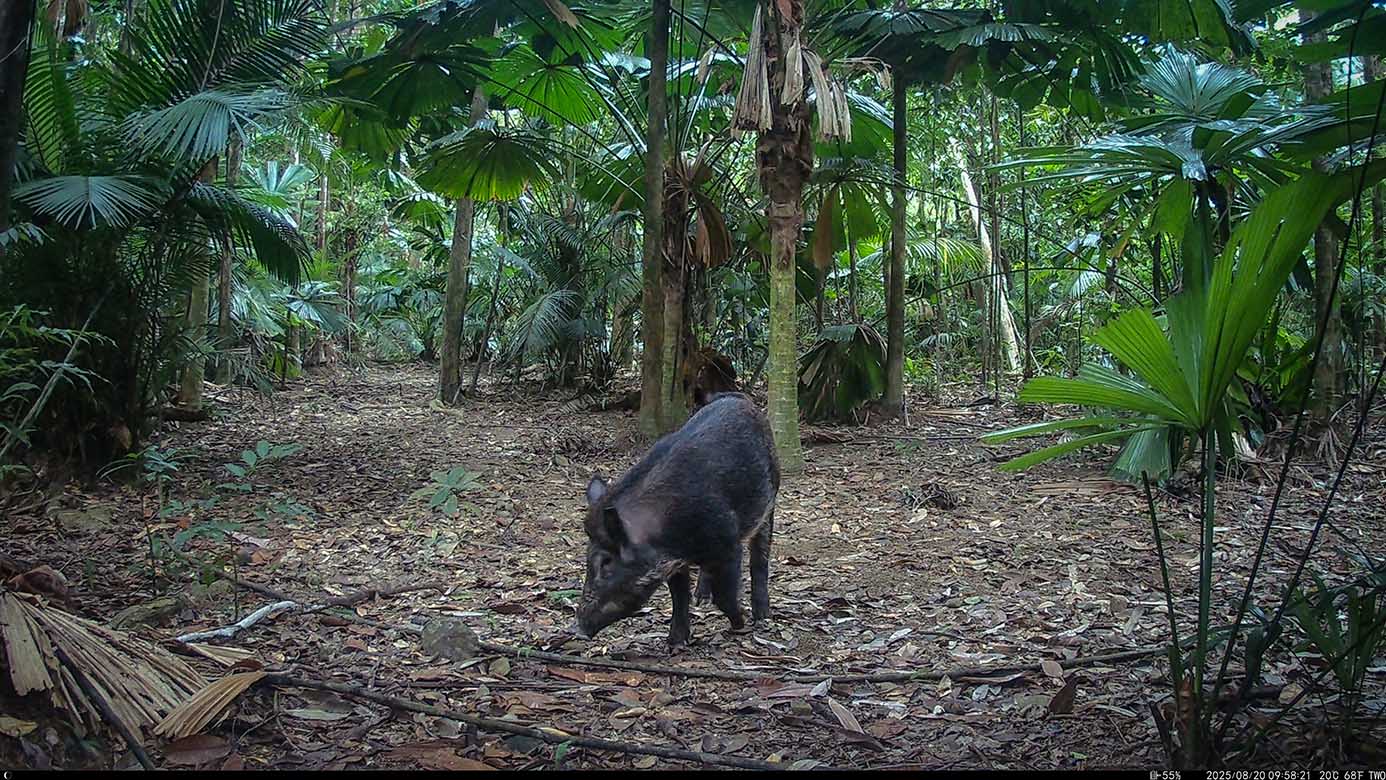
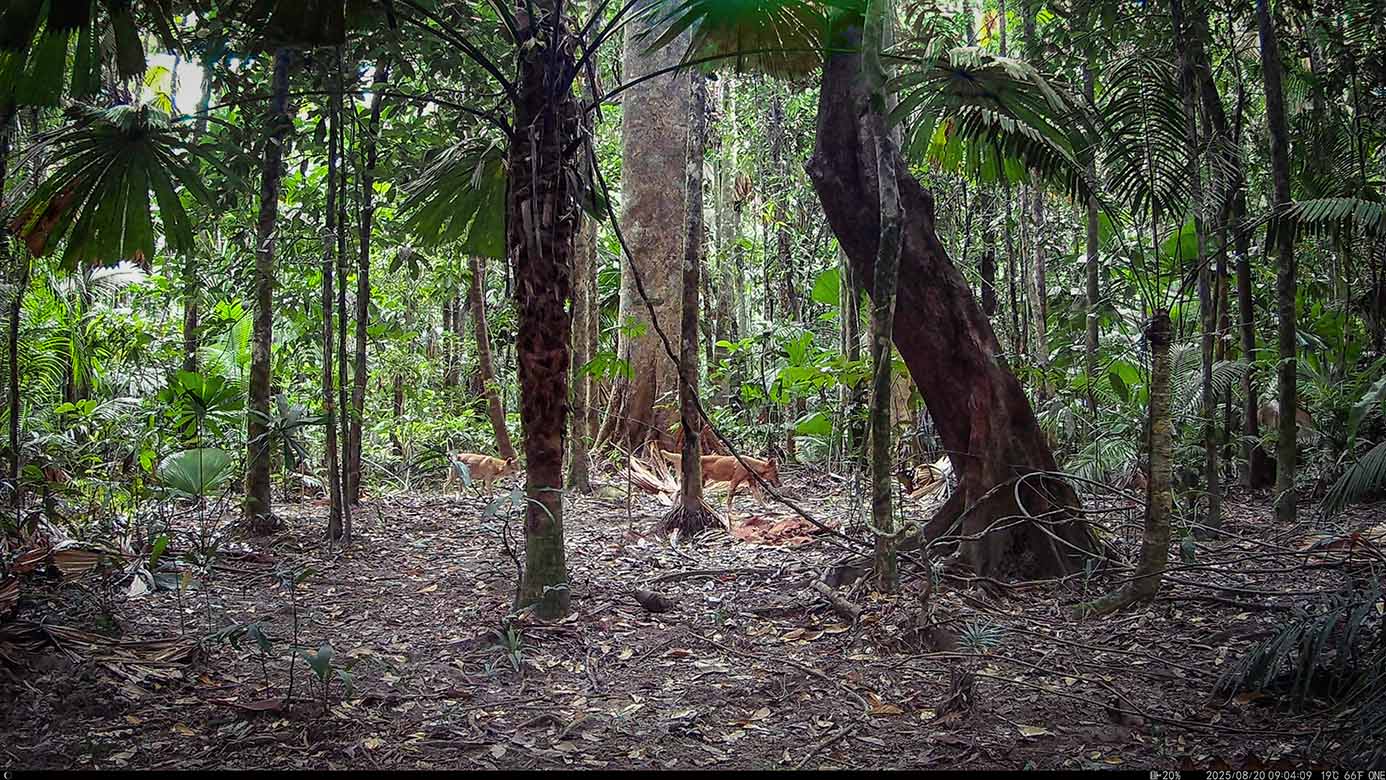
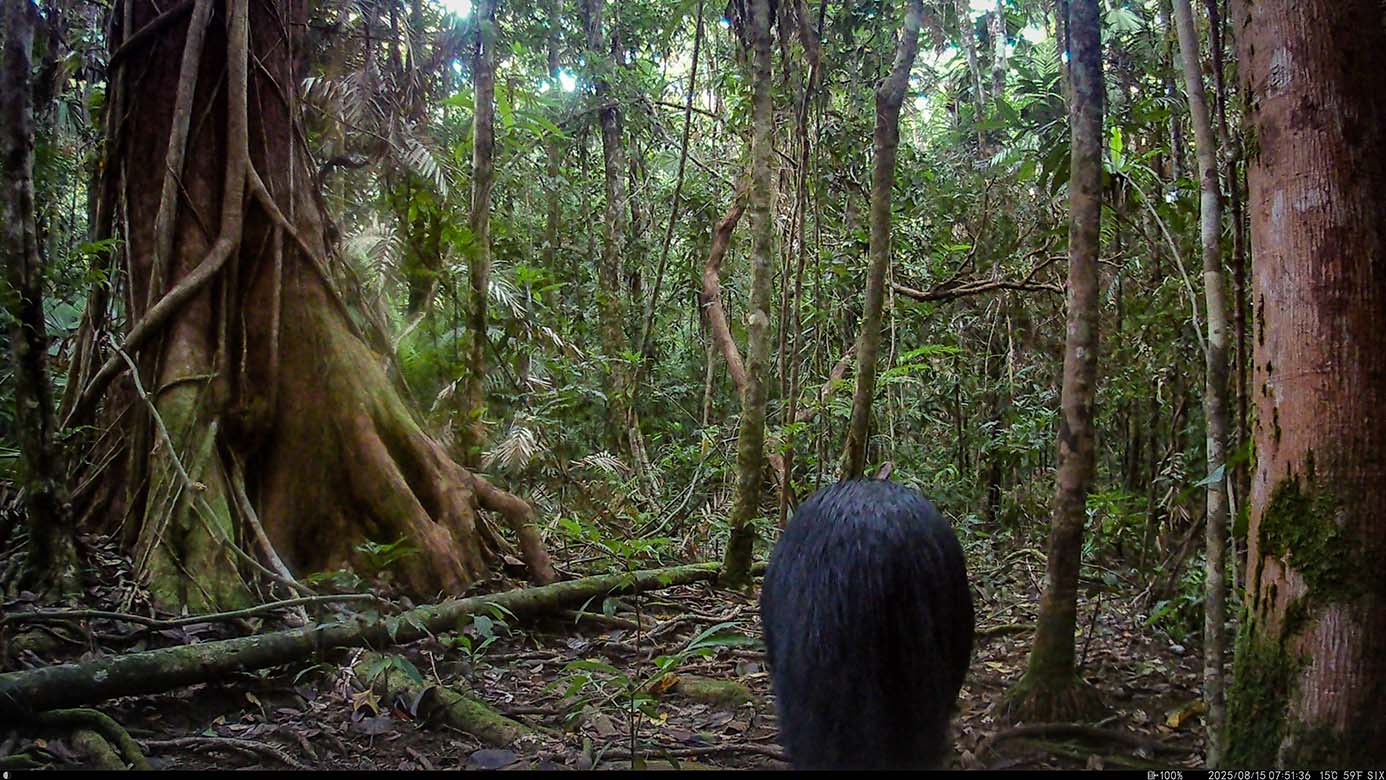
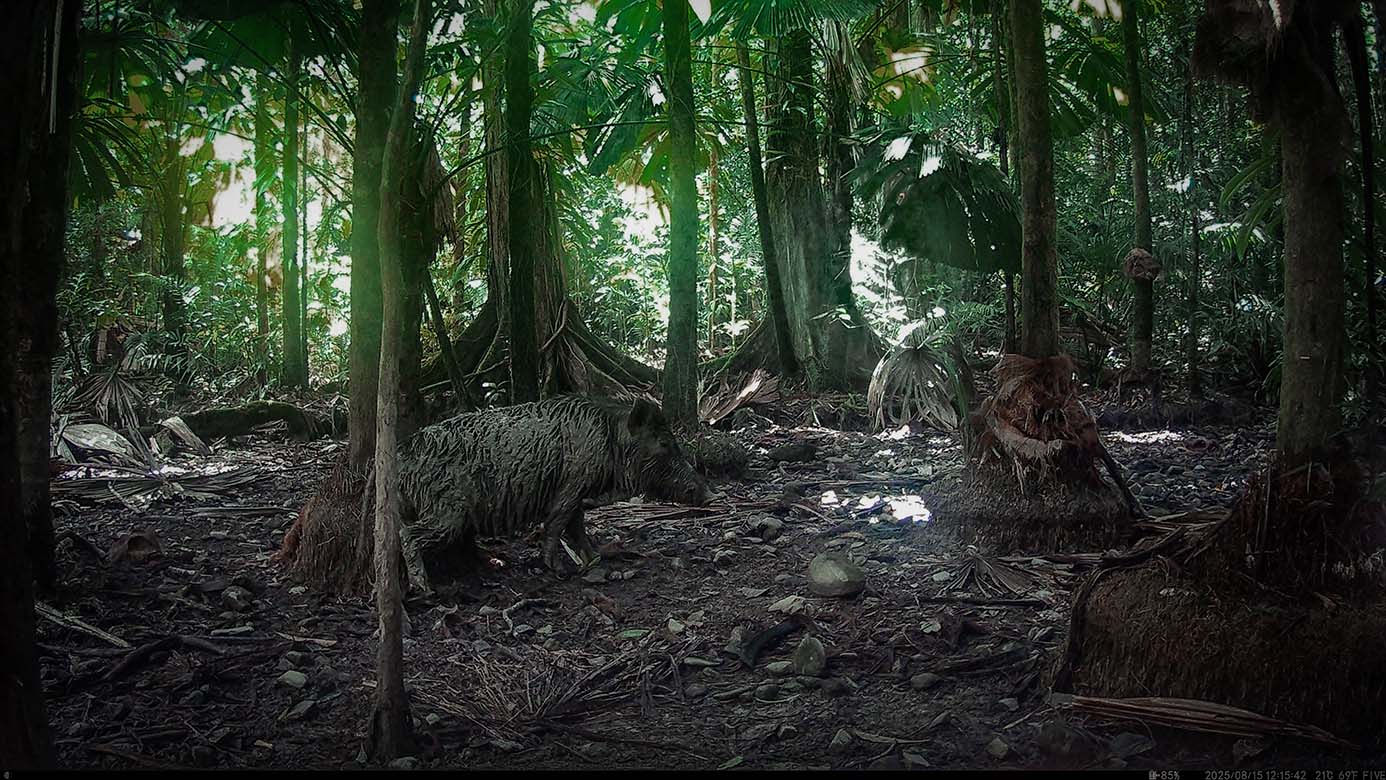
Camera Traps – August 2025 accrued 48-cassowary sightings, 42-dingoes and 66-feral pigs. Against the cumulative monthly average, cassowary numbers fell by 54%, dingo-sightings dropped by 3% and feral-pig numbers collapsed by 67%. Against August 2024, cassowary sightings were 27% fewer, dingo numbers also fell by 27%, whilst feral-pigs plummeted by 67%!
Image highlights from Camera Traps – August 2025


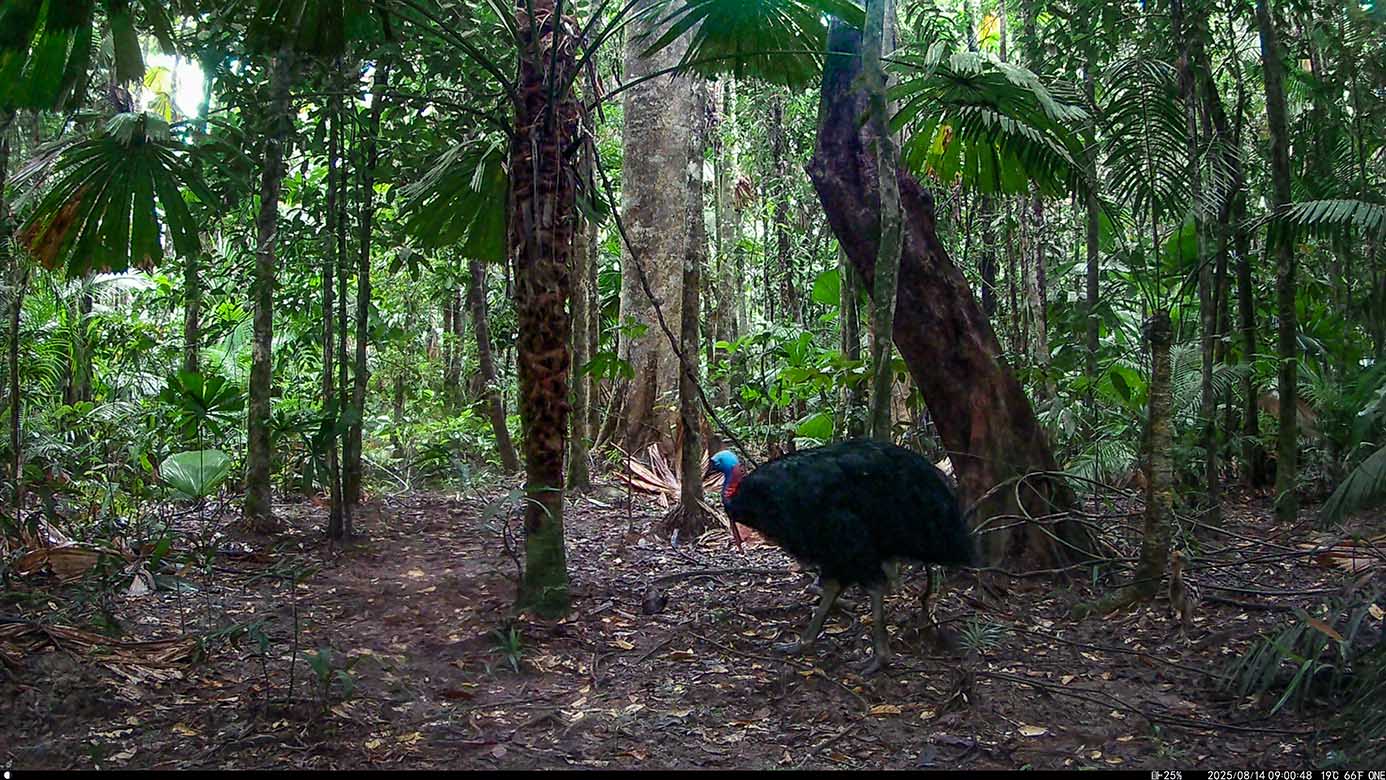
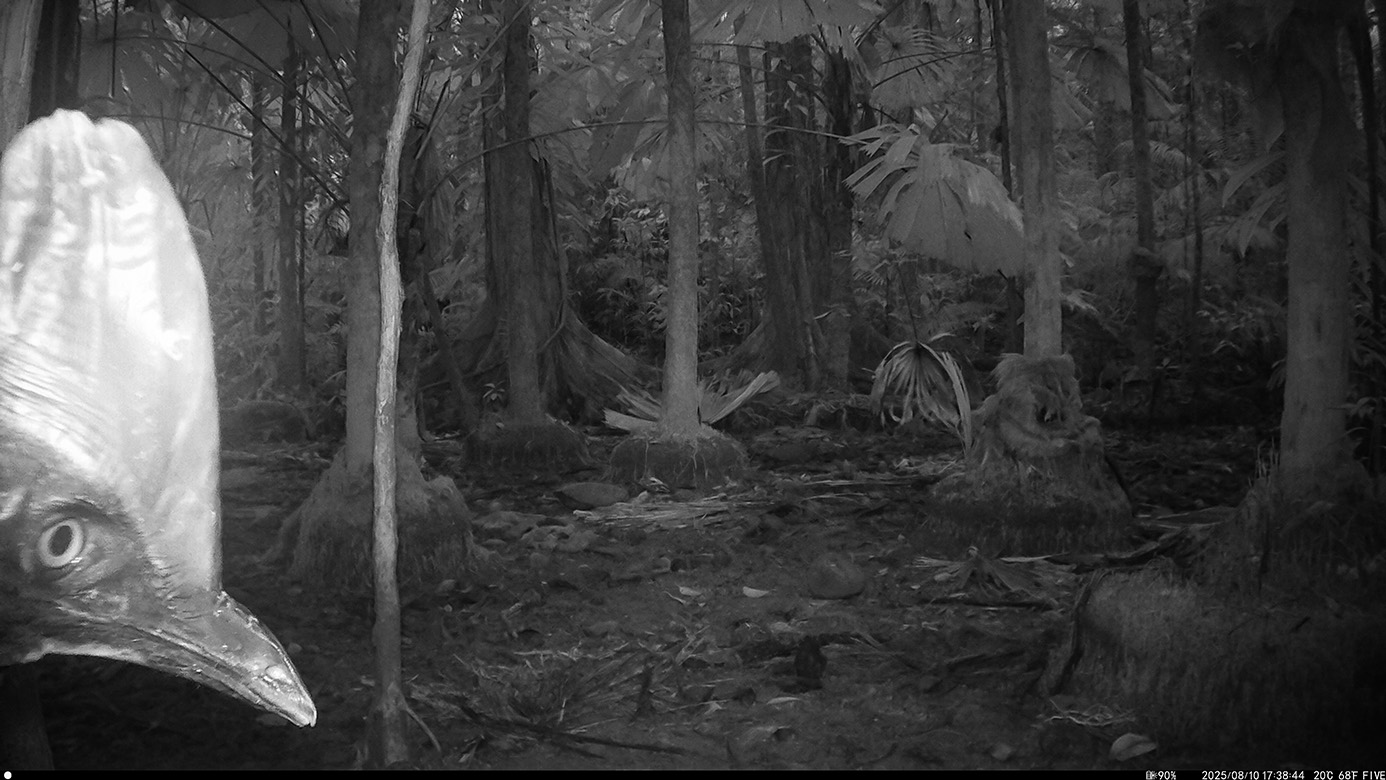
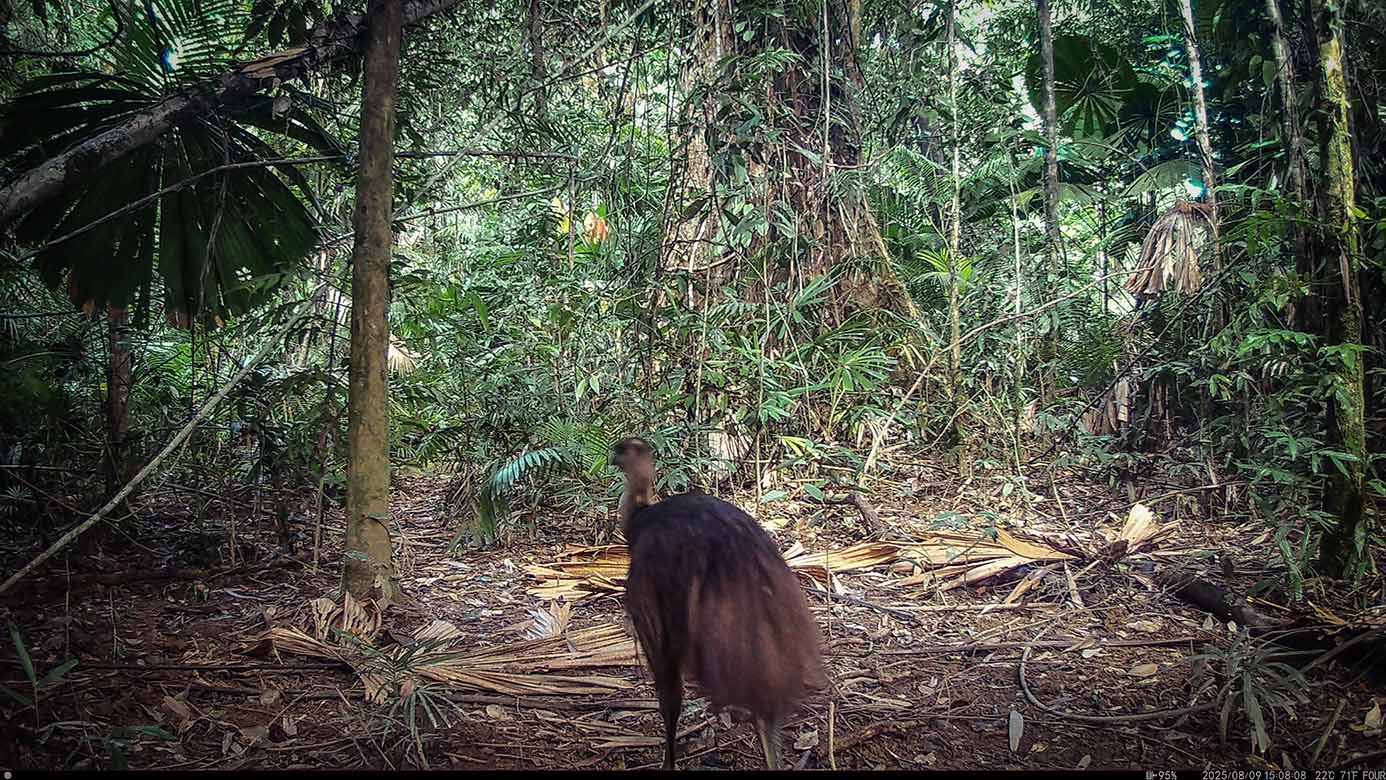
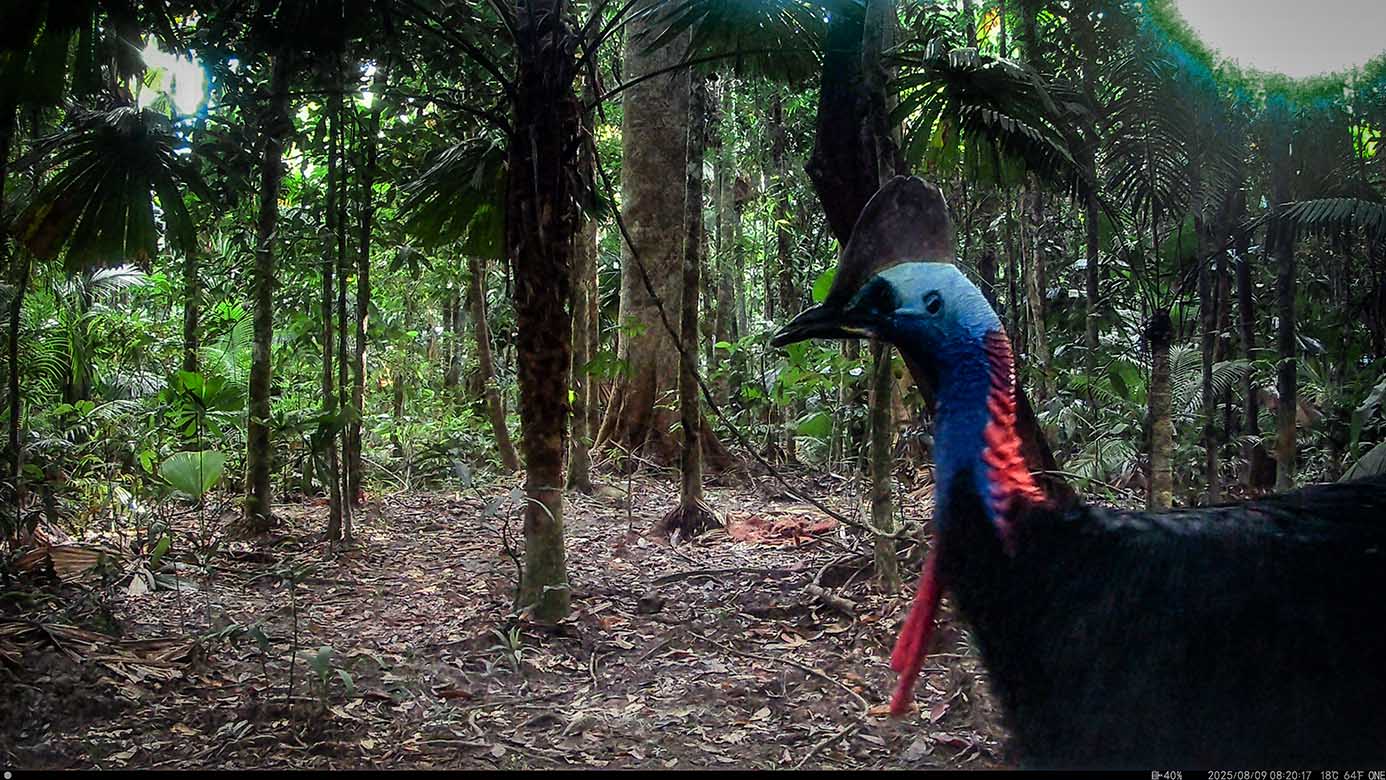
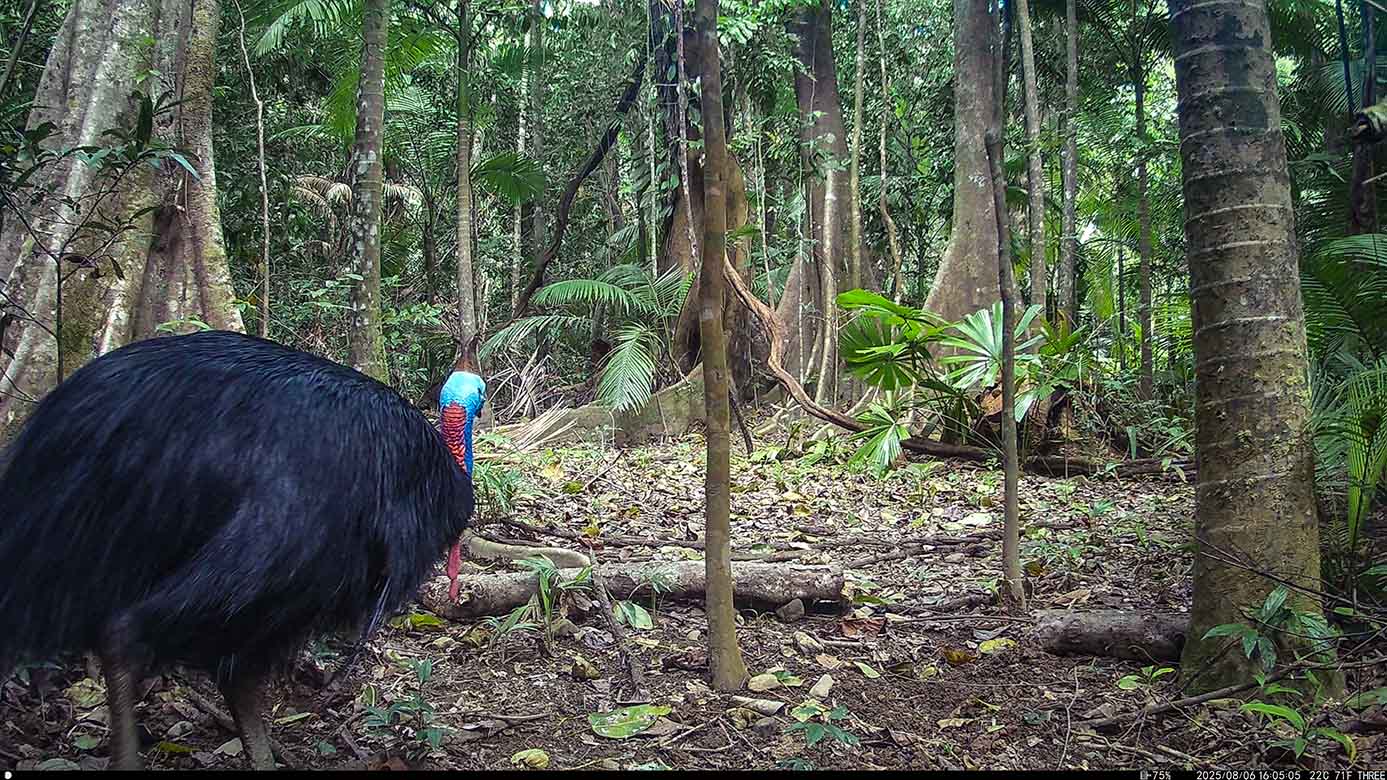
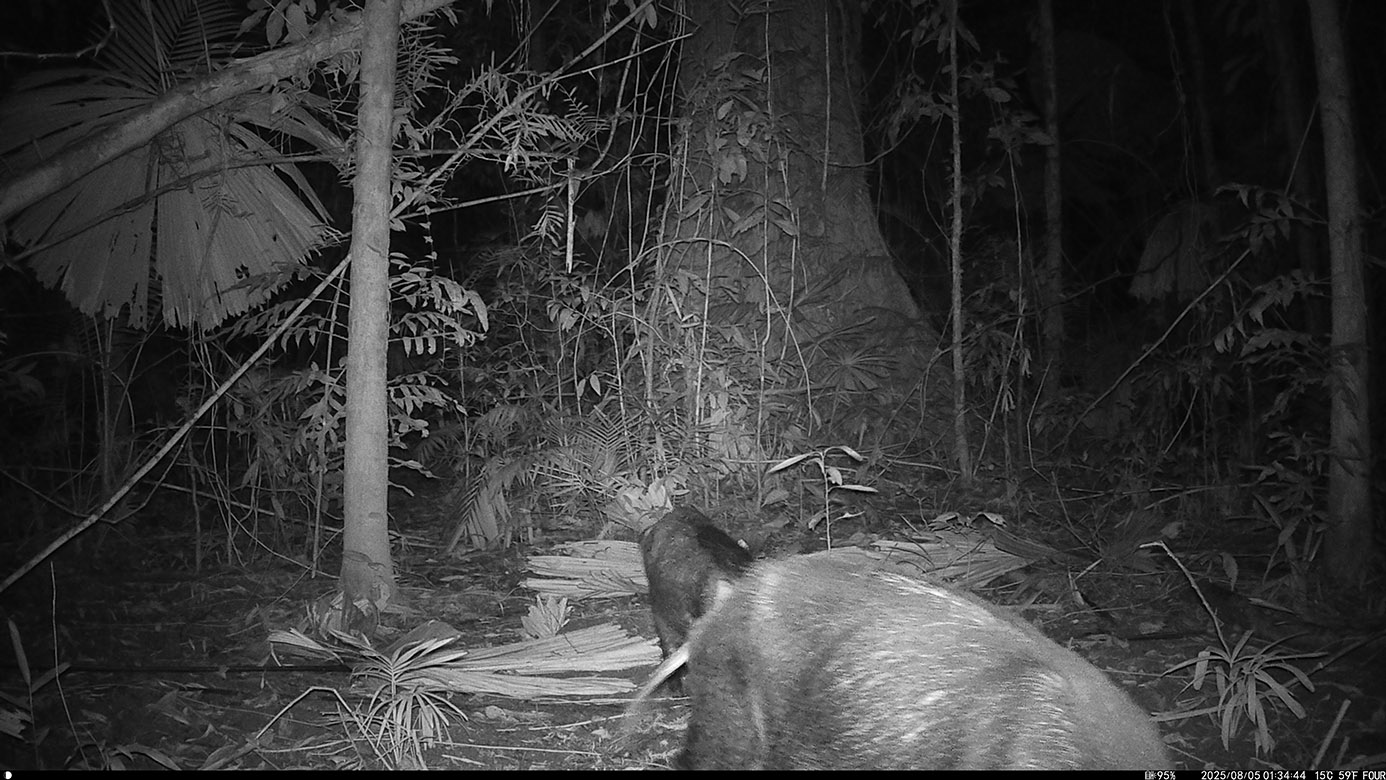
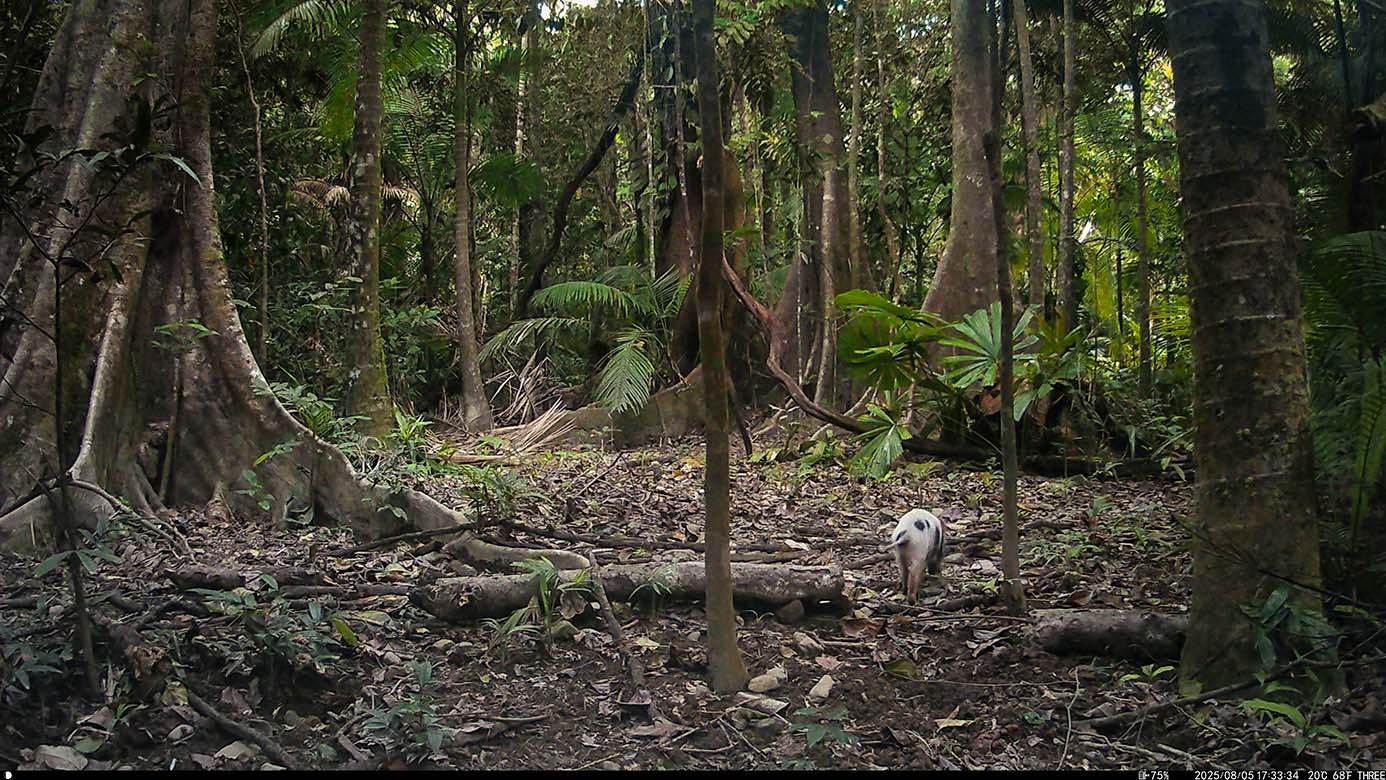
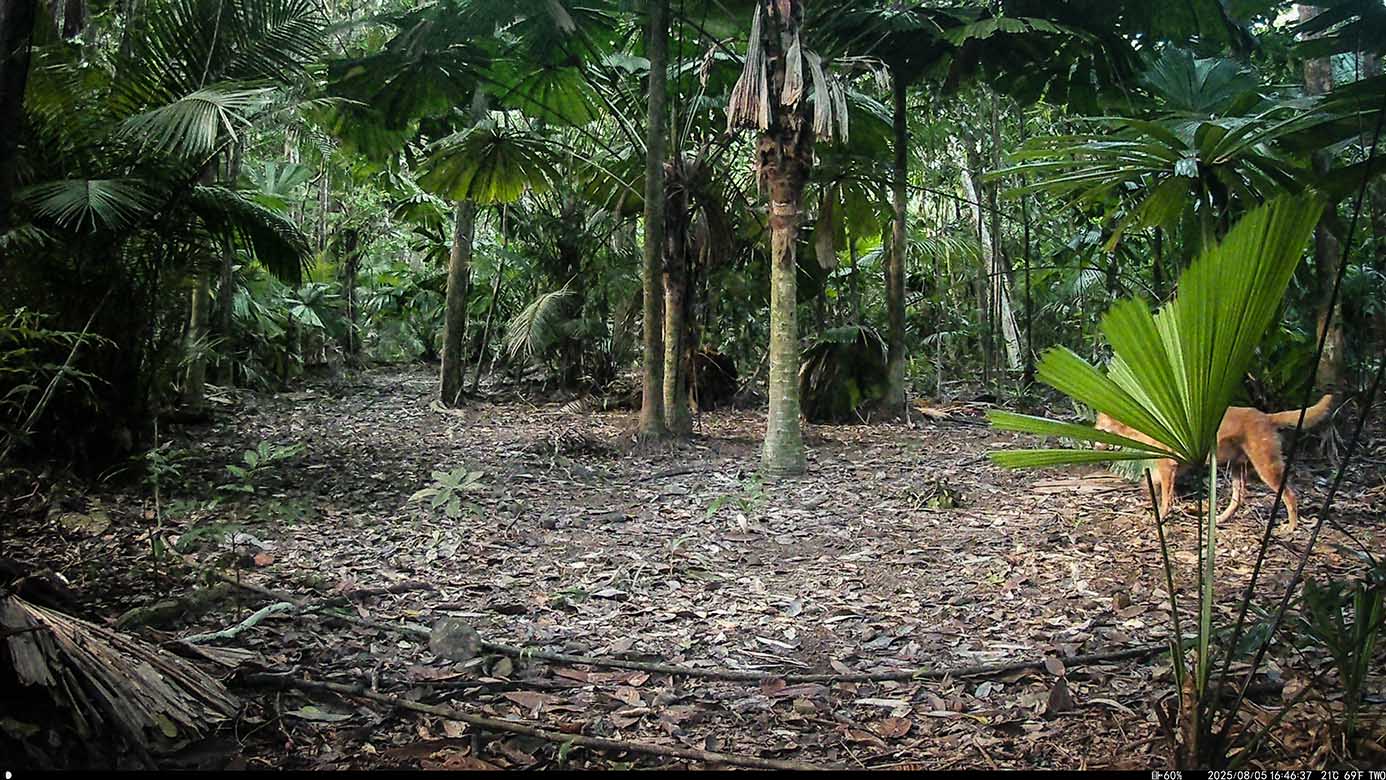
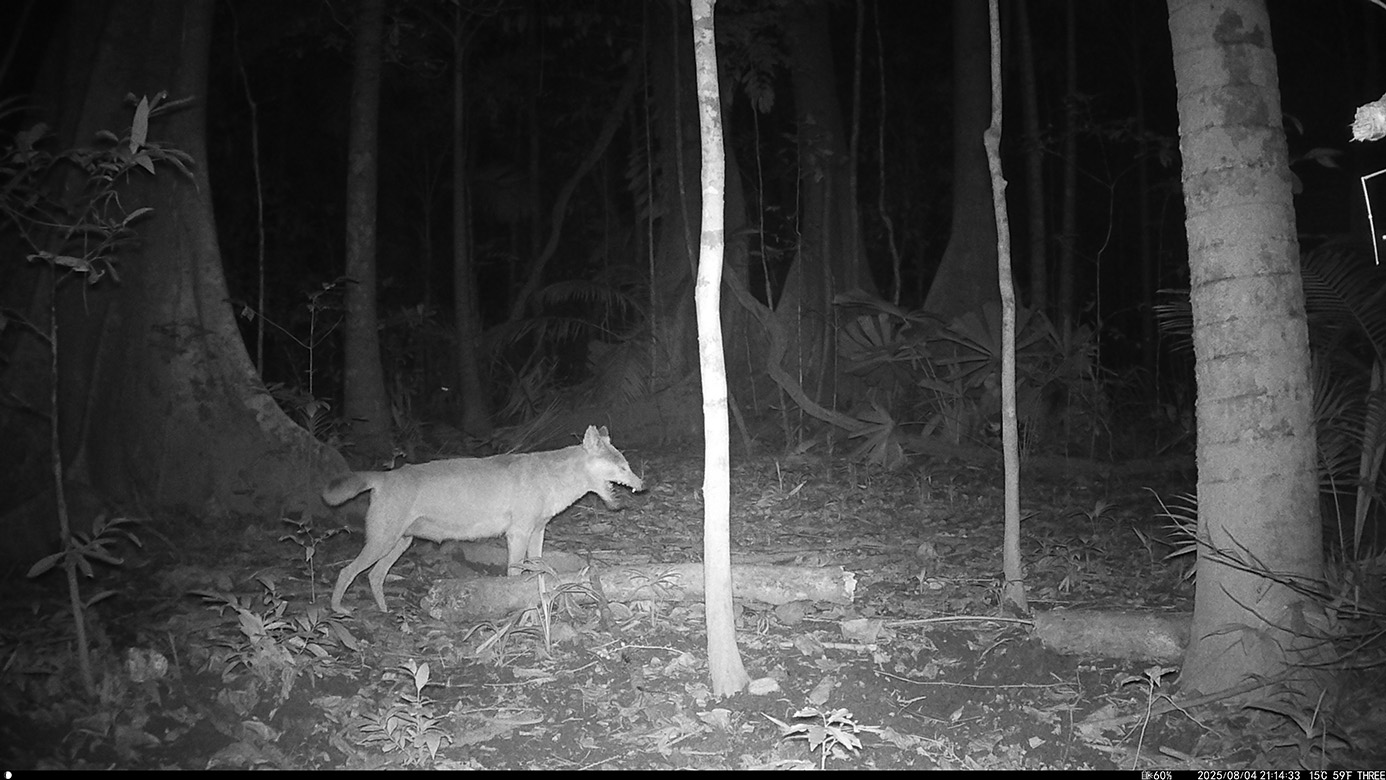
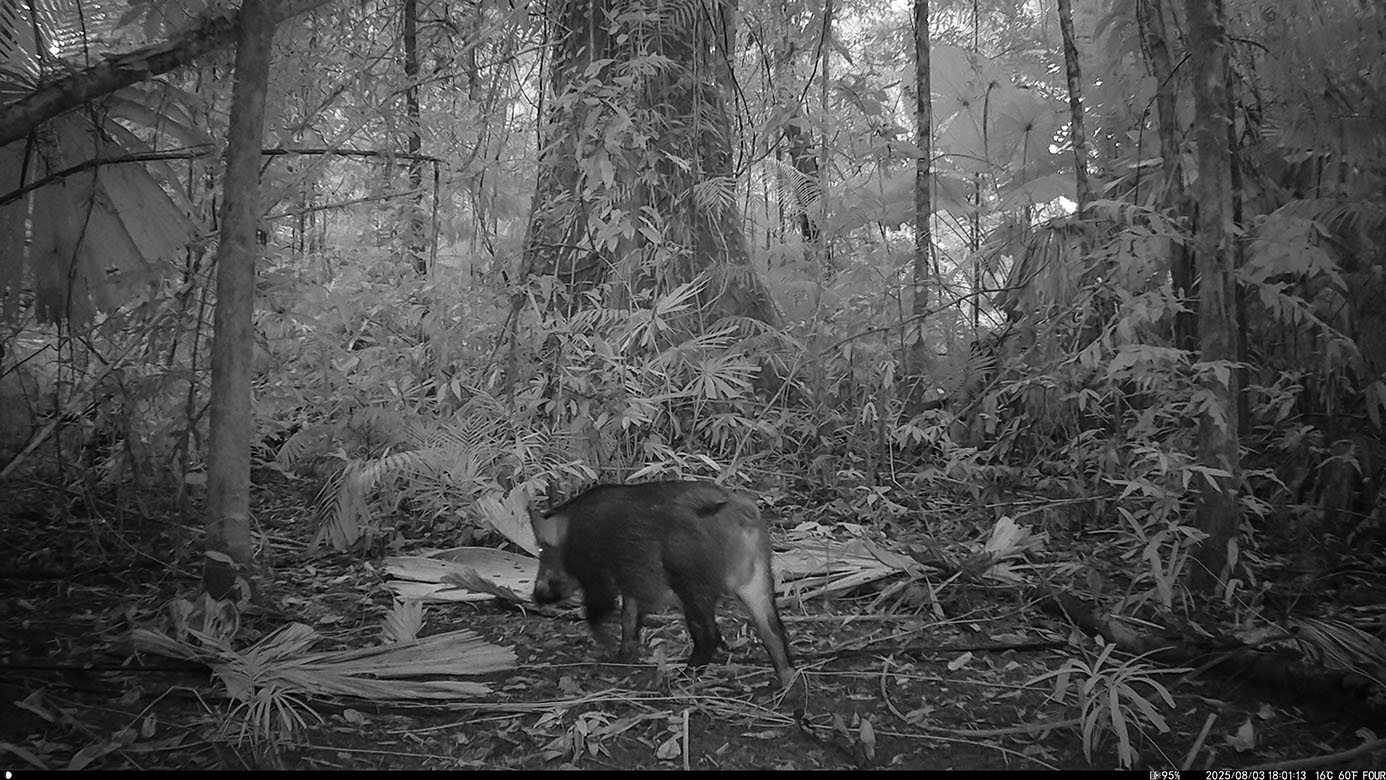
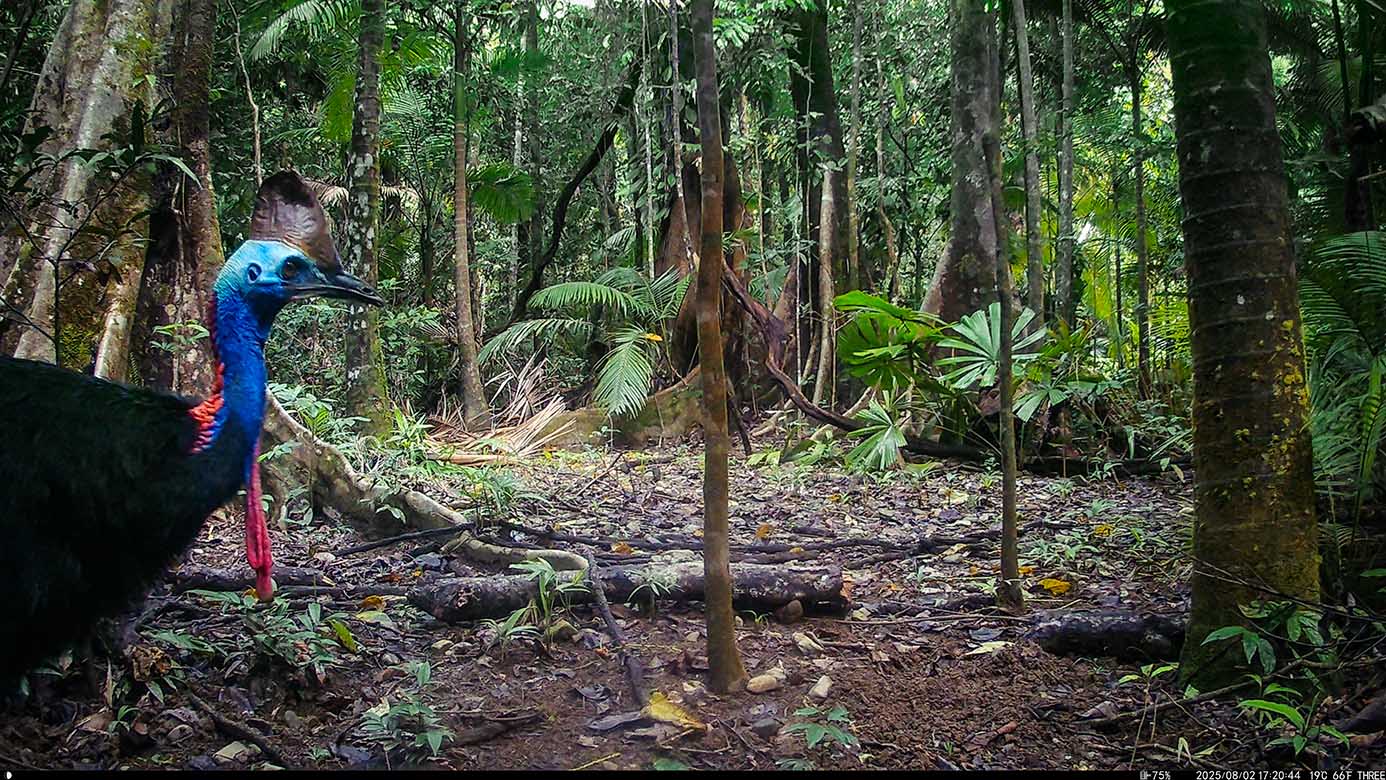
Keeping up with the cassowaries …
Crinkle Cut & Wobbly
Manu & Baloo
Cheryl
Alex or Richard
Delilah
Taiga
Dingo with Bennett’s Tree-kangaroo
Zoomed in and scrutinised frame-by-frame, the dark macropod in the dingo’s mouth appears to be a juvenile Bennett’s Tree Kangaroo – Dendrolagus bennettianus (De Vis, 1887). Listed as Near Threatened in 2015, within the IUCN Red List of Threatened Species, Bennett’s Tree Kangaroos are so scarcely sighted, that any fatality admonishes humanity, but not from the perspective of the successful predator.
Dingoes are highly evolved, but possess neither human understanding nor appreciation of endemism, rarity or the importance of preserving biological diversity or intergenerational equity. Expecting dingoes to behave in accordance with human understanding, discernment or altruism, is ludicrous. If humanity desires to protect Bennett’s Tree Kangaroos from population decline, then humanity must act accordingly and not hysterically scapegoat dingoes for being dingoes.
Endemism is the state of a species inhabiting a single defined geographic location and the exclusive habitat of Bennett’s Tree Kangaroo is merely 70-KM long by 50-KM wide, between the Daintree River and Cooktown. Of course, this same area is a world-renowned centre of endemism, containing a refugium of relictual species from Gondwanan origin. The vast majority of the area is World Heritage-listed and whatever portion falls outside of the World Heritage-boundary is federally declared as Endangered Ecological Community, providing the same National Environmental Significance that gives the Federal Government lead-agency over development decisions. So, Bennett’s Tree Kangaroos share their vulnerabilities and legislated protections with a host of similar endemics and every other co-habitant of the same environment.
As arboreal mammals, Bennett’s Tree Kangaroos most formidable predator is Australia’s largest and longest snake, the Amethystine Python – Simalia kinghorni (Stull, 1933). For millenia, human inhabitants managed Amethystine Pythons with unrivalled expertise and spiritual finesse, which is to say that the python population was held in balance with their maintained viability as a spiritually treasured cohort. Substantially fewer pythons substantially lessens predatory pressure upon Tree Kangaroos, which were also coveted for human consumption. The profound difference between human and python predation of Bennett’s Tree Kangaroos, is that the former can knowingly increase their population size as a condition of a sustainable harvesting, whereas the latter cannot and does not.
The systematic removal of human inhabitants from ancestral environments, robs environments of knowledge, understanding, appreciation. spiritual sensitivity and altruism across the passage of time. Indeed, it unceremoniously jilts reptiles into de facto apex predatorship, which they in turn discharge with predatory prowess, but without the refinements of human predecessors and without the capacity to understand or appreciate that killing to their carrying capacity pushes warm-blooded prey towards extinction.
With Australia having suffered the world’s highest rate of mammal decline and extinction over the past one-hundred-and-fifty-years, it has been contended that the rarity of a top predator has triggered continent-wide collapse of mammal prey. It should come as no surprise that the top predator is Human – Homo sapiens (Linnaeus, 1758).
Daintree Rainforest Foundation Ltd has been registered by the Australian Charities and Not-for-profits Commission and successfully entered onto the Register of Environmental Organisations. Donations made to the Daintree Rainforest Fund support the Daintree Rainforest community custodianship and are eligible for a tax deduction under the Income Tax Assessment Act 1997.