
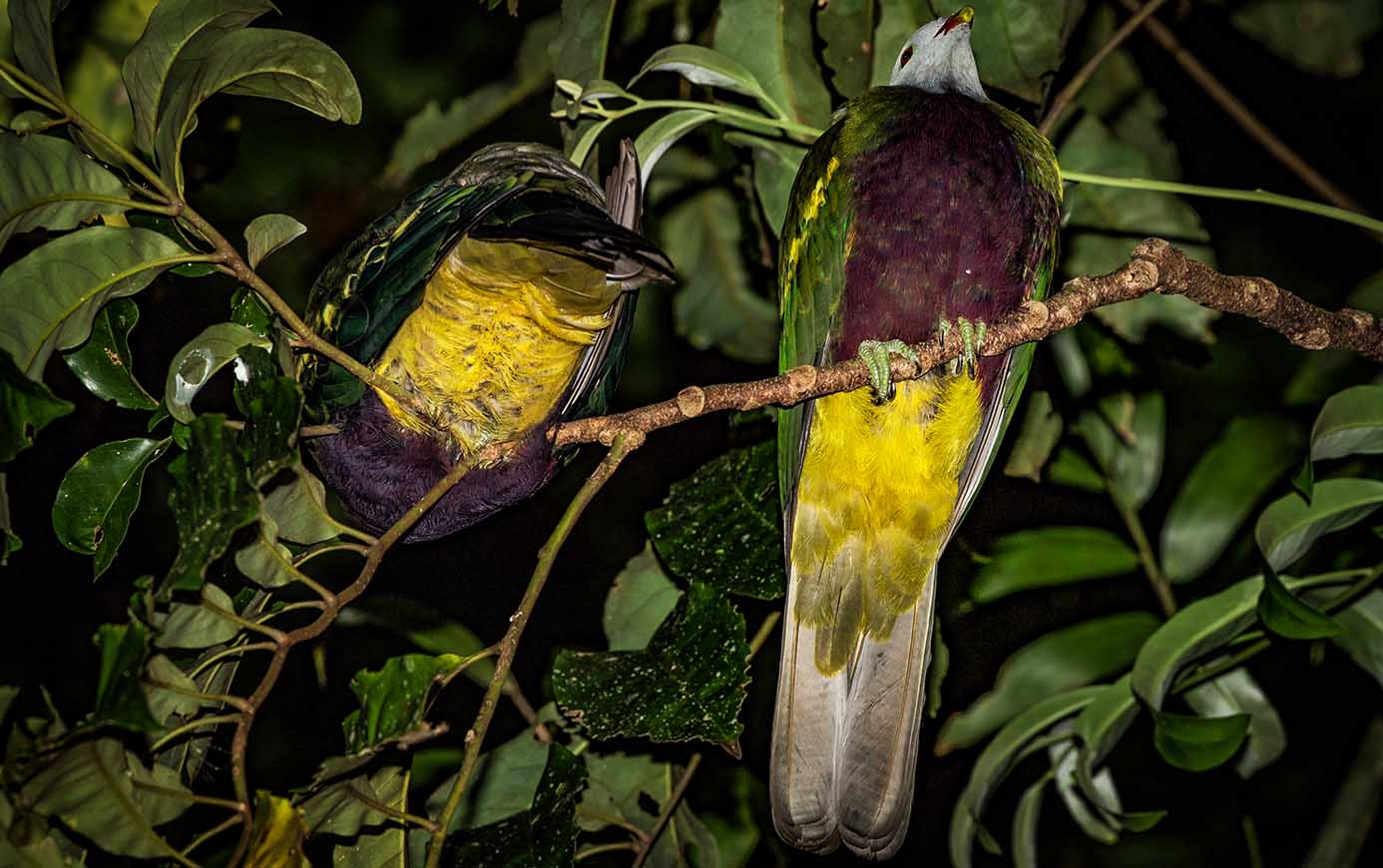
Daintree Rainforest Camera Trap Project
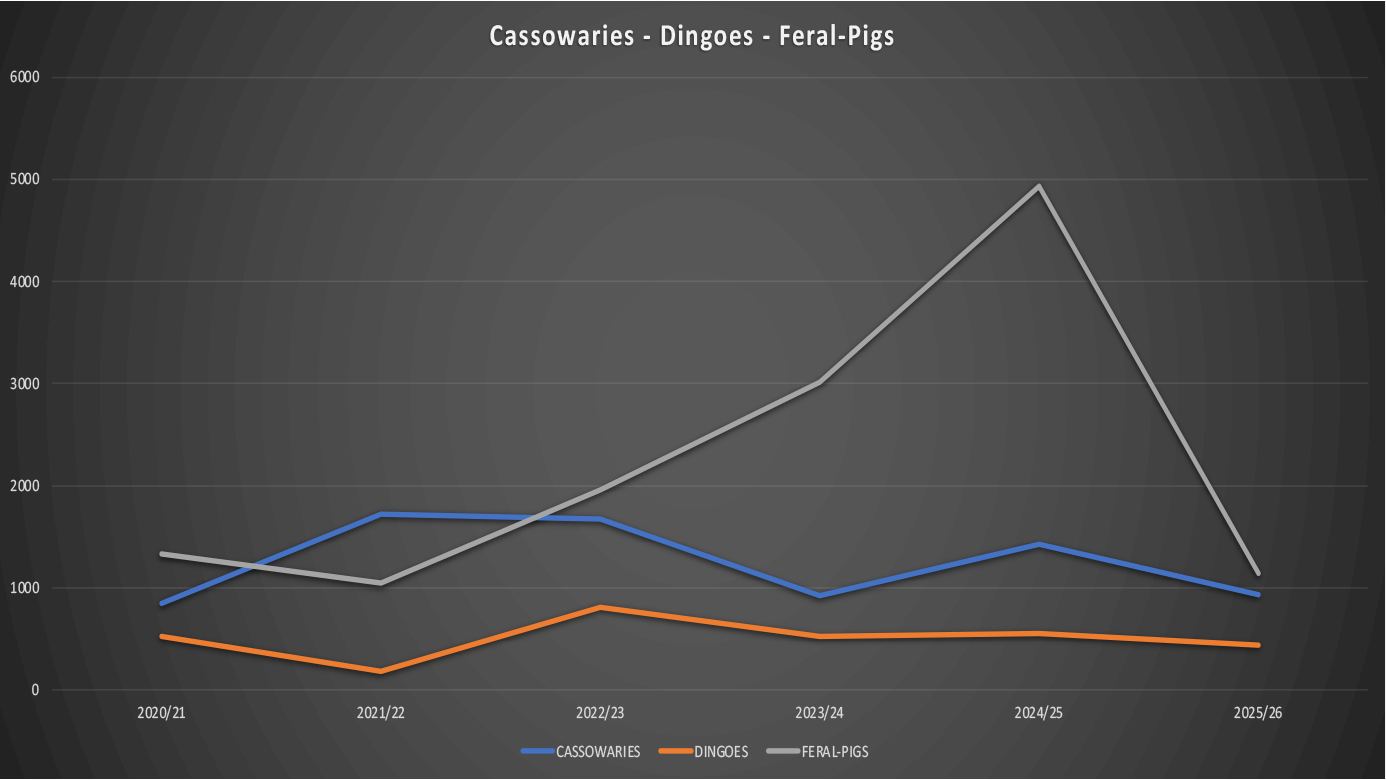
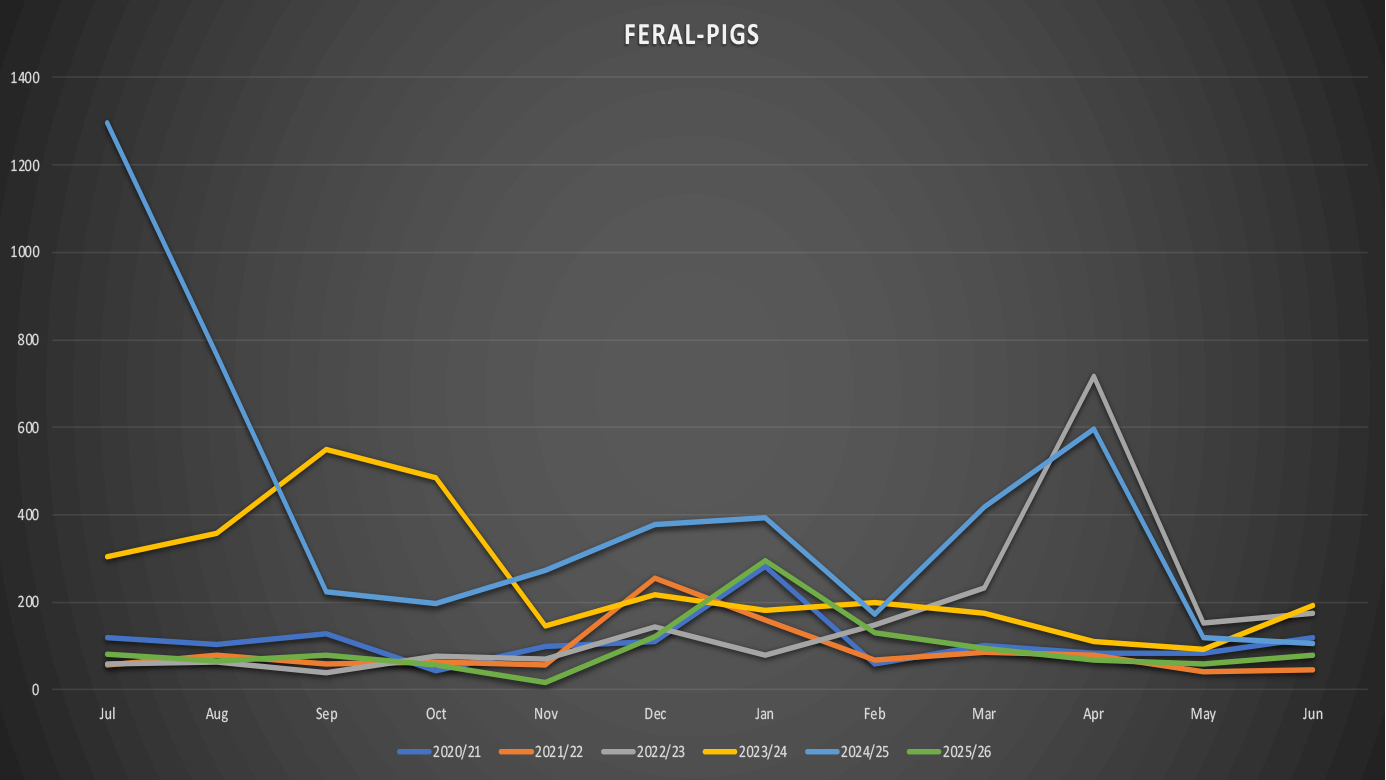
Across the course of the 2025-26 financial year, the Foundation has dutifully monitored and reported to the Wet Tropics Management Authority, Jabalbina Yalanji Aboriginal Corporation, Centre for Invasive Species Solutions, Invasive Species Council, Biosecurity Queensland and the public-at-large, the number of sightings of cassowaries, dingoes and feral-pigs from twelve permanently positioned and maintained camera traps, accruing 930-cassowary sightings, 438-dingoes and 1,145-feral-pigs. In comparison with 2024-25, cassowary sightings fell by 35%, dingoes dropped by 21% and feral-pig numbers plummeted by 77%. Over the full-course of the long-term monitoring project, this fiscal-year revealed 23% fewer cassowary sightings, dingoes lessened by 12% and feral-pig numbers also diminished by 50%.
This overall plummeting in numbers is probably an ecological consequence of the monsoonal landslides of 17th December 2023. Whilst their initial collapse converted vast expanses of forest-product into beetle larvae, driving a consequential explosion in feral-pig numbers, overall depreciation of ecological productivity would have inevitably driven concomitant carrying capacities down. When soils containing iron sulfide minerals called pyrites come into contact with oxygen, as when disturbed by land-slides, sulfuric acid is produced, causing massive damage to the environment. When acidity builds up to high levels in water it poisons plants in and around affected creeks and also kills fish and other aquatic creatures if they are unable to escape. The expansive debris apron at the foot of landslides spreads widely across lowlands with lower levels of acidity, rendering plants and animals weaker and more vulnerable to disease and early death.
Admittedly, this study collects data from a mere 0.007% of the overall Wet Tropics World Heritage Area, but arguably from the least damaged portion at the biological centre of irreplaceability, which also happens to have an environmental foundation advantageously equipped with a full-time human inhabitancy. Whatever is reported from this least damaged and most vigilantly monitored portion of the world’s most irreplaceable rainforest, almost certainly confers similar if not worse statistics between cassowaries, dingoes and feral-pigs across the broader expanse of the entire Wet Tropics World Heritage Area.
Progressive sightings across 2021, 2022, 2023, 2024, 2025 & 2026:
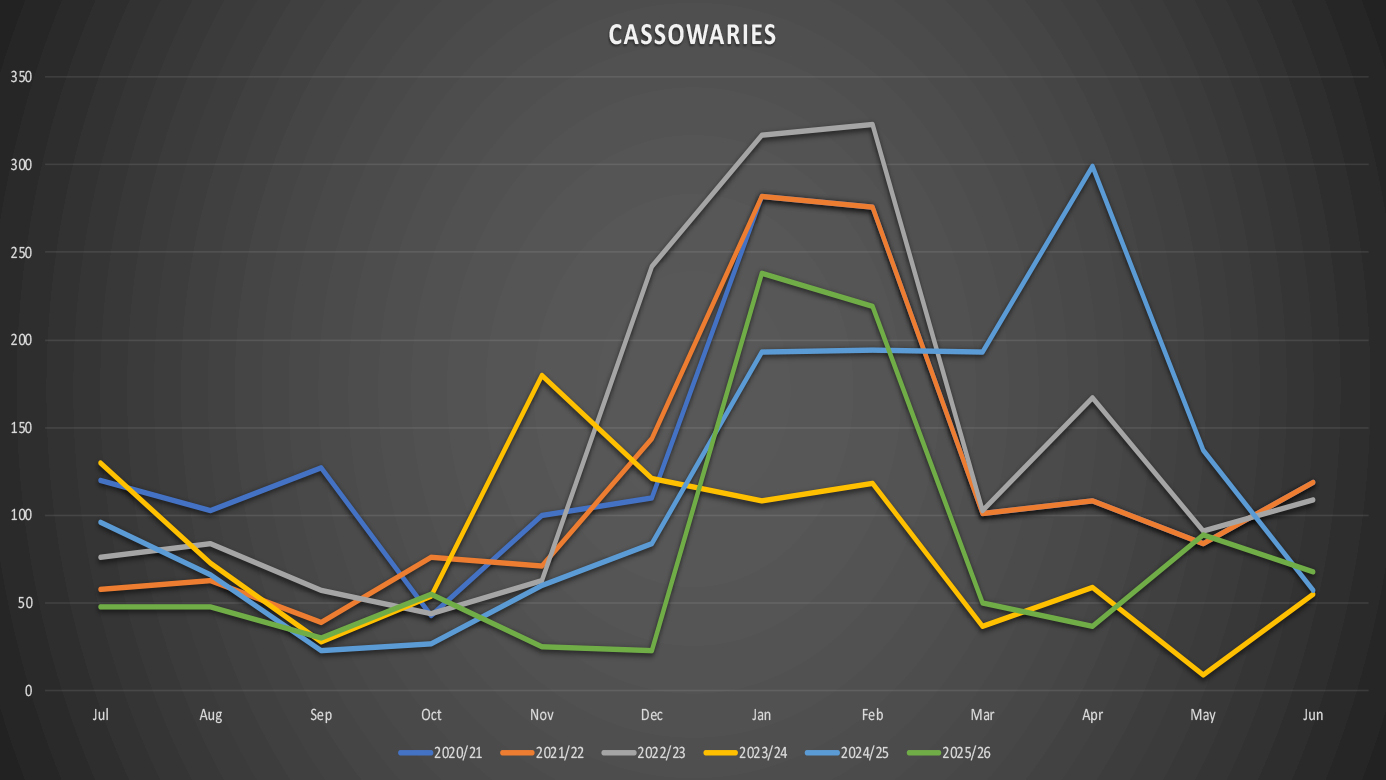
Overlay of cassowary sightings between 2020 – 2026:
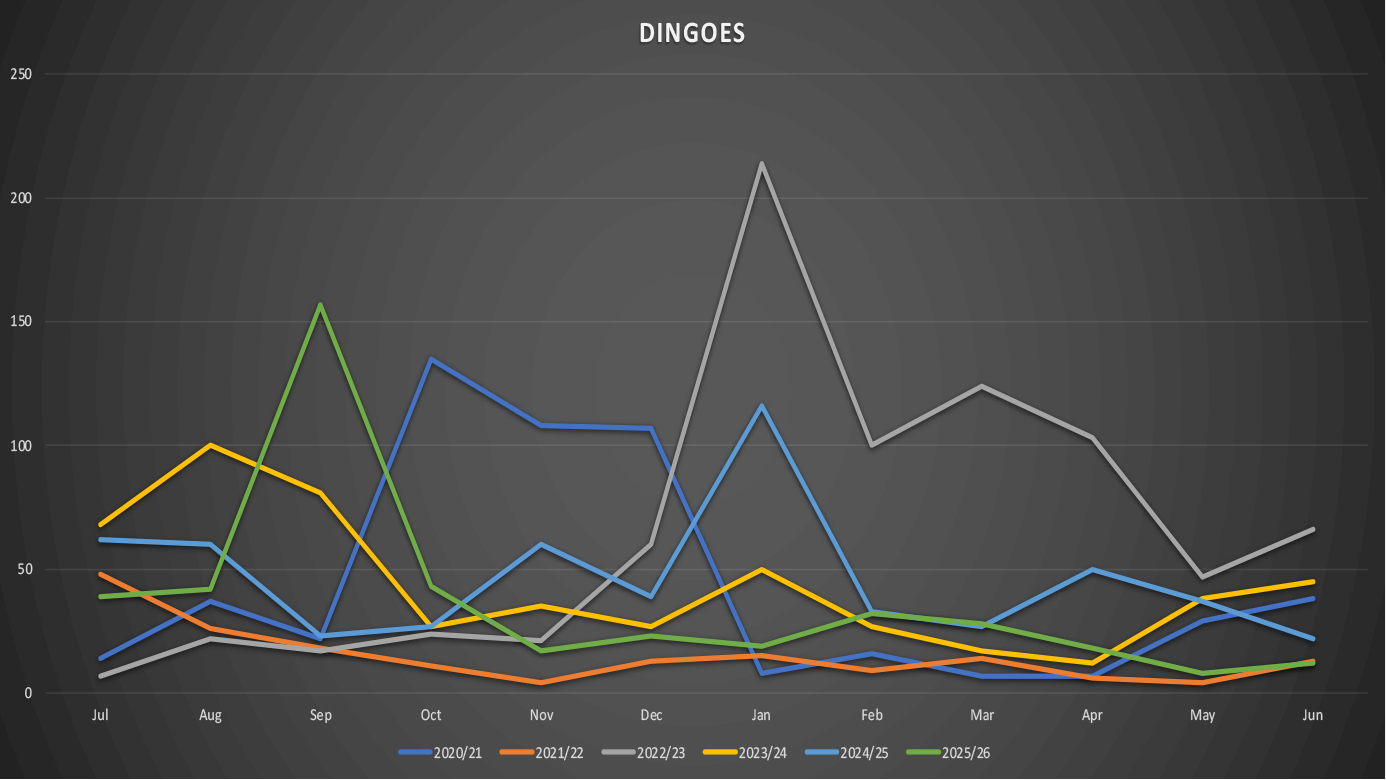
Overlay of dingo sightings between 2020 – 2026:
Overlay of feral-pig sightings between 2020 – 2026:
As a keystone species sustaining a multitude of dependent symbionts, all of which would fall with its demise, the Southern Cassowary occupies the highest order of conservation importance. They are are also the only player in the world’s longest surviving rainforest that habitually steps into spotlights generated by the loss of upper-story crowns, to illuminate their vibrant reds and blues about their head and necks to assert territorialism, inevitably pooping seeds in a rich pile of fertiliser beneath the canopy openings, to recruit and fill gaps left by collapsed crowns, restoring structural integrity that maintains cyclones as replenishing assets rather than disturbing liabilities. For all their undeniable importance, cassowaries must be provided with the highest order of protection and Australia must prioritise the eradication of feral-pigs.
Environmental Advocacy
Within the year’s 12-monthly Camera Trap Reports, made possible by the generous members and donors of the Daintree Rainforest Foundation Ltd., environmental advocacy included the 22 priority bird species within Australia’s Threatened Species Action Plan excluding the Endangered Southern Cassowary and that neglecting to address the pestilent infestation of 30,000-feral-pigs into the last vestige of cassowary habitat, is driving the cassowary towards the same fate as the Dodo.
A video clip with a Dingo with Bennett’s Tree-kangaroo in its mouth gave rise to advocacy for acknowledging the ecologically disastrous removal of human tree-kangaroo hunters and associated python managers.
Arguments were made concerning the Draft Queensland Feral Pig Management Action Plan 2026-2031, criticising it’s unlikely success in terms of the ecological removal of Indigenous human inhabitants, which created vacancies that cultivated feral-pigs and some 72-additional other vertebrate introduced species into pestilent proliferation, and the division of pest habitat into ‘reserve’ and ‘off-reserve’ purposes, one which has turned the former into unintended sanctuaries, whilst the other 77.5% majority portion is regulated to be invasive-species-free.
In response to ferry-fees increasing (yet again) on 1st July 2026 by 11.8%, the Foundation decried uncharitable conduct in the Daintree Rainforest, under the pretence of urgent environmental intervention. If the objective of any external organisation is to displace people and communities from coveted property, then it will only ever be uncharitable, as it degrades the quality and contiguousness of Cape Tribulation and Daintree Coast environmental capital, compromises community stewardship and undermines the highest order of environmental charity and ecotourism cost-recovery-potential.
The Foundation also wrote a public letter-of-support for QLD Health and any other agencies and interests to support the Cow Bay Friends of the Foundation obtain a community-based shuttle-bus with disabled lift provision as the next obvious improvement to patient care infrastructure, in an environment with an increasingly aging constituency.
Daintree Rainforest Fund
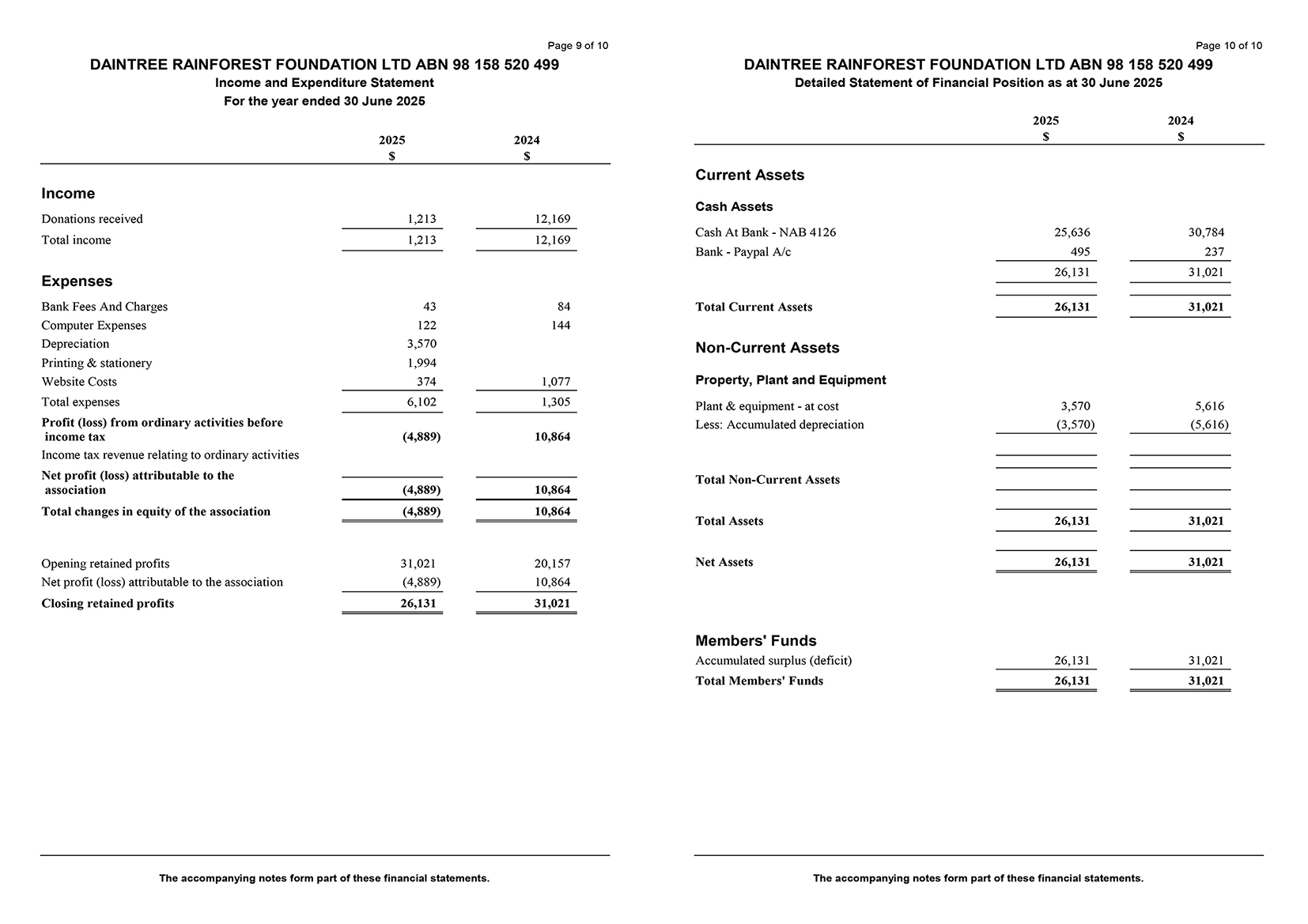
On behalf of the Foundation, I hereby thank the generous contributors to the Daintree Rainforest Fund and also the directors, for their enthusiasm, dedication and all the various contributions that have brought the Daintree Rainforest Foundation Ltd., successfully to its eleventh Annual General Meeting.
Neil Hewett – Chairperson
Daintree Rainforest Foundation Ltd has been registered by the Australian Charities and Not-for-profits Commission and successfully entered onto the Register of Environmental Organisations. Donations made to the Daintree Rainforest Fund support Daintree Rainforest community custodianship and are eligible for a tax deduction under the Income Tax Assessment Act 1997.